

Cashews, unsalted
Common food

Photo: Wikipedia
Cashews are the kidney-shaped seeds of the tropical cashew apple, prized for their creamy, buttery texture and subtly sweet, nutty flavor. Nutritionally, they are a powerhouse of monounsaturated fats and a good source of plant-based protein and essential minerals like magnesium and copper. Their unique, rich mouthfeel makes them a versatile ingredient in both savory and sweet dishes.
Calorie split: 10% protein · 21% carbs · 70% fat
↓ Full nutrition💚 Why it's loved
People love cashews for their luxuriously creamy texture and mild, sweet flavor that enhances everything from stir-fries to desserts. Their versatility allows them to be eaten raw, roasted, turned into butter, or blended into rich, dairy-free sauces and cheeses.
⚠️ Watch-outs & how to enjoy it better
As a tree nut, cashews are a common allergen and must be avoided by those with allergies. They are calorie-dense, so mindful portion control is key. The raw shells contain an irritant oil (urushiol), which is why they are always sold shelled and often roasted to neutralize any residual compounds.
Key benefits
- Excellent source of heart-healthy monounsaturated fats
- Good plant-based source of protein and dietary fiber
- Rich in essential minerals, especially copper and magnesium
- Contains antioxidants that support cellular health
- Provides sustained energy due to healthy fat and protein content
🍽️ Popular dishes
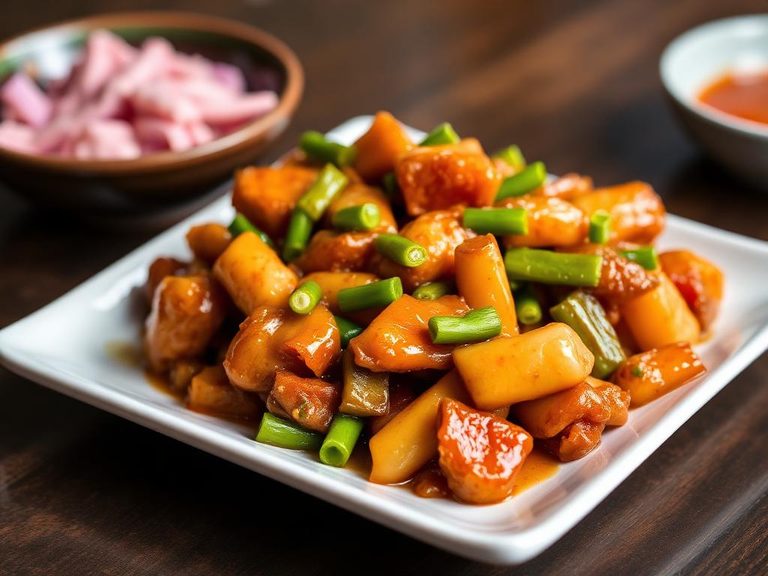
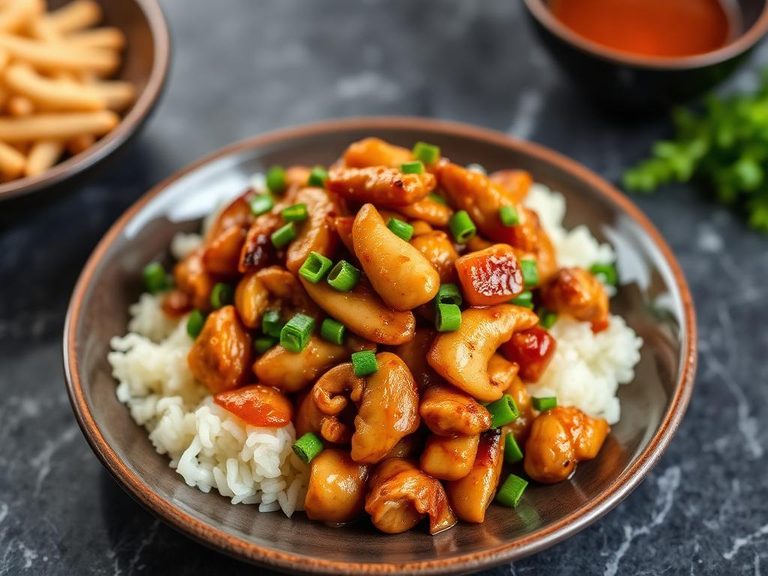
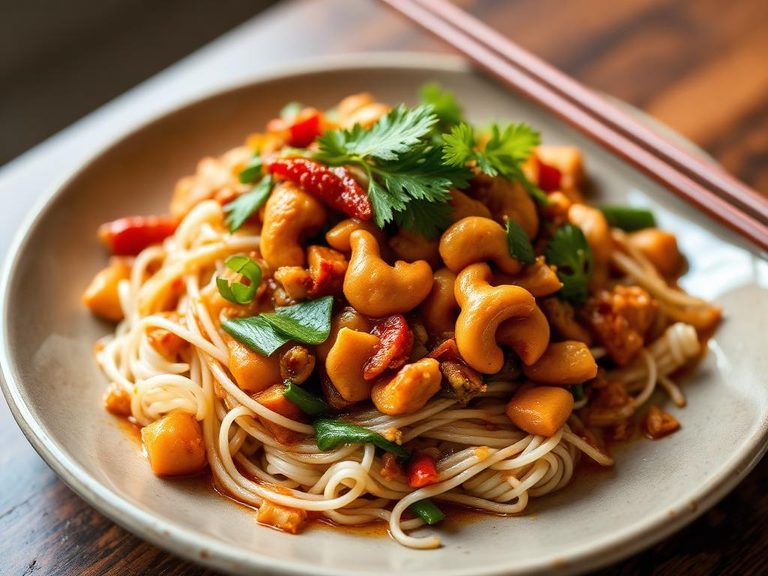
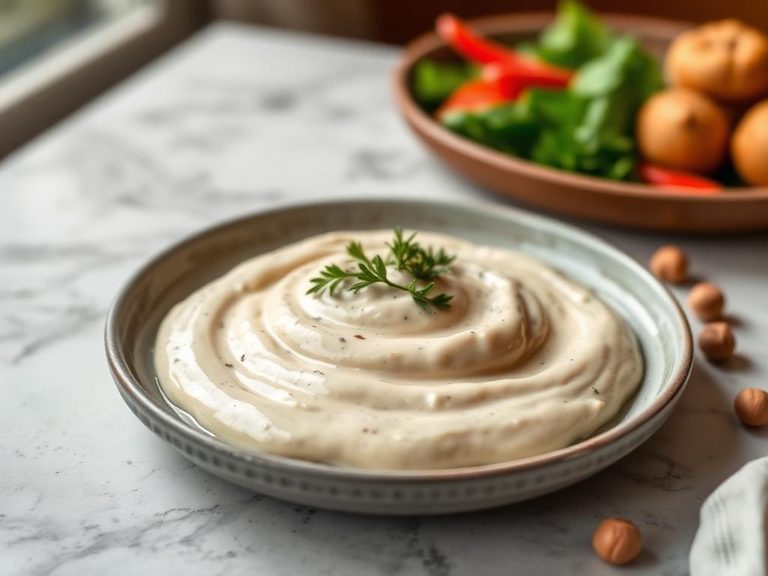
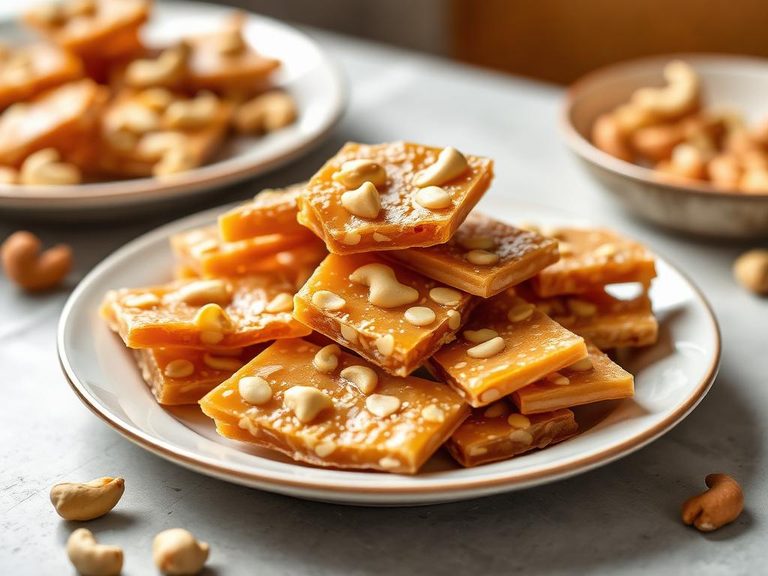
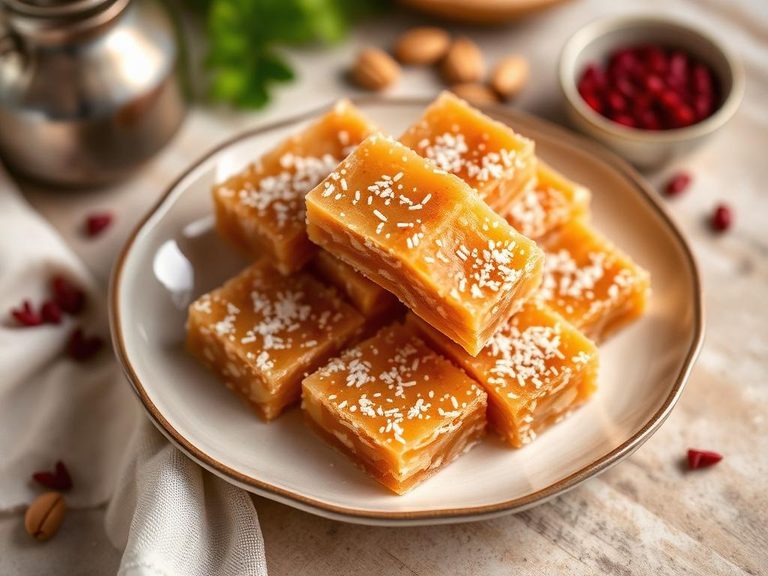
🌍 Where it's eaten
💡 Did you know?
The cashew 'nut' is technically a seed that grows at the end of a fleshy, pear-shaped fruit called the cashew apple, which is too delicate for long-distance transport and is often used locally for juices or fermented into alcoholic drinks.
Full nutrition (USDA data · scales with serving)
| Water | 1.6 g |
| Energy | 584 kcal |
| Protein | 14.8 g |
| Total lipid (fat) | 48.0 g |
| Carbohydrate, by difference | 31.7 g |
| Fiber, total dietary | 2.9 g |
| Total Sugars | 4.9 g |
| Calcium, Ca | 44.0 mg |
| Iron, Fe | 5.8 mg |
| Magnesium, Mg | 252 mg |
| Phosphorus, P | 475 mg |
| Potassium, K | 548 mg |
| Sodium, Na | 16.0 mg |
| Zinc, Zn | 5.4 mg |
| Copper, Cu | 2.2 mg |
| Selenium, Se | 11.3 ug |
| Vitamin C, total ascorbic acid | 0.00 mg |
| Thiamin | 0.19 mg |
| Riboflavin | 0.19 mg |
| Niacin | 1.4 mg |
| Vitamin B-6 | 0.25 mg |
| Folate, total | 67.0 ug |
| Folic acid | 0.00 ug |
| Folate, food | 67.0 ug |
| Folate, DFE | 67.0 ug |
| Choline, total | 59.2 mg |
| Vitamin B-12 | 0.00 ug |
| Vitamin B-12, added | 0.00 ug |
| Vitamin A, RAE | 0.00 ug |
| Retinol | 0.00 ug |
| Carotene, beta | 0.00 ug |
| Carotene, alpha | 0.00 ug |
| Cryptoxanthin, beta | 0.00 ug |
| Lycopene | 0.00 ug |
| Lutein + zeaxanthin | 22.0 ug |
| Vitamin E (alpha-tocopherol) | 1.5 mg |
| Vitamin E, added | 0.00 mg |
| Vitamin D (D2 + D3) | 0.00 ug |
| Vitamin K (phylloquinone) | 36.7 ug |
| Alcohol, ethyl | 0.00 g |
| Caffeine | 0.00 mg |
| Theobromine | 0.00 mg |
Fat & fatty acid profile (per 100g)
| Fatty acids, total saturated | 9.3 g |
| SFA 4:0 | 0.00 g |
| SFA 6:0 | 0.00 g |
| SFA 8:0 | 0.13 g |
| SFA 10:0 | 0.13 g |
| SFA 12:0 | 0.76 g |
| SFA 14:0 | 0.34 g |
| SFA 16:0 | 4.5 g |
| SFA 18:0 | 3.0 g |
| Fatty acids, total monounsaturated | 27.8 g |
| MUFA 16:1 | 0.32 g |
| MUFA 18:1 | 27.2 g |
| MUFA 20:1 | 0.15 g |
| MUFA 22:1 | 0.00 g |
| Fatty acids, total polyunsaturated | 8.8 g |
| PUFA 18:2 | 8.4 g |
| PUFA 18:3 | 0.29 g |
| PUFA 18:4 | 0.00 g |
| PUFA 20:4 | 0.00 g |
| PUFA 20:5 n-3 (EPA) | 0.00 g |
| PUFA 22:5 n-3 (DPA) | 0.00 g |
| PUFA 22:6 n-3 (DHA) | 0.00 g |
| Cholesterol | 0.00 mg |
FAQ
Why are cashews never sold in the shell at the grocery store?
The shell of the cashew contains a toxic, oily resin called urushiol (the same compound in poison ivy) that can cause severe skin irritation. The shells must be carefully removed and processed, typically by roasting, before the edible kernel is safe to handle and eat.
Are roasted cashews less healthy than raw?
Dry-roasting doesn't significantly alter the core nutritional profile of healthy fats, protein, and minerals. However, many commercially roasted cashews are cooked in added oils and salt, which increases calories and sodium. Choosing dry-roasted, unsalted versions keeps them a healthier option.
How can I use cashews to make a dairy-free cream or cheese?
Soak raw cashews in hot water for 30 minutes (or cold water for 2-4 hours), then blend with fresh water until completely smooth. This creates a neutral, rich base for cream sauces, soups, or vegan cheesecakes. Adding nutritional yeast, lemon juice, and garlic can mimic a tangy cheese flavor.
Nutrient density (calculated · NRF9.3)
Nutrient Rich Foods index: beneficial nutrients (protein, fiber, vitamins, minerals) minus saturated fat, added sugar & sodium, per 100 kcal.
NRF9.3 index — Fulgoni, Keast & Drewnowski, 2009. Computed from USDA nutrients.
Weight-loss friendliness (composite index)
Energy density 5.84 kcal/g · 10% calories from protein · 2.9 g fiber · 4.9 g sugar per 100 g.
Composite of energy density (Rolls et al., 1999), protein & fiber satiety, minus sugar. A calculated heuristic — ranks satiety-per-calorie, not a clinical measure.
Dietary load (calculated from USDA values)
Potential renal acid load. Positive = acid-forming, negative = alkaline-forming.
Sodium-to-potassium ratio: 0.03 (lower is better — aim for ≤ 1)
Sodium:potassium per WHO potassium guidance. Computed from USDA nutrients.