

Cake or cupcake, gingerbread
Common food

Photo: Wikipedia
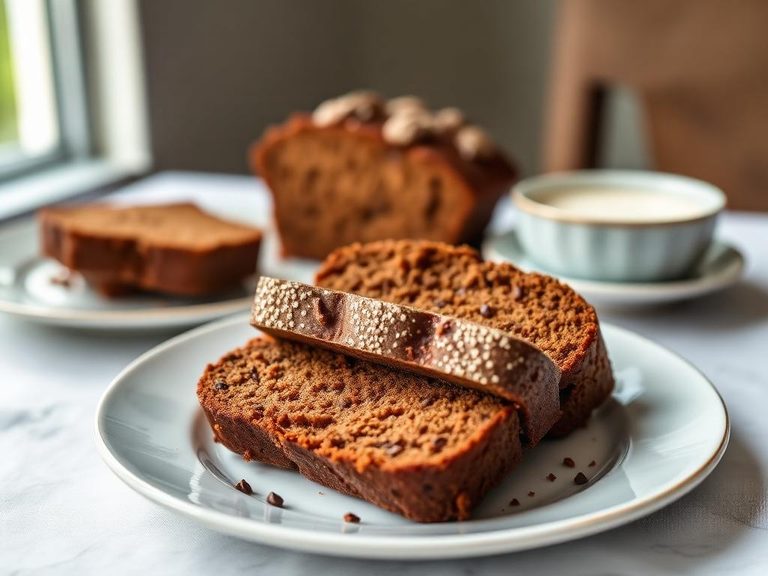
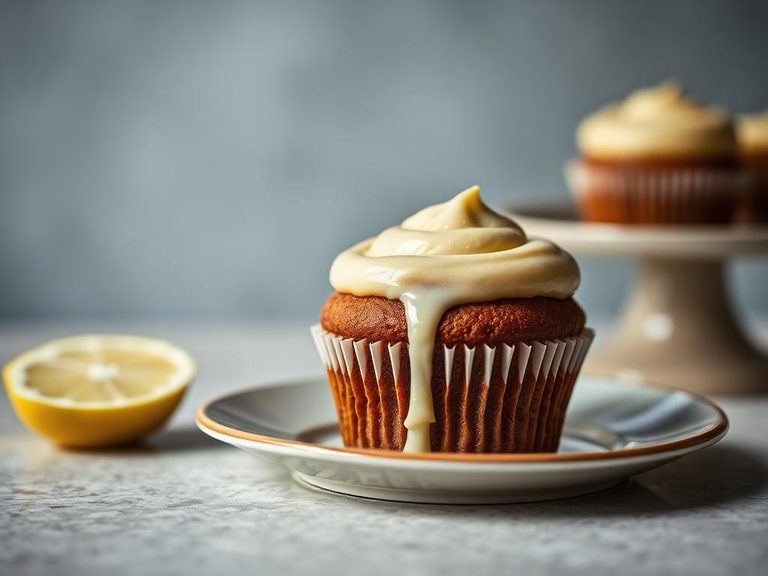
A spiced, molasses-rich cake or cupcake, offering a tender, moist crumb with a deep, warming flavor from ginger, cinnamon, and cloves. Its dark, caramelized exterior often contrasts with a soft interior, sometimes topped with a simple lemon glaze or cream cheese frosting. Nutritionally, it's a dense source of quick energy from its high carbohydrate and sugar content.
Calorie split: 5% protein · 65% carbs · 30% fat
↓ Full nutrition💚 Why it's loved
People adore its quintessential holiday aroma and complex spice profile that feels both nostalgic and comforting. Its versatility allows it to be a simple snack cake, an elegant dessert, or a fun cupcake for festive occasions.
⚠️ Watch-outs & how to enjoy it better
The high sugar and refined carbohydrate content can lead to rapid blood-sugar spikes. To counteract this, pair a smaller portion with a source of protein or fat, like a handful of nuts or a dollop of Greek yogurt, to slow digestion. Those monitoring sodium should be aware that some recipes, especially with salted caramel toppings, can be surprisingly high.
Key benefits
- Provides quick energy from simple carbohydrates.
- Contains small amounts of minerals like iron and manganese from molasses and spices.
- Ginger may offer mild digestive comfort.
- A traditional holiday treat that boosts seasonal morale.
- Often made with buttermilk, adding a slight tang and calcium.
🍽️ Popular dishes



🌍 Where it's eaten
💡 Did you know?
The tradition of gingerbread houses started in Germany during the 16th century, popularized by the Brothers Grimm fairy tale of Hansel and Gretel.
Full nutrition (USDA data · scales with serving)
| Water | 40.0 g |
| Energy | 276 kcal |
| Protein | 3.6 g |
| Total lipid (fat) | 9.2 g |
| Carbohydrate, by difference | 45.3 g |
| Fiber, total dietary | 1.0 g |
| Total Sugars | 28.3 g |
| Calcium, Ca | 62.0 mg |
| Iron, Fe | 3.0 mg |
| Magnesium, Mg | 14.0 mg |
| Phosphorus, P | 152 mg |
| Potassium, K | 217 mg |
| Sodium, Na | 411 mg |
| Zinc, Zn | 0.32 mg |
| Copper, Cu | 0.15 mg |
| Selenium, Se | 3.7 ug |
| Vitamin C, total ascorbic acid | 0.10 mg |
| Thiamin | 0.17 mg |
| Riboflavin | 0.16 mg |
| Niacin | 1.4 mg |
| Vitamin B-6 | 0.03 mg |
| Folate, total | 26.0 ug |
| Folic acid | 16.0 ug |
| Folate, food | 10.0 ug |
| Folate, DFE | 37.0 ug |
| Choline, total | 27.2 mg |
| Vitamin B-12 | 0.06 ug |
| Vitamin B-12, added | 0.00 ug |
| Vitamin A, RAE | 14.0 ug |
| Retinol | 14.0 ug |
| Carotene, beta | 1.0 ug |
| Carotene, alpha | 0.00 ug |
| Cryptoxanthin, beta | 2.0 ug |
| Lycopene | 0.00 ug |
| Lutein + zeaxanthin | 41.0 ug |
| Vitamin E (alpha-tocopherol) | 0.20 mg |
| Vitamin E, added | 0.00 mg |
| Vitamin D (D2 + D3) | 0.20 ug |
| Vitamin K (phylloquinone) | 3.9 ug |
| Alcohol, ethyl | 0.00 g |
| Caffeine | 0.00 mg |
| Theobromine | 0.00 mg |
Fat & fatty acid profile (per 100g)
| Fatty acids, total saturated | 2.4 g |
| SFA 4:0 | 0.00 g |
| SFA 6:0 | 0.00 g |
| SFA 8:0 | 0.00 g |
| SFA 10:0 | 0.00 g |
| SFA 12:0 | 0.00 g |
| SFA 14:0 | 0.04 g |
| SFA 16:0 | 1.3 g |
| SFA 18:0 | 1.1 g |
| Fatty acids, total monounsaturated | 5.0 g |
| MUFA 16:1 | 0.02 g |
| MUFA 18:1 | 5.0 g |
| MUFA 20:1 | 0.00 g |
| MUFA 22:1 | 0.00 g |
| Fatty acids, total polyunsaturated | 1.2 g |
| PUFA 18:2 | 1.1 g |
| PUFA 18:3 | 0.06 g |
| PUFA 18:4 | 0.00 g |
| PUFA 20:4 | 0.00 g |
| PUFA 20:5 n-3 (EPA) | 0.00 g |
| PUFA 22:5 n-3 (DPA) | 0.00 g |
| PUFA 22:6 n-3 (DHA) | 0.00 g |
| Cholesterol | 32.0 mg |
FAQ
What makes gingerbread dark and moist?
The key ingredients are molasses (or treacle) and brown sugar, which provide the deep color, moisture, and characteristic bittersweet flavor.
Is gingerbread the same as ginger cake?
They are very similar. 'Gingerbread' is a broad term that can refer to cakes, cookies, and confections, while 'ginger cake' specifically denotes the cake-like form.
Can I reduce the sugar in gingerbread?
You can moderately reduce the sugar, but it will affect moisture and texture. Substituting some molasses with applesauce can help retain moisture while cutting some sugar.
Nutrient density (calculated · NRF9.3)
Nutrient Rich Foods index: beneficial nutrients (protein, fiber, vitamins, minerals) minus saturated fat, added sugar & sodium, per 100 kcal.
NRF9.3 index — Fulgoni, Keast & Drewnowski, 2009. Computed from USDA nutrients.
Weight-loss friendliness (composite index)
Energy density 2.76 kcal/g · 5% calories from protein · 1.0 g fiber · 28.3 g sugar per 100 g.
Composite of energy density (Rolls et al., 1999), protein & fiber satiety, minus sugar. A calculated heuristic — ranks satiety-per-calorie, not a clinical measure.
Dietary load (calculated from USDA values)
Potential renal acid load. Positive = acid-forming, negative = alkaline-forming.
Sodium-to-potassium ratio: 1.89 (lower is better — aim for ≤ 1)
Sodium:potassium per WHO potassium guidance. Computed from USDA nutrients.