

Broccoflower, cooked
Common food

Photo: Wikipedia
Broccoflower is a striking cruciferous vegetable, a hybrid of broccoli and cauliflower, with a pale green, fractal-like head. When cooked, it offers a tender-crisp texture and a mild, sweet, nutty flavor that's more delicate than broccoli. Nutritionally, it's a low-calorie powerhouse, providing a good source of fiber and protein for its caloric cost.
Calorie split: 19% protein · 39% carbs · 42% fat
↓ Full nutrition💚 Why it's loved
People adore broccoflower for its unique appearance and its ability to bridge the gap between broccoli and cauliflower, offering a milder, sweeter taste. Its versatility allows it to be roasted, steamed, or stir-fried, making it a favorite for adding color and subtle flavor to diverse dishes.
⚠️ Watch-outs & how to enjoy it better
Some may find its flavor too mild or its texture slightly watery if overcooked. Those sensitive to FODMAPs or prone to digestive gas from cruciferous vegetables might experience discomfort. To counteract, cook it al dente (steaming or quick stir-frying) and pair it with a digestive aid like ginger or a small amount of healthy fat to improve tolerance.
Key benefits
- Excellent source of dietary fiber (3.2g per 100g).
- Provides plant-based protein (2.98g per 100g).
- Very low in calories (55 kcal per 100g).
- Contains beneficial glucosinolates, common in cruciferous vegetables.
- Naturally low in sugar (3.06g per 100g).
🍽️ Popular dishes
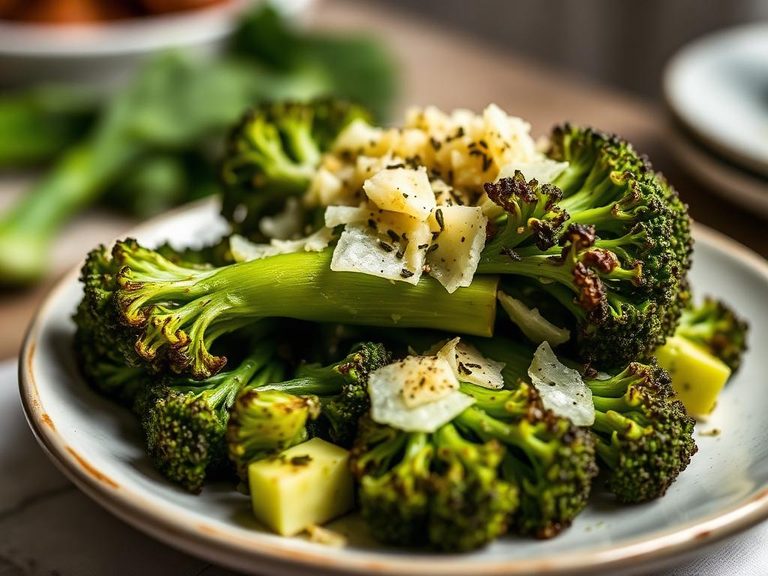
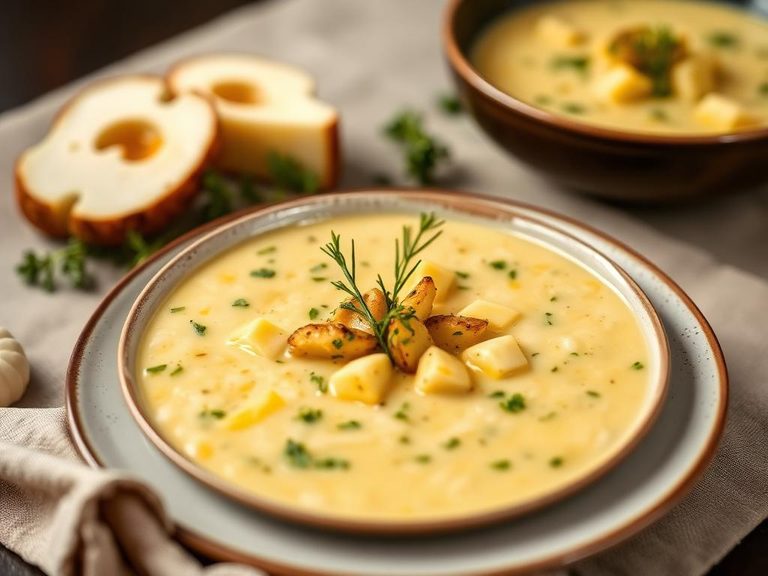
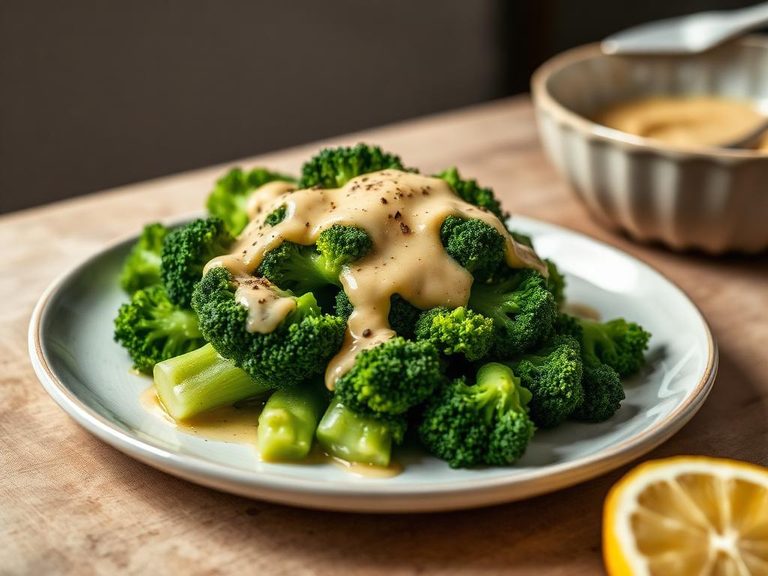
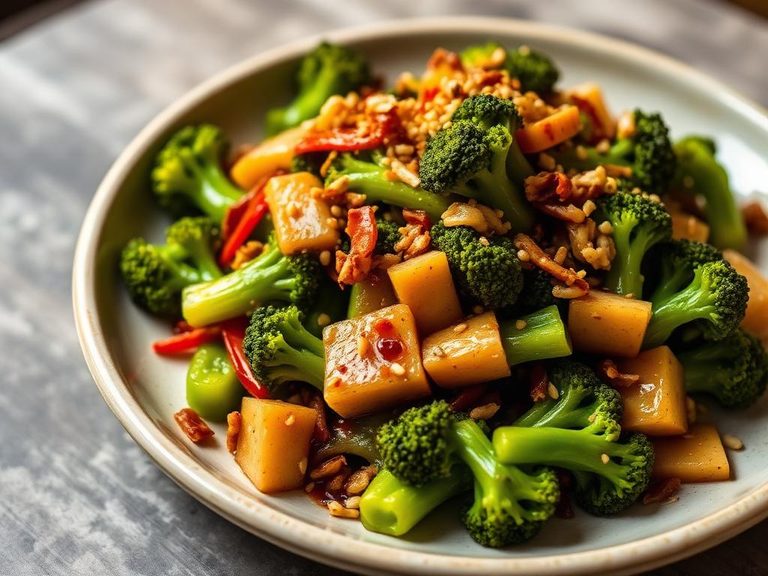
🌍 Where it's eaten
💡 Did you know?
Broccoflower isn't a single, fixed hybrid but a trade name for several green cauliflower varieties, most famously the 'Romanesco' with its stunning, mathematically precise logarithmic spiral pattern.
Full nutrition (USDA data · scales with serving)
| Water | 86.7 g |
| Energy | 55.0 kcal |
| Protein | 3.0 g |
| Total lipid (fat) | 3.0 g |
| Carbohydrate, by difference | 6.2 g |
| Fiber, total dietary | 3.2 g |
| Total Sugars | 3.1 g |
| Calcium, Ca | 34.0 mg |
| Iron, Fe | 0.74 mg |
| Magnesium, Mg | 20.0 mg |
| Phosphorus, P | 63.0 mg |
| Potassium, K | 303 mg |
| Sodium, Na | 149 mg |
| Zinc, Zn | 0.65 mg |
| Copper, Cu | 0.04 mg |
| Selenium, Se | 0.60 ug |
| Vitamin C, total ascorbic acid | 75.5 mg |
| Thiamin | 0.07 mg |
| Riboflavin | 0.10 mg |
| Niacin | 0.70 mg |
| Vitamin B-6 | 0.22 mg |
| Folate, total | 49.0 ug |
| Folic acid | 0.00 ug |
| Folate, food | 49.0 ug |
| Folate, DFE | 49.0 ug |
| Choline, total | 57.8 mg |
| Vitamin B-12 | 0.00 ug |
| Vitamin B-12, added | 0.00 ug |
| Vitamin A, RAE | 19.0 ug |
| Retinol | 11.0 ug |
| Carotene, beta | 94.0 ug |
| Carotene, alpha | 0.00 ug |
| Cryptoxanthin, beta | 0.00 ug |
| Lycopene | 0.00 ug |
| Lutein + zeaxanthin | 40.0 ug |
| Vitamin E (alpha-tocopherol) | 0.44 mg |
| Vitamin E, added | 0.00 mg |
| Vitamin D (D2 + D3) | 0.00 ug |
| Vitamin K (phylloquinone) | 22.6 ug |
| Alcohol, ethyl | 0.00 g |
| Caffeine | 0.00 mg |
| Theobromine | 0.00 mg |
Fat & fatty acid profile (per 100g)
| Fatty acids, total saturated | 0.74 g |
| SFA 4:0 | 0.02 g |
| SFA 6:0 | 0.01 g |
| SFA 8:0 | 0.01 g |
| SFA 10:0 | 0.02 g |
| SFA 12:0 | 0.02 g |
| SFA 14:0 | 0.07 g |
| SFA 16:0 | 0.42 g |
| SFA 18:0 | 0.15 g |
| Fatty acids, total monounsaturated | 0.97 g |
| MUFA 16:1 | 0.02 g |
| MUFA 18:1 | 0.93 g |
| MUFA 20:1 | 0.01 g |
| MUFA 22:1 | 0.00 g |
| Fatty acids, total polyunsaturated | 0.90 g |
| PUFA 18:2 | 0.70 g |
| PUFA 18:3 | 0.19 g |
| PUFA 18:4 | 0.00 g |
| PUFA 20:4 | 0.00 g |
| PUFA 20:5 n-3 (EPA) | 0.00 g |
| PUFA 22:5 n-3 (DPA) | 0.00 g |
| PUFA 22:6 n-3 (DHA) | 0.00 g |
| Cholesterol | 2.0 mg |
FAQ
Is broccoflower the same as Romanesco?
Not exactly. 'Broccoflower' is a general term for green cauliflower varieties. Romanesco is a specific, iconic type of broccoflower known for its pointed, spiral florets. Other broccoflowers may have a more traditional cauliflower shape but are green.
How do I keep it from turning mushy?
Avoid overcooking. For best texture, steam for 4-5 minutes, roast at high heat (400°F/200°C) until just tender, or stir-fry quickly. It should be vibrant green and have a slight bite.
Can I eat the leaves and stalk?
Yes! The leaves are edible and nutritious, similar to kale or collard greens when cooked. The stalk is also edible; peel off the tough outer layer, slice it, and cook it along with the florets.
Nutrient density (calculated · NRF9.3)
Nutrient Rich Foods index: beneficial nutrients (protein, fiber, vitamins, minerals) minus saturated fat, added sugar & sodium, per 100 kcal.
NRF9.3 index — Fulgoni, Keast & Drewnowski, 2009. Computed from USDA nutrients.
Weight-loss friendliness (composite index)
Energy density 0.55 kcal/g · 22% calories from protein · 3.2 g fiber · 3.1 g sugar per 100 g.
Composite of energy density (Rolls et al., 1999), protein & fiber satiety, minus sugar. A calculated heuristic — ranks satiety-per-calorie, not a clinical measure.
Dietary load (calculated from USDA values)
Potential renal acid load. Positive = acid-forming, negative = alkaline-forming.
Sodium-to-potassium ratio: 0.49 (lower is better — aim for ≤ 1)
Sodium:potassium per WHO potassium guidance. Computed from USDA nutrients.