

Broccoflower, raw
Common food

Photo: Wikipedia
Broccoflower is a striking, pale green cruciferous vegetable, a hybrid of broccoli and cauliflower. Its raw florets have a crisp, dense texture and a mild, slightly nutty flavor with a subtle peppery finish. Nutritionally, it's a low-calorie powerhouse, offering a solid 2.95g of protein and 3.2g of fiber per 100g, making it excellent for satiety.
Calorie split: 30% protein · 63% carbs · 7% fat
↓ Full nutrition💚 Why it's loved
People love it for its unique, vibrant color and versatile, mild flavor that absorbs dressings and spices beautifully. It's a favorite in raw veggie platters and modern salads for its satisfying crunch and visual appeal.
⚠️ Watch-outs & how to enjoy it better
Like other cruciferous vegetables, it contains goitrogens which can interfere with thyroid function in very large amounts, especially when raw. To mitigate this, individuals with thyroid concerns can lightly steam or roast it, which reduces goitrogen content, and ensure adequate iodine intake in their diet.
Key benefits
- High in fiber for digestive health
- Good source of plant-based protein
- Very low in fat and calories
- Rich in vitamin C and K
- Contains antioxidants like sulforaphane
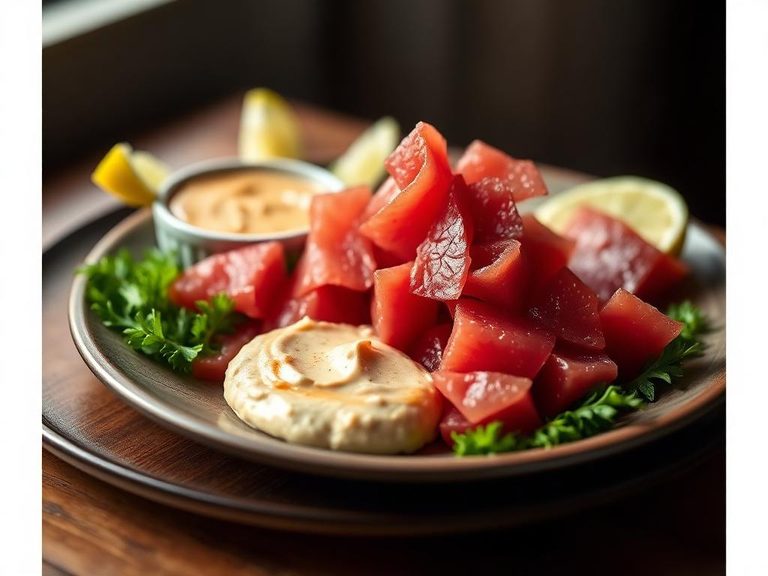
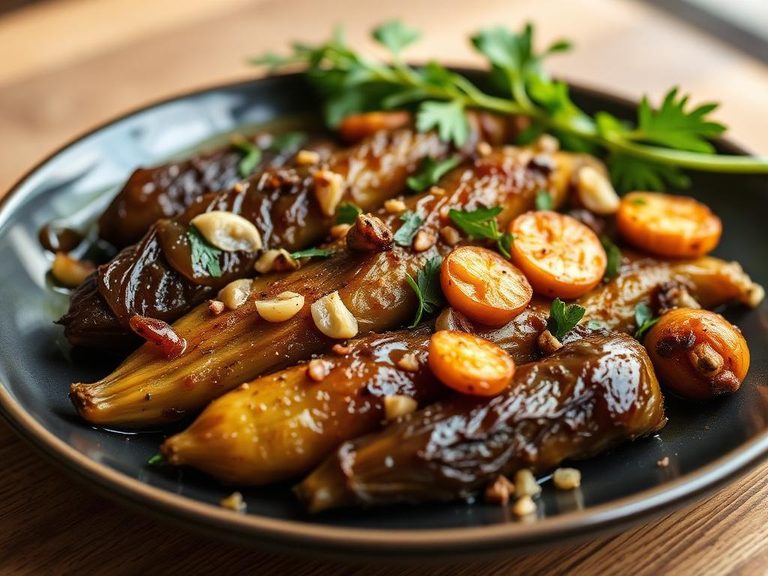
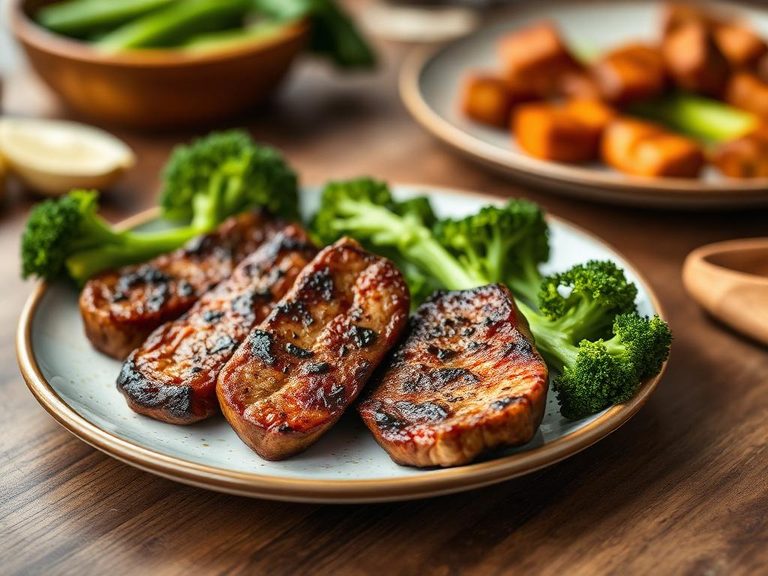
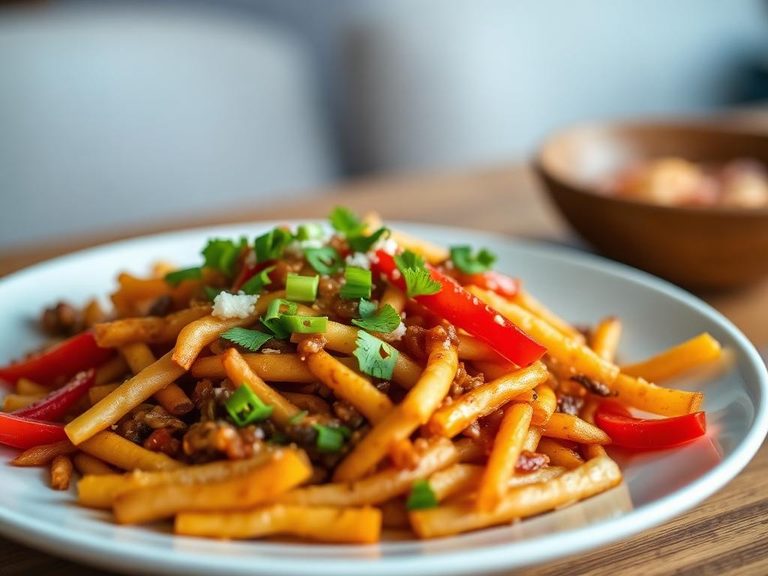
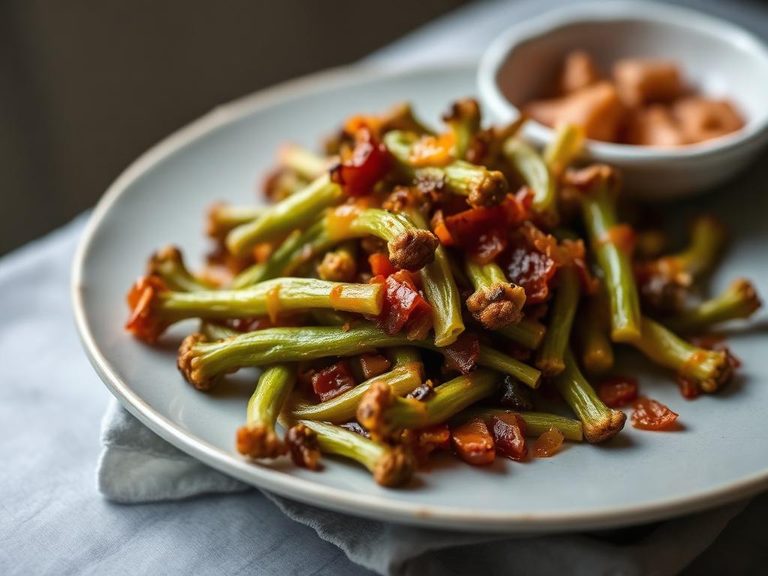
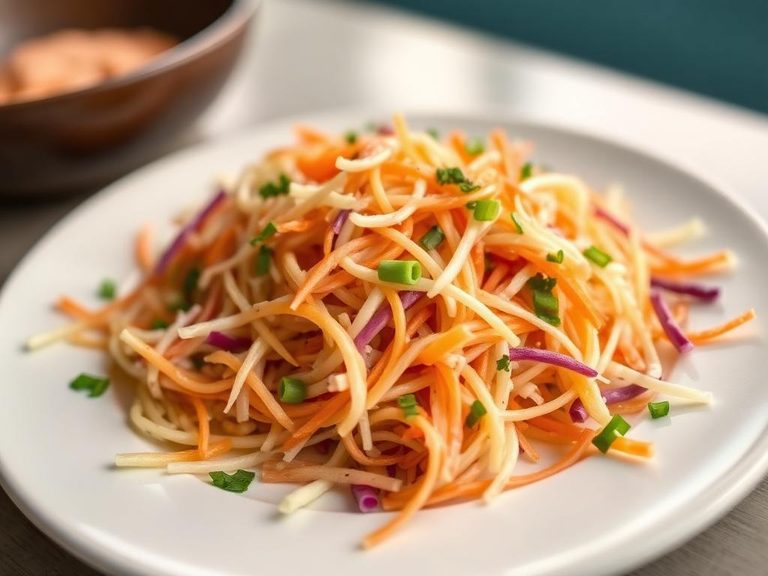
🍽️ Popular dishes
🌍 Where it's eaten
💡 Did you know?
Broccoflower isn't a single, standardized cultivar; the name is often used for different green cauliflower varieties like 'Alverda' or the Romanesco broccoli, which is famous for its fractal, spiral-shaped florets.
Full nutrition (USDA data · scales with serving)
| Water | 89.8 g |
| Energy | 31.0 kcal |
| Protein | 3.0 g |
| Total lipid (fat) | 0.30 g |
| Carbohydrate, by difference | 6.1 g |
| Fiber, total dietary | 3.2 g |
| Total Sugars | 3.0 g |
| Calcium, Ca | 33.0 mg |
| Iron, Fe | 0.73 mg |
| Magnesium, Mg | 20.0 mg |
| Phosphorus, P | 62.0 mg |
| Potassium, K | 300 mg |
| Sodium, Na | 23.0 mg |
| Zinc, Zn | 0.64 mg |
| Copper, Cu | 0.04 mg |
| Selenium, Se | 0.60 ug |
| Vitamin C, total ascorbic acid | 88.1 mg |
| Thiamin | 0.08 mg |
| Riboflavin | 0.10 mg |
| Niacin | 0.73 mg |
| Vitamin B-6 | 0.22 mg |
| Folate, total | 57.0 ug |
| Folic acid | 0.00 ug |
| Folate, food | 57.0 ug |
| Folate, DFE | 57.0 ug |
| Choline, total | 57.1 mg |
| Vitamin B-12 | 0.00 ug |
| Vitamin B-12, added | 0.00 ug |
| Vitamin A, RAE | 8.0 ug |
| Retinol | 0.00 ug |
| Carotene, beta | 93.0 ug |
| Carotene, alpha | 0.00 ug |
| Cryptoxanthin, beta | 0.00 ug |
| Lycopene | 0.00 ug |
| Lutein + zeaxanthin | 42.0 ug |
| Vitamin E (alpha-tocopherol) | 0.04 mg |
| Vitamin E, added | 0.00 mg |
| Vitamin D (D2 + D3) | 0.00 ug |
| Vitamin K (phylloquinone) | 20.2 ug |
| Alcohol, ethyl | 0.00 g |
| Caffeine | 0.00 mg |
| Theobromine | 0.00 mg |
Fat & fatty acid profile (per 100g)
| Fatty acids, total saturated | 0.05 g |
| SFA 4:0 | 0.00 g |
| SFA 6:0 | 0.00 g |
| SFA 8:0 | 0.00 g |
| SFA 10:0 | 0.00 g |
| SFA 12:0 | 0.00 g |
| SFA 14:0 | 0.00 g |
| SFA 16:0 | 0.04 g |
| SFA 18:0 | 0.00 g |
| Fatty acids, total monounsaturated | 0.03 g |
| MUFA 16:1 | 0.00 g |
| MUFA 18:1 | 0.02 g |
| MUFA 20:1 | 0.00 g |
| MUFA 22:1 | 0.00 g |
| Fatty acids, total polyunsaturated | 0.13 g |
| PUFA 18:2 | 0.03 g |
| PUFA 18:3 | 0.10 g |
| PUFA 18:4 | 0.00 g |
| PUFA 20:4 | 0.00 g |
| PUFA 20:5 n-3 (EPA) | 0.00 g |
| PUFA 22:5 n-3 (DPA) | 0.00 g |
| PUFA 22:6 n-3 (DHA) | 0.00 g |
| Cholesterol | 0.00 mg |
FAQ
Is broccoflower the same as Romanesco?
Not exactly. 'Broccoflower' is a general term for green cauliflower hybrids. Romanesco is a specific type of broccoflower distinguished by its beautiful, cone-shaped, fractal florets and a slightly nuttier, more delicate flavor.
How do I choose and store a fresh broccoflower?
Look for a firm, compact head with tight florets and no brown spots or soft areas. The color should be a vibrant, uniform green. Store it unwashed in a perforated plastic bag in the refrigerator's crisper drawer for up to a week.
What's the best way to cook broccoflower?
While excellent raw, it truly shines when lightly roasted or steamed. Roasting at high heat (400°F/200°C) with olive oil caramelizes its natural sugars and enhances its nutty flavor. Steaming for 4-5 minutes preserves its crisp-tender texture and bright color.
Nutrient density (calculated · NRF9.3)
Nutrient Rich Foods index: beneficial nutrients (protein, fiber, vitamins, minerals) minus saturated fat, added sugar & sodium, per 100 kcal.
NRF9.3 index — Fulgoni, Keast & Drewnowski, 2009. Computed from USDA nutrients.
Weight-loss friendliness (composite index)
Energy density 0.31 kcal/g · 38% calories from protein · 3.2 g fiber · 3.0 g sugar per 100 g.
Composite of energy density (Rolls et al., 1999), protein & fiber satiety, minus sugar. A calculated heuristic — ranks satiety-per-calorie, not a clinical measure.
Dietary load (calculated from USDA values)
Potential renal acid load. Positive = acid-forming, negative = alkaline-forming.
Sodium-to-potassium ratio: 0.08 (lower is better — aim for ≤ 1)
Sodium:potassium per WHO potassium guidance. Computed from USDA nutrients.