

Broadbeans, immature seeds, cooked, boiled, drained, with salt
Whole food · Vegetables and Vegetable Products

Photo: Wikipedia
These are the tender, bright green seeds of the fava bean plant, harvested before maturity and boiled until just tender. They have a distinctive, slightly sweet and earthy flavor with a creamy yet firm texture that pops gently in the mouth. Nutritionally, they are a lean, plant-based protein source with minimal fat.
Calorie split: 30% protein · 63% carbs · 7% fat
↓ Full nutrition💚 Why it's loved
People love them for their unique, vibrant spring flavor and satisfying, meaty texture. They are a beloved seasonal ingredient in many cuisines, marking the arrival of warmer weather.
⚠️ Watch-outs & how to enjoy it better
They contain purines, which can be a concern for individuals with gout or certain kidney issues. The added salt in this preparation can contribute to excess sodium intake. To counteract, rinse them briefly after cooking to reduce surface salt, and pair with low-sodium dishes or fresh herbs for flavor.
Key benefits
- Provides plant-based protein for muscle maintenance.
- Low in fat, making it a light protein option.
- Contains folate (vitamin B9), important for cell function.
- Source of minerals like manganese and copper.
- Offers complex carbohydrates for sustained energy.
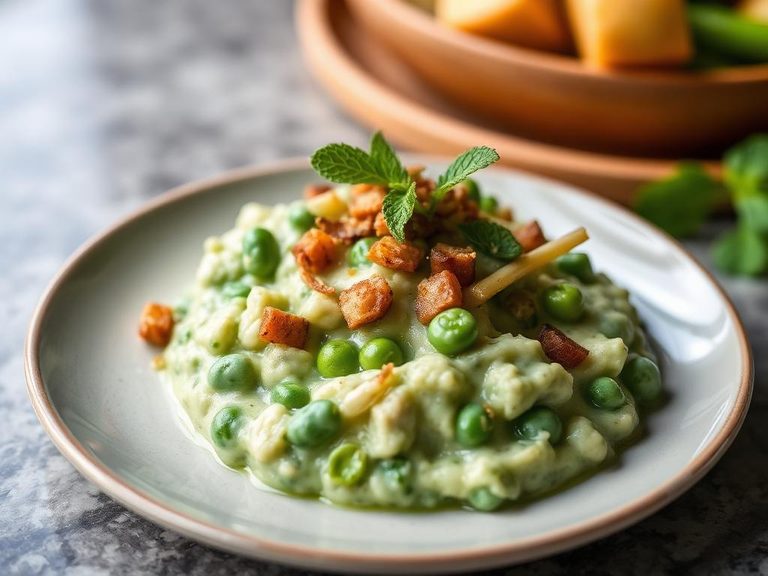
🍽️ Popular dishes
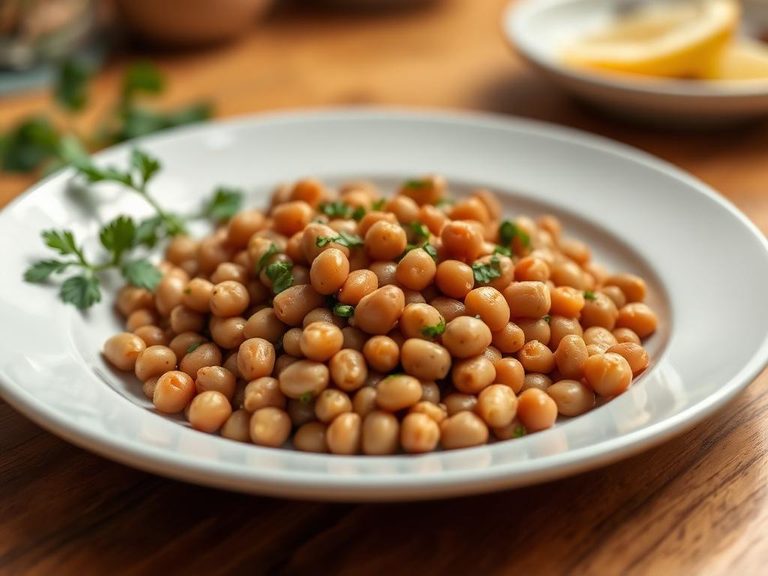
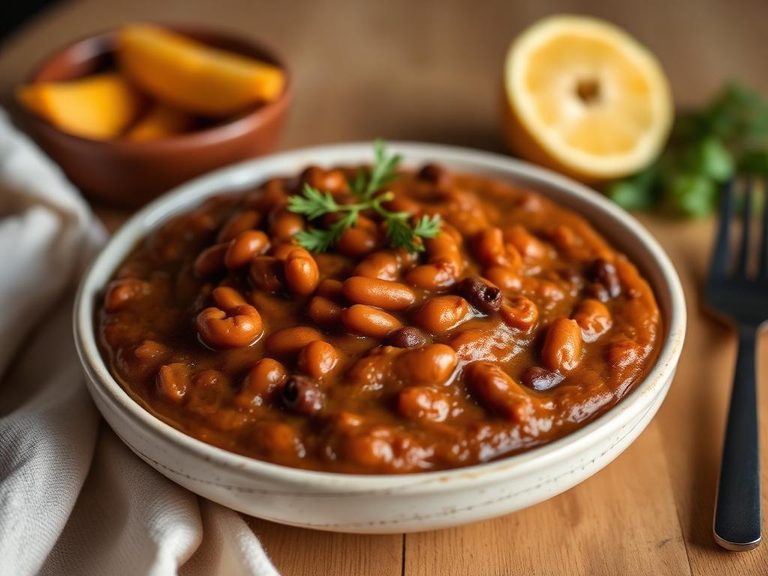
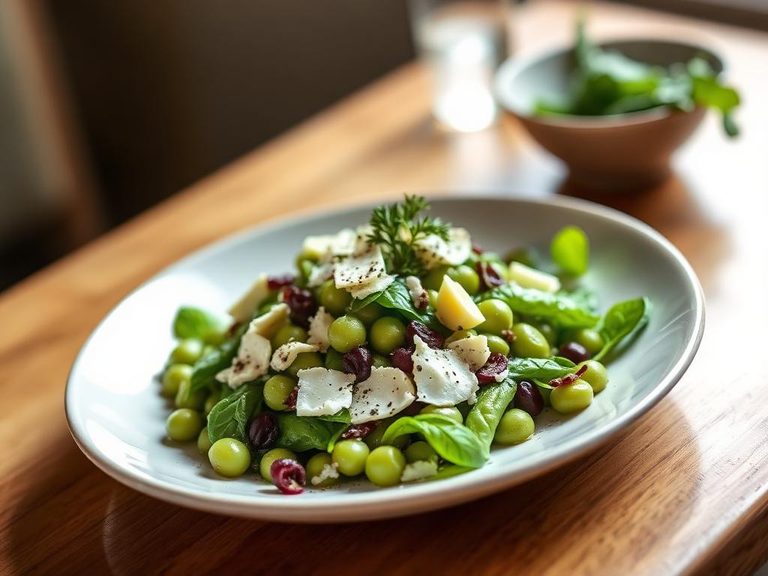
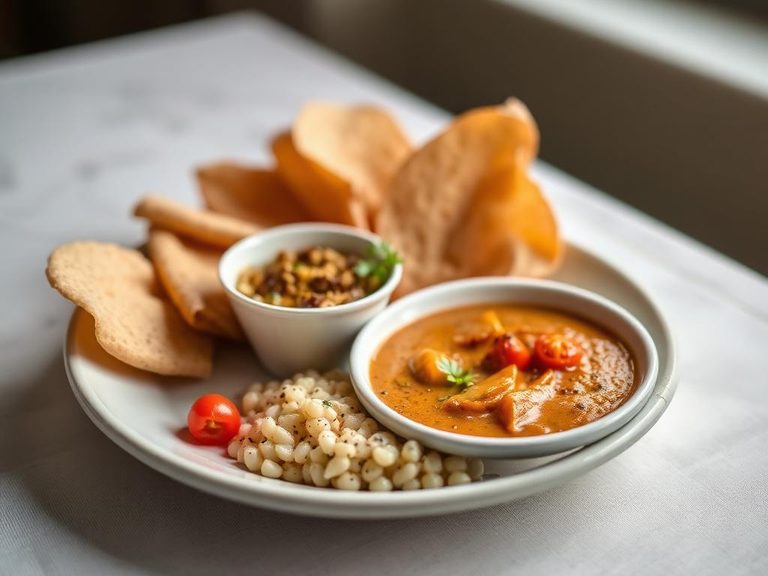
🌍 Where it's eaten
💡 Did you know?
In ancient Greece and Rome, fava beans were not only food but also used as ballot tokens in elections—the white side for yes, the black for no.
Full nutrition (USDA data · scales with serving)
| Water | 83.7 g |
| Energy | 62.0 kcal |
| Energy | 259 kj |
| Protein | 4.8 g |
| Total lipid (fat) | 0.50 g |
| Ash | 0.90 g |
| Carbohydrate, by difference | 10.1 g |
| Calcium, Ca | 18.0 mg |
| Iron, Fe | 1.5 mg |
| Magnesium, Mg | 31.0 mg |
| Phosphorus, P | 73.0 mg |
| Potassium, K | 193 mg |
| Sodium, Na | 277 mg |
| Zinc, Zn | 0.47 mg |
| Copper, Cu | 0.06 mg |
| Manganese, Mn | 0.26 mg |
| Selenium, Se | 1.0 ug |
| Vitamin C, total ascorbic acid | 19.8 mg |
| Thiamin | 0.13 mg |
| Riboflavin | 0.09 mg |
| Niacin | 1.2 mg |
| Pantothenic acid | 0.07 mg |
| Vitamin B-6 | 0.03 mg |
| Folate, total | 58.0 ug |
| Folic acid | 0.00 ug |
| Folate, food | 58.0 ug |
| Folate, DFE | 58.0 ug |
| Vitamin B-12 | 0.00 ug |
| Vitamin A, RAE | 14.0 ug |
| Retinol | 0.00 ug |
| Vitamin A, IU | 270 iu |
| Vitamin D (D2 + D3), International Units | 0.00 iu |
| Vitamin D (D2 + D3) | 0.00 ug |
Fat & fatty acid profile (per 100g)
| Fatty acids, total saturated | 0.14 g |
| SFA 14:0 | 0.00 g |
| SFA 16:0 | 0.12 g |
| SFA 18:0 | 0.02 g |
| Fatty acids, total monounsaturated | 0.02 g |
| MUFA 16:1 | 0.00 g |
| MUFA 18:1 | 0.02 g |
| Fatty acids, total polyunsaturated | 0.30 g |
| PUFA 18:2 | 0.12 g |
| PUFA 18:3 | 0.18 g |
| Fatty acids, total trans | 0.00 g |
| Cholesterol | 0.00 mg |
Amino acid profile (per 100g)
| Tryptophan | 0.05 g |
| Threonine | 0.18 g |
| Isoleucine | 0.21 g |
| Leucine | 0.37 g |
| Lysine | 0.31 g |
| Methionine | 0.04 g |
| Cystine | 0.07 g |
| Phenylalanine | 0.20 g |
| Tyrosine | 0.17 g |
| Valine | 0.23 g |
| Arginine | 0.40 g |
| Histidine | 0.12 g |
| Alanine | 0.20 g |
| Aspartic acid | 0.54 g |
| Glutamic acid | 0.73 g |
| Glycine | 0.20 g |
| Proline | 0.22 g |
| Serine | 0.21 g |
FAQ
Are these the same as lima beans?
No, they are different. Broad beans (fava beans) are from the Vicia faba plant, while lima beans are from Phaseolus lunatus. They have distinct flavors and textures.
Why are they called 'immature'?
They are harvested while the seeds are still young, soft, and green. If left to mature fully, the seeds harden, turn brown, and require soaking and longer cooking.
Can I eat them raw?
While some people do, it's not recommended. Raw broad beans contain compounds that can cause digestive upset and, in rare cases, a more serious condition called favism in genetically susceptible individuals. Cooking neutralizes these compounds.
Nutrient density (calculated · NRF9.3)
Nutrient Rich Foods index: beneficial nutrients (protein, fiber, vitamins, minerals) minus saturated fat, added sugar & sodium, per 100 kcal.
NRF9.3 index — Fulgoni, Keast & Drewnowski, 2009. Computed from USDA nutrients.
Weight-loss friendliness (composite index)
Energy density 0.62 kcal/g · 31% calories from protein · 0.0 g fiber · 0.0 g sugar per 100 g.
Composite of energy density (Rolls et al., 1999), protein & fiber satiety, minus sugar. A calculated heuristic — ranks satiety-per-calorie, not a clinical measure.
Dietary load (calculated from USDA values)
Potential renal acid load. Positive = acid-forming, negative = alkaline-forming.
Sodium-to-potassium ratio: 1.44 (lower is better — aim for ≤ 1)
Sodium:potassium per WHO potassium guidance. Computed from USDA nutrients.