

Breadsticks, soft, fast food / restaurant
Common food

Photo: Wikipedia
Soft, pillowy breadsticks are the comforting, chewy sidekick to many fast-food meals, offering a warm, yeasty aroma and a satisfyingly soft bite. Nutritionally, they provide a quick energy boost from their high carbohydrate content, balanced with a moderate amount of protein.
Calorie split: 14% protein · 52% carbs · 34% fat
↓ Full nutrition💚 Why it's loved
People love them for their warm, comforting texture and mild, slightly sweet flavor that pairs perfectly with savory dips and sauces. Their soft, pull-apart nature makes them a fun, shareable staple in casual dining and family meals.
⚠️ Watch-outs & how to enjoy it better
Their high refined carbohydrate content can lead to blood-sugar spikes, and they may be high in sodium depending on the recipe. To counteract this, pair them with a protein-rich dip like hummus or a fat source like olive oil to slow digestion, and practice portion control by limiting yourself to one or two sticks.
Key benefits
- Good source of quick energy from complex carbohydrates
- Provides a moderate protein boost for muscle maintenance
- Contains small amounts of dietary fiber
- Convenient and portable snack or side dish
- Often fortified with iron and B vitamins
🍽️ Popular dishes
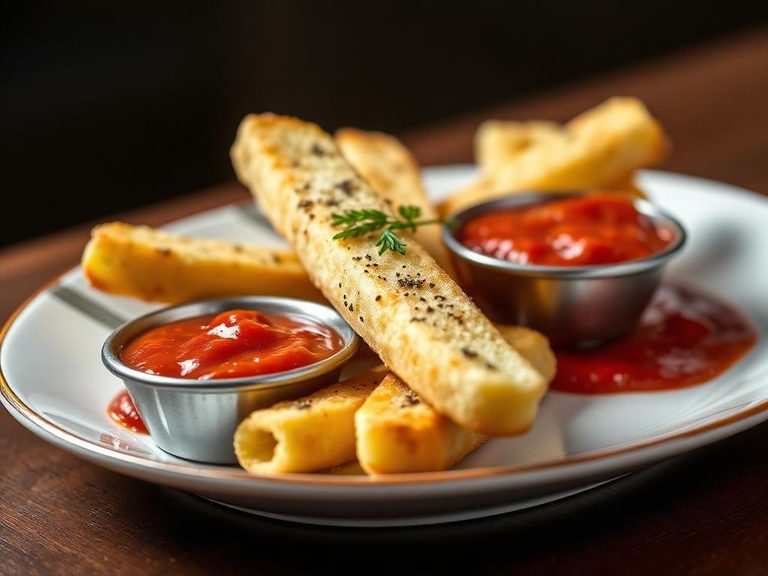
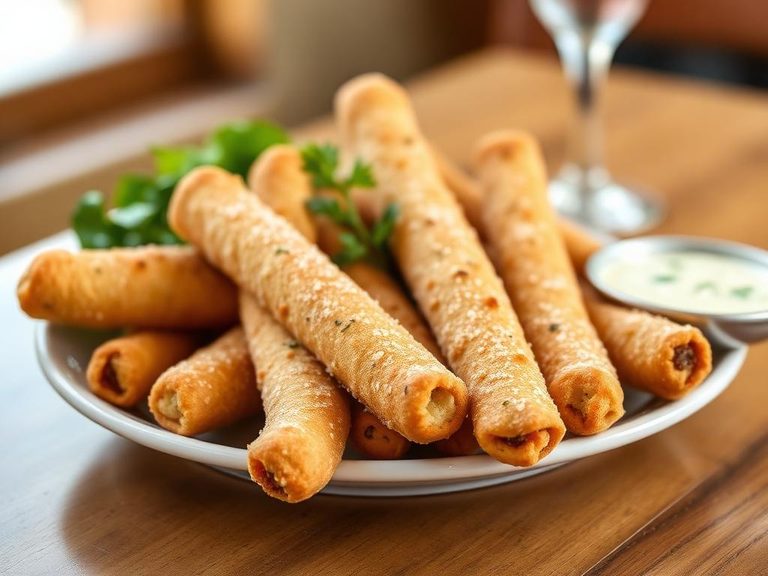

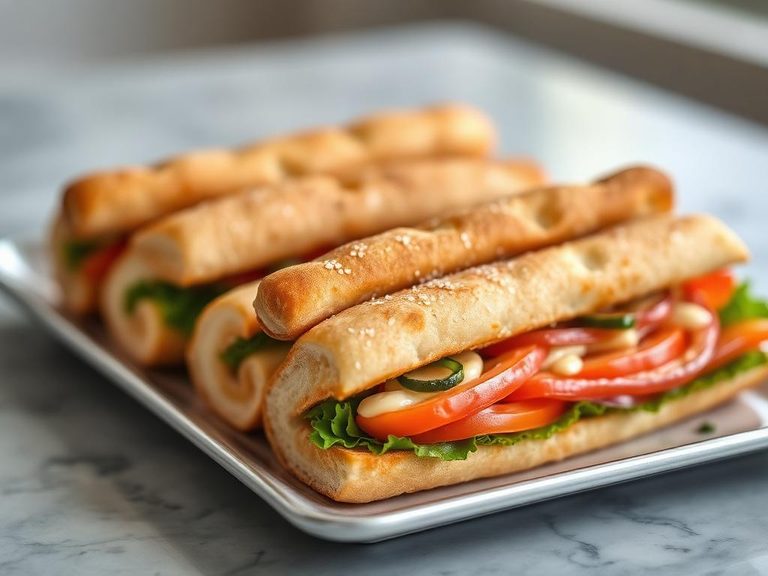
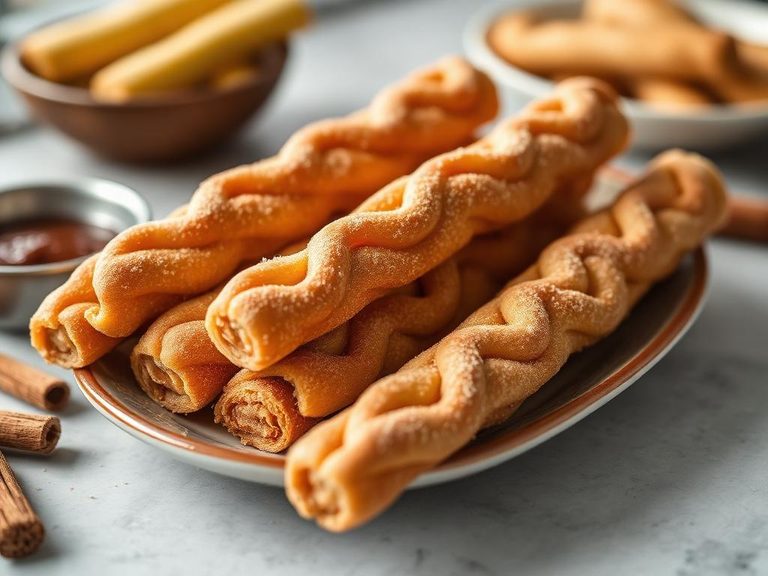
🌍 Where it's eaten
💡 Did you know?
The iconic, unlimited breadstick tradition at the American chain Olive Garden was inspired by the 'pane a zero' (bread made with no salt) served in the Veneto region of Italy.
Full nutrition (USDA data · scales with serving)
| Water | 28.3 g |
| Energy | 342 kcal |
| Protein | 12.2 g |
| Total lipid (fat) | 12.8 g |
| Carbohydrate, by difference | 44.4 g |
| Fiber, total dietary | 2.4 g |
| Total Sugars | 1.1 g |
| Calcium, Ca | 87.0 mg |
| Iron, Fe | 4.6 mg |
| Magnesium, Mg | 22.0 mg |
| Phosphorus, P | 129 mg |
| Potassium, K | 132 mg |
| Sodium, Na | 615 mg |
| Zinc, Zn | 1.0 mg |
| Copper, Cu | 0.11 mg |
| Selenium, Se | 22.0 ug |
| Vitamin C, total ascorbic acid | 0.00 mg |
| Thiamin | 0.49 mg |
| Riboflavin | 0.56 mg |
| Niacin | 7.1 mg |
| Vitamin B-6 | 0.10 mg |
| Folate, total | 147 ug |
| Folic acid | 123 ug |
| Folate, food | 24.0 ug |
| Folate, DFE | 233 ug |
| Choline, total | 7.5 mg |
| Vitamin B-12 | 0.13 ug |
| Vitamin B-12, added | 0.00 ug |
| Vitamin A, RAE | 24.0 ug |
| Retinol | 23.0 ug |
| Carotene, beta | 7.0 ug |
| Carotene, alpha | 0.00 ug |
| Cryptoxanthin, beta | 0.00 ug |
| Lycopene | 0.00 ug |
| Lutein + zeaxanthin | 10.0 ug |
| Vitamin E (alpha-tocopherol) | 0.88 mg |
| Vitamin E, added | 0.00 mg |
| Vitamin D (D2 + D3) | 0.00 ug |
| Vitamin K (phylloquinone) | 21.1 ug |
| Alcohol, ethyl | 0.00 g |
| Caffeine | 0.00 mg |
| Theobromine | 0.00 mg |
Fat & fatty acid profile (per 100g)
| Fatty acids, total saturated | 3.0 g |
| SFA 4:0 | 0.04 g |
| SFA 6:0 | 0.03 g |
| SFA 8:0 | 0.02 g |
| SFA 10:0 | 0.04 g |
| SFA 12:0 | 0.06 g |
| SFA 14:0 | 0.22 g |
| SFA 16:0 | 1.8 g |
| SFA 18:0 | 0.67 g |
| Fatty acids, total monounsaturated | 2.8 g |
| MUFA 16:1 | 0.07 g |
| MUFA 18:1 | 2.6 g |
| MUFA 20:1 | 0.05 g |
| MUFA 22:1 | 0.00 g |
| Fatty acids, total polyunsaturated | 6.1 g |
| PUFA 18:2 | 5.4 g |
| PUFA 18:3 | 0.72 g |
| PUFA 18:4 | 0.00 g |
| PUFA 20:4 | 0.01 g |
| PUFA 20:5 n-3 (EPA) | 0.00 g |
| PUFA 22:5 n-3 (DPA) | 0.00 g |
| PUFA 22:6 n-3 (DHA) | 0.00 g |
| Cholesterol | 7.0 mg |
FAQ
Are soft breadsticks a good source of fiber?
Typically, they are not. With only about 2.4g of fiber per 100g, they are considered a low-fiber food. The flour used is usually refined white flour, which has had the fiber-rich bran and germ removed.
Can I make a healthier version at home?
Absolutely. You can use whole-wheat or a blend of whole-grain flours to boost fiber, reduce added sugar, and control the sodium content by using less salt. Adding seeds like sesame or flax can also increase nutritional value.
Why are restaurant breadsticks so soft and chewy?
The texture comes from using high-protein bread flour, a precise hydration level, and often a short proofing time. Many commercial recipes also include dough conditioners or fats like oil or butter to ensure a consistently soft crumb.
Nutrient density (calculated · NRF9.3)
Nutrient Rich Foods index: beneficial nutrients (protein, fiber, vitamins, minerals) minus saturated fat, added sugar & sodium, per 100 kcal.
NRF9.3 index — Fulgoni, Keast & Drewnowski, 2009. Computed from USDA nutrients.
Weight-loss friendliness (composite index)
Energy density 3.42 kcal/g · 14% calories from protein · 2.4 g fiber · 1.1 g sugar per 100 g.
Composite of energy density (Rolls et al., 1999), protein & fiber satiety, minus sugar. A calculated heuristic — ranks satiety-per-calorie, not a clinical measure.
Dietary load (calculated from USDA values)
Potential renal acid load. Positive = acid-forming, negative = alkaline-forming.
Sodium-to-potassium ratio: 4.66 (lower is better — aim for ≤ 1)
Sodium:potassium per WHO potassium guidance. Computed from USDA nutrients.