

Bologna sandwich on wheat, with cheese
Common food

Photo: Wikipedia
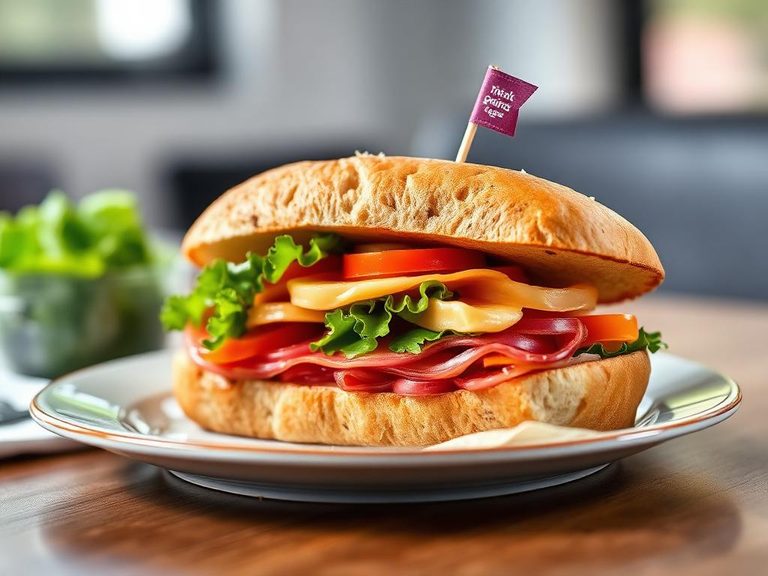
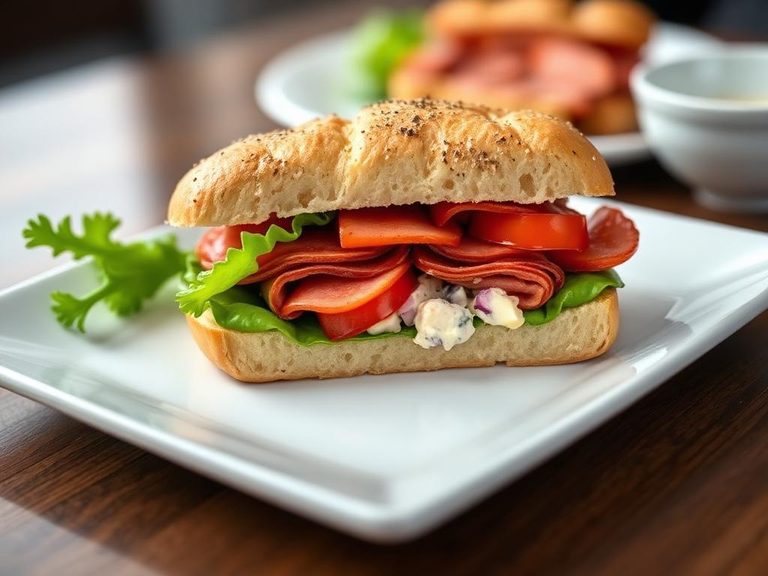
A classic American deli staple, the Bologna sandwich on wheat with cheese is a soft, savory, and satisfyingly salty bite. The mild, finely ground meat pairs with the nutty, chewy wheat bread and the creamy melt of cheese for a comforting texture contrast. Nutritionally, it delivers a solid protein punch and a good dose of energy from its carbs and fats.
Calorie split: 17% protein · 33% carbs · 50% fat
↓ Full nutrition💚 Why it's loved
People love it for its nostalgic, no-fuss comfort food appeal and the perfect balance of salty, savory, and creamy flavors. It's a versatile, quick meal that's equally at home in a lunchbox or a diner.
⚠️ Watch-outs & how to enjoy it better
Processed meats like bologna are typically high in sodium and saturated fat, which may concern those monitoring heart health or blood pressure. To counteract this, opt for low-sodium bologna, use a single slice, and pair the sandwich with a potassium-rich side like sliced tomato or a piece of fruit to help balance sodium intake.
Key benefits
- Good source of protein for muscle maintenance.
- Provides quick energy from carbohydrates.
- Contains calcium from the cheese.
- Convenient and portable meal option.
- Wheat bread adds some dietary fiber.
🍽️ Popular dishes


🌍 Where it's eaten
💡 Did you know?
The name 'Bologna' comes from the Italian city of Bologna, where a similar sausage called 'mortadella' originated, though American bologna is a distinct, finely ground product.
Full nutrition (USDA data · scales with serving)
| Water | 45.3 g |
| Energy | 285 kcal |
| Protein | 12.3 g |
| Total lipid (fat) | 15.8 g |
| Carbohydrate, by difference | 23.2 g |
| Fiber, total dietary | 2.4 g |
| Total Sugars | 3.5 g |
| Calcium, Ca | 260 mg |
| Iron, Fe | 2.0 mg |
| Magnesium, Mg | 35.0 mg |
| Phosphorus, P | 248 mg |
| Potassium, K | 237 mg |
| Sodium, Na | 797 mg |
| Zinc, Zn | 1.5 mg |
| Copper, Cu | 0.10 mg |
| Selenium, Se | 21.4 ug |
| Vitamin C, total ascorbic acid | 0.10 mg |
| Thiamin | 0.20 mg |
| Riboflavin | 0.21 mg |
| Niacin | 3.5 mg |
| Vitamin B-6 | 0.16 mg |
| Folate, total | 37.0 ug |
| Folic acid | 6.0 ug |
| Folate, food | 31.0 ug |
| Folate, DFE | 41.0 ug |
| Choline, total | 36.9 mg |
| Vitamin B-12 | 0.43 ug |
| Vitamin B-12, added | 0.00 ug |
| Vitamin A, RAE | 41.0 ug |
| Retinol | 40.0 ug |
| Carotene, beta | 13.0 ug |
| Carotene, alpha | 0.00 ug |
| Cryptoxanthin, beta | 1.0 ug |
| Lycopene | 0.00 ug |
| Lutein + zeaxanthin | 31.0 ug |
| Vitamin E (alpha-tocopherol) | 0.50 mg |
| Vitamin E, added | 0.00 mg |
| Vitamin D (D2 + D3) | 0.90 ug |
| Vitamin K (phylloquinone) | 3.5 ug |
| Alcohol, ethyl | 0.00 g |
| Caffeine | 0.00 mg |
| Theobromine | 0.00 mg |
Fat & fatty acid profile (per 100g)
| Fatty acids, total saturated | 5.8 g |
| SFA 4:0 | 0.09 g |
| SFA 6:0 | 0.07 g |
| SFA 8:0 | 0.05 g |
| SFA 10:0 | 0.12 g |
| SFA 12:0 | 0.14 g |
| SFA 14:0 | 0.41 g |
| SFA 16:0 | 3.5 g |
| SFA 18:0 | 1.3 g |
| Fatty acids, total monounsaturated | 5.5 g |
| MUFA 16:1 | 0.46 g |
| MUFA 18:1 | 4.9 g |
| MUFA 20:1 | 0.10 g |
| MUFA 22:1 | 0.04 g |
| Fatty acids, total polyunsaturated | 2.7 g |
| PUFA 18:2 | 2.4 g |
| PUFA 18:3 | 0.17 g |
| PUFA 18:4 | 0.00 g |
| PUFA 20:4 | 0.05 g |
| PUFA 20:5 n-3 (EPA) | 0.00 g |
| PUFA 22:5 n-3 (DPA) | 0.01 g |
| PUFA 22:6 n-3 (DHA) | 0.00 g |
| Cholesterol | 51.0 mg |
FAQ
Is a bologna sandwich on wheat a healthy lunch choice?
It can be a balanced part of a diet. The wheat bread offers fiber, and the cheese and bologna provide protein. However, it's often high in sodium and saturated fat. Choosing whole-grain bread, low-sodium meat, and adding fresh veggies can improve its nutritional profile.
What's the difference between bologna and mortadella?
While related, they are distinct. Mortadella is an Italian cooked sausage with visible cubes of pork fat and often pistachios or olives. American bologna is a finely ground, emulsified sausage, typically made from beef, pork, or a blend, with a uniform texture.
How can I make a bologna sandwich less salty?
Look for low-sodium or reduced-sodium bologna at the deli counter. Rinsing a slice briefly under water can remove some surface salt. Balance the saltiness by adding unsalted condiments like mustard, and include fresh, crisp lettuce, cucumber, or sprouts.
Nutrient density (calculated · NRF9.3)
Nutrient Rich Foods index: beneficial nutrients (protein, fiber, vitamins, minerals) minus saturated fat, added sugar & sodium, per 100 kcal.
NRF9.3 index — Fulgoni, Keast & Drewnowski, 2009. Computed from USDA nutrients.
Weight-loss friendliness (composite index)
Energy density 2.85 kcal/g · 17% calories from protein · 2.4 g fiber · 3.5 g sugar per 100 g.
Composite of energy density (Rolls et al., 1999), protein & fiber satiety, minus sugar. A calculated heuristic — ranks satiety-per-calorie, not a clinical measure.
Dietary load (calculated from USDA values)
Potential renal acid load. Positive = acid-forming, negative = alkaline-forming.
Sodium-to-potassium ratio: 3.36 (lower is better — aim for ≤ 1)
Sodium:potassium per WHO potassium guidance. Computed from USDA nutrients.