

Bitter melon, horseradish, jute, or radish leaves, cooked
Common food

Photo: Wikipedia
This is a cooked medley of bitter greens, a humble yet vibrant side dish where the sharp, pungent kick of horseradish and the earthy bitterness of jute leaves meet the peppery bite of radish greens. The texture is typically tender and slightly wilted, with a robust, complex flavor that is far from bland. Nutritionally, it's a low-calorie powerhouse, delivering a good dose of protein and fiber for very few calories.
Calorie split: 22% protein · 40% carbs · 38% fat
↓ Full nutrition💚 Why it's loved
People love it for its bold, assertive flavors that cut through rich, fatty meals, making it a perfect palate cleanser. It's also cherished in many cultures as a symbol of resourcefulness, turning foraged or garden greens into a nutritious, flavorful staple.
⚠️ Watch-outs & how to enjoy it better
The strong bitterness and pungency can be overwhelming for some palates, especially those unaccustomed to bitter flavors. Those with digestive sensitivities like IBS may find the high fiber and certain compounds in bitter greens can cause discomfort. To counteract bitterness, you can blanch the greens first, then sauté with garlic and a pinch of salt or sugar; pairing with a fat like olive oil or a protein like egg can also balance the flavor.
Key benefits
- Excellent source of dietary fiber for digestive health.
- Very low in calories, supporting weight management.
- Provides plant-based protein relative to its calorie content.
- Rich in vitamins and minerals, including vitamins A, C, and K.
- Contains antioxidants from the diverse mix of bitter greens.
🍽️ Popular dishes
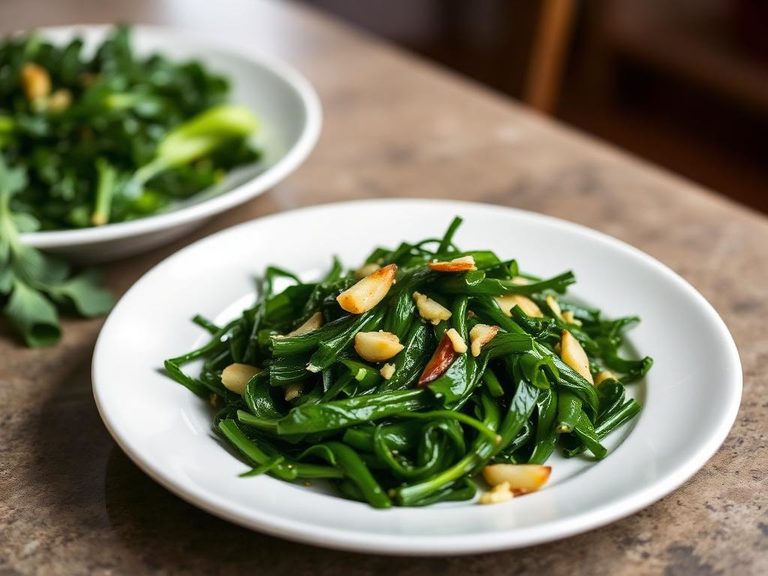 Sautéed Bitter Greens with Garlic
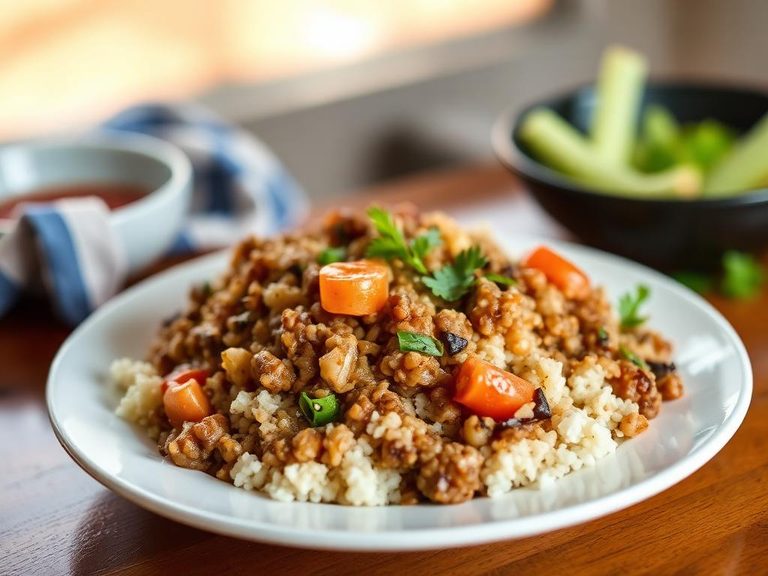 Nigerian Efo Riro (with spinach or jute leaves)
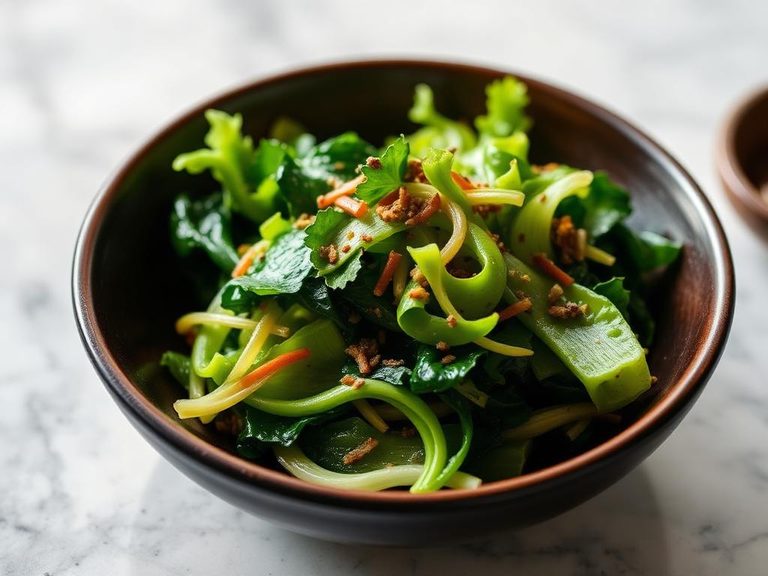 Japanese Ohitashi (blanched greens with dashi)
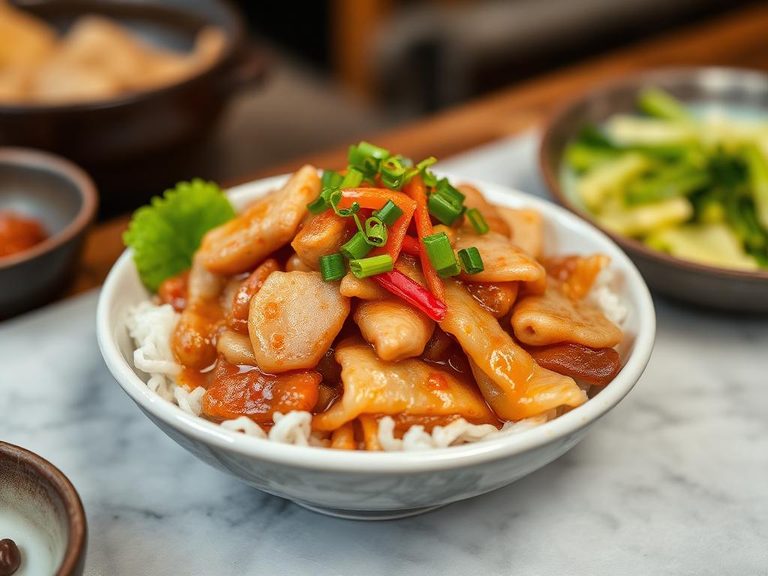 Korean Sigeumchi Namul (seasoned spinach, similar preparation)
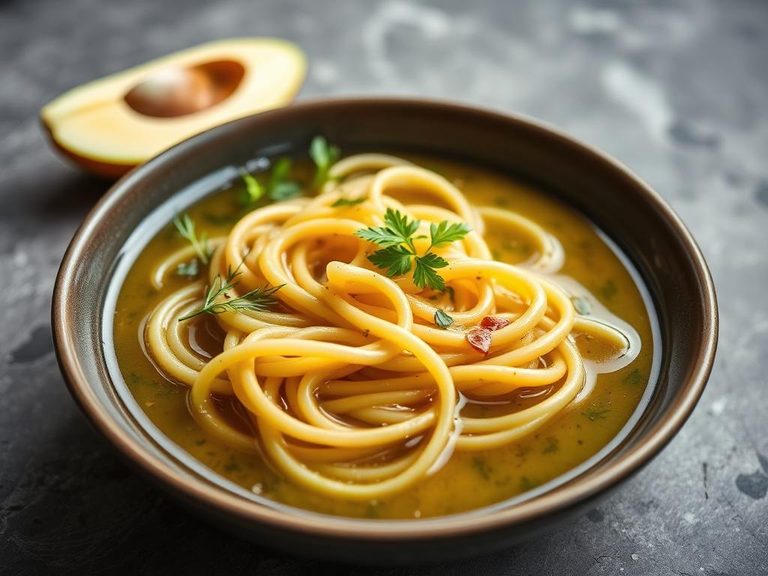 Italian Fagiolini in Umido (green beans, often made with bitter greens)
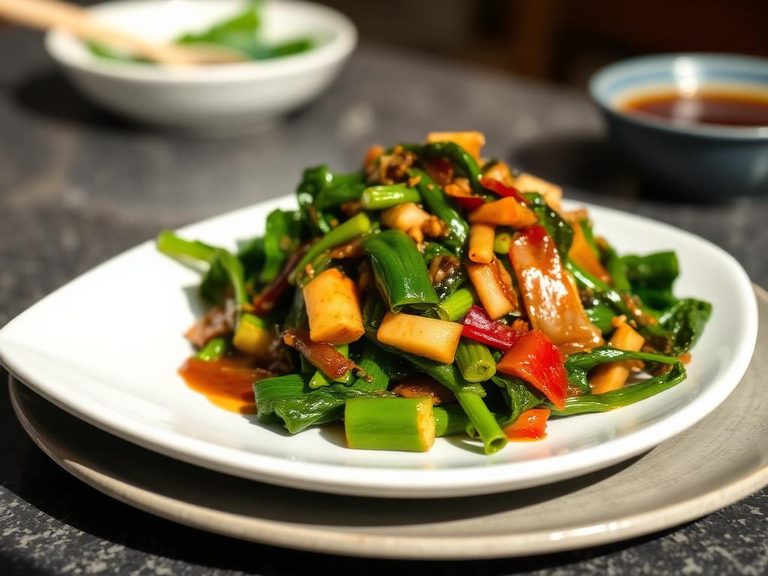 Chinese Stir-fried Mixed Greens with Oyster Sauce
🌍 Where it's eaten
💡 Did you know?
Bitter melon contains a compound called charantin, which has been studied for its potential blood sugar-lowering effects, making it a food of interest in diabetes research.
Full nutrition (USDA data · scales with serving)
| Water | 86.2 g |
| Energy | 56.0 kcal |
| Protein | 3.5 g |
| Total lipid (fat) | 2.7 g |
| Carbohydrate, by difference | 6.5 g |
| Fiber, total dietary | 1.8 g |
| Total Sugars | 1.0 g |
| Calcium, Ca | 41.0 mg |
| Iron, Fe | 0.99 mg |
| Magnesium, Mg | 91.0 mg |
| Phosphorus, P | 75.0 mg |
| Potassium, K | 583 mg |
| Sodium, Na | 134 mg |
| Zinc, Zn | 0.29 mg |
| Copper, Cu | 0.20 mg |
| Selenium, Se | 0.90 ug |
| Vitamin C, total ascorbic acid | 53.8 mg |
| Thiamin | 0.14 mg |
| Riboflavin | 0.27 mg |
| Niacin | 0.96 mg |
| Vitamin B-6 | 0.75 mg |
| Folate, total | 85.0 ug |
| Folic acid | 0.00 ug |
| Folate, food | 85.0 ug |
| Folate, DFE | 85.0 ug |
| Choline, total | 20.6 mg |
| Vitamin B-12 | 0.00 ug |
| Vitamin B-12, added | 0.00 ug |
| Vitamin A, RAE | 128 ug |
| Retinol | 11.0 ug |
| Carotene, beta | 1409 ug |
| Carotene, alpha | 0.00 ug |
| Cryptoxanthin, beta | 0.00 ug |
| Lycopene | 0.00 ug |
| Lutein + zeaxanthin | 2554 ug |
| Vitamin E (alpha-tocopherol) | 1.8 mg |
| Vitamin E, added | 0.00 mg |
| Vitamin D (D2 + D3) | 0.00 ug |
| Vitamin K (phylloquinone) | 160 ug |
| Alcohol, ethyl | 0.00 g |
| Caffeine | 0.00 mg |
| Theobromine | 0.00 mg |
Fat & fatty acid profile (per 100g)
| Fatty acids, total saturated | 0.70 g |
| SFA 4:0 | 0.02 g |
| SFA 6:0 | 0.01 g |
| SFA 8:0 | 0.01 g |
| SFA 10:0 | 0.02 g |
| SFA 12:0 | 0.02 g |
| SFA 14:0 | 0.07 g |
| SFA 16:0 | 0.39 g |
| SFA 18:0 | 0.14 g |
| Fatty acids, total monounsaturated | 0.91 g |
| MUFA 16:1 | 0.02 g |
| MUFA 18:1 | 0.87 g |
| MUFA 20:1 | 0.01 g |
| MUFA 22:1 | 0.00 g |
| Fatty acids, total polyunsaturated | 0.81 g |
| PUFA 18:2 | 0.66 g |
| PUFA 18:3 | 0.14 g |
| PUFA 18:4 | 0.00 g |
| PUFA 20:4 | 0.00 g |
| PUFA 20:5 n-3 (EPA) | 0.00 g |
| PUFA 22:5 n-3 (DPA) | 0.00 g |
| PUFA 22:6 n-3 (DHA) | 0.00 g |
| Cholesterol | 2.0 mg |
FAQ
How do I reduce the bitterness of these greens?
Blanching the greens in boiling water for 1-2 minutes, then shocking them in ice water, can significantly mellow the bitterness. Sautéing with aromatics like garlic, onion, or a splash of vinegar can also help balance the flavor.
Can I eat bitter melon raw?
While possible, it is extremely bitter and often not palatable raw. It is most commonly cooked—stir-fried, stuffed, or boiled—which tempers its intense bitterness.
Are there any parts of bitter melon I shouldn't eat?
The ripe red arils (seed pulp) inside are sweet and edible, but the white pith and seeds of the green fruit are very bitter and are typically scooped out and discarded before cooking.
Nutrient density (calculated · NRF9.3)
Nutrient Rich Foods index: beneficial nutrients (protein, fiber, vitamins, minerals) minus saturated fat, added sugar & sodium, per 100 kcal.
NRF9.3 index — Fulgoni, Keast & Drewnowski, 2009. Computed from USDA nutrients.
Weight-loss friendliness (composite index)
Energy density 0.56 kcal/g · 25% calories from protein · 1.8 g fiber · 1.0 g sugar per 100 g.
Composite of energy density (Rolls et al., 1999), protein & fiber satiety, minus sugar. A calculated heuristic — ranks satiety-per-calorie, not a clinical measure.
Dietary load (calculated from USDA values)
Potential renal acid load. Positive = acid-forming, negative = alkaline-forming.
Sodium-to-potassium ratio: 0.23 (lower is better — aim for ≤ 1)
Sodium:potassium per WHO potassium guidance. Computed from USDA nutrients.