

Beans, navy, mature seeds, sprouted, cooked, boiled, drained, without salt
Whole food · Vegetables and Vegetable Products

Photo: Wikipedia
Sprouted navy beans, once boiled and drained, offer a mild, nutty flavor with a tender, slightly crisp texture that's lighter than their mature counterparts. Nutritionally, they are a lean protein source with a low glycemic impact, making them a smart choice for balanced meals. Their subtle taste makes them a versatile addition to salads, soups, and stir-fries without overpowering other ingredients.
Calorie split: 30% protein · 63% carbs · 8% fat
↓ Full nutrition💚 Why it's loved
People love sprouted navy beans for their delicate, earthy flavor and satisfying crunch that elevates simple dishes. They are cherished in health-conscious diets and traditional cuisines for their ability to absorb spices and seasonings while maintaining a light, non-bulky texture.
⚠️ Watch-outs & how to enjoy it better
Some may find the sprouted texture less creamy than fully mature beans, which can be off-putting in creamy dishes. Those with sensitive digestion should introduce them gradually, as sprouting can increase fermentable fibers; pairing with a small amount of fat or acid (like lemon juice) can improve digestibility.
Key benefits
- High in plant-based protein for muscle maintenance
- Low in fat and calories, supporting weight management
- Provides essential minerals like iron and folate
- Sprouting may enhance nutrient bioavailability
- Low glycemic index helps stabilize blood sugar
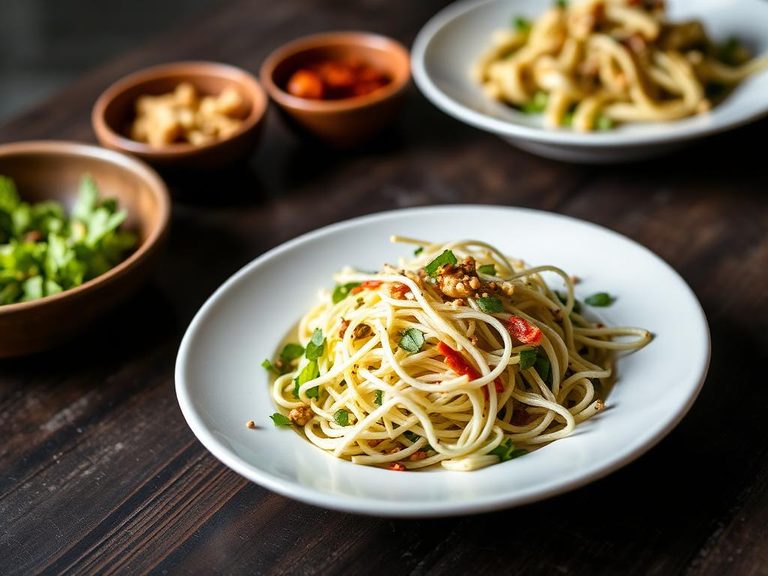
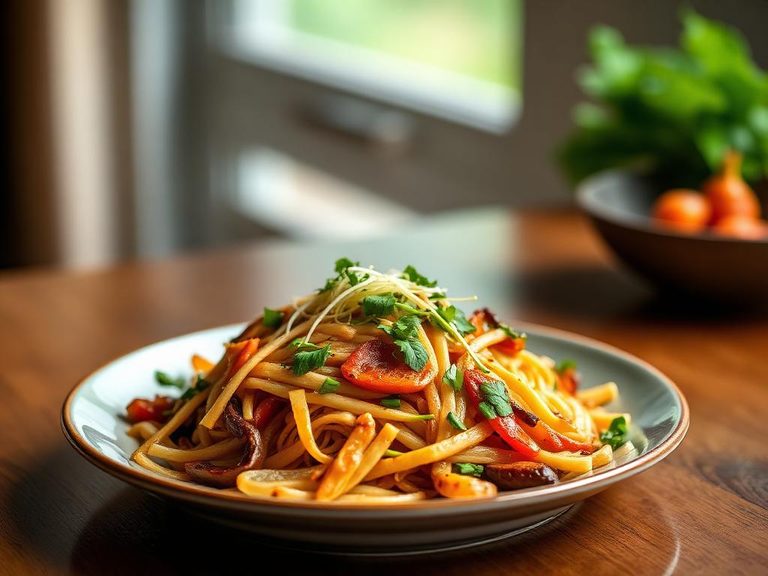
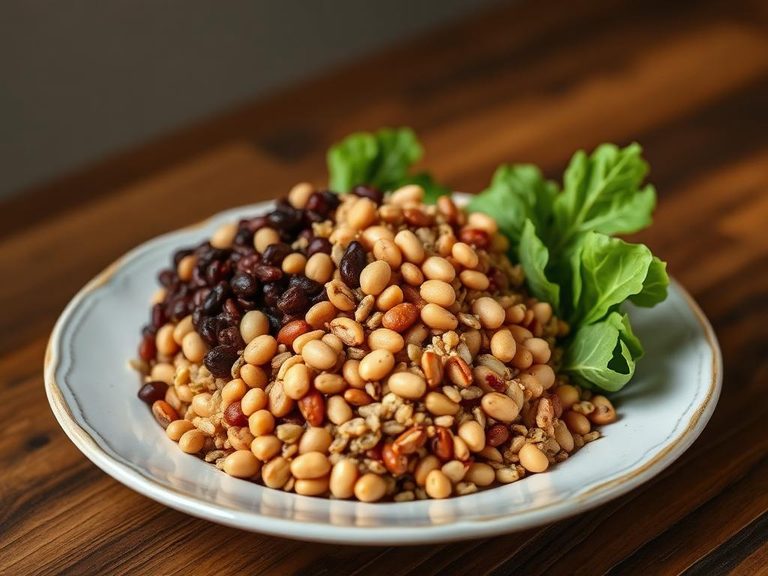
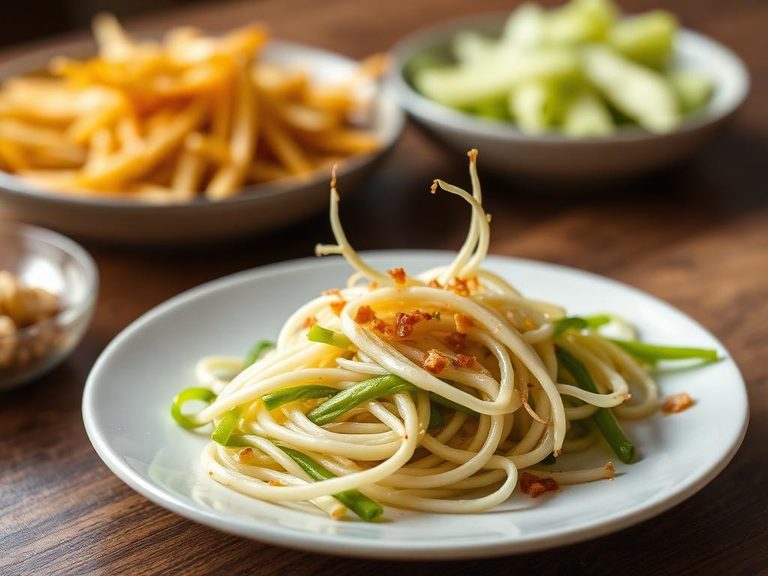
🍽️ Popular dishes

🌍 Where it's eaten
💡 Did you know?
Sprouting navy beans can reduce their cooking time by up to 50% compared to unsprouted mature beans, making them a quick-cooking option for busy kitchens.
Full nutrition (USDA data · scales with serving)
| Water | 76.0 g |
| Energy | 78.0 kcal |
| Energy | 325 kj |
| Protein | 7.1 g |
| Total lipid (fat) | 0.81 g |
| Ash | 1.1 g |
| Carbohydrate, by difference | 15.0 g |
| Calcium, Ca | 16.0 mg |
| Iron, Fe | 2.1 mg |
| Magnesium, Mg | 111 mg |
| Phosphorus, P | 103 mg |
| Potassium, K | 317 mg |
| Sodium, Na | 14.0 mg |
| Zinc, Zn | 0.97 mg |
| Copper, Cu | 0.39 mg |
| Manganese, Mn | 0.45 mg |
| Selenium, Se | 0.60 ug |
| Vitamin C, total ascorbic acid | 17.3 mg |
| Thiamin | 0.38 mg |
| Riboflavin | 0.23 mg |
| Niacin | 1.3 mg |
| Pantothenic acid | 0.85 mg |
| Vitamin B-6 | 0.20 mg |
| Folate, total | 106 ug |
| Folic acid | 0.00 ug |
| Folate, food | 106 ug |
| Folate, DFE | 106 ug |
| Vitamin B-12 | 0.00 ug |
| Vitamin A, RAE | 0.00 ug |
| Retinol | 0.00 ug |
| Vitamin A, IU | 4.0 iu |
| Vitamin D (D2 + D3), International Units | 0.00 iu |
| Vitamin D (D2 + D3) | 0.00 ug |
Fat & fatty acid profile (per 100g)
| Fatty acids, total saturated | 0.10 g |
| SFA 16:0 | 0.09 g |
| SFA 18:0 | 0.01 g |
| Fatty acids, total monounsaturated | 0.06 g |
| MUFA 18:1 | 0.06 g |
| Fatty acids, total polyunsaturated | 0.47 g |
| PUFA 18:2 | 0.17 g |
| PUFA 18:3 | 0.30 g |
| Fatty acids, total trans | 0.00 g |
| Cholesterol | 0.00 mg |
Amino acid profile (per 100g)
| Tryptophan | 0.07 g |
| Threonine | 0.30 g |
| Isoleucine | 0.31 g |
| Leucine | 0.51 g |
| Lysine | 0.40 g |
| Methionine | 0.07 g |
| Cystine | 0.08 g |
| Phenylalanine | 0.36 g |
| Tyrosine | 0.24 g |
| Valine | 0.36 g |
| Arginine | 0.39 g |
| Histidine | 0.20 g |
| Alanine | 0.29 g |
| Aspartic acid | 0.92 g |
| Glutamic acid | 0.86 g |
| Glycine | 0.24 g |
| Proline | 0.28 g |
| Serine | 0.38 g |
FAQ
How do sprouted navy beans differ from regular navy beans?
Sprouted navy beans are lighter in texture, have a milder flavor, and may have slightly higher nutrient availability due to the sprouting process, which breaks down some anti-nutrients.
Can I eat sprouted navy beans raw?
While sprouting reduces some compounds, it's generally recommended to cook sprouted beans (boil, steam, or stir-fry) to ensure safety and digestibility, as raw sprouts can carry bacteria.
Are sprouted navy beans suitable for a low-carb diet?
They contain about 15g of carbs per 100g, which is moderate; they can fit into a low-carb diet in controlled portions, especially when paired with protein and fat to slow digestion.
Nutrient density (calculated · NRF9.3)
Nutrient Rich Foods index: beneficial nutrients (protein, fiber, vitamins, minerals) minus saturated fat, added sugar & sodium, per 100 kcal.
NRF9.3 index — Fulgoni, Keast & Drewnowski, 2009. Computed from USDA nutrients.
Weight-loss friendliness (composite index)
Energy density 0.78 kcal/g · 36% calories from protein · 0.0 g fiber · 0.0 g sugar per 100 g.
Composite of energy density (Rolls et al., 1999), protein & fiber satiety, minus sugar. A calculated heuristic — ranks satiety-per-calorie, not a clinical measure.
Dietary load (calculated from USDA values)
Potential renal acid load. Positive = acid-forming, negative = alkaline-forming.
Sodium-to-potassium ratio: 0.04 (lower is better — aim for ≤ 1)
Sodium:potassium per WHO potassium guidance. Computed from USDA nutrients.