

Bacon strip, meatless
Common food

Photo: Wikipedia
Meatless bacon strips are a plant-based alternative designed to mimic the smoky, salty, and fatty profile of traditional bacon. They typically have a chewy, slightly crispy texture when cooked, with a savory, umami-rich flavor. Nutritionally, they are a high-fat, moderate-protein option with minimal carbohydrates.
Calorie split: 14% protein · 6% carbs · 80% fat
↓ Full nutrition💚 Why it's loved
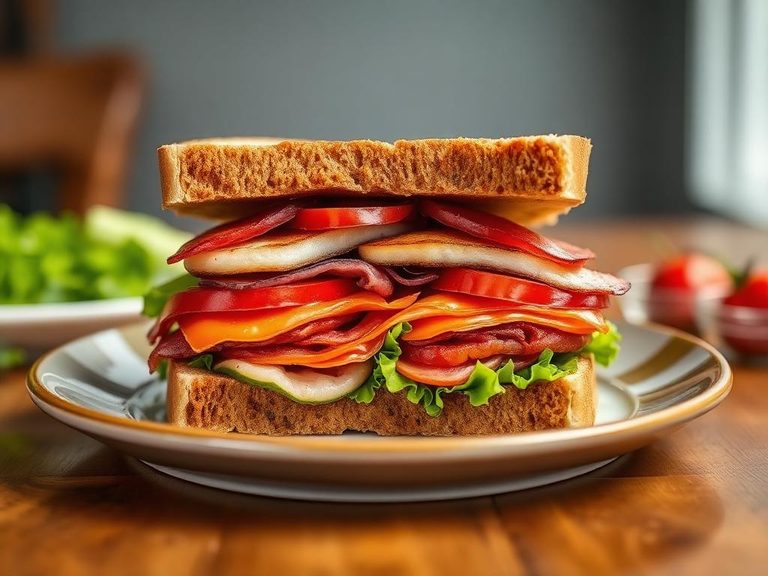
People love it for delivering the iconic smoky, salty, and savory flavor of bacon in a vegetarian-friendly format, making it a versatile topping for salads, sandwiches, and baked potatoes.
⚠️ Watch-outs & how to enjoy it better
Some versions can be high in sodium, which may be a concern for those monitoring blood pressure. They are also a processed food, so checking the ingredient list for additives is wise. To counteract high sodium, pair it with potassium-rich foods like avocado or spinach, and practice portion control.
Key benefits
- Cholesterol-free
- Often lower in saturated fat than animal bacon
- Suitable for vegetarian and vegan diets
- Provides a smoky flavor without animal products
- Quick to prepare for breakfast or snacks
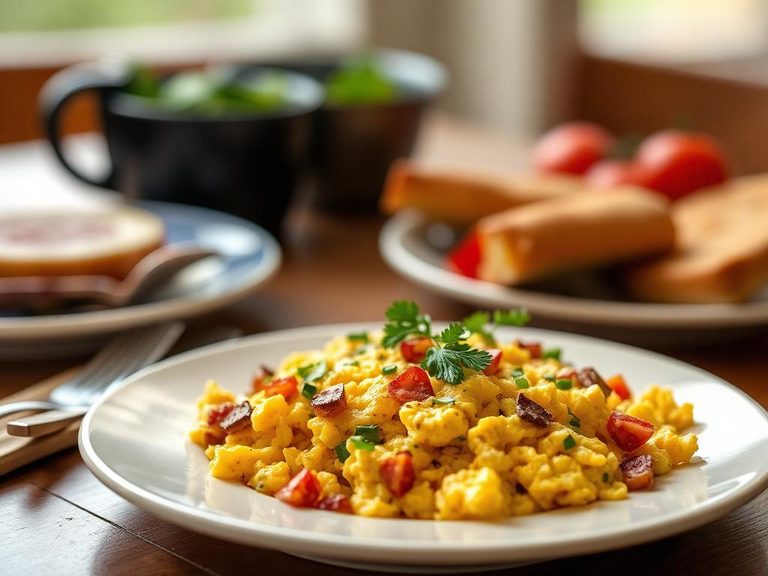
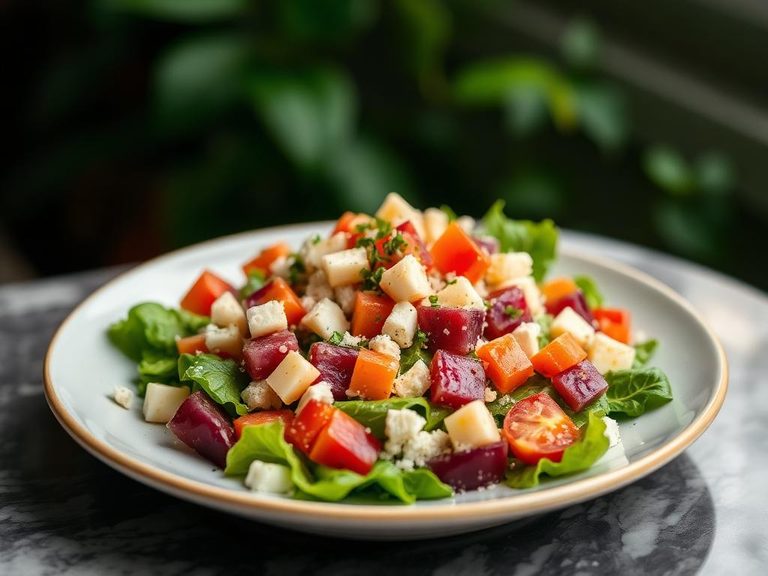
🍽️ Popular dishes



🌍 Where it's eaten
💡 Did you know?
The first commercial meatless bacon was developed in the 1970s using textured vegetable protein (TVP), a soy-based ingredient originally created by the food processing industry.
Full nutrition (USDA data · scales with serving)
| Water | 49.0 g |
| Energy | 309 kcal |
| Protein | 11.7 g |
| Total lipid (fat) | 29.5 g |
| Carbohydrate, by difference | 5.3 g |
| Fiber, total dietary | 2.6 g |
| Total Sugars | 0.00 g |
| Calcium, Ca | 23.0 mg |
| Iron, Fe | 2.4 mg |
| Magnesium, Mg | 19.0 mg |
| Phosphorus, P | 70.0 mg |
| Potassium, K | 170 mg |
| Sodium, Na | 1465 mg |
| Zinc, Zn | 0.42 mg |
| Copper, Cu | 0.10 mg |
| Selenium, Se | 7.4 ug |
| Vitamin C, total ascorbic acid | 0.00 mg |
| Thiamin | 4.4 mg |
| Riboflavin | 0.48 mg |
| Niacin | 7.6 mg |
| Vitamin B-6 | 0.48 mg |
| Folate, total | 42.0 ug |
| Folic acid | 0.00 ug |
| Folate, food | 42.0 ug |
| Folate, DFE | 42.0 ug |
| Choline, total | 45.0 mg |
| Vitamin B-12 | 0.00 ug |
| Vitamin B-12, added | 0.00 ug |
| Vitamin A, RAE | 4.0 ug |
| Retinol | 0.00 ug |
| Carotene, beta | 53.0 ug |
| Carotene, alpha | 0.00 ug |
| Cryptoxanthin, beta | 0.00 ug |
| Lycopene | 0.00 ug |
| Lutein + zeaxanthin | 0.00 ug |
| Vitamin E (alpha-tocopherol) | 6.9 mg |
| Vitamin E, added | 0.00 mg |
| Vitamin D (D2 + D3) | 0.00 ug |
| Vitamin K (phylloquinone) | 0.00 ug |
| Alcohol, ethyl | 0.00 g |
| Caffeine | 0.00 mg |
| Theobromine | 0.00 mg |
Fat & fatty acid profile (per 100g)
| Fatty acids, total saturated | 4.6 g |
| SFA 4:0 | 0.00 g |
| SFA 6:0 | 0.00 g |
| SFA 8:0 | 0.00 g |
| SFA 10:0 | 0.00 g |
| SFA 12:0 | 0.24 g |
| SFA 14:0 | 0.16 g |
| SFA 16:0 | 3.0 g |
| SFA 18:0 | 1.2 g |
| Fatty acids, total monounsaturated | 7.1 g |
| MUFA 16:1 | 0.00 g |
| MUFA 18:1 | 7.1 g |
| MUFA 20:1 | 0.00 g |
| MUFA 22:1 | 0.00 g |
| Fatty acids, total polyunsaturated | 15.4 g |
| PUFA 18:2 | 13.8 g |
| PUFA 18:3 | 1.7 g |
| PUFA 18:4 | 0.00 g |
| PUFA 20:4 | 0.00 g |
| PUFA 20:5 n-3 (EPA) | 0.00 g |
| PUFA 22:5 n-3 (DPA) | 0.00 g |
| PUFA 22:6 n-3 (DHA) | 0.00 g |
| Cholesterol | 0.00 mg |
FAQ
Is meatless bacon healthier than regular bacon?
It is cholesterol-free and often lower in saturated fat, but it can still be high in sodium and fat. Always compare nutrition labels, as formulations vary widely.
Can I use it in recipes that call for real bacon?
Yes, it works well as a direct substitute in most recipes for flavor and texture, though it may render less fat during cooking.
What is it typically made from?
Common bases include soy protein, wheat gluten (seitan), pea protein, or coconut oil, combined with seasonings like liquid smoke, paprika, and salt.
Nutrient density (calculated · NRF9.3)
Nutrient Rich Foods index: beneficial nutrients (protein, fiber, vitamins, minerals) minus saturated fat, added sugar & sodium, per 100 kcal.
NRF9.3 index — Fulgoni, Keast & Drewnowski, 2009. Computed from USDA nutrients.
Weight-loss friendliness (composite index)
Energy density 3.09 kcal/g · 15% calories from protein · 2.6 g fiber · 0.0 g sugar per 100 g.
Composite of energy density (Rolls et al., 1999), protein & fiber satiety, minus sugar. A calculated heuristic — ranks satiety-per-calorie, not a clinical measure.
Dietary load (calculated from USDA values)
Potential renal acid load. Positive = acid-forming, negative = alkaline-forming.
Sodium-to-potassium ratio: 8.62 (lower is better — aim for ≤ 1)
Sodium:potassium per WHO potassium guidance. Computed from USDA nutrients.