Tomato products, canned, sauce, spanish style
Whole food · Vegetables and Vegetable Products

Photo: Wikipedia
This is a smooth, vibrant red sauce made from cooked and strained tomatoes, often seasoned with onions, garlic, and spices. Its texture is velvety and pourable, with a rich, savory tomato flavor that's slightly less sweet than plain tomato sauce. It's a low-calorie, fiber-rich pantry staple that adds a deep, umami base to countless dishes.
💚 Why it's loved
People love it for its ability to instantly build a complex, savory foundation for soups, stews, and sauces. Its consistent flavor and texture make it a reliable and time-saving ingredient in home kitchens.
⚠️ Watch-outs & how to enjoy it better
Some brands can be high in sodium, which may concern those monitoring salt intake. To counteract this, look for 'no salt added' versions, or use it in dishes where you can control the final seasoning. The natural acidity may also bother those with acid reflux; pairing it with a small amount of fat (like olive oil) or a pinch of sugar can help balance the tang.
Key benefits
- Excellent source of the antioxidant lycopene.
- Very low in fat and calories.
- Provides dietary fiber for digestive health.
- Versatile base for quick, flavorful cooking.
- Retains nutrients from cooked tomatoes.
🍽️ Popular dishes
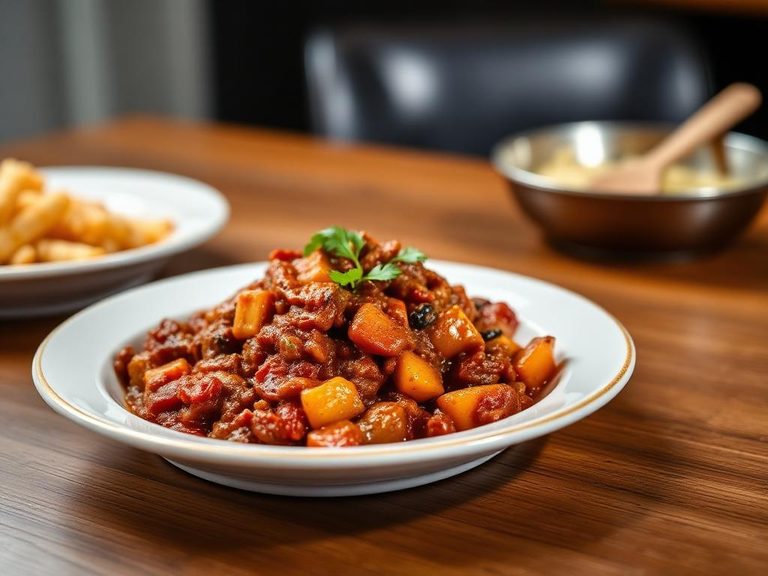
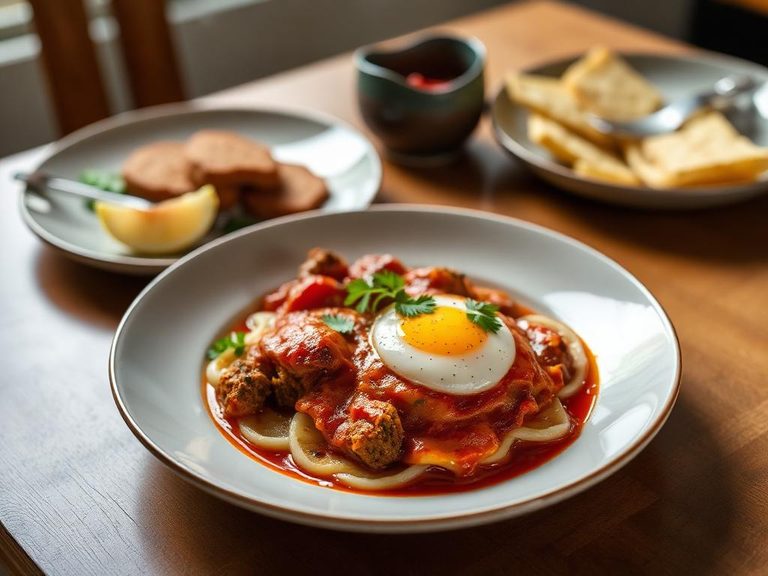

🌍 Where it's eaten
💡 Did you know?
The 'Spanish style' designation often refers to the inclusion of bell peppers and onions in the sauce base, differentiating it from plain tomato purée.
Full nutrition (scales with serving)
| Water | 89.1 g |
| Energy | 33.0 kcal |
| Energy | 138 kj |
| Protein | 1.4 g |
| Total lipid (fat) | 0.27 g |
| Ash | 2.0 g |
| Carbohydrate, by difference | 7.2 g |
| Fiber, total dietary | 1.4 g |
| Calcium, Ca | 17.0 mg |
| Iron, Fe | 3.5 mg |
| Magnesium, Mg | 19.0 mg |
| Phosphorus, P | 48.0 mg |
| Potassium, K | 369 mg |
| Sodium, Na | 472 mg |
| Zinc, Zn | 0.34 mg |
| Copper, Cu | 0.16 mg |
| Manganese, Mn | 0.22 mg |
| Selenium, Se | 0.60 ug |
| Vitamin C, total ascorbic acid | 8.6 mg |
| Thiamin | 0.07 mg |
| Riboflavin | 0.06 mg |
| Niacin | 1.3 mg |
| Pantothenic acid | 0.28 mg |
| Vitamin B-6 | 0.18 mg |
| Folate, total | 14.0 ug |
| Folic acid | 0.00 ug |
| Folate, food | 14.0 ug |
| Folate, DFE | 14.0 ug |
| Vitamin B-12 | 0.00 ug |
| Vitamin A, RAE | 49.0 ug |
| Retinol | 0.00 ug |
| Vitamin A, IU | 985 iu |
| Vitamin D (D2 + D3), International Units | 0.00 iu |
| Vitamin D (D2 + D3) | 0.00 ug |
Fat & fatty acid profile (per 100g)
| Fatty acids, total saturated | 0.04 g |
| SFA 14:0 | 0.00 g |
| SFA 16:0 | 0.03 g |
| SFA 18:0 | 0.01 g |
| Fatty acids, total monounsaturated | 0.04 g |
| MUFA 16:1 | 0.00 g |
| MUFA 18:1 | 0.04 g |
| MUFA 20:1 | 0.00 g |
| Fatty acids, total polyunsaturated | 0.11 g |
| PUFA 18:2 | 0.10 g |
| PUFA 18:3 | 0.00 g |
| Fatty acids, total trans | 0.00 g |
| Cholesterol | 0.00 mg |
Amino acid profile (per 100g)
| Tryptophan | 0.01 g |
| Threonine | 0.03 g |
| Isoleucine | 0.03 g |
| Leucine | 0.04 g |
| Lysine | 0.04 g |
| Methionine | 0.01 g |
| Cystine | 0.01 g |
| Phenylalanine | 0.03 g |
| Tyrosine | 0.02 g |
| Valine | 0.03 g |
| Arginine | 0.03 g |
| Histidine | 0.02 g |
| Alanine | 0.04 g |
| Aspartic acid | 0.18 g |
| Glutamic acid | 0.57 g |
| Glycine | 0.02 g |
| Proline | 0.03 g |
| Serine | 0.03 g |
FAQ
How is this different from tomato paste or ketchup?
Tomato sauce is thinner and less concentrated than paste, which is a thick, intense concentrate. Ketchup is much sweeter and contains vinegar and spices, making it a condiment rather than a cooking base.
Can I use it as a substitute for crushed tomatoes?
Yes, in many recipes like sauces or soups. The texture will be smoother, so for a chunkier result, you might want to add some diced tomatoes or let it reduce further.
Is it gluten-free?
Most plain canned tomato sauces are naturally gluten-free, but always check the label for any added thickeners or flavorings that might contain gluten.