

Turkey ham, prepackaged or deli, luncheon meat
Common food

Photo: Wikipedia
Turkey ham is a lean, pre-cooked luncheon meat made from processed turkey thigh or other poultry parts, shaped into a ham-like form. It offers a mild, slightly smoky flavor with a firm, uniform texture similar to traditional ham but with a lighter, less fatty mouthfeel. Nutritionally, it stands out for its high protein-to-calorie ratio, providing nearly 15 grams of protein per 100 grams for only 106 calories.
Calorie split: 58% protein · 9% carbs · 33% fat
↓ Full nutrition💚 Why it's loved
People love turkey ham for its mild, savory flavor that pairs easily with a wide range of foods, from bread to eggs, without overpowering other ingredients. Its convenience and lean profile make it a staple for quick sandwiches, salads, and breakfasts, fitting into health-conscious and time-saving meal routines.
⚠️ Watch-outs & how to enjoy it better
A primary concern is its typically high sodium content, which can contribute to increased blood pressure in sensitive individuals. To counteract this, pair it with potassium-rich foods like avocado, spinach, or banana, and rinse slices briefly under water to reduce surface sodium. Those monitoring processed meat intake should also consume it in moderation.
Key benefits
- High-quality protein source for muscle maintenance
- Low in total fat compared to many other deli meats
- Very low in carbohydrates and sugars
- Convenient, ready-to-eat protein for quick meals
- Often lower in calories than traditional pork ham
🍽️ Popular dishes
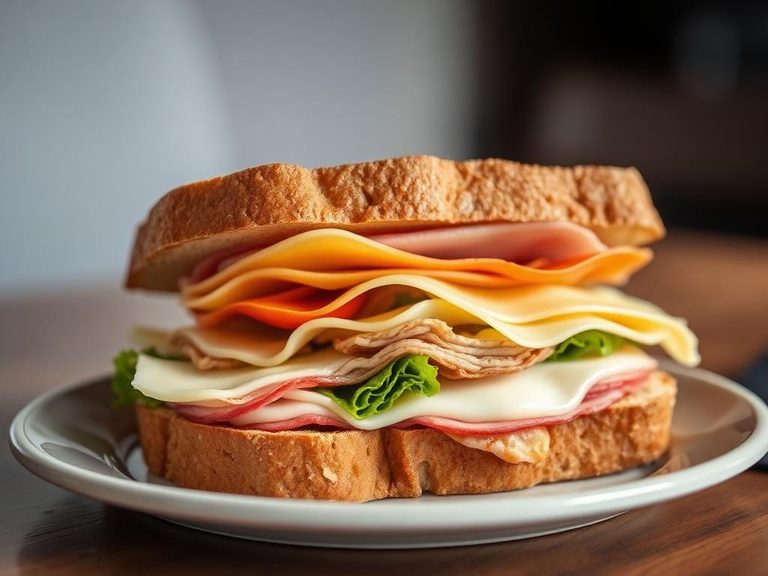



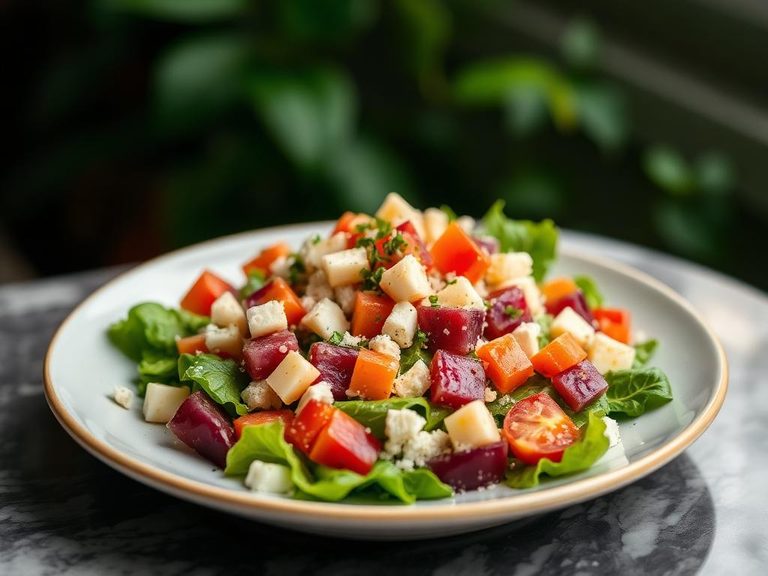
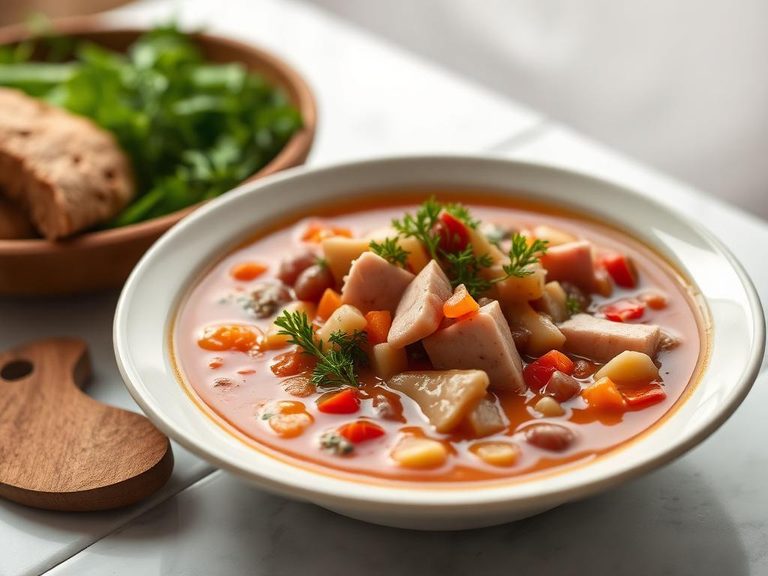
🌍 Where it's eaten
💡 Did you know?
Despite its name, turkey ham is not cured ham from pork; it's a USDA-regulated product that must be made from turkey thigh meat and may be smoked or water-added.
Full nutrition (USDA data · scales with serving)
| Water | 76.0 g |
| Energy | 106 kcal |
| Protein | 14.8 g |
| Total lipid (fat) | 3.8 g |
| Carbohydrate, by difference | 2.2 g |
| Fiber, total dietary | 0.00 g |
| Total Sugars | 0.91 g |
| Calcium, Ca | 14.0 mg |
| Iron, Fe | 0.42 mg |
| Magnesium, Mg | 19.0 mg |
| Phosphorus, P | 249 mg |
| Potassium, K | 371 mg |
| Sodium, Na | 810 mg |
| Zinc, Zn | 0.94 mg |
| Copper, Cu | 0.02 mg |
| Selenium, Se | 13.0 ug |
| Vitamin C, total ascorbic acid | 0.00 mg |
| Thiamin | 0.04 mg |
| Riboflavin | 0.14 mg |
| Niacin | 7.2 mg |
| Vitamin B-6 | 0.41 mg |
| Folate, total | 4.0 ug |
| Folic acid | 0.00 ug |
| Folate, food | 4.0 ug |
| Folate, DFE | 4.0 ug |
| Choline, total | 30.1 mg |
| Vitamin B-12 | 0.37 ug |
| Vitamin B-12, added | 0.00 ug |
| Vitamin A, RAE | 0.00 ug |
| Retinol | 0.00 ug |
| Carotene, beta | 0.00 ug |
| Carotene, alpha | 0.00 ug |
| Cryptoxanthin, beta | 0.00 ug |
| Lycopene | 0.00 ug |
| Lutein + zeaxanthin | 0.00 ug |
| Vitamin E (alpha-tocopherol) | 0.13 mg |
| Vitamin E, added | 0.00 mg |
| Vitamin D (D2 + D3) | 0.20 ug |
| Vitamin K (phylloquinone) | 0.00 ug |
| Alcohol, ethyl | 0.00 g |
| Caffeine | 0.00 mg |
| Theobromine | 0.00 mg |
Fat & fatty acid profile (per 100g)
| Fatty acids, total saturated | 0.91 g |
| SFA 4:0 | 0.00 g |
| SFA 6:0 | 0.00 g |
| SFA 8:0 | 0.00 g |
| SFA 10:0 | 0.00 g |
| SFA 12:0 | 0.00 g |
| SFA 14:0 | 0.03 g |
| SFA 16:0 | 0.62 g |
| SFA 18:0 | 0.23 g |
| Fatty acids, total monounsaturated | 1.1 g |
| MUFA 16:1 | 0.11 g |
| MUFA 18:1 | 1.0 g |
| MUFA 20:1 | 0.01 g |
| MUFA 22:1 | 0.00 g |
| Fatty acids, total polyunsaturated | 1.0 g |
| PUFA 18:2 | 0.88 g |
| PUFA 18:3 | 0.05 g |
| PUFA 18:4 | 0.00 g |
| PUFA 20:4 | 0.05 g |
| PUFA 20:5 n-3 (EPA) | 0.00 g |
| PUFA 22:5 n-3 (DPA) | 0.01 g |
| PUFA 22:6 n-3 (DHA) | 0.01 g |
| Cholesterol | 49.0 mg |
FAQ
Is turkey ham the same as turkey breast deli meat?
No. Turkey ham is specifically made from turkey thigh meat, which gives it a slightly darker color and different texture than slices made from turkey breast. It is also often shaped and processed to resemble a ham.
Can I use turkey ham in recipes that call for regular ham?
Yes, it is a common substitute, especially in dishes like salads, quiches, or fried rice. Keep in mind it is leaner and may have a milder flavor, so you might need to adjust seasoning or cooking times slightly.
Is turkey ham considered a processed meat?
Yes, it is a processed, pre-cooked product. While it is a leaner option, it falls under the category of processed meats, which some dietary guidelines recommend consuming in limited amounts.
Nutrient density (calculated · NRF9.3)
Nutrient Rich Foods index: beneficial nutrients (protein, fiber, vitamins, minerals) minus saturated fat, added sugar & sodium, per 100 kcal.
NRF9.3 index — Fulgoni, Keast & Drewnowski, 2009. Computed from USDA nutrients.
Weight-loss friendliness (composite index)
Energy density 1.06 kcal/g · 56% calories from protein · 0.0 g fiber · 0.9 g sugar per 100 g.
Composite of energy density (Rolls et al., 1999), protein & fiber satiety, minus sugar. A calculated heuristic — ranks satiety-per-calorie, not a clinical measure.
Dietary load (calculated from USDA values)
Potential renal acid load. Positive = acid-forming, negative = alkaline-forming.
Sodium-to-potassium ratio: 2.18 (lower is better — aim for ≤ 1)
Sodium:potassium per WHO potassium guidance. Computed from USDA nutrients.