

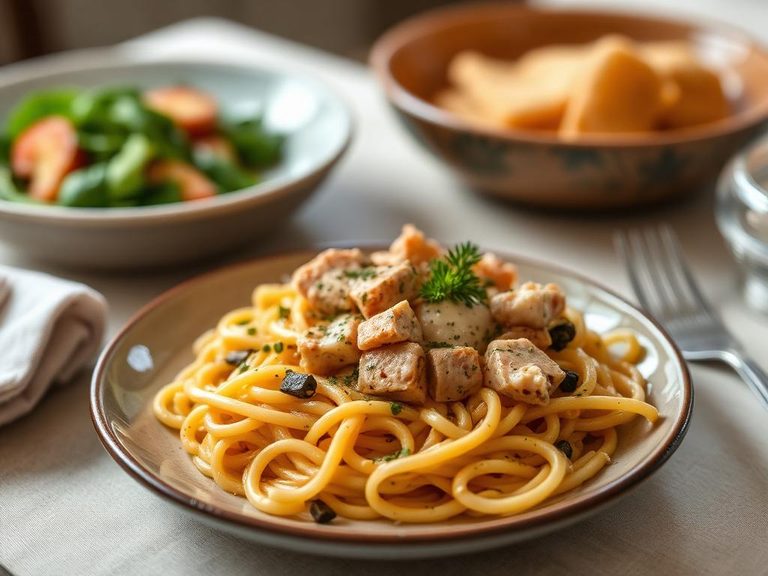
Tuna noodle casserole with vegetables, cream or white sauce
Common food

Photo: Wikipedia
A classic American comfort food, this casserole layers tender egg noodles, flaky tuna, and mixed vegetables (often peas and carrots) in a rich, creamy white sauce, typically baked until bubbly. The texture is soft and cohesive, with a mild, savory flavor profile that's both creamy and subtly briny from the fish. It's a nutritionally balanced one-dish meal, offering a solid protein punch (nearly 9g per 100g) alongside its comforting carbs and fats.
Calorie split: 24% protein · 38% carbs · 38% fat
↓ Full nutrition💚 Why it's loved
People adore this dish for its nostalgic, homestyle flavor and incredible convenience—it's the ultimate 'set it and forget it' comfort meal that feeds a crowd. Its mild, creamy taste and soft texture make it a universally palatable choice, especially for children and those seeking familiar, hearty fare.
⚠️ Watch-outs & how to enjoy it better
The dish can be high in sodium and saturated fat, especially if made with condensed soup and full-fat dairy, and the refined pasta may cause blood-sugar spikes. To counteract this, opt for low-sodium soup, use milk instead of cream, boost the vegetable ratio, and pair a smaller portion with a leafy green salad to increase fiber and slow digestion.
Key benefits
- Excellent source of lean protein from tuna.
- Provides a balanced mix of protein, carbs, and fats for sustained energy.
- Contains vegetables for added vitamins and minerals.
- A complete, satisfying meal in a single dish.
- Highly customizable with different veggies or pasta types.
🍽️ Popular dishes
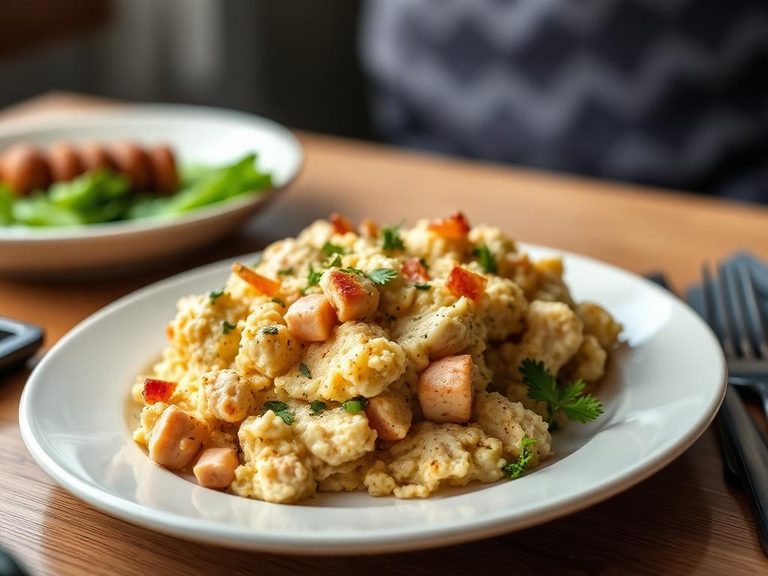
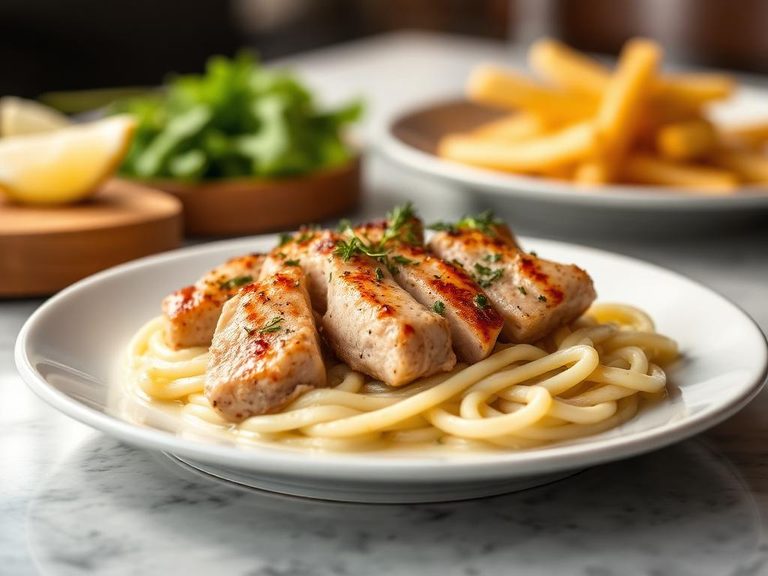
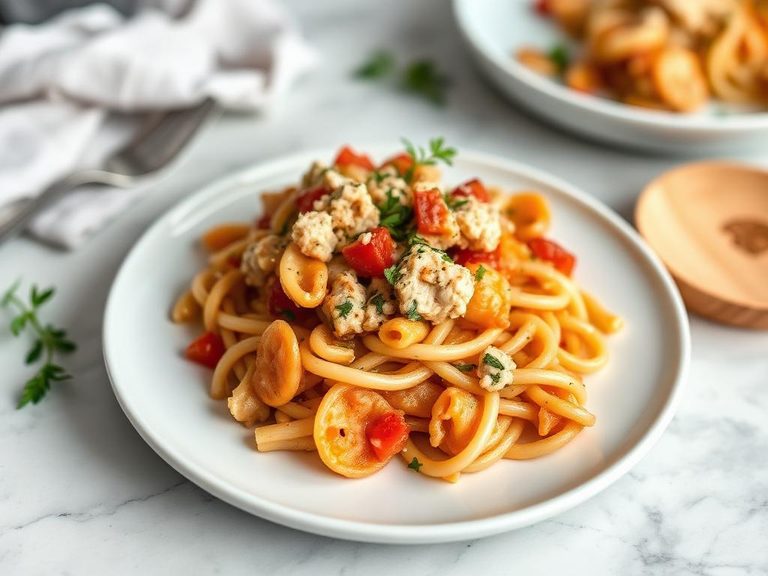
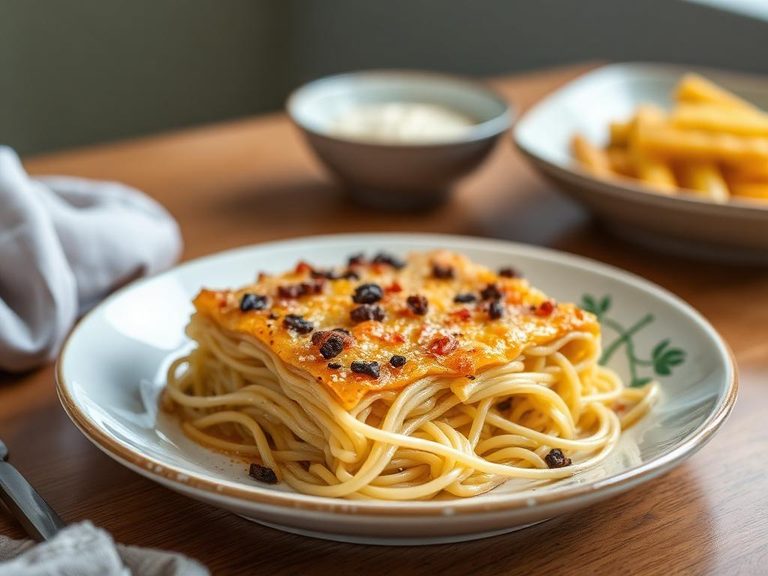
🌍 Where it's eaten
💡 Did you know?
The iconic use of canned tuna and condensed soup in this casserole is largely a product of mid-20th century American marketing, with brands like Campbell's actively promoting recipes that showcased their shelf-stable products during the post-WWII era.
Full nutrition (USDA data · scales with serving)
| Water | 69.5 g |
| Energy | 149 kcal |
| Protein | 9.0 g |
| Total lipid (fat) | 6.2 g |
| Carbohydrate, by difference | 14.2 g |
| Fiber, total dietary | 0.90 g |
| Total Sugars | 2.4 g |
| Calcium, Ca | 56.0 mg |
| Iron, Fe | 1.3 mg |
| Magnesium, Mg | 20.0 mg |
| Phosphorus, P | 114 mg |
| Potassium, K | 178 mg |
| Sodium, Na | 211 mg |
| Zinc, Zn | 0.65 mg |
| Copper, Cu | 0.10 mg |
| Selenium, Se | 30.5 ug |
| Vitamin C, total ascorbic acid | 3.2 mg |
| Thiamin | 0.16 mg |
| Riboflavin | 0.18 mg |
| Niacin | 4.4 mg |
| Vitamin B-6 | 0.19 mg |
| Folate, total | 35.0 ug |
| Folic acid | 25.0 ug |
| Folate, food | 10.0 ug |
| Folate, DFE | 53.0 ug |
| Choline, total | 24.6 mg |
| Vitamin B-12 | 0.92 ug |
| Vitamin B-12, added | 0.00 ug |
| Vitamin A, RAE | 67.0 ug |
| Retinol | 66.0 ug |
| Carotene, beta | 23.0 ug |
| Carotene, alpha | 1.0 ug |
| Cryptoxanthin, beta | 1.0 ug |
| Lycopene | 0.00 ug |
| Lutein + zeaxanthin | 21.0 ug |
| Vitamin E (alpha-tocopherol) | 0.41 mg |
| Vitamin E, added | 0.00 mg |
| Vitamin D (D2 + D3) | 0.80 ug |
| Vitamin K (phylloquinone) | 2.3 ug |
| Alcohol, ethyl | 0.00 g |
| Caffeine | 0.00 mg |
| Theobromine | 0.00 mg |
Fat & fatty acid profile (per 100g)
| Fatty acids, total saturated | 2.8 g |
| SFA 4:0 | 0.10 g |
| SFA 6:0 | 0.07 g |
| SFA 8:0 | 0.04 g |
| SFA 10:0 | 0.10 g |
| SFA 12:0 | 0.12 g |
| SFA 14:0 | 0.38 g |
| SFA 16:0 | 1.4 g |
| SFA 18:0 | 0.51 g |
| Fatty acids, total monounsaturated | 1.4 g |
| MUFA 16:1 | 0.07 g |
| MUFA 18:1 | 1.3 g |
| MUFA 20:1 | 0.01 g |
| MUFA 22:1 | 0.00 g |
| Fatty acids, total polyunsaturated | 0.82 g |
| PUFA 18:2 | 0.69 g |
| PUFA 18:3 | 0.07 g |
| PUFA 18:4 | 0.00 g |
| PUFA 20:4 | 0.01 g |
| PUFA 20:5 n-3 (EPA) | 0.01 g |
| PUFA 22:5 n-3 (DPA) | 0.00 g |
| PUFA 22:6 n-3 (DHA) | 0.06 g |
| Cholesterol | 31.0 mg |
FAQ
Can I make tuna noodle casserole healthier?
Absolutely. Use whole-wheat or legume-based noodles, swap condensed soup for a homemade roux with low-sodium broth, add extra vegetables like broccoli or spinach, and use Greek yogurt or light sour cream for a protein boost in the sauce.
Why is my casserole watery?
This often happens if the vegetables (like frozen peas) release too much moisture. Pat them dry, or sauté fresh vegetables first. Also, ensure your sauce is thick enough before combining, and let the casserole rest for 10 minutes after baking to set.
What's the best tuna to use?
Solid white albacore tuna packed in water is the classic choice for its firm texture and mild flavor. For a stronger taste and higher omega-3 content, use light tuna (skipjack). Always drain it well to prevent a soggy casserole.
Nutrient density (calculated · NRF9.3)
Nutrient Rich Foods index: beneficial nutrients (protein, fiber, vitamins, minerals) minus saturated fat, added sugar & sodium, per 100 kcal.
NRF9.3 index — Fulgoni, Keast & Drewnowski, 2009. Computed from USDA nutrients.
Weight-loss friendliness (composite index)
Energy density 1.49 kcal/g · 24% calories from protein · 0.9 g fiber · 2.4 g sugar per 100 g.
Composite of energy density (Rolls et al., 1999), protein & fiber satiety, minus sugar. A calculated heuristic — ranks satiety-per-calorie, not a clinical measure.
Dietary load (calculated from USDA values)
Potential renal acid load. Positive = acid-forming, negative = alkaline-forming.
Sodium-to-potassium ratio: 1.19 (lower is better — aim for ≤ 1)
Sodium:potassium per WHO potassium guidance. Computed from USDA nutrients.