

Tomatoes, whole, canned, solids and liquids, with salt added
Whole food · Vegetables and Vegetable Products
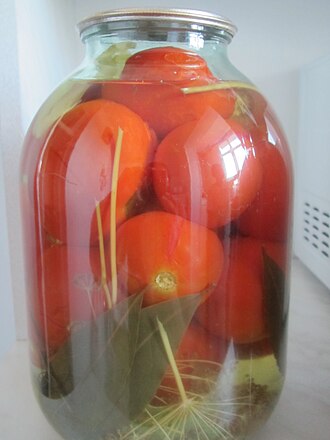
Photo: Wikipedia
Whole canned tomatoes are peeled, cooked tomatoes packed in their own juice with added salt, offering a soft, yielding texture and a deep, concentrated umami-sweet flavor. They are a pantry staple, providing a rich source of lycopene and a convenient way to add robust tomato flavor to dishes year-round. Nutritionally, they are low in calories and fat, while contributing a decent amount of fiber and essential vitamins like vitamin C and potassium.
Calorie split: 15% protein · 76% carbs · 8% fat
↓ Full nutrition💚 Why it's loved
People love them for their deep, concentrated tomato flavor that forms the backbone of countless sauces, stews, and soups. Their soft, breakable texture integrates seamlessly into dishes, and they are celebrated for their incredible versatility in both simple and complex recipes across global cuisines.
⚠️ Watch-outs & how to enjoy it better
The added salt can be a concern for those monitoring sodium intake, potentially contributing to high blood pressure. To counteract this, choose 'no salt added' varieties when possible, or rinse the tomatoes before use. Additionally, the acidity can trigger heartburn in sensitive individuals; pairing with a small amount of fat or a pinch of baking soda can help neutralize it.
Key benefits
- Excellent source of lycopene, an antioxidant linked to heart health.
- Low in calories and fat, making them a weight-conscious ingredient.
- Good source of dietary fiber, aiding digestion.
- Rich in potassium, which supports healthy blood pressure.
- Convenient and shelf-stable, available year-round.
🍽️ Popular dishes
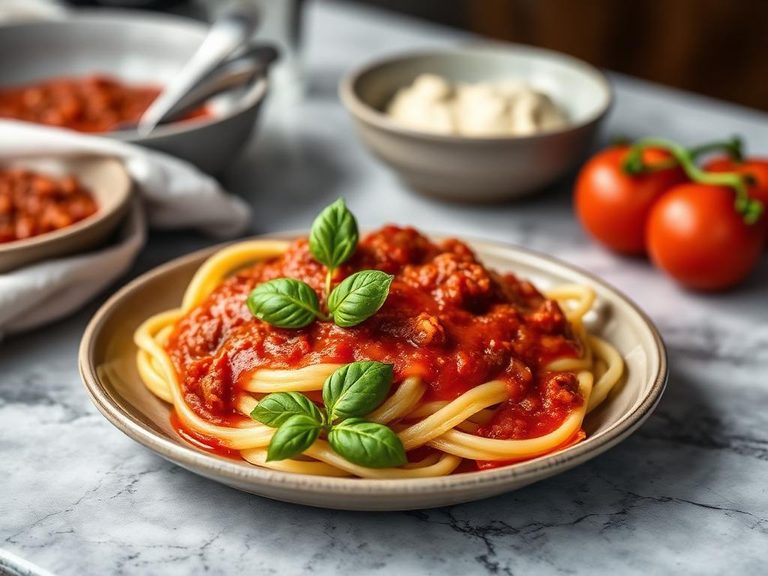


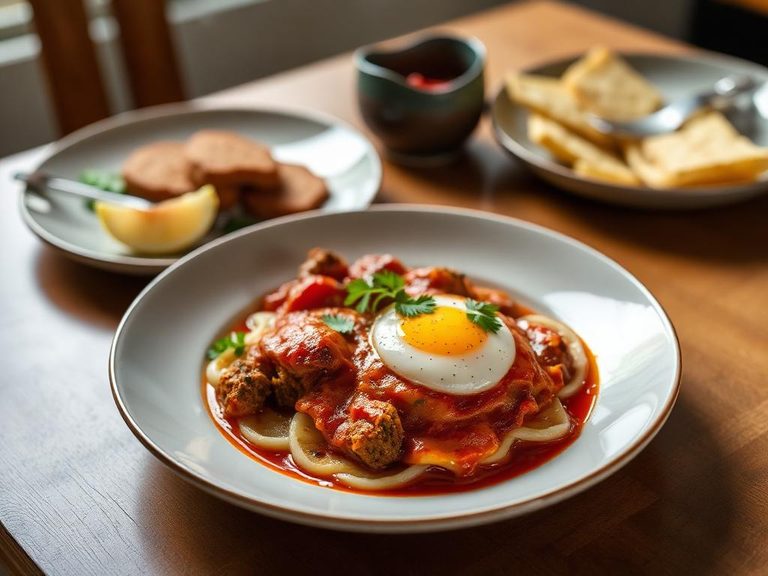
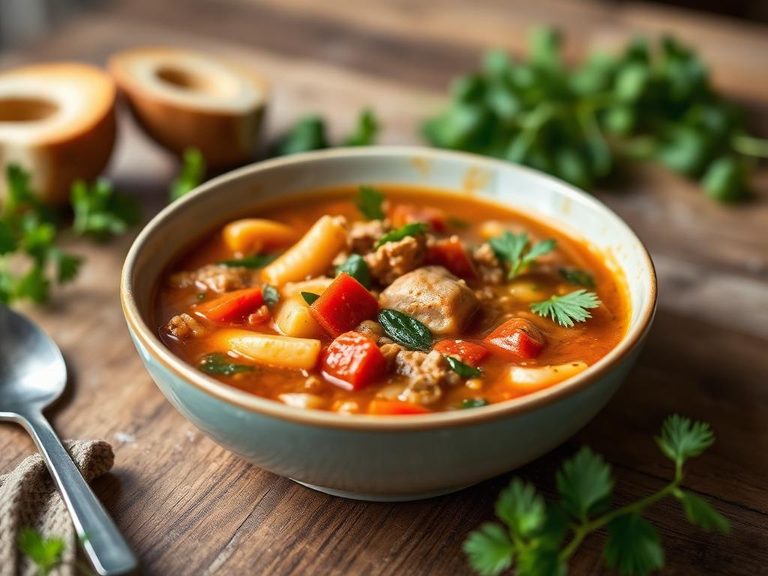
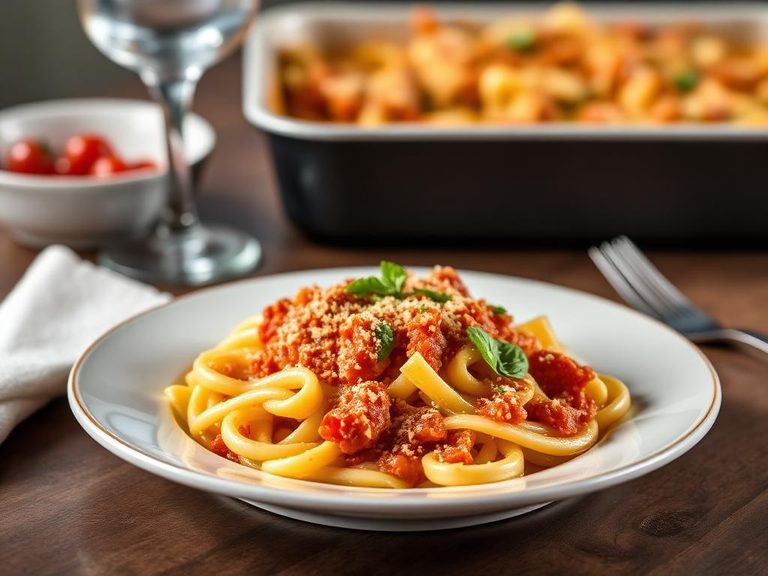
🌍 Where it's eaten
💡 Did you know?
Canning tomatoes was one of the first successful applications of Nicolas Appert's food preservation method in the early 19th century, revolutionizing how people could access produce outside its growing season.
Full nutrition (USDA data · scales with serving)
| Water | 93.9 g |
| Energy (Atwater General Factors) | 22.5 kcal |
| Energy (Atwater Specific Factors) | 19.1 kcal |
| Nitrogen | 0.14 g |
| Protein | 0.87 g |
| Total lipid (fat) | 0.21 g |
| Ash | 0.71 g |
| Carbohydrate, by difference | 4.3 g |
| Fiber, total dietary | 0.87 g |
| Sugars, Total | 2.6 g |
| Sucrose | 0.00 g |
| Glucose | 1.3 g |
| Fructose | 1.3 g |
| Lactose | 0.00 g |
| Maltose | 0.00 g |
| Calcium, Ca | 19.8 mg |
| Iron, Fe | 0.93 mg |
| Magnesium, Mg | 10.8 mg |
| Phosphorus, P | 17.3 mg |
| Potassium, K | 203 mg |
| Sodium, Na | 112 mg |
| Zinc, Zn | 0.12 mg |
| Copper, Cu | 0.06 mg |
| Manganese, Mn | 0.08 mg |
| Vitamin C, total ascorbic acid | 7.7 mg |
Fat & fatty acid profile (per 100g)
Estimated from Tomatoes, sun-dried, packed in oil, drained — USDA does not publish this profile for Tomatoes.
| Fatty acids, total saturated | 1.9 g |
| SFA 14:0 | 0.01 g |
| SFA 16:0 | 1.5 g |
| SFA 18:0 | 0.34 g |
| Fatty acids, total monounsaturated | 8.7 g |
| MUFA 16:1 | 0.10 g |
| MUFA 18:1 | 8.5 g |
| MUFA 20:1 | 0.03 g |
| Fatty acids, total polyunsaturated | 2.1 g |
| PUFA 18:2 | 2.0 g |
| PUFA 18:3 | 0.08 g |
| Fatty acids, total trans | 0.00 g |
| Cholesterol | 0.00 mg |
Amino acid profile (per 100g)
Estimated from Tomatoes, sun-dried, packed in oil, drained — USDA does not publish this profile for Tomatoes.
| Tryptophan | 0.04 g |
| Threonine | 0.13 g |
| Isoleucine | 0.12 g |
| Leucine | 0.18 g |
| Lysine | 0.19 g |
| Methionine | 0.04 g |
| Cystine | 0.07 g |
| Phenylalanine | 0.13 g |
| Tyrosine | 0.09 g |
| Valine | 0.13 g |
| Arginine | 0.12 g |
| Histidine | 0.08 g |
| Alanine | 0.14 g |
| Aspartic acid | 0.70 g |
| Glutamic acid | 1.9 g |
| Glycine | 0.13 g |
| Proline | 0.10 g |
| Serine | 0.13 g |
FAQ
What is the difference between whole canned tomatoes and crushed tomatoes?
Whole canned tomatoes are peeled, intact tomatoes (often plum or Roma varieties) packed in juice or puree. Crushed tomatoes are pre-crushed or puréed, resulting in a thicker, more uniform texture. Whole tomatoes offer more control over the final texture of your dish.
Are canned tomatoes as nutritious as fresh tomatoes?
Yes, and in some ways they are superior. The canning process breaks down cell walls, making the antioxidant lycopene more bioavailable and easier for your body to absorb compared to raw tomatoes. They retain most of their vitamins and minerals, though vitamin C content may be slightly reduced.
How should I store leftover canned tomatoes?
Transfer any unused tomatoes from the can to a non-reactive container (like glass or plastic) and refrigerate. They will keep for 3-5 days. For longer storage, you can freeze them in airtight containers or freezer bags for up to 6 months.
Nutrient density (calculated · NRF9.3)
Nutrient Rich Foods index: beneficial nutrients (protein, fiber, vitamins, minerals) minus saturated fat, added sugar & sodium, per 100 kcal.
NRF9.3 index — Fulgoni, Keast & Drewnowski, 2009. Computed from USDA nutrients.
Weight-loss friendliness (composite index)
Energy density 0.22 kcal/g · 15% calories from protein · 0.9 g fiber · 0.0 g sugar per 100 g.
Composite of energy density (Rolls et al., 1999), protein & fiber satiety, minus sugar. A calculated heuristic — ranks satiety-per-calorie, not a clinical measure.
Dietary load (calculated from USDA values)
Potential renal acid load. Positive = acid-forming, negative = alkaline-forming.
Sodium-to-potassium ratio: 0.55 (lower is better — aim for ≤ 1)
Sodium:potassium per WHO potassium guidance. Computed from USDA nutrients.