

Thuringer
Common food

Photo: Wikipedia
Thüringer Rostbratwurst is a thin, coarse-ground pork sausage from Germany, seasoned with marjoram, caraway, and garlic, then grilled or pan-fried to a juicy, snappy finish. It delivers a savory, herb-forward flavor with a slightly smoky char. Nutritionally, it's a high-protein, high-fat food with virtually no carbohydrates.
Calorie split: 20% protein · 4% carbs · 77% fat
↓ Full nutrition💚 Why it's loved
People love it for its distinctive, aromatic seasoning and satisfying snap when bitten into. It's a cornerstone of German street food and beer garden culture, often enjoyed in a crispy roll with mustard.
⚠️ Watch-outs & how to enjoy it better
As a processed meat, it is high in saturated fat and sodium, which may be a concern for heart health or blood pressure management. To counteract, enjoy it occasionally, pair with a large portion of fiber-rich sauerkraut or a fresh salad, and choose a whole-grain roll to add fiber.
Key benefits
- Excellent source of complete protein for muscle maintenance
- Provides essential B vitamins like B12 and niacin
- Source of minerals like iron and zinc
- Zero carbohydrates, suitable for low-carb diets
- Traditional preparation uses natural casings
🍽️ Popular dishes
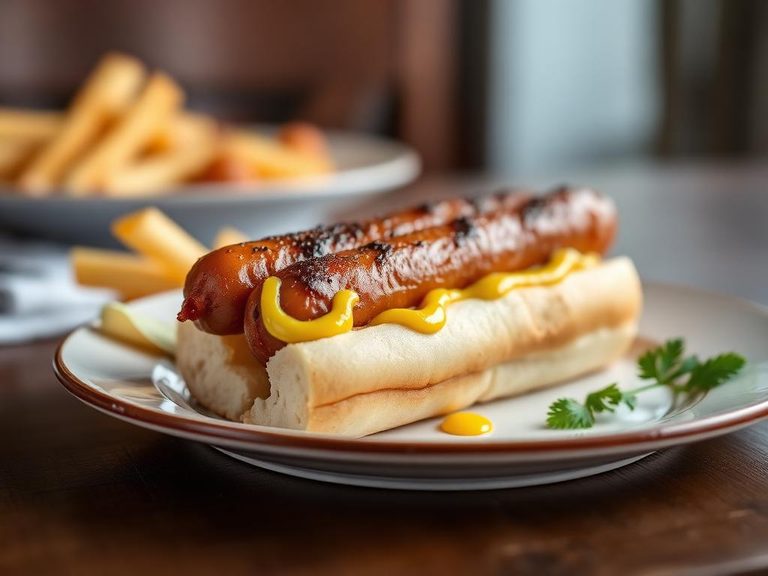
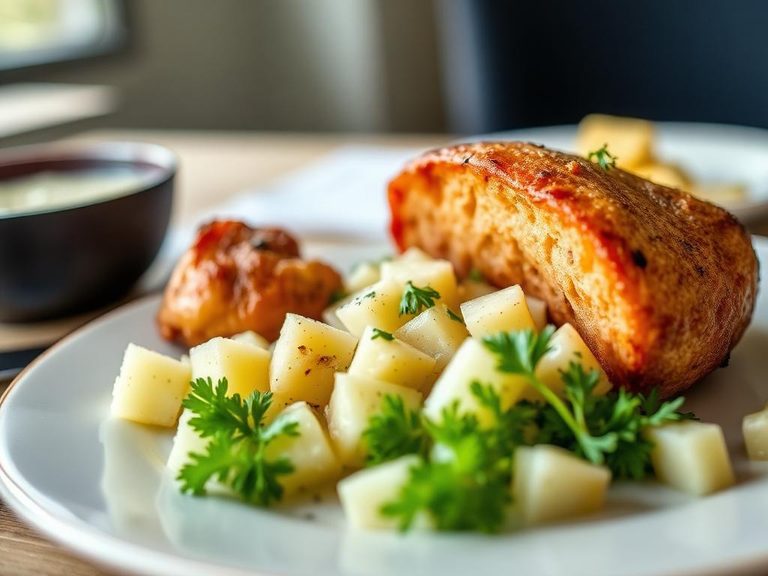
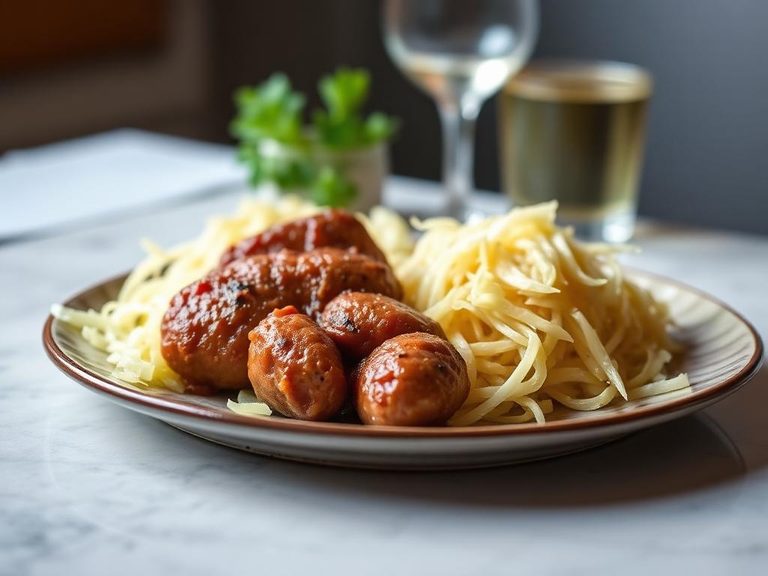
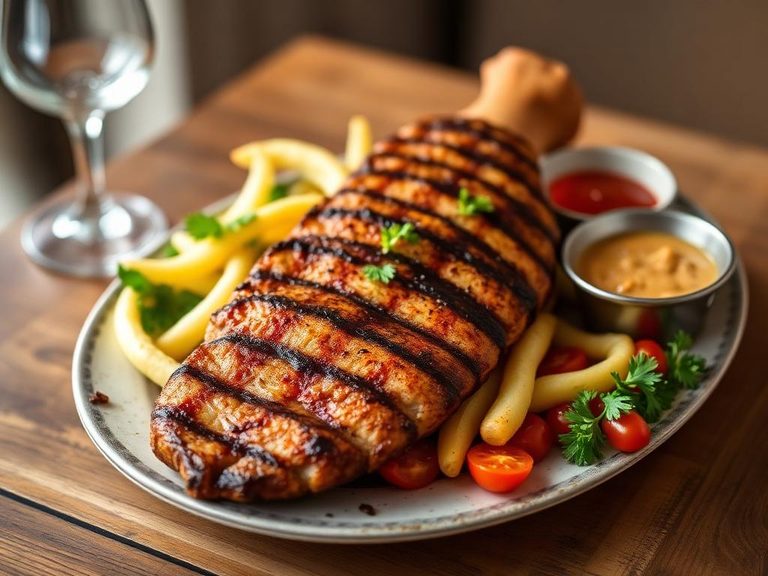
🌍 Where it's eaten
💡 Did you know?
The Thüringer Rostbratwurst has Protected Geographical Indication (PGI) status in the EU, meaning it can only be legally called by that name if produced in the German state of Thuringia according to specific traditional methods.
Full nutrition (USDA data · scales with serving)
| Water | 45.2 g |
| Energy | 362 kcal |
| Protein | 17.4 g |
| Total lipid (fat) | 30.4 g |
| Carbohydrate, by difference | 3.3 g |
| Fiber, total dietary | 0.00 g |
| Total Sugars | 0.85 g |
| Calcium, Ca | 9.0 mg |
| Iron, Fe | 2.0 mg |
| Magnesium, Mg | 14.0 mg |
| Phosphorus, P | 111 mg |
| Potassium, K | 260 mg |
| Sodium, Na | 1300 mg |
| Zinc, Zn | 2.6 mg |
| Copper, Cu | 0.15 mg |
| Selenium, Se | 20.3 ug |
| Vitamin C, total ascorbic acid | 16.6 mg |
| Thiamin | 0.15 mg |
| Riboflavin | 0.33 mg |
| Niacin | 4.3 mg |
| Vitamin B-6 | 0.26 mg |
| Folate, total | 2.0 ug |
| Folic acid | 0.00 ug |
| Folate, food | 2.0 ug |
| Folate, DFE | 2.0 ug |
| Choline, total | 78.9 mg |
| Vitamin B-12 | 5.5 ug |
| Vitamin B-12, added | 0.00 ug |
| Vitamin A, RAE | 0.00 ug |
| Retinol | 0.00 ug |
| Carotene, beta | 0.00 ug |
| Carotene, alpha | 0.00 ug |
| Cryptoxanthin, beta | 0.00 ug |
| Lycopene | 0.00 ug |
| Lutein + zeaxanthin | 0.00 ug |
| Vitamin E (alpha-tocopherol) | 0.22 mg |
| Vitamin E, added | 0.00 mg |
| Vitamin D (D2 + D3) | 1.1 ug |
| Vitamin K (phylloquinone) | 1.3 ug |
| Alcohol, ethyl | 0.00 g |
| Caffeine | 0.00 mg |
| Theobromine | 0.00 mg |
Fat & fatty acid profile (per 100g)
| Fatty acids, total saturated | 11.5 g |
| SFA 4:0 | 0.00 g |
| SFA 6:0 | 0.00 g |
| SFA 8:0 | 0.00 g |
| SFA 10:0 | 0.11 g |
| SFA 12:0 | 0.08 g |
| SFA 14:0 | 0.80 g |
| SFA 16:0 | 6.3 g |
| SFA 18:0 | 4.2 g |
| Fatty acids, total monounsaturated | 13.0 g |
| MUFA 16:1 | 1.8 g |
| MUFA 18:1 | 11.2 g |
| MUFA 20:1 | 0.00 g |
| MUFA 22:1 | 0.00 g |
| Fatty acids, total polyunsaturated | 1.2 g |
| PUFA 18:2 | 0.99 g |
| PUFA 18:3 | 0.21 g |
| PUFA 18:4 | 0.00 g |
| PUFA 20:4 | 0.00 g |
| PUFA 20:5 n-3 (EPA) | 0.00 g |
| PUFA 22:5 n-3 (DPA) | 0.00 g |
| PUFA 22:6 n-3 (DHA) | 0.00 g |
| Cholesterol | 74.0 mg |
FAQ
What makes Thüringer different from other German sausages?
It's defined by its PGI status, specific seasoning blend (especially marjoram), coarse grind, and traditional grilling method. It's typically thinner than a Bratwurst and has a more pronounced herbal flavor.
How is it traditionally cooked?
Traditionally, it's grilled over a charcoal fire (Rost means grate or grill), which imparts a smoky flavor. It can also be pan-fried. The goal is a crisp, browned exterior with a juicy interior.
Is it gluten-free?
Authentic Thüringer Rostbratwurst recipes are typically gluten-free as they contain no fillers or breadcrumbs. However, always check the ingredient list for any added binders or if it's processed in a facility with gluten.
Nutrient density (calculated · NRF9.3)
Nutrient Rich Foods index: beneficial nutrients (protein, fiber, vitamins, minerals) minus saturated fat, added sugar & sodium, per 100 kcal.
NRF9.3 index — Fulgoni, Keast & Drewnowski, 2009. Computed from USDA nutrients.
Weight-loss friendliness (composite index)
Energy density 3.62 kcal/g · 19% calories from protein · 0.0 g fiber · 0.8 g sugar per 100 g.
Composite of energy density (Rolls et al., 1999), protein & fiber satiety, minus sugar. A calculated heuristic — ranks satiety-per-calorie, not a clinical measure.
Dietary load (calculated from USDA values)
Potential renal acid load. Positive = acid-forming, negative = alkaline-forming.
Sodium-to-potassium ratio: 5.00 (lower is better — aim for ≤ 1)
Sodium:potassium per WHO potassium guidance. Computed from USDA nutrients.