

Tabbouleh
Common food

Photo: Wikipedia
Tabbouleh is a vibrant Levantine salad where finely chopped parsley and mint are the stars, not the bulgur. It delivers a bright, herbaceous punch with a refreshing, slightly chewy texture from the wheat and a zesty tang from lemon juice and olive oil. Despite its fresh appearance, it is a nutrient-dense dish, offering healthy fats and fiber in every bite.
Calorie split: 5% protein · 29% carbs · 66% fat
↓ Full nutrition💚 Why it's loved
People love tabbouleh for its incredibly fresh, zesty flavor that acts as a palate cleanser, especially in hot weather. It is also cherished for its cultural significance in Middle Eastern cuisine, often served as a symbol of hospitality and communal dining.
⚠️ Watch-outs & how to enjoy it better
The high oxalate content in parsley can be a concern for individuals prone to kidney stones. To mitigate this, ensure adequate water intake and pair the salad with calcium-rich foods like yogurt or cheese to bind oxalates. Additionally, those monitoring blood sugar should be mindful of the bulgur wheat, which can cause spikes if consumed in large portions; pairing with grilled protein helps stabilize glucose levels.
Key benefits
- Rich in antioxidants and vitamins A, C, and K from fresh parsley and mint.
- Provides healthy monounsaturated fats from olive oil, supporting heart health.
- High fiber content aids digestion and promotes satiety.
- Naturally low in calories while being nutrient-dense.
- Contains plant-based protein from bulgur wheat.
🍽️ Popular dishes
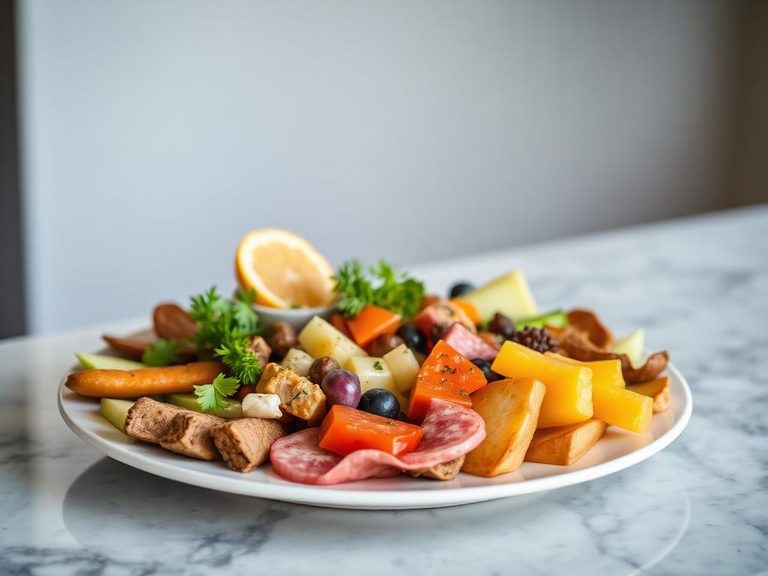
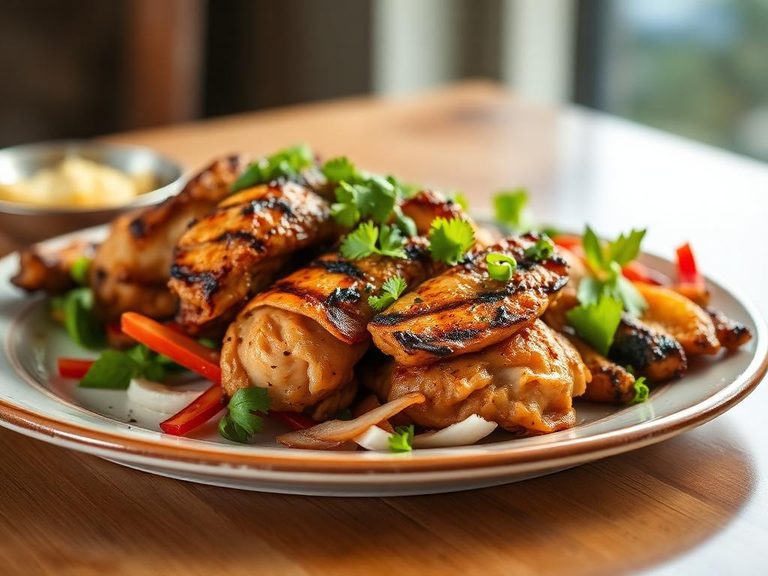
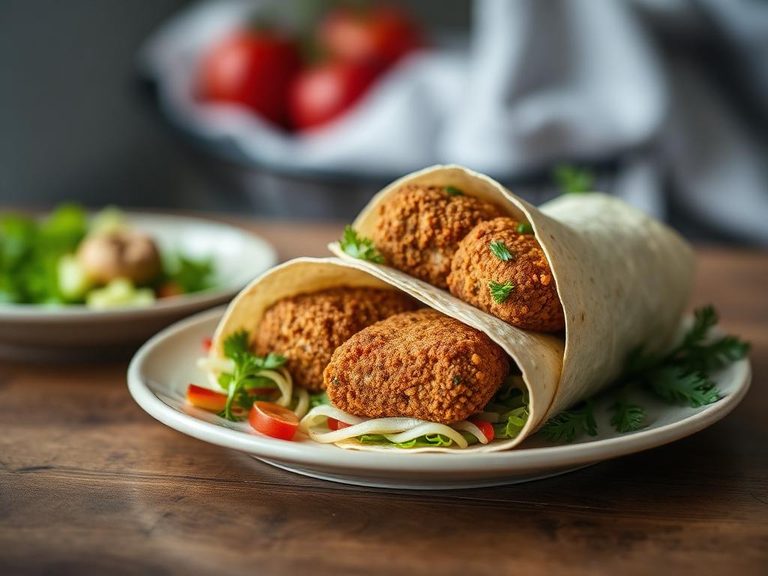
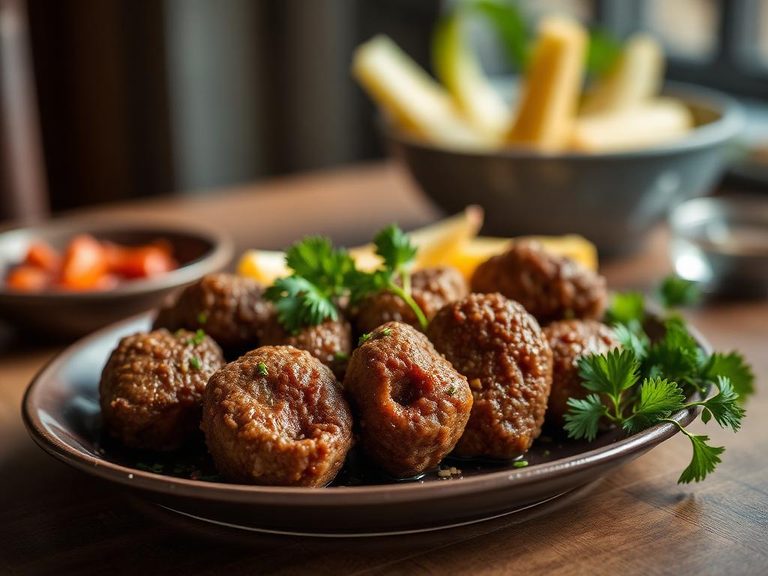
🌍 Where it's eaten
💡 Did you know?
In Lebanon, tabbouleh is traditionally eaten as a main dish or appetizer with lettuce leaves, not as a side dish, and the parsley-to-bulgur ratio is often 10:1, making it more of a herb salad than a grain salad.
Full nutrition (USDA data · scales with serving)
| Water | 77.3 g |
| Energy | 127 kcal |
| Protein | 1.6 g |
| Total lipid (fat) | 9.7 g |
| Carbohydrate, by difference | 9.7 g |
| Fiber, total dietary | 1.8 g |
| Total Sugars | 1.3 g |
| Calcium, Ca | 20.0 mg |
| Iron, Fe | 0.74 mg |
| Magnesium, Mg | 22.0 mg |
| Phosphorus, P | 39.0 mg |
| Potassium, K | 154 mg |
| Sodium, Na | 495 mg |
| Zinc, Zn | 0.30 mg |
| Copper, Cu | 0.06 mg |
| Selenium, Se | 0.30 ug |
| Vitamin C, total ascorbic acid | 15.8 mg |
| Thiamin | 0.04 mg |
| Riboflavin | 0.03 mg |
| Niacin | 0.70 mg |
| Vitamin B-6 | 0.07 mg |
| Folate, total | 20.0 ug |
| Folic acid | 0.00 ug |
| Folate, food | 20.0 ug |
| Folate, DFE | 20.0 ug |
| Choline, total | 5.9 mg |
| Vitamin B-12 | 0.00 ug |
| Vitamin B-12, added | 0.00 ug |
| Vitamin A, RAE | 33.0 ug |
| Retinol | 0.00 ug |
| Carotene, beta | 389 ug |
| Carotene, alpha | 23.0 ug |
| Cryptoxanthin, beta | 1.0 ug |
| Lycopene | 590 ug |
| Lutein + zeaxanthin | 387 ug |
| Vitamin E (alpha-tocopherol) | 2.2 mg |
| Vitamin E, added | 0.00 mg |
| Vitamin D (D2 + D3) | 0.00 ug |
| Vitamin K (phylloquinone) | 97.6 ug |
| Alcohol, ethyl | 0.00 g |
| Caffeine | 0.00 mg |
| Theobromine | 0.00 mg |
Fat & fatty acid profile (per 100g)
| Fatty acids, total saturated | 1.5 g |
| SFA 4:0 | 0.00 g |
| SFA 6:0 | 0.00 g |
| SFA 8:0 | 0.00 g |
| SFA 10:0 | 0.00 g |
| SFA 12:0 | 0.00 g |
| SFA 14:0 | 0.00 g |
| SFA 16:0 | 1.2 g |
| SFA 18:0 | 0.25 g |
| Fatty acids, total monounsaturated | 6.5 g |
| MUFA 16:1 | 0.10 g |
| MUFA 18:1 | 6.3 g |
| MUFA 20:1 | 0.03 g |
| MUFA 22:1 | 0.00 g |
| Fatty acids, total polyunsaturated | 0.97 g |
| PUFA 18:2 | 0.91 g |
| PUFA 18:3 | 0.07 g |
| PUFA 18:4 | 0.00 g |
| PUFA 20:4 | 0.00 g |
| PUFA 20:5 n-3 (EPA) | 0.00 g |
| PUFA 22:5 n-3 (DPA) | 0.00 g |
| PUFA 22:6 n-3 (DHA) | 0.00 g |
| Cholesterol | 0.00 mg |
FAQ
Is tabbouleh gluten-free?
Traditional tabbouleh contains bulgur wheat, which is not gluten-free. However, you can make a gluten-free version by substituting bulgur with quinoa or cauliflower rice.
How long does tabbouleh last in the fridge?
Tabbouleh is best eaten fresh but can last 2-3 days in an airtight container in the refrigerator. The herbs may wilt slightly, so add lemon juice just before serving to refresh the flavor.
Can I use dried herbs instead of fresh?
No, tabbouleh relies heavily on the fresh, vibrant flavor of parsley and mint. Dried herbs will not provide the same texture or taste and will result in a dry, less appealing dish.
Nutrient density (calculated · NRF9.3)
Nutrient Rich Foods index: beneficial nutrients (protein, fiber, vitamins, minerals) minus saturated fat, added sugar & sodium, per 100 kcal.
NRF9.3 index — Fulgoni, Keast & Drewnowski, 2009. Computed from USDA nutrients.
Weight-loss friendliness (composite index)
Energy density 1.27 kcal/g · 5% calories from protein · 1.8 g fiber · 1.3 g sugar per 100 g.
Composite of energy density (Rolls et al., 1999), protein & fiber satiety, minus sugar. A calculated heuristic — ranks satiety-per-calorie, not a clinical measure.
Dietary load (calculated from USDA values)
Potential renal acid load. Positive = acid-forming, negative = alkaline-forming.
Sodium-to-potassium ratio: 3.21 (lower is better — aim for ≤ 1)
Sodium:potassium per WHO potassium guidance. Computed from USDA nutrients.