

Snacks, rice cakes, brown rice, multigrain
Whole food · Snacks

Photo: Wikipedia
A light, airy puffed grain snack made from brown rice and other whole grains, offering a satisfyingly crisp crunch with a mild, nutty flavor. It's a classic, low-fat, high-carb choice for a quick energy boost, providing a solid 8.5g of protein per 100g to help keep you feeling fuller than a simple rice cake.
Calorie split: 9% protein · 83% carbs · 8% fat
↓ Full nutrition💚 Why it's loved
People love it for its satisfying crunch and neutral, slightly toasty flavor that acts as a perfect blank canvas for both sweet and savory toppings. It's a culturally ubiquitous, convenient, and generally perceived 'healthy' snack that fits easily into a busy lifestyle.
⚠️ Watch-outs & how to enjoy it better
Its high carbohydrate content and low fiber/protein ratio can lead to rapid blood sugar spikes, especially when eaten plain. To counteract this, always pair it with a source of protein or healthy fat, like nut butter, cheese, or avocado, to slow digestion and stabilize energy levels.
Key benefits
- Provides quick, accessible energy from complex carbohydrates
- Low in fat and contains no added sugar
- A good source of plant-based protein for a snack
- Contains dietary fiber from whole grains
- Light and crunchy texture satisfies snack cravings
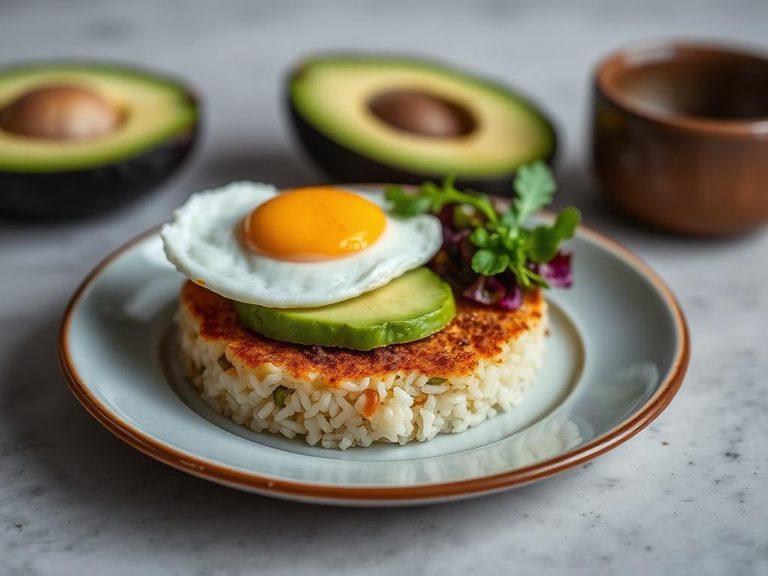
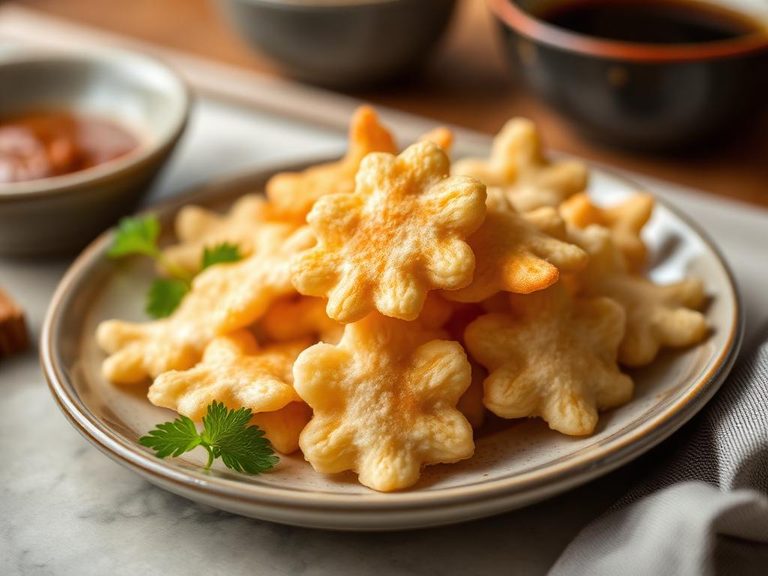
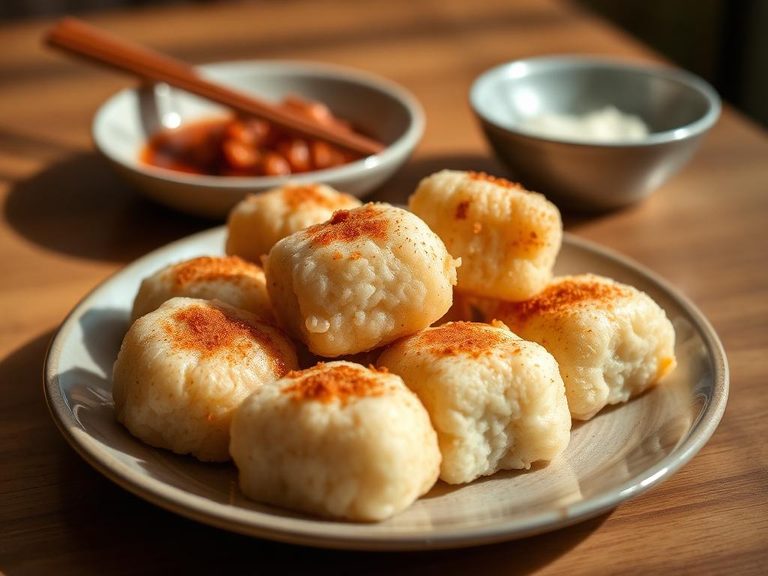
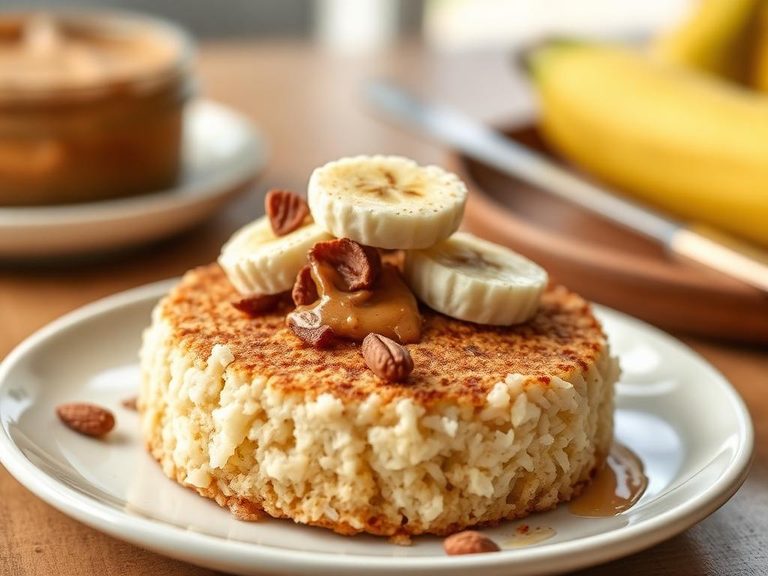
🍽️ Popular dishes

🌍 Where it's eaten
💡 Did you know?
The process of making puffed rice cakes involves heating grains under pressure and then suddenly releasing that pressure, causing the moisture inside to flash into steam and puff the grain to many times its original size.
Full nutrition (USDA data · scales with serving)
| Water | 6.3 g |
| Energy | 387 kcal |
| Energy | 1619 kj |
| Protein | 8.5 g |
| Total lipid (fat) | 3.5 g |
| Ash | 1.6 g |
| Carbohydrate, by difference | 80.1 g |
| Fiber, total dietary | 3.0 g |
| Calcium, Ca | 21.0 mg |
| Iron, Fe | 2.0 mg |
| Magnesium, Mg | 137 mg |
| Phosphorus, P | 370 mg |
| Potassium, K | 294 mg |
| Sodium, Na | 252 mg |
| Zinc, Zn | 2.5 mg |
| Copper, Cu | 0.43 mg |
| Manganese, Mn | 5.2 mg |
| Vitamin C, total ascorbic acid | 0.00 mg |
| Thiamin | 0.07 mg |
| Riboflavin | 0.18 mg |
| Niacin | 6.6 mg |
| Pantothenic acid | 1.0 mg |
| Vitamin B-6 | 0.14 mg |
| Folate, total | 20.0 ug |
| Folic acid | 0.00 ug |
| Folate, food | 20.0 ug |
| Folate, DFE | 20.0 ug |
| Vitamin B-12 | 0.00 ug |
| Vitamin A, RAE | 0.00 ug |
| Retinol | 0.00 ug |
| Vitamin A, IU | 0.00 iu |
Fat & fatty acid profile (per 100g)
| Fatty acids, total saturated | 0.56 g |
| SFA 10:0 | 0.00 g |
| SFA 12:0 | 0.00 g |
| SFA 14:0 | 0.01 g |
| SFA 16:0 | 0.46 g |
| SFA 18:0 | 0.08 g |
| Fatty acids, total monounsaturated | 1.2 g |
| MUFA 16:1 | 0.01 g |
| MUFA 18:1 | 1.1 g |
| MUFA 20:1 | 0.00 g |
| Fatty acids, total polyunsaturated | 1.4 g |
| PUFA 18:2 | 1.0 g |
| PUFA 18:3 | 0.44 g |
| Cholesterol | 0.00 mg |
Amino acid profile (per 100g)
| Tryptophan | 0.11 g |
| Threonine | 0.30 g |
| Isoleucine | 0.35 g |
| Leucine | 0.68 g |
| Lysine | 0.31 g |
| Methionine | 0.18 g |
| Cystine | 0.11 g |
| Phenylalanine | 0.42 g |
| Tyrosine | 0.30 g |
| Valine | 0.48 g |
| Arginine | 0.62 g |
| Histidine | 0.21 g |
| Alanine | 0.48 g |
| Aspartic acid | 0.77 g |
| Glutamic acid | 1.7 g |
| Glycine | 0.41 g |
| Proline | 0.41 g |
| Serine | 0.43 g |
FAQ
Are brown rice cakes healthier than white rice cakes?
Generally, yes. Brown rice cakes are made from whole grain brown rice, which retains the bran and germ, providing more fiber, vitamins, and minerals compared to refined white rice. However, the puffing process can still cause a significant blood sugar response, so pairing is key.
Can I eat rice cakes on a low-carb diet?
Rice cakes are very high in carbohydrates (over 80g per 100g) and are typically not considered suitable for strict low-carb or ketogenic diets. A single plain cake has around 7-8g of carbs.
How can I make rice cakes more filling?
The key is to add toppings that provide protein and healthy fats. Excellent options include nut butter, hummus, cottage cheese, sliced hard-boiled eggs, smoked salmon with cream cheese, or avocado with a sprinkle of seeds.
Nutrient density (calculated · NRF9.3)
Nutrient Rich Foods index: beneficial nutrients (protein, fiber, vitamins, minerals) minus saturated fat, added sugar & sodium, per 100 kcal.
NRF9.3 index — Fulgoni, Keast & Drewnowski, 2009. Computed from USDA nutrients.
Weight-loss friendliness (composite index)
Energy density 3.87 kcal/g · 9% calories from protein · 3.0 g fiber · 0.0 g sugar per 100 g.
Composite of energy density (Rolls et al., 1999), protein & fiber satiety, minus sugar. A calculated heuristic — ranks satiety-per-calorie, not a clinical measure.
Dietary load (calculated from USDA values)
Potential renal acid load. Positive = acid-forming, negative = alkaline-forming.
Sodium-to-potassium ratio: 0.86 (lower is better — aim for ≤ 1)
Sodium:potassium per WHO potassium guidance. Computed from USDA nutrients.