

Snacks, pork skins, barbecue-flavor
Whole food · Snacks

Photo: Wikipedia
Barbecue-flavor pork skins, or chicharrones, are airy, puffed rinds fried to a light, shattering crisp and dusted with a smoky, sweet, and tangy barbecue seasoning. They deliver a powerful crunch with a savory, umami-rich pork flavor and a satisfyingly greasy finish. Nutritionally, they are an exceptionally high-protein, virtually zero-carb snack, making them a staple in ketogenic and carnivore diets.
Calorie split: 44% protein · 1% carbs · 55% fat
↓ Full nutrition💚 Why it's loved
People love them for the irresistible combination of a bold, smoky barbecue flavor and an intensely satisfying, airy crunch that's both savory and slightly sweet. They are a beloved, portable comfort food and a go-to for game days, road trips, and casual snacking.
⚠️ Watch-outs & how to enjoy it better
They are very high in sodium and saturated fat, which can be a concern for those monitoring heart health or blood pressure. The barbecue seasoning often contains added sugars and spices like paprika, which can be an irritant for some. To enjoy them mindfully, practice strict portion control (stick to a single serving), pair them with a hydrating beverage or fresh vegetables, and look for brands with lower sodium or simpler ingredient lists.
Key benefits
- Very high in complete protein per serving
- Virtually zero carbohydrates and sugars
- A crunchy, satisfying snack for low-carb diets
- Provides dietary collagen from the pork skin
- Long shelf life as a dried, packaged snack
🍽️ Popular dishes
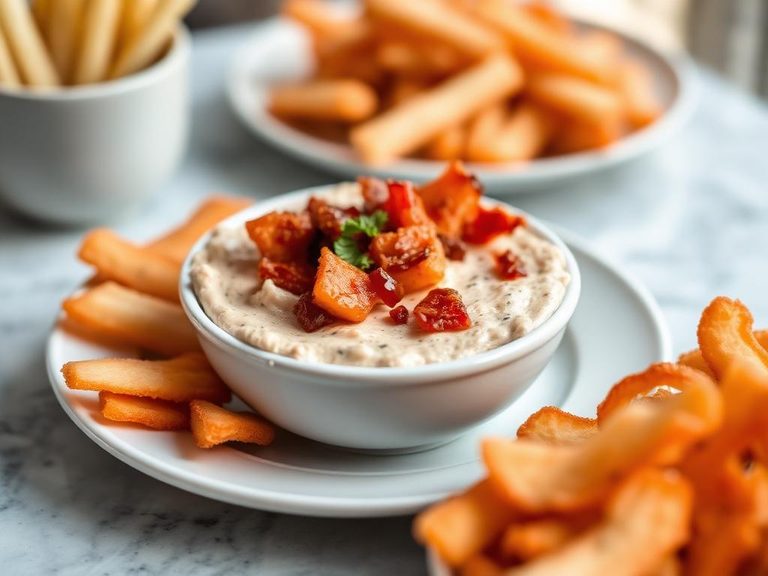
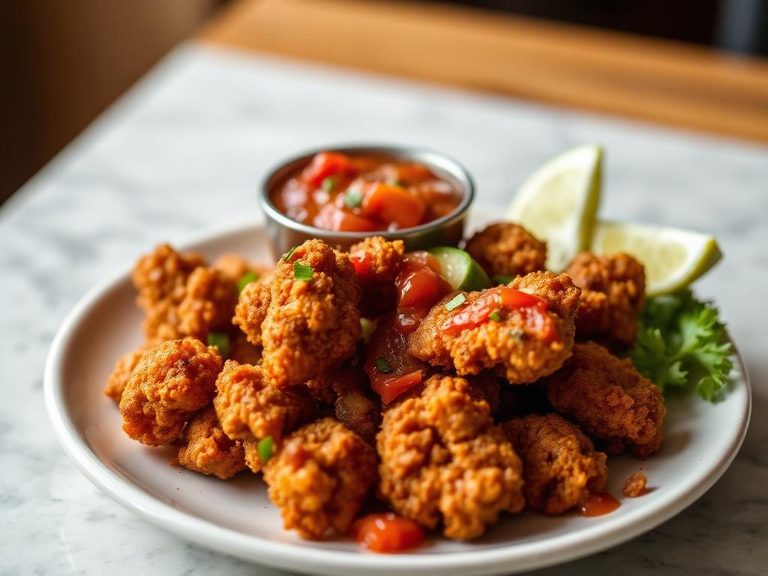
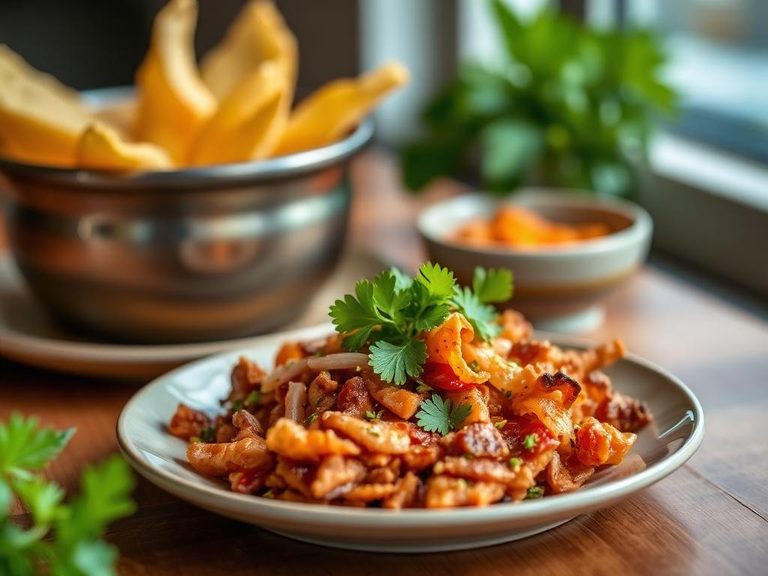
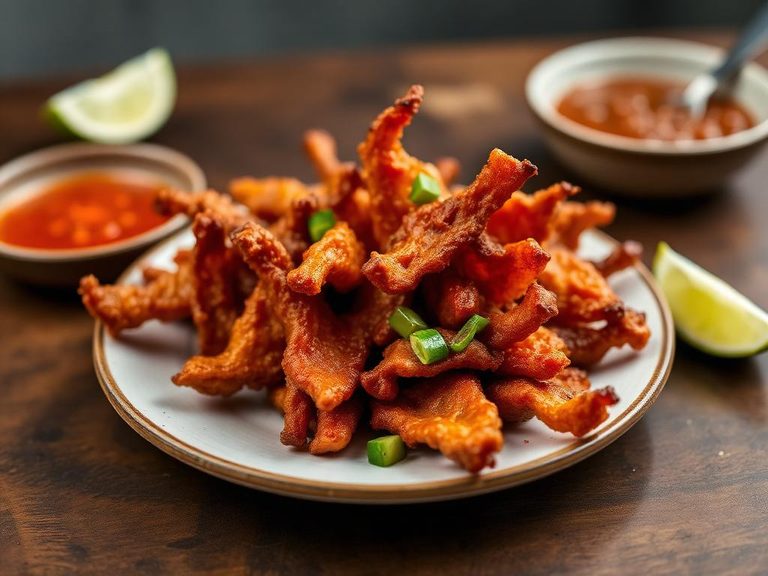
🌍 Where it's eaten
💡 Did you know?
During the American pork shortage of World War II, pork rinds were used as a substitute for rubber in certain industrial applications due to their high collagen content.
Full nutrition (USDA data · scales with serving)
| Water | 2.1 g |
| Energy | 538 kcal |
| Energy | 2251 kj |
| Protein | 57.9 g |
| Total lipid (fat) | 31.8 g |
| Ash | 7.0 g |
| Carbohydrate, by difference | 1.6 g |
| Calcium, Ca | 43.0 mg |
| Iron, Fe | 1.0 mg |
| Magnesium, Mg | 0.00 mg |
| Phosphorus, P | 220 mg |
| Potassium, K | 180 mg |
| Sodium, Na | 2667 mg |
| Zinc, Zn | 0.71 mg |
| Copper, Cu | 0.35 mg |
| Manganese, Mn | 0.07 mg |
| Vitamin C, total ascorbic acid | 1.5 mg |
| Thiamin | 0.08 mg |
| Riboflavin | 0.43 mg |
| Niacin | 3.4 mg |
| Pantothenic acid | 0.43 mg |
| Vitamin B-6 | 0.16 mg |
| Folate, total | 31.0 ug |
| Folic acid | 0.00 ug |
| Folate, food | 31.0 ug |
| Folate, DFE | 31.0 ug |
| Vitamin B-12 | 0.13 ug |
| Vitamin A, RAE | 65.0 ug |
| Retinol | 38.0 ug |
| Carotene, beta | 324 ug |
| Vitamin A, IU | 667 iu |
Fat & fatty acid profile (per 100g)
| Fatty acids, total saturated | 11.6 g |
| SFA 10:0 | 0.02 g |
| SFA 12:0 | 0.07 g |
| SFA 14:0 | 0.40 g |
| SFA 16:0 | 7.0 g |
| SFA 18:0 | 4.1 g |
| Fatty acids, total monounsaturated | 15.0 g |
| MUFA 16:1 | 0.99 g |
| MUFA 18:1 | 13.8 g |
| MUFA 20:1 | 0.25 g |
| Fatty acids, total polyunsaturated | 3.5 g |
| PUFA 18:2 | 3.4 g |
| PUFA 18:3 | 0.00 g |
| PUFA 20:4 | 0.04 g |
| Cholesterol | 115 mg |
Amino acid profile (per 100g)
| Tryptophan | 0.13 g |
| Threonine | 1.8 g |
| Isoleucine | 1.4 g |
| Leucine | 3.2 g |
| Lysine | 2.7 g |
| Methionine | 0.48 g |
| Cystine | 0.51 g |
| Phenylalanine | 1.9 g |
| Tyrosine | 1.2 g |
| Valine | 2.3 g |
| Arginine | 4.5 g |
| Histidine | 0.72 g |
| Alanine | 5.5 g |
| Aspartic acid | 4.3 g |
| Glutamic acid | 7.3 g |
| Glycine | 11.0 g |
| Proline | 6.8 g |
| Serine | 2.5 g |
FAQ
Are pork skins and pork rinds the same thing?
Yes, the terms are used interchangeably. 'Chicharrón' is the Spanish term, often referring to the fried skin itself, which may be served soft or puffed.
Why are they so high in protein?
The skin is primarily composed of collagen, a structural protein. When fried, the water evaporates, leaving behind a concentrated, airy matrix of protein and fat.
Do they contain carbs or sugar?
The plain fried skin has negligible carbs. However, flavored varieties like barbecue add seasonings that can include small amounts of sugar and starch, so always check the label.
How should I store them?
Keep them in a sealed container at room temperature to maintain their crispness. Exposure to air will cause them to become stale and chewy.
Nutrient density (calculated · NRF9.3)
Nutrient Rich Foods index: beneficial nutrients (protein, fiber, vitamins, minerals) minus saturated fat, added sugar & sodium, per 100 kcal.
NRF9.3 index — Fulgoni, Keast & Drewnowski, 2009. Computed from USDA nutrients.
Weight-loss friendliness (composite index)
Energy density 5.38 kcal/g · 43% calories from protein · 0.0 g fiber · 0.0 g sugar per 100 g.
Composite of energy density (Rolls et al., 1999), protein & fiber satiety, minus sugar. A calculated heuristic — ranks satiety-per-calorie, not a clinical measure.
Dietary load (calculated from USDA values)
Potential renal acid load. Positive = acid-forming, negative = alkaline-forming.
Sodium-to-potassium ratio: 14.82 (lower is better — aim for ≤ 1)
Sodium:potassium per WHO potassium guidance. Computed from USDA nutrients.