

Sloe gin fizz
Common food
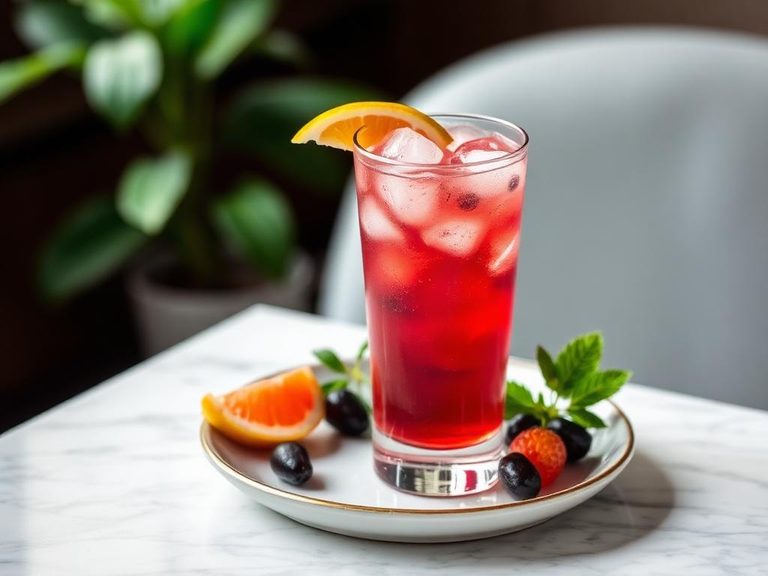
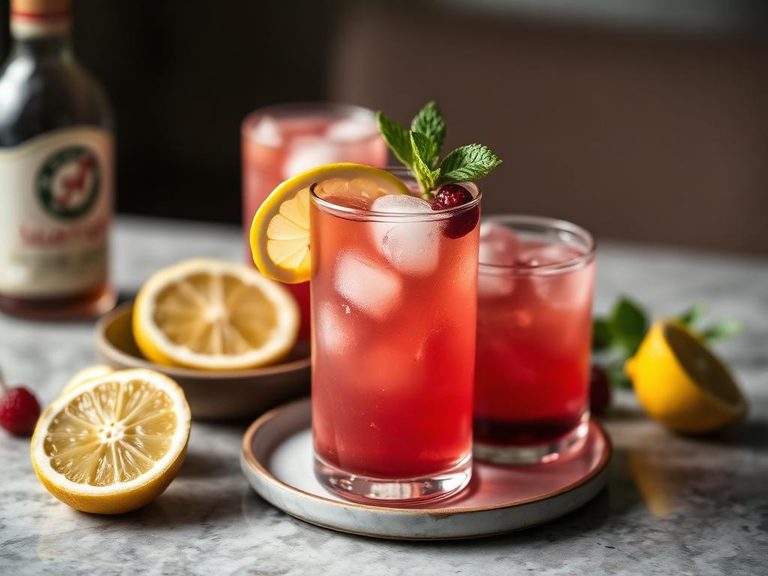
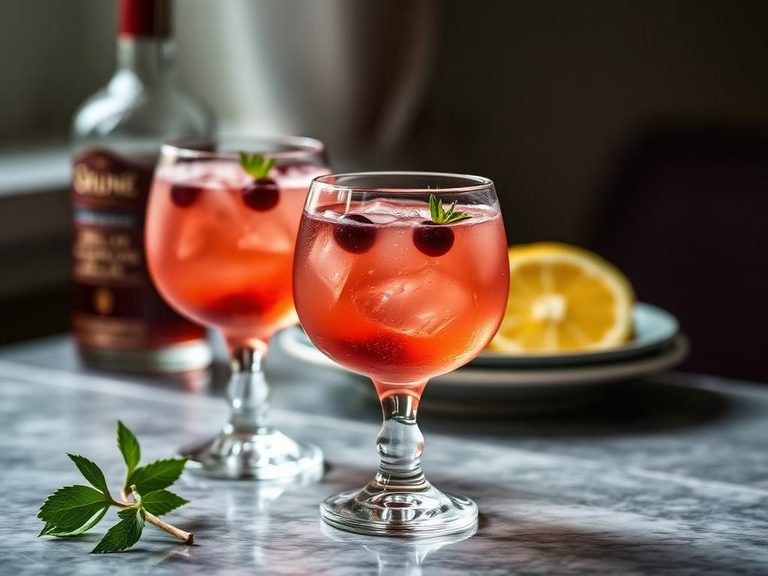
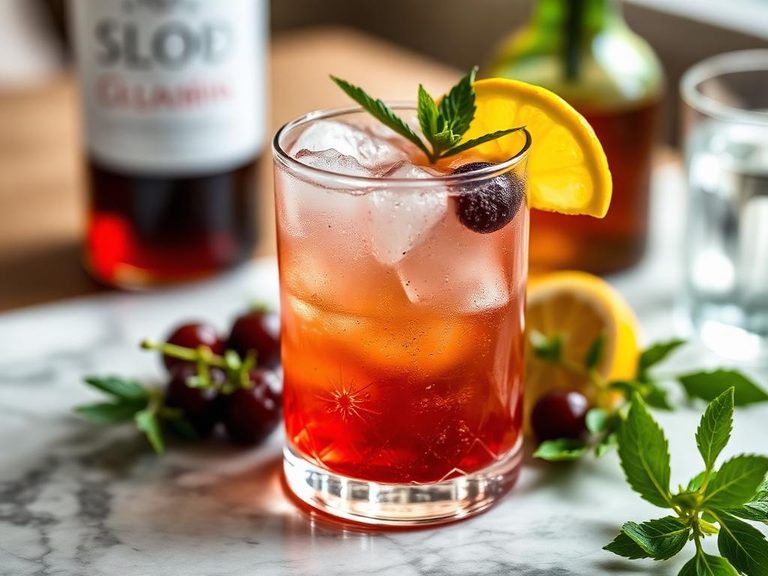
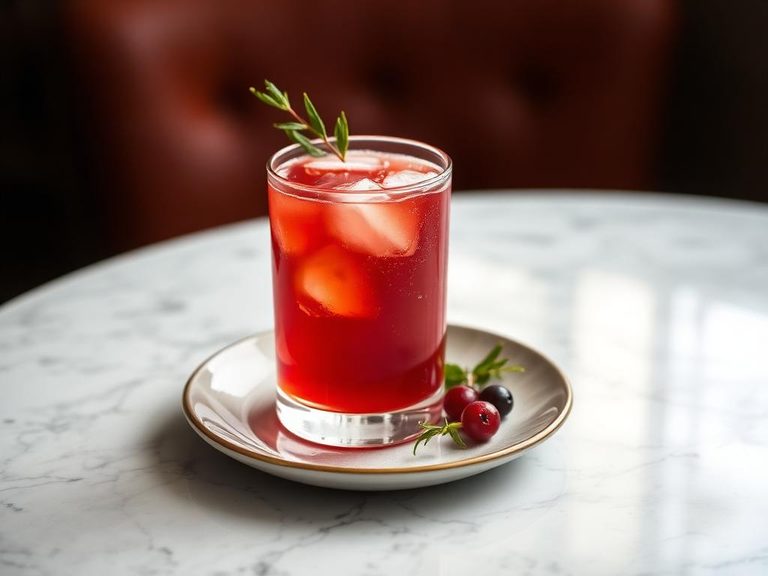
Sloe gin fizz is a sparkling, ruby-hued cocktail that marries the tart, almond-like depth of sloe gin with the effervescence of soda water. It's a light, refreshing drink with a distinctive berry tang and a subtle, bittersweet finish. Nutritionally, it's a low-calorie alcoholic beverage, deriving its minimal carbs almost entirely from the sugar in the sloe gin liqueur.
Calorie split: 1% protein · 98% carbs · 1% fat
↓ Full nutrition💚 Why it's loved
People love it for its perfect balance of sweet, tart, and effervescent, making it a sophisticated yet refreshing choice. Its deep red color and connection to British pub culture give it a classic, nostalgic appeal.
⚠️ Watch-outs & how to enjoy it better
The primary concern is the sugar content from the sloe gin, which can contribute to blood-sugar spikes. As an alcoholic beverage, it should be consumed in moderation. To mitigate the sugar impact, enjoy it slowly with a meal that includes protein and fiber to slow absorption.
Key benefits
- Low in calories compared to many cocktails
- Contains no fat or protein
- Provides a quick source of simple carbohydrates
- Offers a distinct, complex berry flavor profile
🍽️ Popular dishes
🌍 Where it's eaten
💡 Did you know?
The sloe berry, the key ingredient, is the fruit of the blackthorn bush and is traditionally harvested after the first frost of autumn, which is said to soften the fruit and enhance its flavor.
Full nutrition (USDA data · scales with serving)
| Water | 89.4 g |
| Energy | 66.0 kcal |
| Protein | 0.03 g |
| Total lipid (fat) | 0.01 g |
| Carbohydrate, by difference | 2.2 g |
| Fiber, total dietary | 0.00 g |
| Total Sugars | 1.9 g |
| Calcium, Ca | 4.0 mg |
| Iron, Fe | 0.02 mg |
| Magnesium, Mg | 1.0 mg |
| Phosphorus, P | 2.0 mg |
| Potassium, K | 9.0 mg |
| Sodium, Na | 16.0 mg |
| Zinc, Zn | 0.09 mg |
| Copper, Cu | 0.01 mg |
| Selenium, Se | 0.00 ug |
| Vitamin C, total ascorbic acid | 1.0 mg |
| Thiamin | 0.00 mg |
| Riboflavin | 0.00 mg |
| Niacin | 0.02 mg |
| Vitamin B-6 | 0.00 mg |
| Folate, total | 1.0 ug |
| Folic acid | 0.00 ug |
| Folate, food | 1.0 ug |
| Folate, DFE | 1.0 ug |
| Choline, total | 0.40 mg |
| Vitamin B-12 | 0.00 ug |
| Vitamin B-12, added | 0.00 ug |
| Vitamin A, RAE | 0.00 ug |
| Retinol | 0.00 ug |
| Carotene, beta | 0.00 ug |
| Carotene, alpha | 0.00 ug |
| Cryptoxanthin, beta | 3.0 ug |
| Lycopene | 0.00 ug |
| Lutein + zeaxanthin | 1.0 ug |
| Vitamin E (alpha-tocopherol) | 0.02 mg |
| Vitamin E, added | 0.00 mg |
| Vitamin D (D2 + D3) | 0.00 ug |
| Vitamin K (phylloquinone) | 0.00 ug |
| Alcohol, ethyl | 8.3 g |
| Caffeine | 0.00 mg |
| Theobromine | 0.00 mg |
Fat & fatty acid profile (per 100g)
| Fatty acids, total saturated | 0.00 g |
| SFA 4:0 | 0.00 g |
| SFA 6:0 | 0.00 g |
| SFA 8:0 | 0.00 g |
| SFA 10:0 | 0.00 g |
| SFA 12:0 | 0.00 g |
| SFA 14:0 | 0.00 g |
| SFA 16:0 | 0.00 g |
| SFA 18:0 | 0.00 g |
| Fatty acids, total monounsaturated | 0.00 g |
| MUFA 16:1 | 0.00 g |
| MUFA 18:1 | 0.00 g |
| MUFA 20:1 | 0.00 g |
| MUFA 22:1 | 0.00 g |
| Fatty acids, total polyunsaturated | 0.00 g |
| PUFA 18:2 | 0.00 g |
| PUFA 18:3 | 0.00 g |
| PUFA 18:4 | 0.00 g |
| PUFA 20:4 | 0.00 g |
| PUFA 20:5 n-3 (EPA) | 0.00 g |
| PUFA 22:5 n-3 (DPA) | 0.00 g |
| PUFA 22:6 n-3 (DHA) | 0.00 g |
| Cholesterol | 0.00 mg |
FAQ
Is sloe gin fizz a strong drink?
It's generally considered a medium-strength cocktail. The alcohol content comes primarily from the sloe gin (typically 15-30% ABV), diluted by soda water and often lemon juice.
Can I make a non-alcoholic version?
Yes. You can create a 'Sloe Gin Fizz Mocktail' by using a non-alcoholic sloe gin alternative or a syrup made from sloe berries, combined with lemon juice and soda water.
What's the difference between sloe gin and regular gin?
Sloe gin is a liqueur made by infusing gin with sloe berries and sugar. It's sweeter, fruitier, lower in alcohol, and has a distinctive deep red color compared to the juniper-forward, dry profile of standard gin.
Nutrient density (calculated · NRF9.3)
Nutrient Rich Foods index: beneficial nutrients (protein, fiber, vitamins, minerals) minus saturated fat, added sugar & sodium, per 100 kcal.
NRF9.3 index — Fulgoni, Keast & Drewnowski, 2009. Computed from USDA nutrients.
Weight-loss friendliness (composite index)
Energy density 0.66 kcal/g · 0% calories from protein · 0.0 g fiber · 1.9 g sugar per 100 g.
Composite of energy density (Rolls et al., 1999), protein & fiber satiety, minus sugar. A calculated heuristic — ranks satiety-per-calorie, not a clinical measure.
Dietary load (calculated from USDA values)
Potential renal acid load. Positive = acid-forming, negative = alkaline-forming.
Sodium-to-potassium ratio: 1.78 (lower is better — aim for ≤ 1)
Sodium:potassium per WHO potassium guidance. Computed from USDA nutrients.