

Shrimp and noodles with gravy
Common food
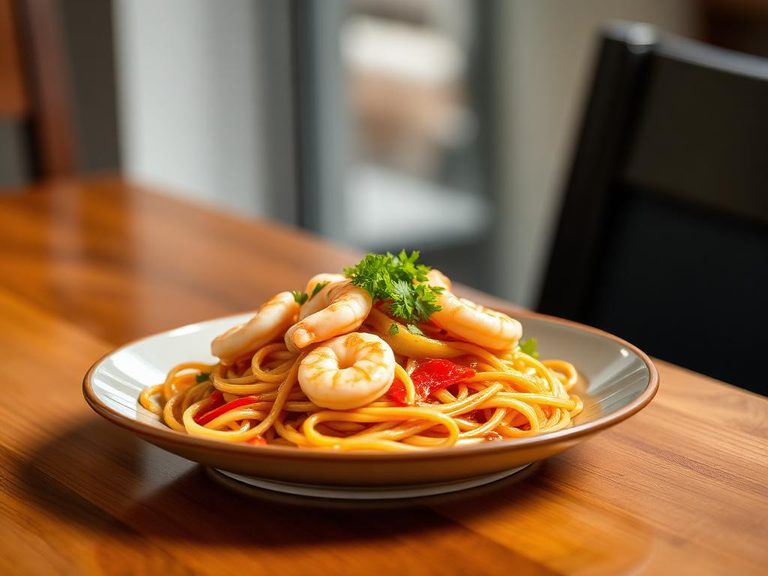
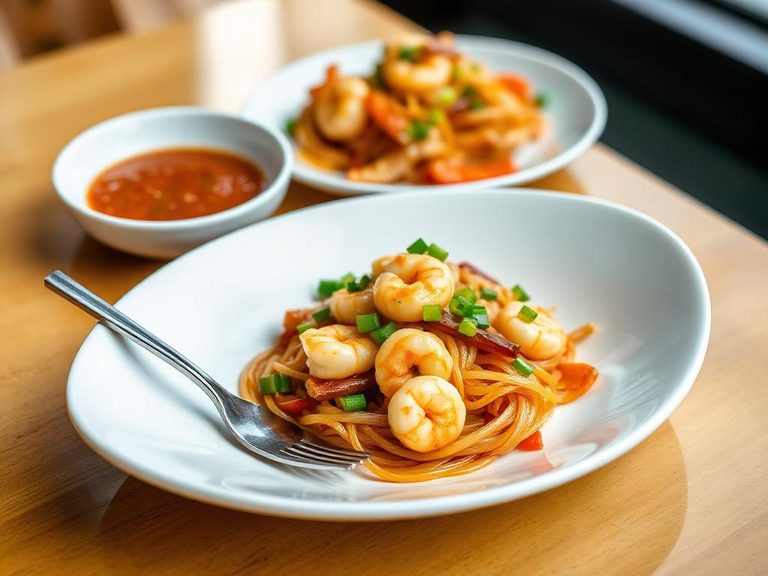
A comforting stir-fry of tender shrimp and soft noodles coated in a savory, umami-rich gravy. The texture is a delightful contrast between the bouncy, succulent shrimp and the slippery, sauce-soaked noodles. It's a balanced, relatively light dish, offering a good protein punch with a moderate calorie count per serving.
Calorie split: 19% protein · 45% carbs · 36% fat
↓ Full nutrition💚 Why it's loved
People adore it for the perfect marriage of savory, slightly sweet, and deeply umami flavors that coat every strand of noodle. It's a versatile comfort food, easily adapted with vegetables or different sauces, and holds a special place in many Asian cuisines as a hearty, everyday staple.
⚠️ Watch-outs & how to enjoy it better
The dish can be high in sodium from the gravy and soy-based sauces, which may be a concern for those monitoring blood pressure. The refined noodles can cause a quicker blood-sugar spike compared to whole grains. Tip: Balance the meal by adding extra vegetables like bok choy or broccoli to increase fiber, and consider using low-sodium soy sauce or tamari.
Key benefits
- Good source of lean protein from shrimp
- Provides quick energy from carbohydrate-rich noodles
- Contains minerals like selenium and zinc from seafood
- Lower in fat compared to many other stir-fry dishes
- Quick to prepare for a satisfying meal
🍽️ Popular dishes
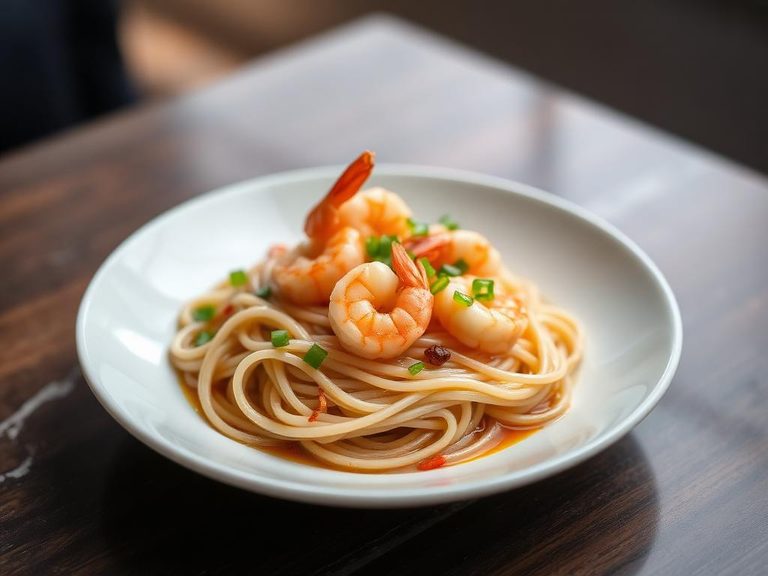
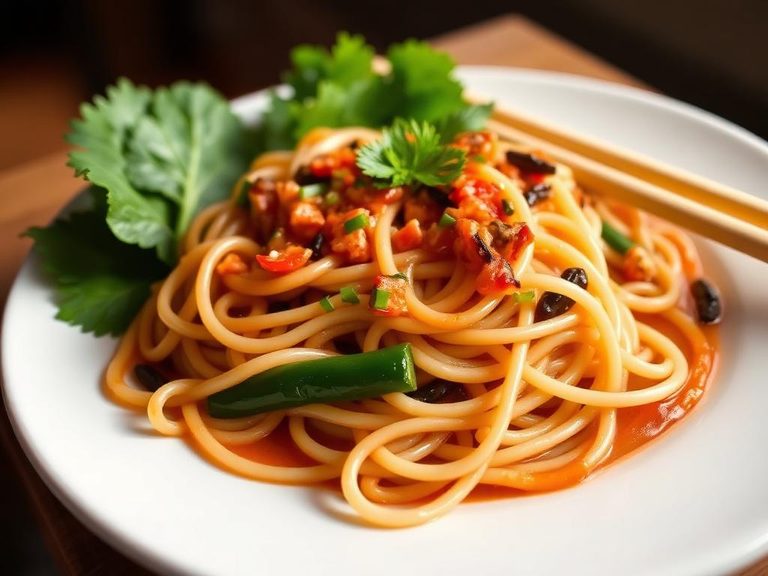
🌍 Where it's eaten
💡 Did you know?
The 'gravy' in many shrimp noodle dishes is often a masterful blend of soy sauce, oyster sauce, and sometimes a touch of sugar or rice wine, creating a complex flavor profile from just a few key ingredients.
Full nutrition (USDA data · scales with serving)
| Water | 73.0 g |
| Energy | 131 kcal |
| Protein | 6.0 g |
| Total lipid (fat) | 5.2 g |
| Carbohydrate, by difference | 14.7 g |
| Fiber, total dietary | 0.60 g |
| Total Sugars | 0.30 g |
| Calcium, Ca | 23.0 mg |
| Iron, Fe | 0.83 mg |
| Magnesium, Mg | 17.0 mg |
| Phosphorus, P | 92.0 mg |
| Potassium, K | 58.0 mg |
| Sodium, Na | 178 mg |
| Zinc, Zn | 0.61 mg |
| Copper, Cu | 0.10 mg |
| Selenium, Se | 19.9 ug |
| Vitamin C, total ascorbic acid | 0.00 mg |
| Thiamin | 0.16 mg |
| Riboflavin | 0.09 mg |
| Niacin | 1.6 mg |
| Vitamin B-6 | 0.07 mg |
| Folate, total | 47.0 ug |
| Folic acid | 39.0 ug |
| Folate, food | 8.0 ug |
| Folate, DFE | 75.0 ug |
| Choline, total | 35.0 mg |
| Vitamin B-12 | 0.30 ug |
| Vitamin B-12, added | 0.00 ug |
| Vitamin A, RAE | 17.0 ug |
| Retinol | 17.0 ug |
| Carotene, beta | 1.0 ug |
| Carotene, alpha | 0.00 ug |
| Cryptoxanthin, beta | 0.00 ug |
| Lycopene | 0.00 ug |
| Lutein + zeaxanthin | 20.0 ug |
| Vitamin E (alpha-tocopherol) | 1.0 mg |
| Vitamin E, added | 0.00 mg |
| Vitamin D (D2 + D3) | 0.10 ug |
| Vitamin K (phylloquinone) | 3.3 ug |
| Alcohol, ethyl | 0.00 g |
| Caffeine | 0.00 mg |
| Theobromine | 0.00 mg |
Fat & fatty acid profile (per 100g)
| Fatty acids, total saturated | 0.90 g |
| SFA 4:0 | 0.00 g |
| SFA 6:0 | 0.00 g |
| SFA 8:0 | 0.00 g |
| SFA 10:0 | 0.00 g |
| SFA 12:0 | 0.00 g |
| SFA 14:0 | 0.01 g |
| SFA 16:0 | 0.66 g |
| SFA 18:0 | 0.19 g |
| Fatty acids, total monounsaturated | 2.0 g |
| MUFA 16:1 | 0.07 g |
| MUFA 18:1 | 1.8 g |
| MUFA 20:1 | 0.03 g |
| MUFA 22:1 | 0.00 g |
| Fatty acids, total polyunsaturated | 1.7 g |
| PUFA 18:2 | 1.5 g |
| PUFA 18:3 | 0.16 g |
| PUFA 18:4 | 0.00 g |
| PUFA 20:4 | 0.01 g |
| PUFA 20:5 n-3 (EPA) | 0.02 g |
| PUFA 22:5 n-3 (DPA) | 0.00 g |
| PUFA 22:6 n-3 (DHA) | 0.02 g |
| Cholesterol | 49.0 mg |
FAQ
Can I make shrimp and noodles healthier?
Absolutely. Use whole-wheat or brown rice noodles for more fiber, load up on colorful vegetables, and opt for a lighter sauce with reduced sodium. Grilling or steaming the shrimp instead of stir-frying can also reduce added fat.
Why are my noodles getting mushy?
Overcooking is the main culprit. Cook noodles until just al dente, as they will continue to soften in the hot gravy. Rinsing them in cold water after boiling can also stop the cooking process and remove excess starch.
Is this dish gluten-free?
Not traditionally, as most gravies use soy sauce (which contains wheat) and noodles are often wheat-based. To make it gluten-free, use tamari or coconut aminos instead of soy sauce, and choose rice noodles or glass noodles.
Nutrient density (calculated · NRF9.3)
Nutrient Rich Foods index: beneficial nutrients (protein, fiber, vitamins, minerals) minus saturated fat, added sugar & sodium, per 100 kcal.
NRF9.3 index — Fulgoni, Keast & Drewnowski, 2009. Computed from USDA nutrients.
Weight-loss friendliness (composite index)
Energy density 1.31 kcal/g · 18% calories from protein · 0.6 g fiber · 0.3 g sugar per 100 g.
Composite of energy density (Rolls et al., 1999), protein & fiber satiety, minus sugar. A calculated heuristic — ranks satiety-per-calorie, not a clinical measure.
Dietary load (calculated from USDA values)
Potential renal acid load. Positive = acid-forming, negative = alkaline-forming.
Sodium-to-potassium ratio: 3.07 (lower is better — aim for ≤ 1)
Sodium:potassium per WHO potassium guidance. Computed from USDA nutrients.