

Sherbet, all flavors
Common food
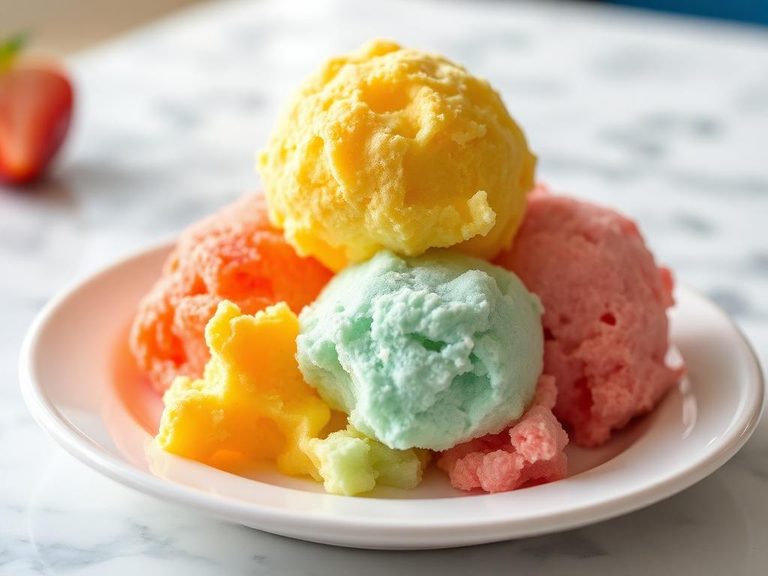
Sherbet is a light, icy dessert made from fruit juice, sugar, and water, distinct from ice cream by its lack of dairy. It delivers a bright, tangy, and refreshing flavor with a smooth, crystalline texture that melts quickly on the tongue. Nutritionally, it is primarily a source of simple carbohydrates, providing a quick energy boost with minimal fat and protein.
Calorie split: 3% protein · 84% carbs · 13% fat
↓ Full nutrition💚 Why it's loved
People love sherbet for its intense, pure fruit flavors and its ability to cleanse the palate between bites of rich food. Its light, non-creamy texture makes it a popular choice for a cool, summery treat or a simple, refreshing dessert.
⚠️ Watch-outs & how to enjoy it better
The high sugar content (24.32g per 100g) can cause rapid blood-sugar spikes, making it a concern for individuals with diabetes or insulin resistance. To mitigate this, pair a small portion with a source of protein or healthy fat (like nuts or Greek yogurt) to slow sugar absorption, and practice strict portion control. Some commercial sherbets may also contain artificial colors or flavors.
Key benefits
- Low in fat (2g per 100g)
- Provides quick energy from carbohydrates
- Contains a small amount of dietary fiber
- Often lower in calories than premium ice creams
- Can be a refreshing way to increase fluid intake
🍽️ Popular dishes
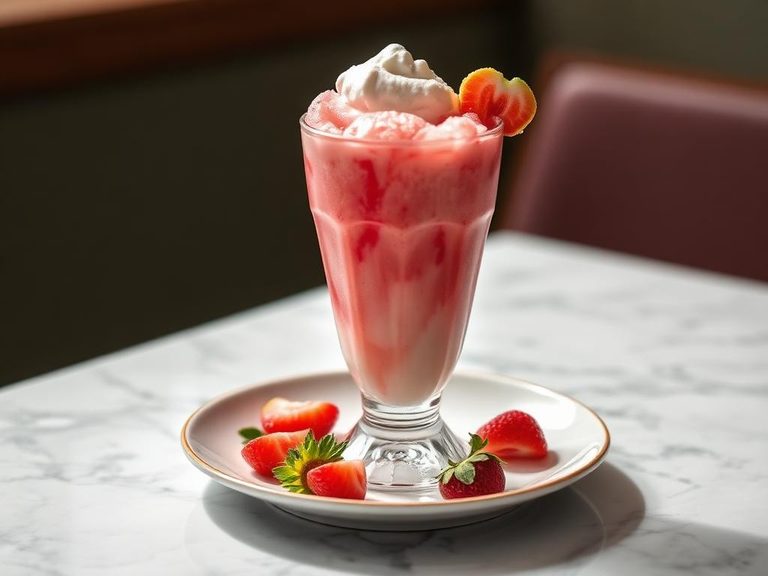
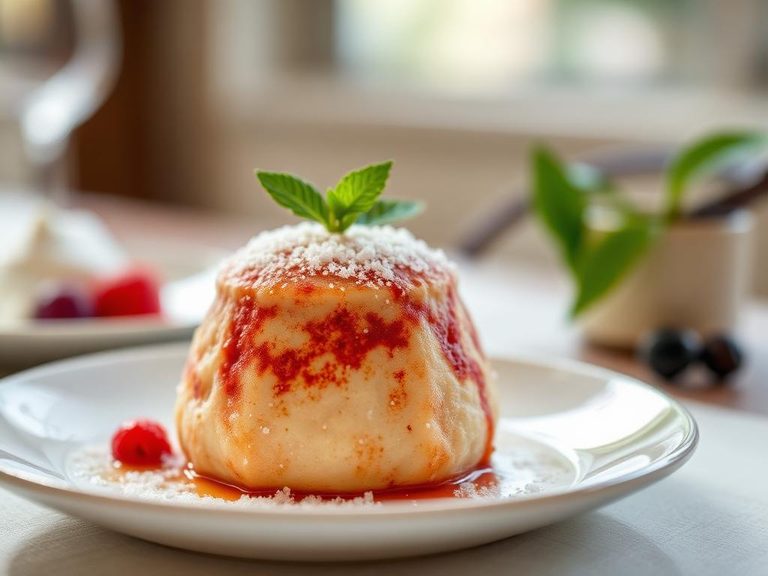
🌍 Where it's eaten
💡 Did you know?
The word 'sherbet' derives from the Persian 'sharbat', which itself comes from the Arabic 'shariba', meaning 'to drink', reflecting its origins as a chilled fruit drink before it was frozen into a dessert.
Full nutrition (USDA data · scales with serving)
| Water | 66.1 g |
| Energy | 144 kcal |
| Protein | 1.1 g |
| Total lipid (fat) | 2.0 g |
| Carbohydrate, by difference | 30.4 g |
| Fiber, total dietary | 1.3 g |
| Total Sugars | 24.3 g |
| Calcium, Ca | 54.0 mg |
| Iron, Fe | 0.14 mg |
| Magnesium, Mg | 8.0 mg |
| Phosphorus, P | 40.0 mg |
| Potassium, K | 96.0 mg |
| Sodium, Na | 46.0 mg |
| Zinc, Zn | 0.48 mg |
| Copper, Cu | 0.03 mg |
| Selenium, Se | 1.5 ug |
| Vitamin C, total ascorbic acid | 2.3 mg |
| Thiamin | 0.03 mg |
| Riboflavin | 0.10 mg |
| Niacin | 0.06 mg |
| Vitamin B-6 | 0.02 mg |
| Folate, total | 4.0 ug |
| Folic acid | 0.00 ug |
| Folate, food | 4.0 ug |
| Folate, DFE | 4.0 ug |
| Choline, total | 7.7 mg |
| Vitamin B-12 | 0.13 ug |
| Vitamin B-12, added | 0.00 ug |
| Vitamin A, RAE | 12.0 ug |
| Retinol | 12.0 ug |
| Carotene, beta | 1.0 ug |
| Carotene, alpha | 0.00 ug |
| Cryptoxanthin, beta | 5.0 ug |
| Lycopene | 0.00 ug |
| Lutein + zeaxanthin | 7.0 ug |
| Vitamin E (alpha-tocopherol) | 0.01 mg |
| Vitamin E, added | 0.00 mg |
| Vitamin D (D2 + D3) | 0.00 ug |
| Vitamin K (phylloquinone) | 0.00 ug |
| Alcohol, ethyl | 0.00 g |
| Caffeine | 0.00 mg |
| Theobromine | 0.00 mg |
Fat & fatty acid profile (per 100g)
| Fatty acids, total saturated | 1.2 g |
| SFA 4:0 | 0.09 g |
| SFA 6:0 | 0.01 g |
| SFA 8:0 | 0.02 g |
| SFA 10:0 | 0.03 g |
| SFA 12:0 | 0.02 g |
| SFA 14:0 | 0.17 g |
| SFA 16:0 | 0.58 g |
| SFA 18:0 | 0.17 g |
| Fatty acids, total monounsaturated | 0.53 g |
| MUFA 16:1 | 0.05 g |
| MUFA 18:1 | 0.47 g |
| MUFA 20:1 | 0.00 g |
| MUFA 22:1 | 0.00 g |
| Fatty acids, total polyunsaturated | 0.08 g |
| PUFA 18:2 | 0.07 g |
| PUFA 18:3 | 0.01 g |
| PUFA 18:4 | 0.00 g |
| PUFA 20:4 | 0.00 g |
| PUFA 20:5 n-3 (EPA) | 0.00 g |
| PUFA 22:5 n-3 (DPA) | 0.00 g |
| PUFA 22:6 n-3 (DHA) | 0.00 g |
| Cholesterol | 1.0 mg |
FAQ
What is the main difference between sherbet and sorbet?
Sherbet traditionally contains a small amount of dairy (like milk or buttermilk), while sorbet is dairy-free, made only from fruit juice, sugar, and water.
Is sherbet a good option for a low-fat diet?
Yes, it is relatively low in fat compared to ice cream, making it a lighter frozen dessert option, though it is still high in sugar.
Can I make sherbet at home without an ice cream maker?
Yes, you can freeze the mixture in a shallow pan and stir vigorously with a fork every 30 minutes to break up ice crystals until it reaches the desired consistency.
Nutrient density (calculated · NRF9.3)
Nutrient Rich Foods index: beneficial nutrients (protein, fiber, vitamins, minerals) minus saturated fat, added sugar & sodium, per 100 kcal.
NRF9.3 index — Fulgoni, Keast & Drewnowski, 2009. Computed from USDA nutrients.
Weight-loss friendliness (composite index)
Energy density 1.44 kcal/g · 3% calories from protein · 1.3 g fiber · 24.3 g sugar per 100 g.
Composite of energy density (Rolls et al., 1999), protein & fiber satiety, minus sugar. A calculated heuristic — ranks satiety-per-calorie, not a clinical measure.
Dietary load (calculated from USDA values)
Potential renal acid load. Positive = acid-forming, negative = alkaline-forming.
Sodium-to-potassium ratio: 0.48 (lower is better — aim for ≤ 1)
Sodium:potassium per WHO potassium guidance. Computed from USDA nutrients.