

Raccoon
Common food

Photo: Wikipedia
Raccoon is a lean, dark game meat with a flavor profile often described as a cross between pork and rabbit, featuring a slightly sweet, nutty taste. Its texture is fine-grained and dense, similar to dark chicken or rabbit, but with a richer, more robust character. Nutritionally, it is a high-protein, zero-carbohydrate meat, making it an excellent choice for low-carb and high-protein diets.
Calorie split: 47% protein · 0% carbs · 53% fat
↓ Full nutrition💚 Why it's loved
People love raccoon meat for its unique, savory flavor that is richer than chicken but leaner than pork, offering a distinct gamey taste that is highly prized in traditional and adventurous cuisines. Its versatility allows it to be roasted, stewed, or smoked, often becoming a centerpiece in hearty, rustic dishes that celebrate its bold character.
⚠️ Watch-outs & how to enjoy it better
Raccoon meat can be tough and gamey if not prepared properly, and it may carry parasites like trichinella if not cooked to a safe internal temperature. To counteract toughness, it should be slow-cooked or braised, and to reduce gamey flavor, marinating in acidic or aromatic ingredients like vinegar, wine, or herbs is recommended. Always ensure it is cooked to at least 160°F (71°C) to eliminate food safety risks.
Key benefits
- High in protein (28.97g per 100g) for muscle maintenance and satiety.
- Zero carbohydrates and sugar, ideal for ketogenic and low-carb diets.
- Contains essential minerals like iron and zinc from game meat.
- Low in fat compared to many domestic meats, with a healthy fat profile.
- A sustainable, wild-sourced protein option in regions where it is hunted.
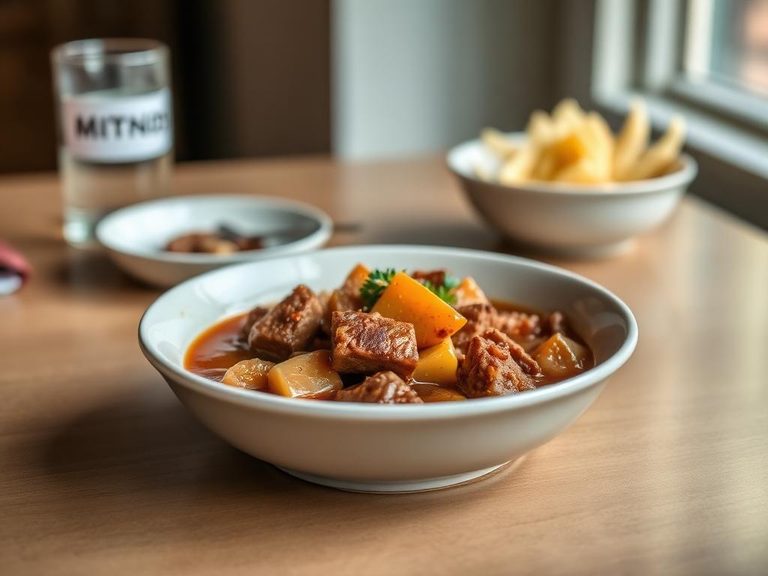
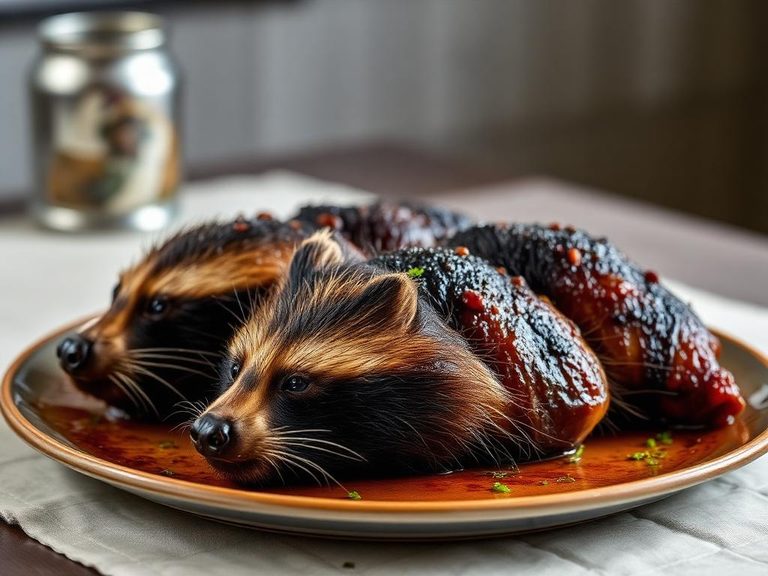
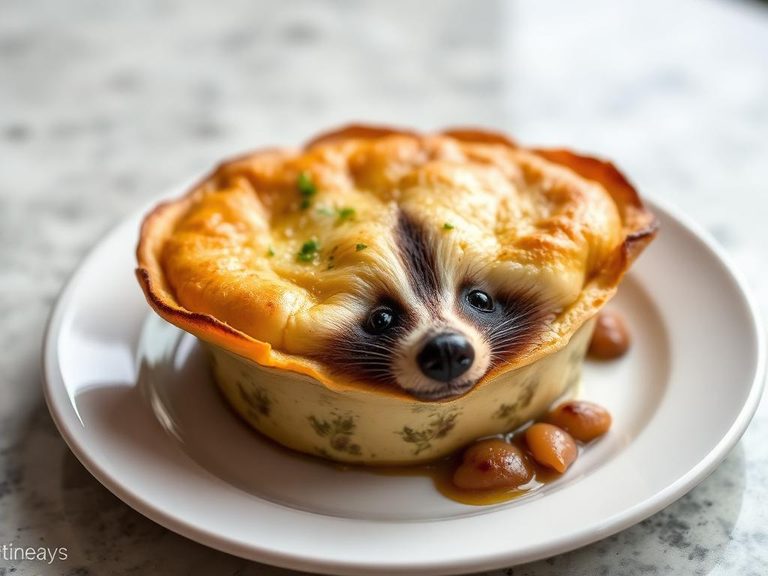
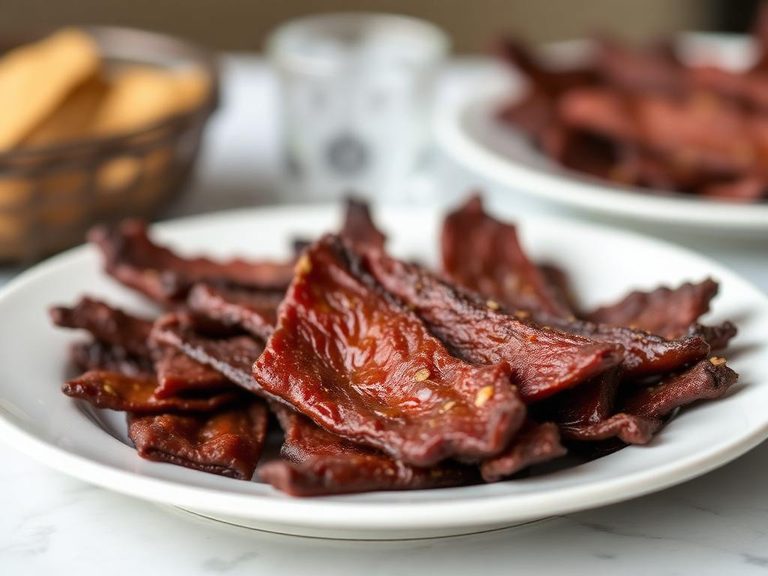
🍽️ Popular dishes
🌍 Where it's eaten
💡 Did you know?
In the early 20th century, raccoon was a common meat in the American South and was even served at the White House during President Calvin Coolidge's administration, reflecting its status as a staple in rural and frontier cuisine.
Full nutrition (USDA data · scales with serving)
| Water | 53.9 g |
| Energy | 253 kcal |
| Protein | 29.0 g |
| Total lipid (fat) | 14.4 g |
| Carbohydrate, by difference | 0.00 g |
| Fiber, total dietary | 0.00 g |
| Total Sugars | 0.00 g |
| Calcium, Ca | 14.0 mg |
| Iron, Fe | 7.0 mg |
| Magnesium, Mg | 30.0 mg |
| Phosphorus, P | 259 mg |
| Potassium, K | 395 mg |
| Sodium, Na | 386 mg |
| Zinc, Zn | 2.3 mg |
| Copper, Cu | 0.19 mg |
| Selenium, Se | 17.9 ug |
| Vitamin C, total ascorbic acid | 0.00 mg |
| Thiamin | 0.58 mg |
| Riboflavin | 0.52 mg |
| Niacin | 4.6 mg |
| Vitamin B-6 | 0.47 mg |
| Folate, total | 11.0 ug |
| Folic acid | 0.00 ug |
| Folate, food | 11.0 ug |
| Folate, DFE | 11.0 ug |
| Choline, total | 115 mg |
| Vitamin B-12 | 8.2 ug |
| Vitamin B-12, added | 0.00 ug |
| Vitamin A, RAE | 0.00 ug |
| Retinol | 0.00 ug |
| Carotene, beta | 0.00 ug |
| Carotene, alpha | 0.00 ug |
| Cryptoxanthin, beta | 0.00 ug |
| Lycopene | 0.00 ug |
| Lutein + zeaxanthin | 0.00 ug |
| Vitamin E (alpha-tocopherol) | 0.49 mg |
| Vitamin E, added | 0.00 mg |
| Vitamin D (D2 + D3) | 0.00 ug |
| Vitamin K (phylloquinone) | 1.7 ug |
| Alcohol, ethyl | 0.00 g |
| Caffeine | 0.00 mg |
| Theobromine | 0.00 mg |
Fat & fatty acid profile (per 100g)
| Fatty acids, total saturated | 4.0 g |
| SFA 4:0 | 0.00 g |
| SFA 6:0 | 0.00 g |
| SFA 8:0 | 0.00 g |
| SFA 10:0 | 0.00 g |
| SFA 12:0 | 0.00 g |
| SFA 14:0 | 0.55 g |
| SFA 16:0 | 2.3 g |
| SFA 18:0 | 1.1 g |
| Fatty acids, total monounsaturated | 5.2 g |
| MUFA 16:1 | 0.95 g |
| MUFA 18:1 | 4.0 g |
| MUFA 20:1 | 0.06 g |
| MUFA 22:1 | 0.00 g |
| Fatty acids, total polyunsaturated | 2.1 g |
| PUFA 18:2 | 1.3 g |
| PUFA 18:3 | 0.06 g |
| PUFA 18:4 | 0.00 g |
| PUFA 20:4 | 0.37 g |
| PUFA 20:5 n-3 (EPA) | 0.05 g |
| PUFA 22:5 n-3 (DPA) | 0.10 g |
| PUFA 22:6 n-3 (DHA) | 0.03 g |
| Cholesterol | 96.0 mg |
FAQ
Is raccoon meat safe to eat?
Yes, raccoon meat is safe to eat if properly prepared and cooked to an internal temperature of at least 160°F (71°C) to kill parasites like trichinella. It should be sourced from healthy animals and handled with proper food safety practices.
What does raccoon meat taste like?
Raccoon meat is often described as a cross between pork and rabbit, with a slightly sweet, nutty flavor and a rich, gamey taste. Its texture is fine-grained and dense, similar to dark chicken or rabbit.
How do you cook raccoon meat?
Raccoon meat is best cooked using slow methods like braising, stewing, or smoking to tenderize it and reduce its gamey flavor. Marinating in acidic or aromatic ingredients such as vinegar, wine, or herbs can also enhance its taste and texture.
Nutrient density (calculated · NRF9.3)
Nutrient Rich Foods index: beneficial nutrients (protein, fiber, vitamins, minerals) minus saturated fat, added sugar & sodium, per 100 kcal.
NRF9.3 index — Fulgoni, Keast & Drewnowski, 2009. Computed from USDA nutrients.
Weight-loss friendliness (composite index)
Energy density 2.53 kcal/g · 46% calories from protein · 0.0 g fiber · 0.0 g sugar per 100 g.
Composite of energy density (Rolls et al., 1999), protein & fiber satiety, minus sugar. A calculated heuristic — ranks satiety-per-calorie, not a clinical measure.
Dietary load (calculated from USDA values)
Potential renal acid load. Positive = acid-forming, negative = alkaline-forming.
Sodium-to-potassium ratio: 0.98 (lower is better — aim for ≤ 1)
Sodium:potassium per WHO potassium guidance. Computed from USDA nutrients.