

Pork, fresh, variety meats and by-products, brain, raw
Whole food · Pork Products
Pork brain is a soft, delicate organ meat with a creamy, custard-like texture when cooked and a mild, subtly sweet flavor. It is exceptionally rich in omega-3 fatty acids and provides a concentrated source of high-quality protein and essential minerals. Its unique, melt-in-the-mouth quality makes it a prized ingredient in many traditional cuisines.
Calorie split: 33% protein · 0% carbs · 67% fat
↓ Full nutrition💚 Why it's loved
People love pork brain for its luxurious, delicate texture that absorbs seasonings beautifully, offering a unique culinary experience. It is cherished in many cultures as a traditional delicacy, often associated with nourishment and special occasions.
⚠️ Watch-outs & how to enjoy it better
Pork brain is very high in cholesterol, which may be a concern for individuals with specific health conditions. It also requires careful sourcing and thorough cooking to ensure safety. To enjoy it, practice strict portion control (e.g., as a small part of a larger dish) and ensure it is cooked to an internal temperature of 160°F (71°C).
Key benefits
- Excellent source of DHA, an omega-3 fatty acid crucial for brain health.
- Provides complete protein with all essential amino acids.
- Rich in essential minerals like selenium, phosphorus, and B vitamins.
- Contains choline, a nutrient important for liver function and metabolism.
🍽️ Popular dishes
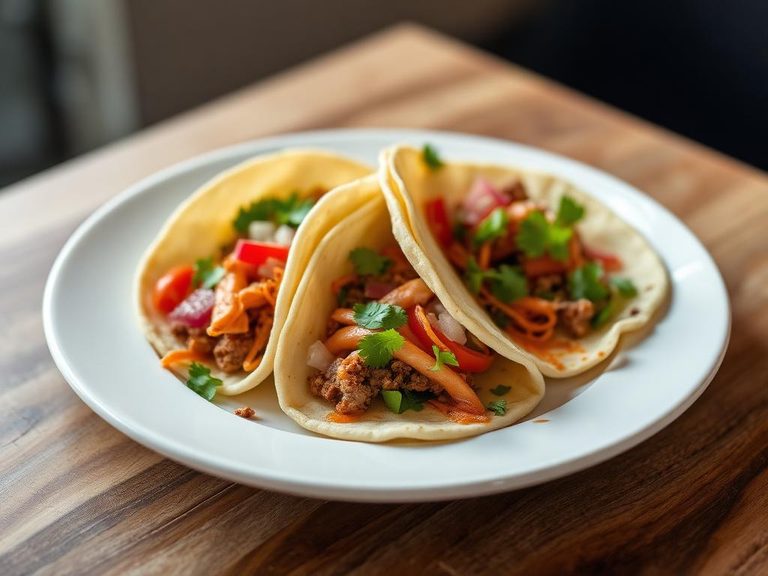
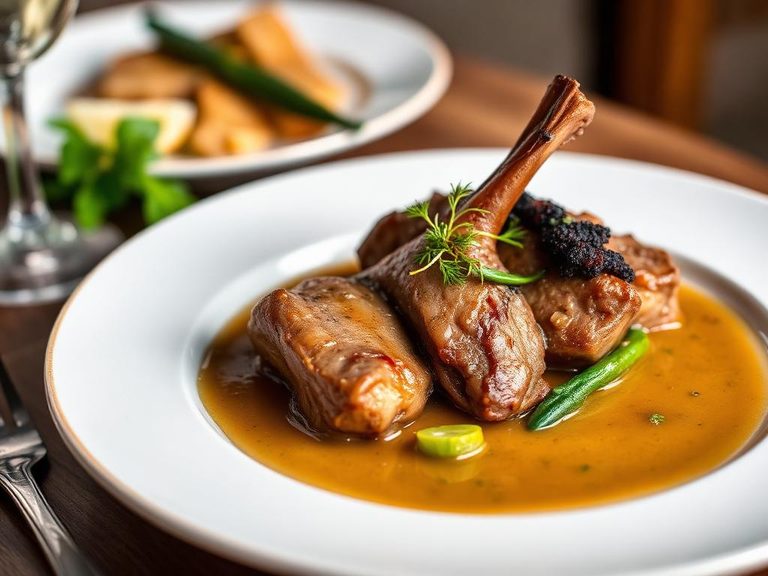
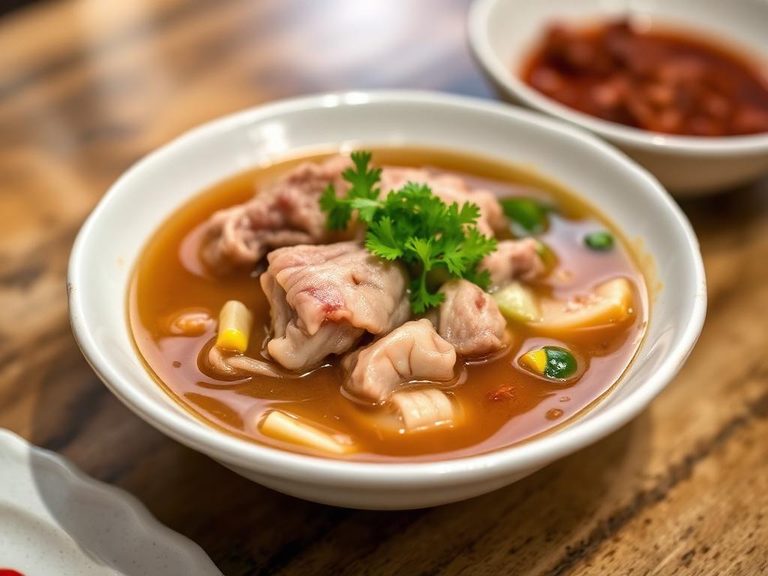
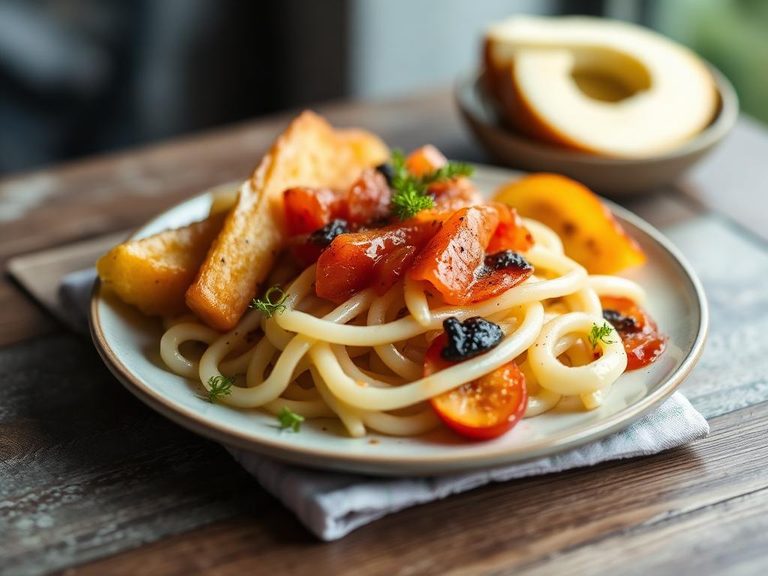
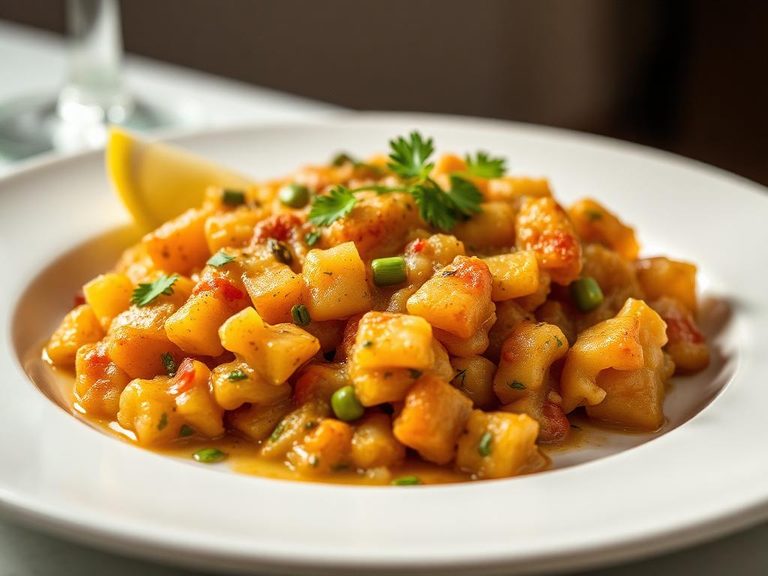
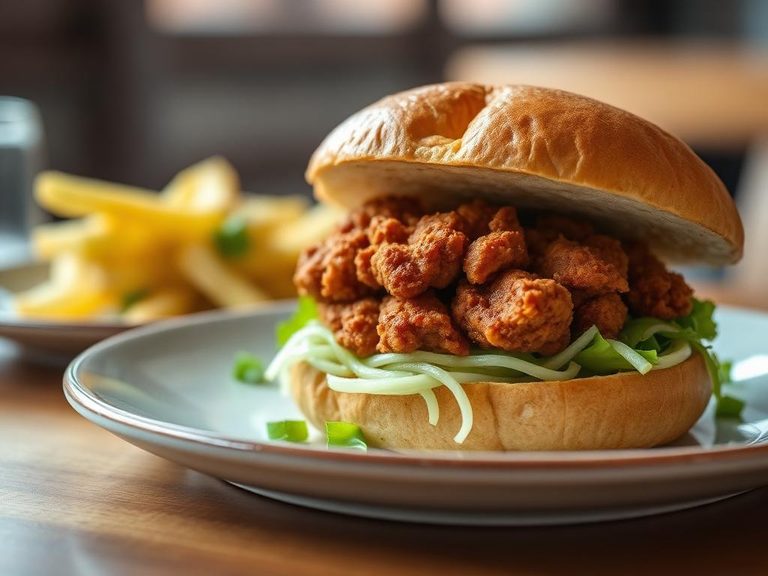
🌍 Where it's eaten
💡 Did you know?
Due to its high fat and low connective tissue content, pork brain is sometimes used as a natural binding agent in terrines and pâtés, replacing eggs.
Full nutrition (USDA data · scales with serving)
| Water | 78.4 g |
| Energy | 127 kcal |
| Energy | 531 kj |
| Protein | 10.3 g |
| Total lipid (fat) | 9.2 g |
| Ash | 1.1 g |
| Carbohydrate, by difference | 0.00 g |
| Fiber, total dietary | 0.00 g |
| Calcium, Ca | 10.0 mg |
| Iron, Fe | 1.6 mg |
| Magnesium, Mg | 14.0 mg |
| Phosphorus, P | 282 mg |
| Potassium, K | 258 mg |
| Sodium, Na | 120 mg |
| Zinc, Zn | 1.3 mg |
| Copper, Cu | 0.24 mg |
| Manganese, Mn | 0.09 mg |
| Selenium, Se | 15.9 ug |
| Vitamin C, total ascorbic acid | 13.5 mg |
| Thiamin | 0.15 mg |
| Riboflavin | 0.28 mg |
| Niacin | 4.3 mg |
| Pantothenic acid | 2.8 mg |
| Vitamin B-6 | 0.19 mg |
| Folate, total | 6.0 ug |
| Folic acid | 0.00 ug |
| Folate, food | 6.0 ug |
| Folate, DFE | 6.0 ug |
| Vitamin B-12 | 2.2 ug |
| Vitamin A, RAE | 0.00 ug |
| Retinol | 0.00 ug |
| Vitamin A, IU | 0.00 iu |
Fat & fatty acid profile (per 100g)
| Fatty acids, total saturated | 2.1 g |
| SFA 14:0 | 0.04 g |
| SFA 16:0 | 1.0 g |
| SFA 18:0 | 1.00 g |
| Fatty acids, total monounsaturated | 1.7 g |
| MUFA 16:1 | 0.12 g |
| MUFA 18:1 | 1.1 g |
| Fatty acids, total polyunsaturated | 1.4 g |
| PUFA 18:2 | 0.09 g |
| PUFA 18:3 | 0.12 g |
| PUFA 20:4 | 0.47 g |
| PUFA 22:5 n-3 (DPA) | 0.22 g |
| PUFA 22:6 n-3 (DHA) | 0.45 g |
| Cholesterol | 2195 mg |
Amino acid profile (per 100g)
| Tryptophan | 0.13 g |
| Threonine | 0.48 g |
| Isoleucine | 0.47 g |
| Leucine | 0.90 g |
| Lysine | 0.81 g |
| Methionine | 0.20 g |
| Phenylalanine | 0.52 g |
| Tyrosine | 0.43 g |
| Valine | 0.59 g |
| Arginine | 0.54 g |
| Histidine | 0.28 g |
| Aspartic acid | 1.0 g |
| Glutamic acid | 1.2 g |
| Glycine | 0.49 g |
FAQ
Is eating pork brain safe?
Yes, when sourced from healthy animals and cooked thoroughly to an internal temperature of 160°F (71°C). Always purchase from a reputable butcher.
How do you prepare pork brain?
It is often soaked in milk or water to remove blood, then gently poached, fried, or added to soups and stews. Overcooking can make it rubbery.
What does pork brain taste like?
It has a very mild, slightly sweet flavor similar to sweetbreads, with a soft, creamy, almost custard-like texture when properly cooked.
Nutrient density (calculated · NRF9.3)
Nutrient Rich Foods index: beneficial nutrients (protein, fiber, vitamins, minerals) minus saturated fat, added sugar & sodium, per 100 kcal.
NRF9.3 index — Fulgoni, Keast & Drewnowski, 2009. Computed from USDA nutrients.
Weight-loss friendliness (composite index)
Energy density 1.27 kcal/g · 32% calories from protein · 0.0 g fiber · 0.0 g sugar per 100 g.
Composite of energy density (Rolls et al., 1999), protein & fiber satiety, minus sugar. A calculated heuristic — ranks satiety-per-calorie, not a clinical measure.
Dietary load (calculated from USDA values)
Potential renal acid load. Positive = acid-forming, negative = alkaline-forming.
Sodium-to-potassium ratio: 0.47 (lower is better — aim for ≤ 1)
Sodium:potassium per WHO potassium guidance. Computed from USDA nutrients.