

Pig Brain Soup (China)
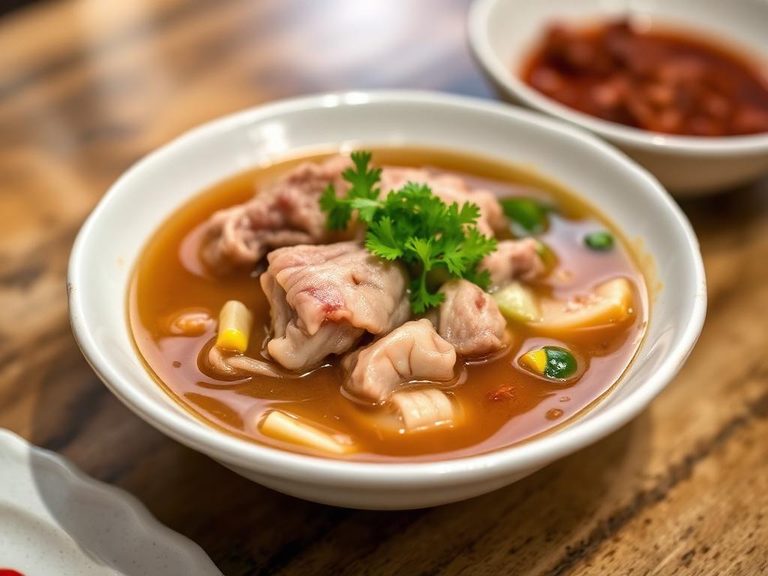
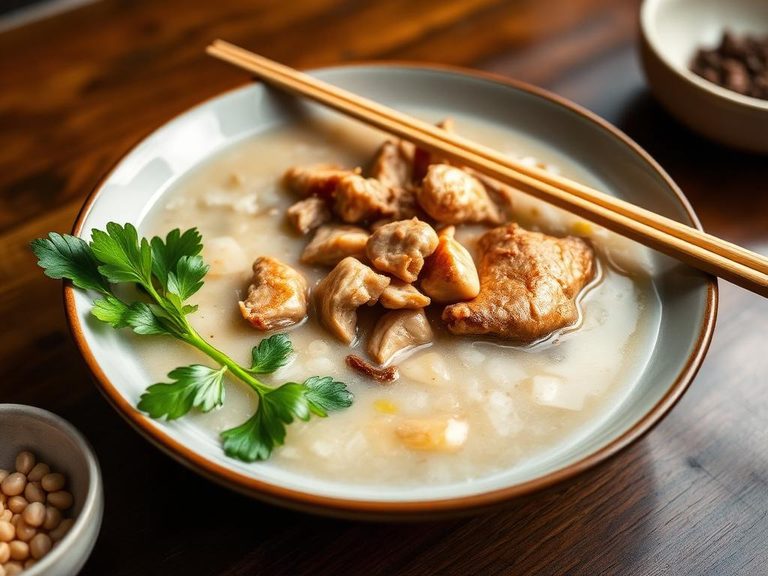
Pig Brain Soup is a traditional Chinese delicacy, often prepared in a clear broth with ginger, scallions, and sometimes rice wine or tofu. The dish features tender, creamy pig brains as the star ingredient and is particularly popular in regions like Sichuan, Hunan, and parts of southern China.
🍽️ Nutrition at a glance
This soup is high in protein and fat, with negligible carbohydrates. It is a significant source of cholesterol, vitamin B12, and iron, with a typical serving containing roughly 200-300 calories.
Nutrition breakdown
| Calories | 260 kcal |
| Protein | 18 g |
| Carbs | 2 g |
| Fat | 20 g |
| Fiber | 0 g |
| Sugar | 0.5 g |
| Sodium | 680 mg |
| Cholesterol | 2200 mg |
| Vitamin B12 | 12 µg |
| Iron | 4.5 mg |
| Phosphorus | 350 mg |
| Selenium | 40 µg |
| Riboflavin (B2) | 0.5 mg |
| Potassium | 300 mg |
| Zinc | 2.5 mg |
Per 1 bowl (300 g) · estimated, varies by recipe
💡 What's interesting
Culinarily, the dish is prized for the brain's uniquely soft, custard-like texture. Nutritionally, it is exceptionally rich in omega-3 fatty acids (like DHA) and phosphatidylserine, compounds associated with brain health, though it is also very high in dietary cholesterol.
🍽️ Related dishes
AI estimate may be inaccurate · Terms