

Pork and watercress with soy-based sauce
Common food

Photo: Wikipedia
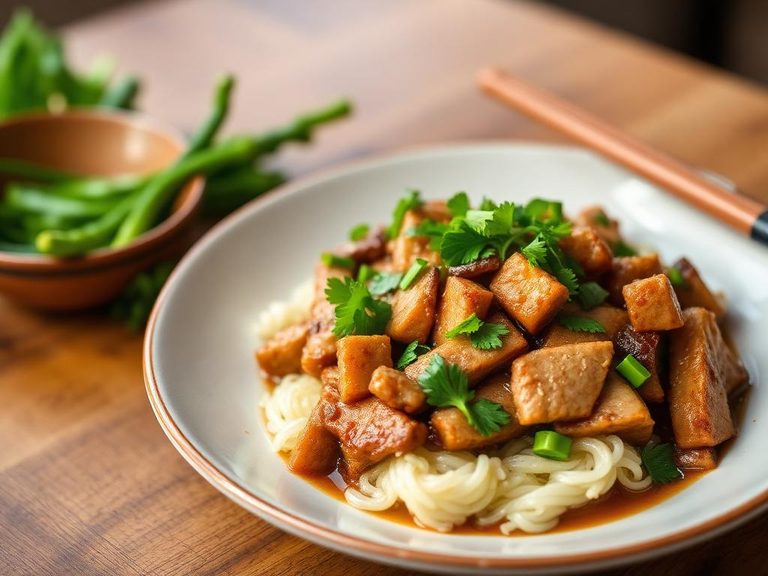
This dish features tender, savory slices of pork stir-fried with crisp, peppery watercress, all coated in a glossy, umami-rich soy-based sauce. The texture is a delightful contrast between the soft meat and the snappy, slightly bitter greens, while the sauce adds a deep, salty-savory backbone. It's a protein-packed, relatively low-carb meal, with the watercress contributing a notable dose of vitamins and minerals.
Calorie split: 32% protein · 7% carbs · 61% fat
↓ Full nutrition💚 Why it's loved
People love it for the harmonious balance of flavors—the savory pork, the bright, peppery bite of the watercress, and the rich, salty sauce that ties everything together. It's also valued as a quick, nutritious staple in many Asian home kitchens, representing a simple yet satisfying comfort food.
⚠️ Watch-outs & how to enjoy it better
The soy-based sauce can be high in sodium, which is a consideration for those monitoring salt intake. To counteract this, use a reduced-sodium soy sauce or tamari, and be mindful of portion size. Additionally, watercress is a cruciferous vegetable containing oxalates; while healthy for most, individuals prone to certain kidney issues should consult a doctor. Pairing the dish with a serving of rice or noodles can help balance the sodium and provide a more complete meal.
Key benefits
- High-quality protein source from pork for muscle maintenance.
- Watercress provides vitamins K, A, and C, plus antioxidants.
- Quick to prepare, making it a practical weeknight meal.
- Low in carbohydrates, suitable for many dietary approaches.
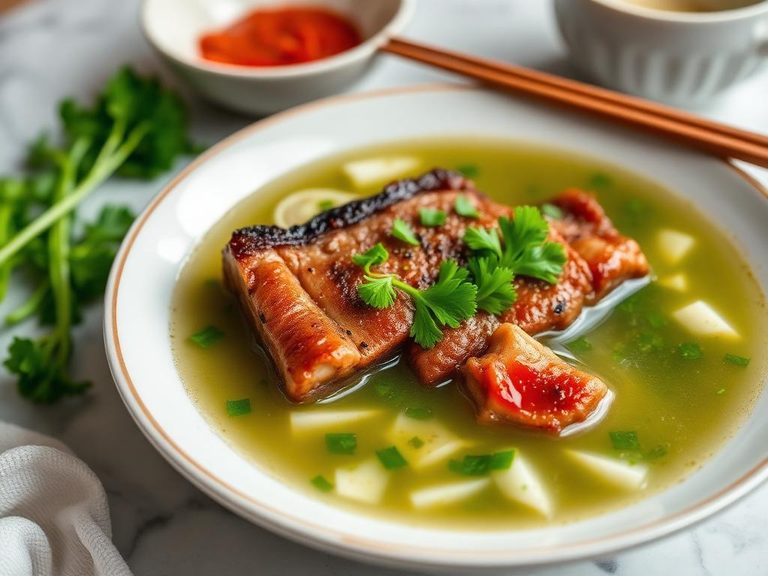
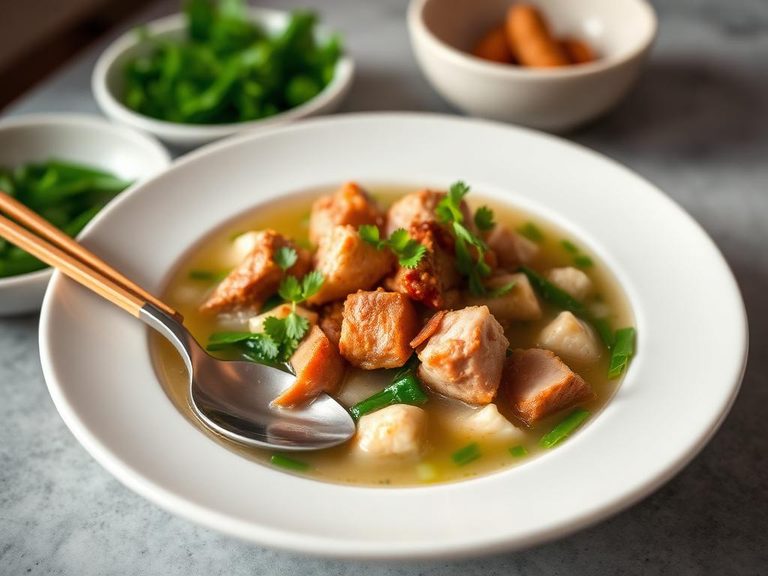
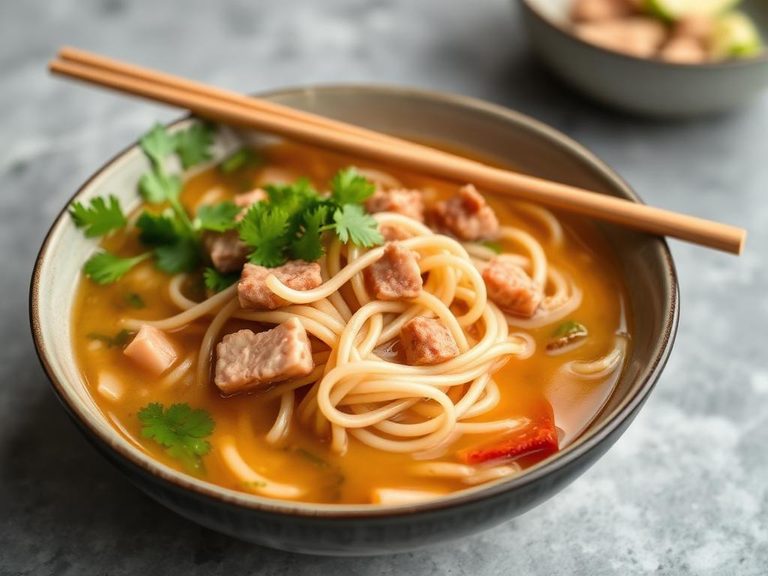
🍽️ Popular dishes
🌍 Where it's eaten
💡 Did you know?
Watercress is a member of the mustard family and its peppery bite comes from compounds called glucosinolates, which are also found in wasabi and mustard greens.
Full nutrition (USDA data · scales with serving)
| Water | 67.7 g |
| Energy | 190 kcal |
| Protein | 14.9 g |
| Total lipid (fat) | 12.7 g |
| Carbohydrate, by difference | 3.4 g |
| Fiber, total dietary | 0.50 g |
| Total Sugars | 1.1 g |
| Calcium, Ca | 24.0 mg |
| Iron, Fe | 0.82 mg |
| Magnesium, Mg | 21.0 mg |
| Phosphorus, P | 142 mg |
| Potassium, K | 295 mg |
| Sodium, Na | 341 mg |
| Zinc, Zn | 1.4 mg |
| Copper, Cu | 0.06 mg |
| Selenium, Se | 17.4 ug |
| Vitamin C, total ascorbic acid | 2.6 mg |
| Thiamin | 0.51 mg |
| Riboflavin | 0.18 mg |
| Niacin | 3.2 mg |
| Vitamin B-6 | 0.33 mg |
| Folate, total | 8.0 ug |
| Folic acid | 0.00 ug |
| Folate, food | 8.0 ug |
| Folate, DFE | 8.0 ug |
| Choline, total | 51.1 mg |
| Vitamin B-12 | 0.36 ug |
| Vitamin B-12, added | 0.00 ug |
| Vitamin A, RAE | 4.0 ug |
| Retinol | 1.0 ug |
| Carotene, beta | 37.0 ug |
| Carotene, alpha | 0.00 ug |
| Cryptoxanthin, beta | 0.00 ug |
| Lycopene | 0.00 ug |
| Lutein + zeaxanthin | 71.0 ug |
| Vitamin E (alpha-tocopherol) | 1.6 mg |
| Vitamin E, added | 0.00 mg |
| Vitamin D (D2 + D3) | 0.30 ug |
| Vitamin K (phylloquinone) | 22.2 ug |
| Alcohol, ethyl | 0.00 g |
| Caffeine | 0.00 mg |
| Theobromine | 0.00 mg |
Fat & fatty acid profile (per 100g)
| Fatty acids, total saturated | 2.8 g |
| SFA 4:0 | 0.00 g |
| SFA 6:0 | 0.00 g |
| SFA 8:0 | 0.00 g |
| SFA 10:0 | 0.01 g |
| SFA 12:0 | 0.01 g |
| SFA 14:0 | 0.06 g |
| SFA 16:0 | 1.8 g |
| SFA 18:0 | 0.78 g |
| Fatty acids, total monounsaturated | 5.5 g |
| MUFA 16:1 | 0.18 g |
| MUFA 18:1 | 5.2 g |
| MUFA 20:1 | 0.10 g |
| MUFA 22:1 | 0.00 g |
| Fatty acids, total polyunsaturated | 3.4 g |
| PUFA 18:2 | 3.0 g |
| PUFA 18:3 | 0.36 g |
| PUFA 18:4 | 0.00 g |
| PUFA 20:4 | 0.02 g |
| PUFA 20:5 n-3 (EPA) | 0.00 g |
| PUFA 22:5 n-3 (DPA) | 0.00 g |
| PUFA 22:6 n-3 (DHA) | 0.00 g |
| Cholesterol | 39.0 mg |
FAQ
Is this dish spicy?
The dish itself is not typically spicy from chili, but watercress has a natural, mild peppery or peppery-bitter flavor that some might describe as a gentle kick.
Can I use a different green if I can't find watercress?
Yes, you can substitute with spinach (for a milder taste) or arugula (to maintain some peppery note), though the texture and specific flavor profile will change.
What cut of pork is best?
Lean cuts like pork tenderloin or loin are common for a quick stir-fry. For more tenderness and flavor, some prefer pork shoulder or butt, sliced thinly.
Nutrient density (calculated · NRF9.3)
Nutrient Rich Foods index: beneficial nutrients (protein, fiber, vitamins, minerals) minus saturated fat, added sugar & sodium, per 100 kcal.
NRF9.3 index — Fulgoni, Keast & Drewnowski, 2009. Computed from USDA nutrients.
Weight-loss friendliness (composite index)
Energy density 1.90 kcal/g · 31% calories from protein · 0.5 g fiber · 1.1 g sugar per 100 g.
Composite of energy density (Rolls et al., 1999), protein & fiber satiety, minus sugar. A calculated heuristic — ranks satiety-per-calorie, not a clinical measure.
Dietary load (calculated from USDA values)
Potential renal acid load. Positive = acid-forming, negative = alkaline-forming.
Sodium-to-potassium ratio: 1.16 (lower is better — aim for ≤ 1)
Sodium:potassium per WHO potassium guidance. Computed from USDA nutrients.