

Pear nectar
Common food

Photo: Wikipedia
Pear nectar is a smooth, sweet beverage made from the juice of pears, often with a slightly thicker, silkier texture than pure juice due to added pulp or puree. Its flavor is a delicate balance of honeyed sweetness with a subtle, floral pear aroma. Nutritionally, it's a light, refreshing drink primarily composed of natural fruit sugars and carbohydrates.
Calorie split: 1% protein · 99% carbs · 0% fat
↓ Full nutrition💚 Why it's loved
People love pear nectar for its gentle, non-acidic sweetness that's less sharp than apple juice and its smooth, comforting texture. It's a versatile base for cocktails, mocktails, and smoothies, and holds a nostalgic place in many European and Latin American breakfast tables.
⚠️ Watch-outs & how to enjoy it better
Its high natural sugar content (over 15g per 100g) can cause rapid blood sugar spikes, making it a concern for diabetics or those monitoring glycemic response. To mitigate this, pair it with a source of protein or healthy fat (like nuts or yogurt) to slow sugar absorption, and practice strict portion control, limiting intake to a small glass (120-150ml).
Key benefits
- Provides quick energy from natural fruit sugars.
- Contains small amounts of dietary fiber if made with pulp.
- Naturally fat-free and very low in protein.
- Offers a source of simple carbohydrates for hydration.
🍽️ Popular dishes
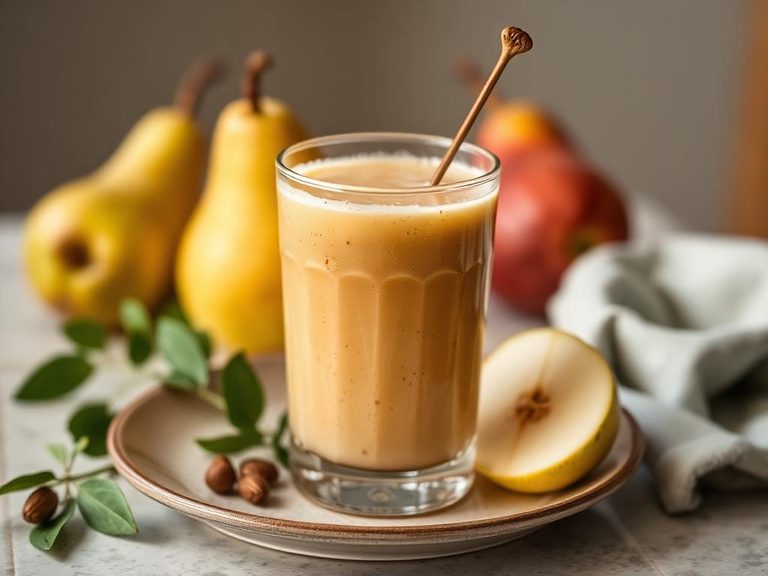

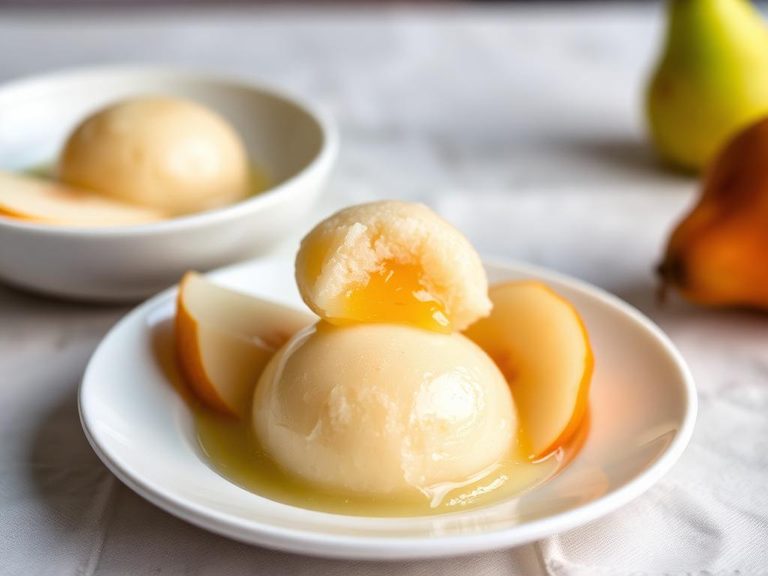

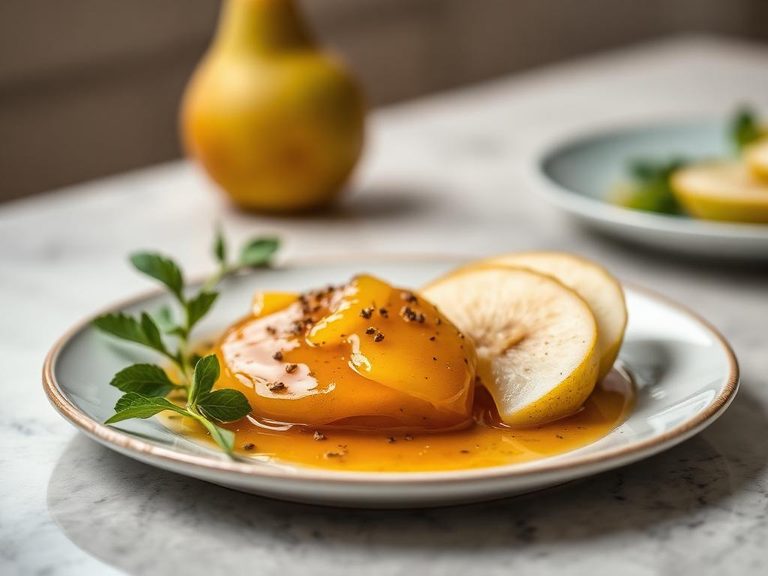
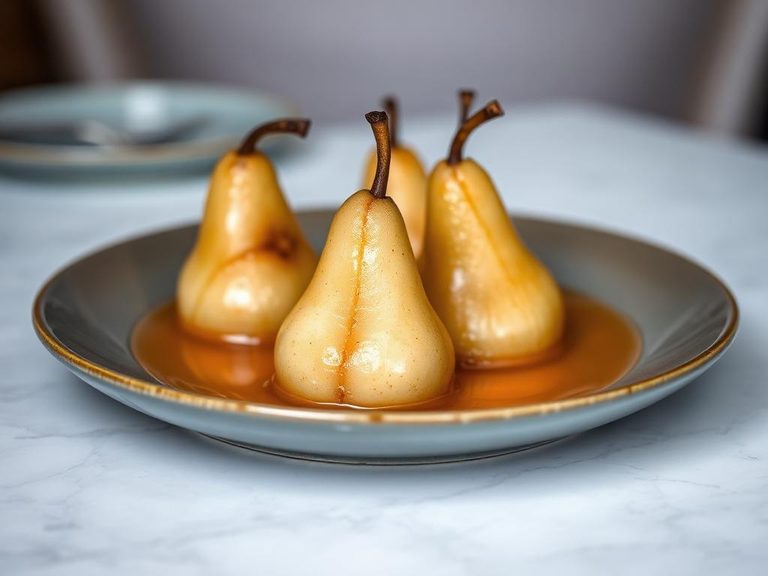
🌍 Where it's eaten
💡 Did you know?
The term 'nectar' for fruit drinks is a marketing invention from the early 20th century, implying a drink of the gods, as pure pear juice is too thin and low in sugar to be commercially viable without adding water and sweeteners.
Full nutrition (USDA data · scales with serving)
| Water | 84.0 g |
| Energy | 60.0 kcal |
| Protein | 0.11 g |
| Total lipid (fat) | 0.01 g |
| Carbohydrate, by difference | 15.8 g |
| Fiber, total dietary | 0.60 g |
| Total Sugars | 15.2 g |
| Calcium, Ca | 5.0 mg |
| Iron, Fe | 0.26 mg |
| Magnesium, Mg | 3.0 mg |
| Phosphorus, P | 3.0 mg |
| Potassium, K | 13.0 mg |
| Sodium, Na | 4.0 mg |
| Zinc, Zn | 0.07 mg |
| Copper, Cu | 0.07 mg |
| Selenium, Se | 0.00 ug |
| Vitamin C, total ascorbic acid | 1.1 mg |
| Thiamin | 0.00 mg |
| Riboflavin | 0.01 mg |
| Niacin | 0.13 mg |
| Vitamin B-6 | 0.01 mg |
| Folate, total | 1.0 ug |
| Folic acid | 0.00 ug |
| Folate, food | 1.0 ug |
| Folate, DFE | 1.0 ug |
| Choline, total | 2.0 mg |
| Vitamin B-12 | 0.00 ug |
| Vitamin B-12, added | 0.00 ug |
| Vitamin A, RAE | 0.00 ug |
| Retinol | 0.00 ug |
| Carotene, beta | 1.0 ug |
| Carotene, alpha | 0.00 ug |
| Cryptoxanthin, beta | 0.00 ug |
| Lycopene | 0.00 ug |
| Lutein + zeaxanthin | 20.0 ug |
| Vitamin E (alpha-tocopherol) | 0.05 mg |
| Vitamin E, added | 0.00 mg |
| Vitamin D (D2 + D3) | 0.00 ug |
| Vitamin K (phylloquinone) | 1.8 ug |
| Alcohol, ethyl | 0.00 g |
| Caffeine | 0.00 mg |
| Theobromine | 0.00 mg |
Fat & fatty acid profile (per 100g)
| Fatty acids, total saturated | 0.00 g |
| SFA 4:0 | 0.00 g |
| SFA 6:0 | 0.00 g |
| SFA 8:0 | 0.00 g |
| SFA 10:0 | 0.00 g |
| SFA 12:0 | 0.00 g |
| SFA 14:0 | 0.00 g |
| SFA 16:0 | 0.00 g |
| SFA 18:0 | 0.00 g |
| Fatty acids, total monounsaturated | 0.00 g |
| MUFA 16:1 | 0.00 g |
| MUFA 18:1 | 0.00 g |
| MUFA 20:1 | 0.00 g |
| MUFA 22:1 | 0.00 g |
| Fatty acids, total polyunsaturated | 0.00 g |
| PUFA 18:2 | 0.00 g |
| PUFA 18:3 | 0.00 g |
| PUFA 18:4 | 0.00 g |
| PUFA 20:4 | 0.00 g |
| PUFA 20:5 n-3 (EPA) | 0.00 g |
| PUFA 22:5 n-3 (DPA) | 0.00 g |
| PUFA 22:6 n-3 (DHA) | 0.00 g |
| Cholesterol | 0.00 mg |
FAQ
Is pear nectar the same as pear juice?
Not exactly. Pear nectar is typically made from pear juice concentrate reconstituted with water and often includes added pear puree or pulp for a thicker texture, while 100% pear juice is just the pressed juice of the fruit.
Does pear nectar contain added sugar?
Many commercial brands do add sugar or high-fructose corn syrup to enhance sweetness, even though pears are naturally sweet. Always check the ingredient list for 'added sugars' if you want to avoid them.
Can I use pear nectar in baking?
Yes, it's an excellent substitute for oil or some liquid in cakes, muffins, and quick breads, adding moisture and a subtle fruity flavor while reducing fat content.
Nutrient density (calculated · NRF9.3)
Nutrient Rich Foods index: beneficial nutrients (protein, fiber, vitamins, minerals) minus saturated fat, added sugar & sodium, per 100 kcal.
NRF9.3 index — Fulgoni, Keast & Drewnowski, 2009. Computed from USDA nutrients.
Weight-loss friendliness (composite index)
Energy density 0.60 kcal/g · 1% calories from protein · 0.6 g fiber · 15.2 g sugar per 100 g.
Composite of energy density (Rolls et al., 1999), protein & fiber satiety, minus sugar. A calculated heuristic — ranks satiety-per-calorie, not a clinical measure.
Dietary load (calculated from USDA values)
Potential renal acid load. Positive = acid-forming, negative = alkaline-forming.
Sodium-to-potassium ratio: 0.31 (lower is better — aim for ≤ 1)
Sodium:potassium per WHO potassium guidance. Computed from USDA nutrients.