

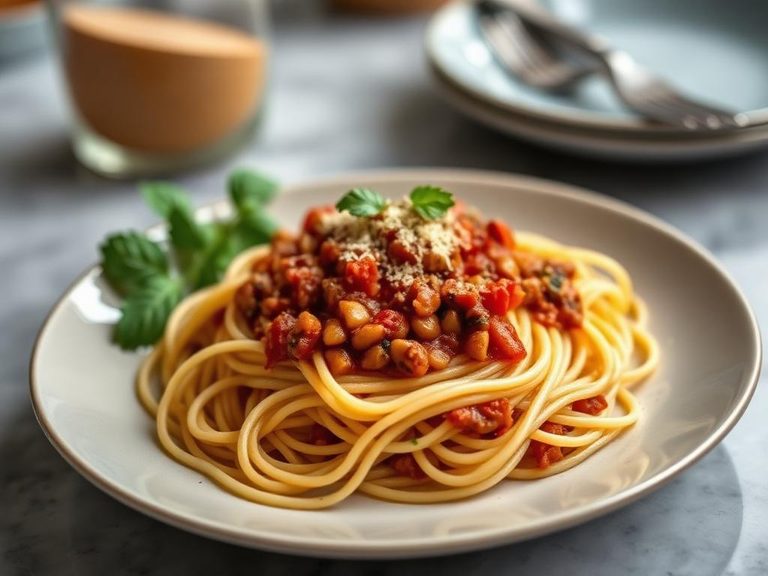
Pasta with tomato-based sauce and beans or lentils
Common food

Photo: Wikipedia
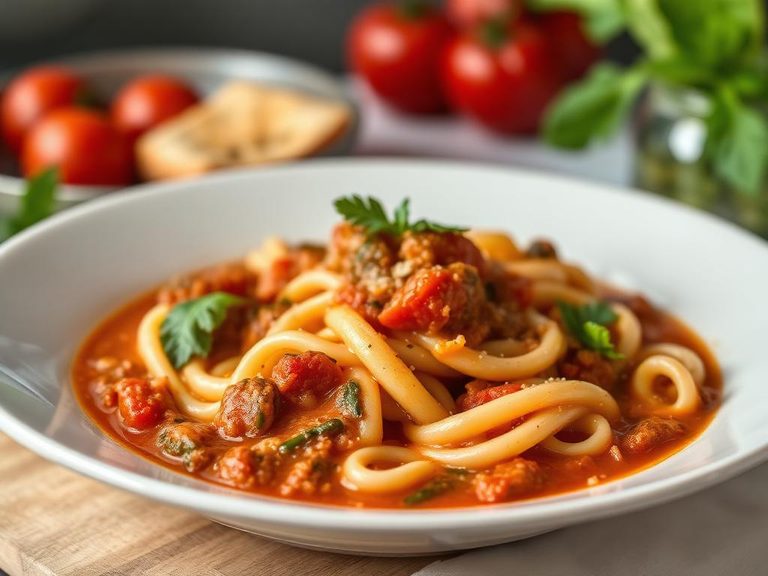
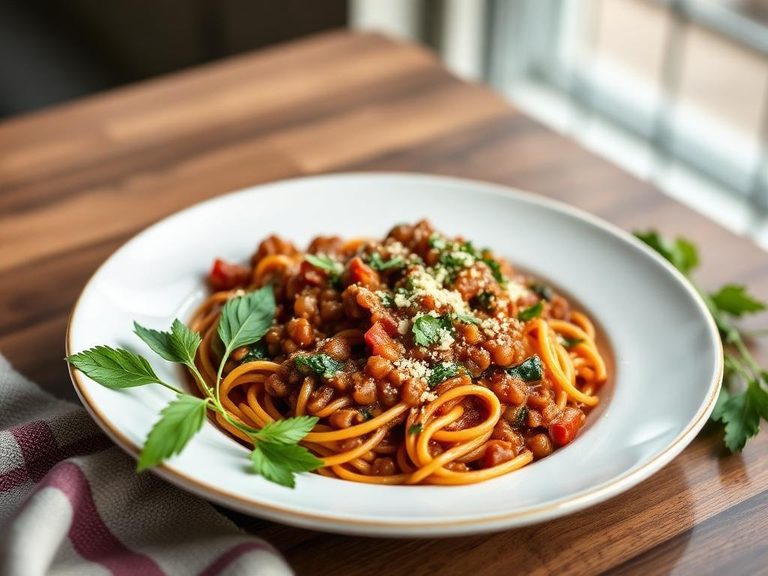
A hearty, comforting dish of al dente pasta coated in a rich, savory tomato sauce, studded with tender beans or lentils for a satisfying bite. The sauce is typically bright and slightly sweet from tomatoes, with a deep, earthy undertone from the legumes. It's a nutritionally balanced meal, offering a solid plant-based protein boost (5.23g per 100g) and good fiber content alongside its satisfying carbohydrates.
Calorie split: 17% protein · 67% carbs · 16% fat
↓ Full nutrition💚 Why it's loved
People adore this dish for its deep, savory umami flavor and the comforting, hearty texture that feels both rustic and nourishing. It's incredibly versatile, serving as a quick weeknight staple or a base for countless regional variations.
⚠️ Watch-outs & how to enjoy it better
The tomato sauce can be high in sodium, and the combination of refined pasta and legumes may cause blood-sugar spikes for some. To counteract this, choose whole-grain or legume-based pasta, pair with a side of leafy greens or a sprinkle of cheese for added protein/fat, and look for low-sodium canned tomatoes or make your own sauce.
Key benefits
- Excellent plant-based protein source from legumes
- High in dietary fiber for digestive health and satiety
- Low in fat, especially saturated fat
- Rich in complex carbohydrates for sustained energy
- Contains iron and folate from both tomatoes and legumes
🍽️ Popular dishes
🌍 Where it's eaten
💡 Did you know?
The classic Italian dish 'Pasta e Fagioli' (pasta and beans) was historically known as 'cucina povera' or 'peasant cooking,' a humble yet brilliant way to stretch a small amount of meat or use none at all, creating a complete meal from pantry staples.
Full nutrition (USDA data · scales with serving)
| Water | 70.1 g |
| Energy | 125 kcal |
| Protein | 5.2 g |
| Total lipid (fat) | 2.3 g |
| Carbohydrate, by difference | 20.9 g |
| Fiber, total dietary | 3.0 g |
| Total Sugars | 2.2 g |
| Calcium, Ca | 36.0 mg |
| Iron, Fe | 1.7 mg |
| Magnesium, Mg | 30.0 mg |
| Phosphorus, P | 63.0 mg |
| Potassium, K | 275 mg |
| Sodium, Na | 250 mg |
| Zinc, Zn | 0.62 mg |
| Copper, Cu | 0.14 mg |
| Selenium, Se | 10.7 ug |
| Vitamin C, total ascorbic acid | 0.70 mg |
| Thiamin | 0.14 mg |
| Riboflavin | 0.08 mg |
| Niacin | 2.0 mg |
| Vitamin B-6 | 0.10 mg |
| Folate, total | 53.0 ug |
| Folic acid | 25.0 ug |
| Folate, food | 29.0 ug |
| Folate, DFE | 70.0 ug |
| Choline, total | 16.4 mg |
| Vitamin B-12 | 0.00 ug |
| Vitamin B-12, added | 0.00 ug |
| Vitamin A, RAE | 11.0 ug |
| Retinol | 0.00 ug |
| Carotene, beta | 135 ug |
| Carotene, alpha | 0.00 ug |
| Cryptoxanthin, beta | 0.00 ug |
| Lycopene | 4397 ug |
| Lutein + zeaxanthin | 68.0 ug |
| Vitamin E (alpha-tocopherol) | 1.4 mg |
| Vitamin E, added | 0.00 mg |
| Vitamin D (D2 + D3) | 0.00 ug |
| Vitamin K (phylloquinone) | 7.1 ug |
| Alcohol, ethyl | 0.00 g |
| Caffeine | 0.00 mg |
| Theobromine | 0.00 mg |
Fat & fatty acid profile (per 100g)
| Fatty acids, total saturated | 0.33 g |
| SFA 4:0 | 0.00 g |
| SFA 6:0 | 0.00 g |
| SFA 8:0 | 0.00 g |
| SFA 10:0 | 0.00 g |
| SFA 12:0 | 0.00 g |
| SFA 14:0 | 0.00 g |
| SFA 16:0 | 0.24 g |
| SFA 18:0 | 0.06 g |
| Fatty acids, total monounsaturated | 0.75 g |
| MUFA 16:1 | 0.01 g |
| MUFA 18:1 | 0.73 g |
| MUFA 20:1 | 0.01 g |
| MUFA 22:1 | 0.00 g |
| Fatty acids, total polyunsaturated | 0.85 g |
| PUFA 18:2 | 0.73 g |
| PUFA 18:3 | 0.11 g |
| PUFA 18:4 | 0.00 g |
| PUFA 20:4 | 0.00 g |
| PUFA 20:5 n-3 (EPA) | 0.00 g |
| PUFA 22:5 n-3 (DPA) | 0.00 g |
| PUFA 22:6 n-3 (DHA) | 0.00 g |
| Cholesterol | 1.0 mg |
FAQ
Is this dish suitable for vegetarians or vegans?
Yes, it is inherently vegetarian and can easily be made vegan by ensuring no animal products (like cheese or meat-based broths) are added to the sauce.
Can I use dried beans instead of canned?
Absolutely. Soak dried beans overnight and cook them until tender before adding to the sauce. This reduces sodium and often improves texture and flavor.
How can I make the sauce richer without adding meat?
Sauté a base of finely chopped onions, carrots, and celery (soffritto) until deeply caramelized. Add a splash of red wine, a Parmesan rind while simmering (remove before serving), or finish with a drizzle of high-quality olive oil.
Nutrient density (calculated · NRF9.3)
Nutrient Rich Foods index: beneficial nutrients (protein, fiber, vitamins, minerals) minus saturated fat, added sugar & sodium, per 100 kcal.
NRF9.3 index — Fulgoni, Keast & Drewnowski, 2009. Computed from USDA nutrients.
Weight-loss friendliness (composite index)
Energy density 1.25 kcal/g · 17% calories from protein · 3.0 g fiber · 2.2 g sugar per 100 g.
Composite of energy density (Rolls et al., 1999), protein & fiber satiety, minus sugar. A calculated heuristic — ranks satiety-per-calorie, not a clinical measure.
Dietary load (calculated from USDA values)
Potential renal acid load. Positive = acid-forming, negative = alkaline-forming.
Sodium-to-potassium ratio: 0.91 (lower is better — aim for ≤ 1)
Sodium:potassium per WHO potassium guidance. Computed from USDA nutrients.