

Papaya nectar
Common food

Photo: Wikipedia
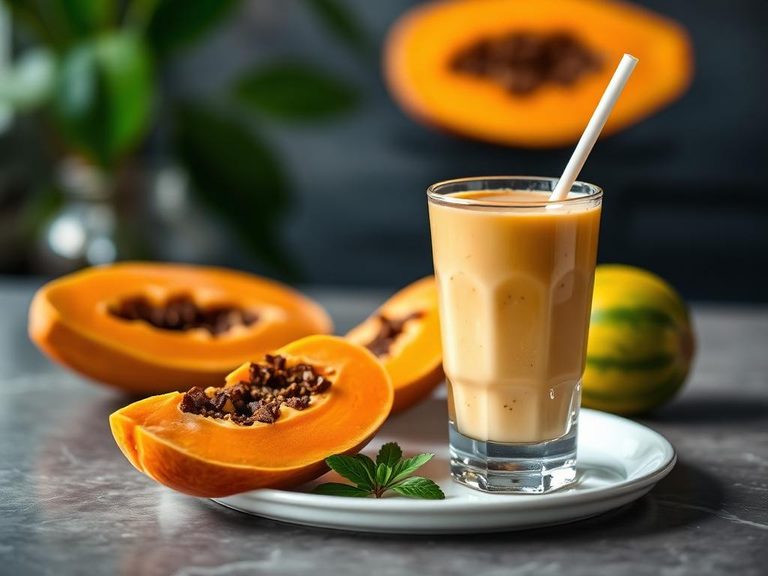
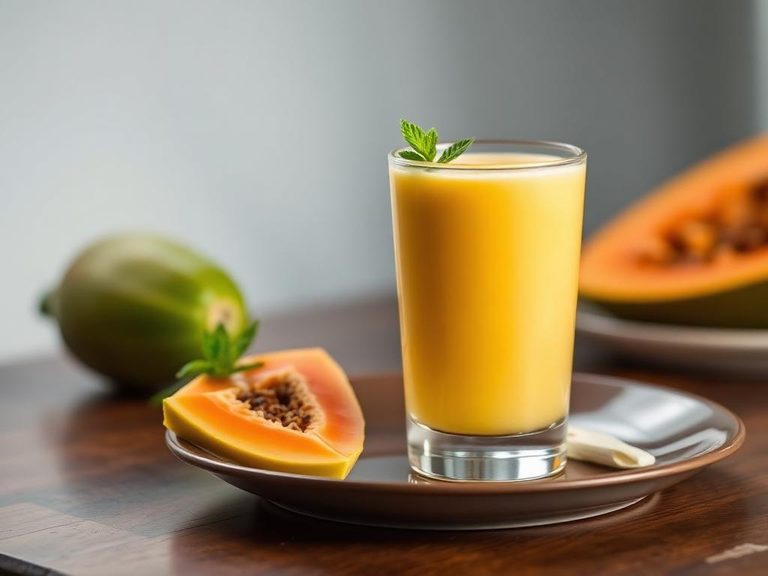
Papaya nectar is a smooth, vibrant, and intensely sweet beverage made from the pureed flesh of the ripe papaya fruit, often thinned with water and sometimes sweetened. Its flavor is a tropical burst of honeyed melon and floral notes, with a velvety, slightly pulpy texture that coats the mouth. Nutritionally, it's a light, hydrating drink that delivers a quick source of natural sugars and a modest amount of the fruit's signature digestive enzyme, papain.
Calorie split: 1% protein · 97% carbs · 2% fat
↓ Full nutrition💚 Why it's loved
People adore papaya nectar for its luxurious, sun-drenched sweetness and refreshing quality, making it a beloved thirst-quencher in tropical climates. It's also prized for its versatility, serving as a base for smoothies, cocktails, and even savory marinades where its enzymes help tenderize meat.
⚠️ Watch-outs & how to enjoy it better
Its high natural sugar content can cause rapid blood-sugar spikes, making it a concern for those managing diabetes or watching their glycemic load. To mitigate this, pair a small serving (e.g., 4 oz) with a source of protein or healthy fat, like a handful of nuts or a dollop of Greek yogurt, to slow sugar absorption. Some people also dislike its strong, musky aroma, which can be off-putting.
Key benefits
- Rich in vitamin C and beta-carotene (provitamin A).
- Contains the enzyme papain, which may aid protein digestion.
- Provides quick, natural energy from fruit sugars.
- Hydrating due to high water content.
- Source of the antioxidant lycopene.
🍽️ Popular dishes
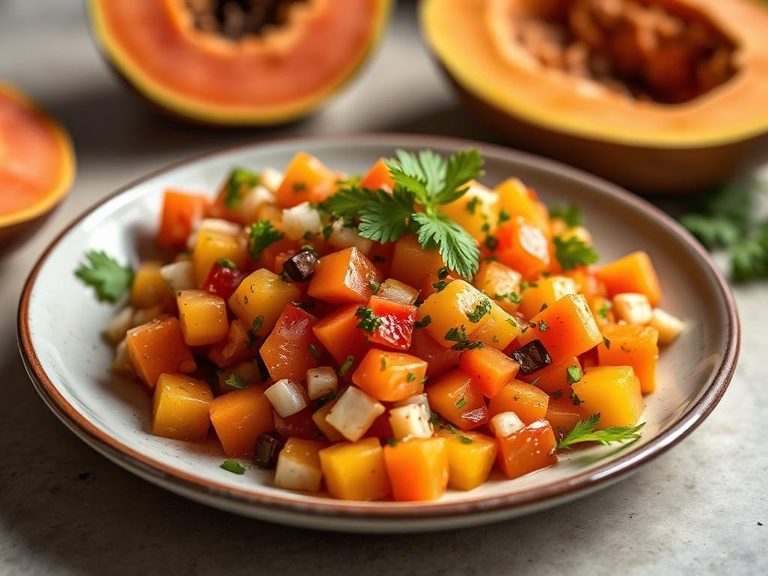
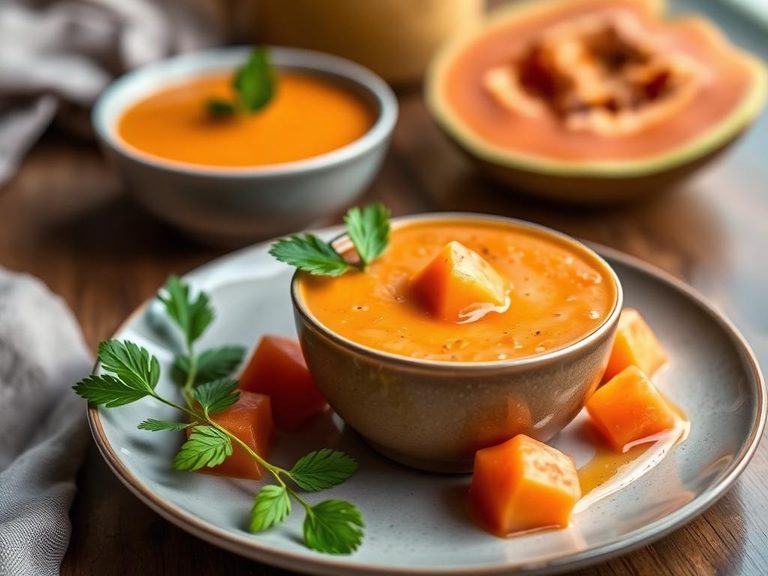
🌍 Where it's eaten
💡 Did you know?
The papain enzyme in papaya nectar is so effective at breaking down proteins that it's used commercially as a meat tenderizer and in some chewing gum to help clean teeth.
Full nutrition (USDA data · scales with serving)
| Water | 85.0 g |
| Energy | 57.0 kcal |
| Protein | 0.17 g |
| Total lipid (fat) | 0.15 g |
| Carbohydrate, by difference | 14.5 g |
| Fiber, total dietary | 0.60 g |
| Total Sugars | 13.9 g |
| Calcium, Ca | 10.0 mg |
| Iron, Fe | 0.34 mg |
| Magnesium, Mg | 3.0 mg |
| Phosphorus, P | 0.00 mg |
| Potassium, K | 31.0 mg |
| Sodium, Na | 5.0 mg |
| Zinc, Zn | 0.15 mg |
| Copper, Cu | 0.01 mg |
| Selenium, Se | 0.30 ug |
| Vitamin C, total ascorbic acid | 3.0 mg |
| Thiamin | 0.01 mg |
| Riboflavin | 0.00 mg |
| Niacin | 0.15 mg |
| Vitamin B-6 | 0.01 mg |
| Folate, total | 2.0 ug |
| Folic acid | 0.00 ug |
| Folate, food | 2.0 ug |
| Folate, DFE | 2.0 ug |
| Choline, total | 2.0 mg |
| Vitamin B-12 | 0.00 ug |
| Vitamin B-12, added | 0.00 ug |
| Vitamin A, RAE | 18.0 ug |
| Retinol | 0.00 ug |
| Carotene, beta | 91.0 ug |
| Carotene, alpha | 0.00 ug |
| Cryptoxanthin, beta | 251 ug |
| Lycopene | 0.00 ug |
| Lutein + zeaxanthin | 25.0 ug |
| Vitamin E (alpha-tocopherol) | 0.24 mg |
| Vitamin E, added | 0.00 mg |
| Vitamin D (D2 + D3) | 0.00 ug |
| Vitamin K (phylloquinone) | 0.80 ug |
| Alcohol, ethyl | 0.00 g |
| Caffeine | 0.00 mg |
| Theobromine | 0.00 mg |
Fat & fatty acid profile (per 100g)
| Fatty acids, total saturated | 0.05 g |
| SFA 4:0 | 0.00 g |
| SFA 6:0 | 0.00 g |
| SFA 8:0 | 0.00 g |
| SFA 10:0 | 0.00 g |
| SFA 12:0 | 0.00 g |
| SFA 14:0 | 0.01 g |
| SFA 16:0 | 0.04 g |
| SFA 18:0 | 0.00 g |
| Fatty acids, total monounsaturated | 0.04 g |
| MUFA 16:1 | 0.02 g |
| MUFA 18:1 | 0.02 g |
| MUFA 20:1 | 0.00 g |
| MUFA 22:1 | 0.00 g |
| Fatty acids, total polyunsaturated | 0.04 g |
| PUFA 18:2 | 0.01 g |
| PUFA 18:3 | 0.03 g |
| PUFA 18:4 | 0.00 g |
| PUFA 20:4 | 0.00 g |
| PUFA 20:5 n-3 (EPA) | 0.00 g |
| PUFA 22:5 n-3 (DPA) | 0.00 g |
| PUFA 22:6 n-3 (DHA) | 0.00 g |
| Cholesterol | 0.00 mg |
FAQ
Is papaya nectar the same as papaya juice?
Not exactly. Nectar is typically made from pureed fruit (like papaya) that is too pulpy or thick to be juiced, so it's blended with water and often sweetened. Juice is the extracted liquid from the fruit.
Can I use papaya nectar in cooking?
Yes, it's excellent in marinades for chicken or fish (the papain tenderizes), as a base for sweet-and-sour sauces, or to add tropical sweetness to dressings and glazes.
How do I choose a good papaya nectar?
Look for brands where papaya is the first ingredient and check for minimal added sugars. The color should be a deep, natural orange-pink, not artificially bright.
Nutrient density (calculated · NRF9.3)
Nutrient Rich Foods index: beneficial nutrients (protein, fiber, vitamins, minerals) minus saturated fat, added sugar & sodium, per 100 kcal.
NRF9.3 index — Fulgoni, Keast & Drewnowski, 2009. Computed from USDA nutrients.
Weight-loss friendliness (composite index)
Energy density 0.57 kcal/g · 1% calories from protein · 0.6 g fiber · 13.9 g sugar per 100 g.
Composite of energy density (Rolls et al., 1999), protein & fiber satiety, minus sugar. A calculated heuristic — ranks satiety-per-calorie, not a clinical measure.
Dietary load (calculated from USDA values)
Potential renal acid load. Positive = acid-forming, negative = alkaline-forming.
Sodium-to-potassium ratio: 0.16 (lower is better — aim for ≤ 1)
Sodium:potassium per WHO potassium guidance. Computed from USDA nutrients.