

Nuts, hazelnuts or filberts, raw
Whole food · Nut and Seed Products

Photo: Wikipedia
Raw hazelnuts, also known as filberts, are small, round nuts with a papery brown skin and a creamy, off-white interior. They offer a delicate, sweet, and buttery flavor with a satisfying crunch. Nutritionally, they are a powerhouse of healthy monounsaturated fats and provide a good amount of protein and fiber.
Calorie split: 8% protein · 17% carbs · 75% fat
↓ Full nutrition💚 Why it's loved
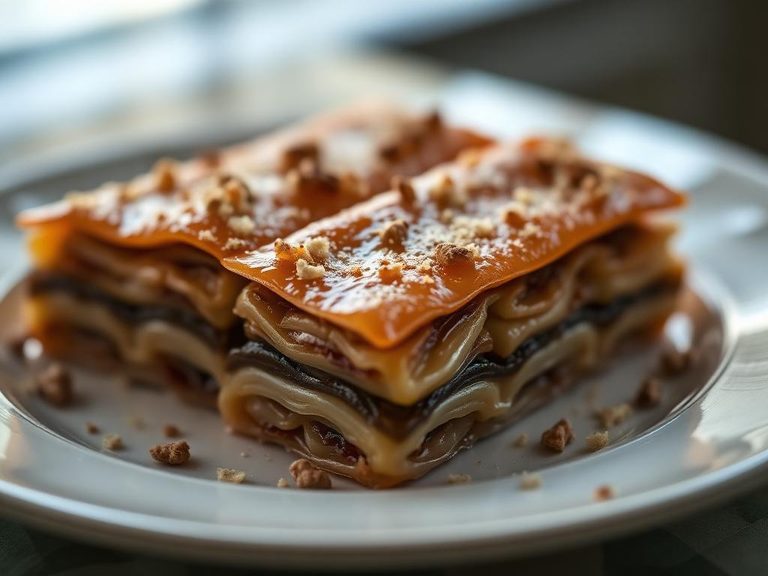
People love hazelnuts for their uniquely sweet, aromatic flavor and versatile texture, which shines both raw and toasted. They are a cornerstone of confectionery, from classic chocolate-hazelnut spreads to pralines and baked goods.
⚠️ Watch-outs & how to enjoy it better
Hazelnuts are a common tree nut allergen, and their high calorie density requires mindful portion control. Their natural tannin-rich skin can be slightly bitter for some; toasting can mellow this, and pairing with other foods helps balance intake.
Key benefits
- Excellent source of heart-healthy monounsaturated fats.
- Good plant-based source of protein and dietary fiber.
- Rich in vitamin E, a potent antioxidant.
- Provides essential minerals like manganese and copper.
- Naturally gluten-free and low in carbohydrates.
🍽️ Popular dishes





🌍 Where it's eaten
💡 Did you know?
Turkey is the world's largest producer of hazelnuts, accounting for roughly 70% of the global supply.
Full nutrition (USDA data · scales with serving)
| Water | 4.3 g |
| Energy (Atwater General Factors) | 641 kcal |
| Energy (Atwater Specific Factors) | 602 kcal |
| Nitrogen | 2.5 g |
| Protein | 13.5 g |
| Total lipid (fat) | 53.5 g |
| Ash | 2.2 g |
| Carbohydrate, by difference | 26.5 g |
| Fiber, total dietary | 8.4 g |
| Calcium, Ca | 135 mg |
| Iron, Fe | 3.5 mg |
| Magnesium, Mg | 156 mg |
| Phosphorus, P | 321 mg |
| Potassium, K | 636 mg |
| Sodium, Na | 0.00 mg |
| Zinc, Zn | 2.3 mg |
| Copper, Cu | 1.4 mg |
| Manganese, Mn | 6.1 mg |
| Selenium, Se | 0.00 ug |
Fat & fatty acid profile (per 100g)
Estimated from Nuts, mixed nuts, dry roasted, with peanuts, with salt added — USDA does not publish this profile for Nuts.
| Fatty acids, total saturated | 6.5 g |
| SFA 4:0 | 0.00 g |
| SFA 6:0 | 0.00 g |
| SFA 8:0 | 0.04 g |
| SFA 10:0 | 0.04 g |
| SFA 12:0 | 0.27 g |
| SFA 14:0 | 0.21 g |
| SFA 16:0 | 4.2 g |
| SFA 18:0 | 1.7 g |
| Fatty acids, total monounsaturated | 31.4 g |
| MUFA 16:1 | 0.22 g |
| MUFA 18:1 | 30.8 g |
| MUFA 20:1 | 0.26 g |
| MUFA 22:1 | 0.00 g |
| Fatty acids, total polyunsaturated | 10.8 g |
| PUFA 18:2 | 10.5 g |
| PUFA 18:3 | 0.19 g |
| PUFA 18:4 | 0.00 g |
| PUFA 20:4 | 0.00 g |
| PUFA 20:5 n-3 (EPA) | 0.00 g |
| PUFA 22:5 n-3 (DPA) | 0.00 g |
| PUFA 22:6 n-3 (DHA) | 0.00 g |
| Cholesterol | 0.00 mg |
Amino acid profile (per 100g)
Estimated from Nuts, mixed nuts, dry roasted, with peanuts, with salt added — USDA does not publish this profile for Nuts.
| Tryptophan | 0.26 g |
| Threonine | 0.60 g |
| Isoleucine | 0.74 g |
| Leucine | 1.4 g |
| Lysine | 0.71 g |
| Methionine | 0.23 g |
| Cystine | 0.29 g |
| Phenylalanine | 0.95 g |
| Tyrosine | 0.68 g |
| Valine | 0.93 g |
| Arginine | 2.2 g |
| Histidine | 0.48 g |
| Alanine | 0.81 g |
| Aspartic acid | 2.1 g |
| Glutamic acid | 4.4 g |
| Glycine | 1.1 g |
| Proline | 0.88 g |
| Serine | 0.92 g |
FAQ
What's the difference between hazelnuts and filberts?
The terms are often used interchangeably. Generally, 'filbert' may refer to the longer, more cylindrical nuts from certain species, while 'hazelnut' is the broader common name. In commerce, they are typically sold together.
Should I remove the skin from raw hazelnuts?
The skin is edible but can be bitter. To remove it easily, blanch the nuts in boiling water for a minute, then shock in ice water; the skins will slip off. Toasting also reduces the skin's bitterness.
How should I store raw hazelnuts?
Due to their high oil content, they can go rancid. Store them in an airtight container in a cool, dark place for up to 3 months, or in the freezer for up to a year.
Nutrient density (calculated · NRF9.3)
Nutrient Rich Foods index: beneficial nutrients (protein, fiber, vitamins, minerals) minus saturated fat, added sugar & sodium, per 100 kcal.
NRF9.3 index — Fulgoni, Keast & Drewnowski, 2009. Computed from USDA nutrients.
Weight-loss friendliness (composite index)
Energy density 6.41 kcal/g · 8% calories from protein · 8.4 g fiber · 0.0 g sugar per 100 g.
Composite of energy density (Rolls et al., 1999), protein & fiber satiety, minus sugar. A calculated heuristic — ranks satiety-per-calorie, not a clinical measure.
Dietary load (calculated from USDA values)
Potential renal acid load. Positive = acid-forming, negative = alkaline-forming.
Sodium-to-potassium ratio: 0.00 (lower is better — aim for ≤ 1)
Sodium:potassium per WHO potassium guidance. Computed from USDA nutrients.