

Nuts, chestnuts, japanese, raw
Whole food · Nut and Seed Products

Photo: Wikipedia
Japanese chestnuts, or 'kuri,' are a starchy, mildly sweet nut with a firm, floury texture when raw, distinct from the sweeter European varieties. Nutritionally, they are a standout for their high carbohydrate content, providing a substantial energy source with minimal fat.
Calorie split: 6% protein · 91% carbs · 3% fat
↓ Full nutrition💚 Why it's loved
People cherish them for their unique, subtly sweet, potato-like flavor and satisfying texture, which forms the base of iconic seasonal treats and savory dishes across East Asia.
⚠️ Watch-outs & how to enjoy it better
Their high carbohydrate content can cause blood sugar spikes if eaten in large quantities, especially raw. To counteract this, pair them with a source of protein or fat (like in a stir-fry with meat or a dessert with cream) and practice portion control.
Key benefits
- High in energy-dense carbohydrates for sustained fuel
- Naturally low in fat and a good source of vitamin C
- Contains minerals like potassium and manganese
- Gluten-free and suitable for various dietary needs
🍽️ Popular dishes
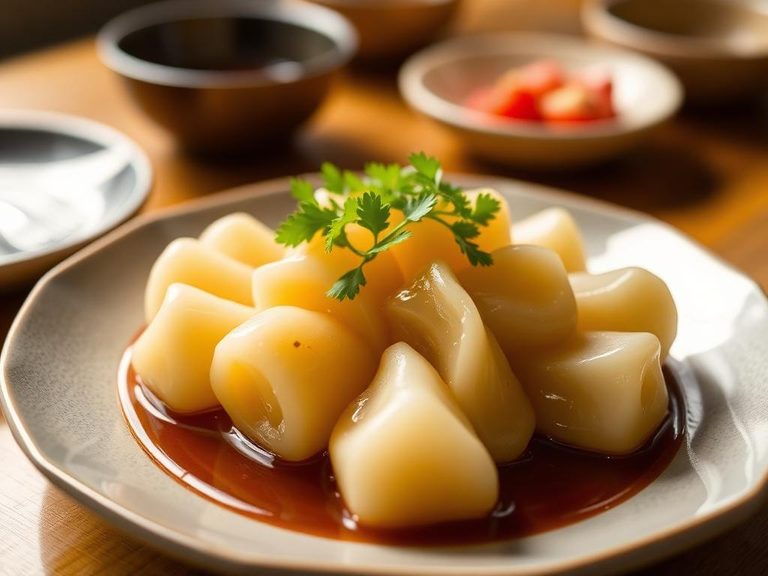

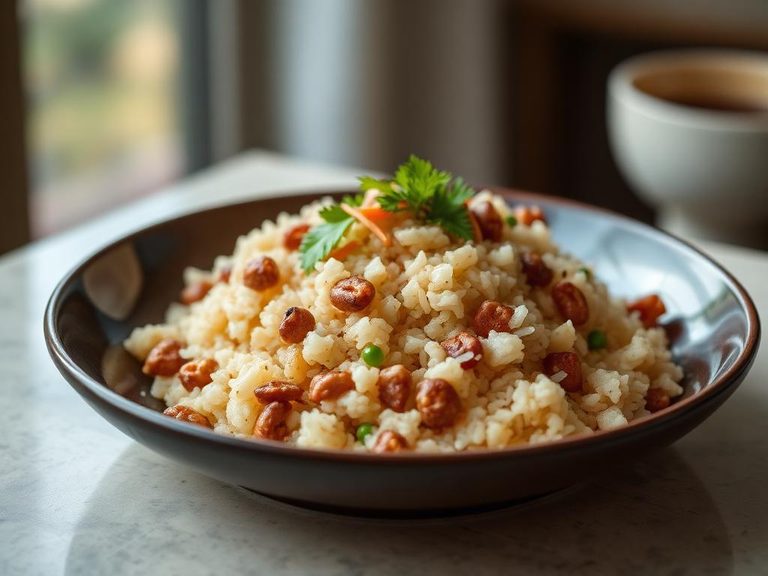
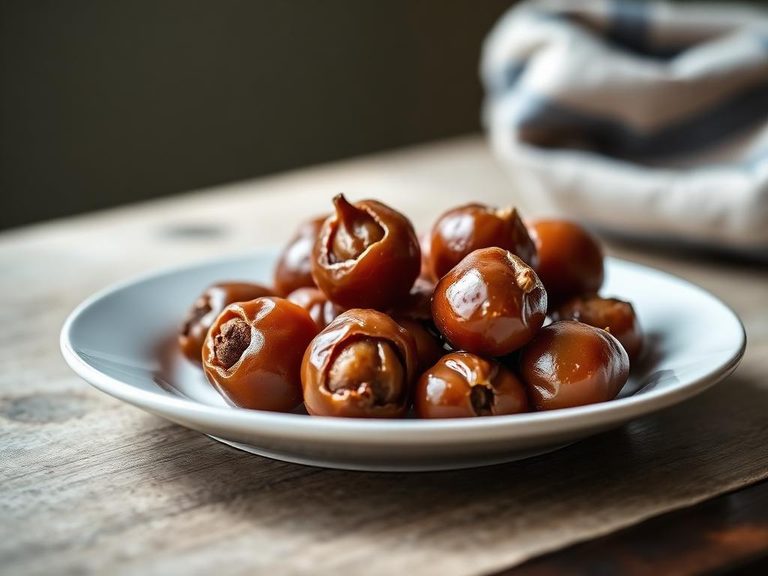
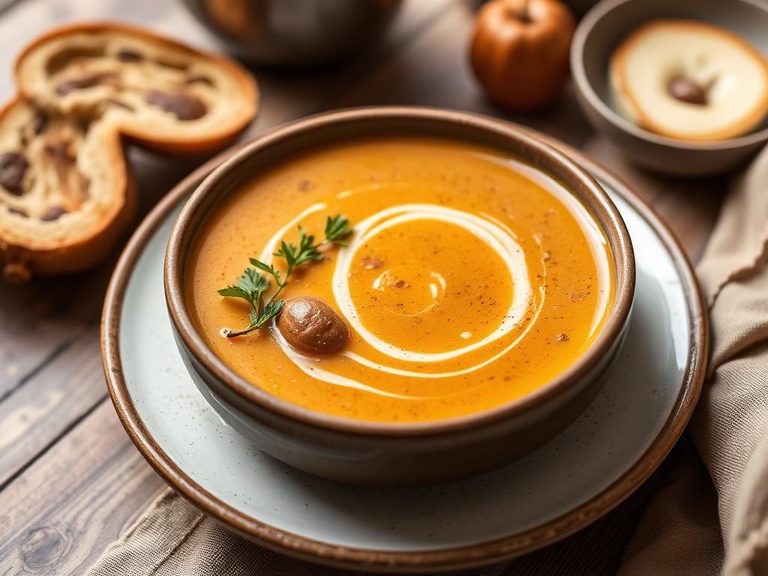
🌍 Where it's eaten
💡 Did you know?
Unlike most nuts, Japanese chestnuts are exceptionally high in Vitamin C—comparable to some citrus fruits—though much of it degrades with cooking.
Full nutrition (USDA data · scales with serving)
| Water | 61.4 g |
| Energy | 154 kcal |
| Energy | 644 kj |
| Protein | 2.3 g |
| Total lipid (fat) | 0.53 g |
| Ash | 0.91 g |
| Carbohydrate, by difference | 34.9 g |
| Calcium, Ca | 31.0 mg |
| Iron, Fe | 1.4 mg |
| Magnesium, Mg | 49.0 mg |
| Phosphorus, P | 72.0 mg |
| Potassium, K | 329 mg |
| Sodium, Na | 14.0 mg |
| Zinc, Zn | 1.1 mg |
| Copper, Cu | 0.56 mg |
| Manganese, Mn | 1.6 mg |
| Vitamin C, total ascorbic acid | 26.3 mg |
| Thiamin | 0.34 mg |
| Riboflavin | 0.16 mg |
| Niacin | 1.5 mg |
| Pantothenic acid | 0.21 mg |
| Vitamin B-6 | 0.28 mg |
| Folate, total | 47.0 ug |
| Folic acid | 0.00 ug |
| Folate, food | 47.0 ug |
| Folate, DFE | 47.0 ug |
| Vitamin B-12 | 0.00 ug |
| Vitamin A, RAE | 2.0 ug |
| Retinol | 0.00 ug |
| Vitamin A, IU | 37.0 iu |
| Vitamin D (D2 + D3), International Units | 0.00 iu |
| Vitamin D (D2 + D3) | 0.00 ug |
Fat & fatty acid profile (per 100g)
| Fatty acids, total saturated | 0.08 g |
| SFA 16:0 | 0.07 g |
| SFA 18:0 | 0.01 g |
| Fatty acids, total monounsaturated | 0.28 g |
| MUFA 16:1 | 0.00 g |
| MUFA 18:1 | 0.27 g |
| MUFA 20:1 | 0.01 g |
| Fatty acids, total polyunsaturated | 0.14 g |
| PUFA 18:2 | 0.12 g |
| PUFA 18:3 | 0.01 g |
| Cholesterol | 0.00 mg |
Amino acid profile (per 100g)
| Tryptophan | 0.03 g |
| Threonine | 0.09 g |
| Isoleucine | 0.11 g |
| Leucine | 0.14 g |
| Lysine | 0.15 g |
| Methionine | 0.05 g |
| Cystine | 0.07 g |
| Phenylalanine | 0.09 g |
| Tyrosine | 0.06 g |
| Valine | 0.13 g |
| Arginine | 0.15 g |
| Histidine | 0.06 g |
| Alanine | 0.20 g |
| Aspartic acid | 0.47 g |
| Glutamic acid | 0.43 g |
| Glycine | 0.11 g |
| Proline | 0.14 g |
| Serine | 0.11 g |
FAQ
How are Japanese chestnuts different from European chestnuts?
Japanese chestnuts (Castanea crenata) are generally smaller, have a sharper point, and are starchier and less sweet than the larger, more rounded European varieties (Castanea sativa).
Can I eat Japanese chestnuts raw?
While possible, they are quite starchy and astringent when raw. They are almost always cooked (boiled, roasted, or steamed) to develop their flavor and improve digestibility.
What is the best way to store them?
Fresh chestnuts are perishable. Store them in the refrigerator in a breathable bag for up to a week, or freeze them after cooking and peeling for longer-term use.
Nutrient density (calculated · NRF9.3)
Nutrient Rich Foods index: beneficial nutrients (protein, fiber, vitamins, minerals) minus saturated fat, added sugar & sodium, per 100 kcal.
NRF9.3 index — Fulgoni, Keast & Drewnowski, 2009. Computed from USDA nutrients.
Weight-loss friendliness (composite index)
Energy density 1.54 kcal/g · 6% calories from protein · 0.0 g fiber · 0.0 g sugar per 100 g.
Composite of energy density (Rolls et al., 1999), protein & fiber satiety, minus sugar. A calculated heuristic — ranks satiety-per-calorie, not a clinical measure.
Dietary load (calculated from USDA values)
Potential renal acid load. Positive = acid-forming, negative = alkaline-forming.
Sodium-to-potassium ratio: 0.04 (lower is better — aim for ≤ 1)
Sodium:potassium per WHO potassium guidance. Computed from USDA nutrients.