

Nuts, brazilnuts, raw
Whole food · Nut and Seed Products

Photo: Wikipedia
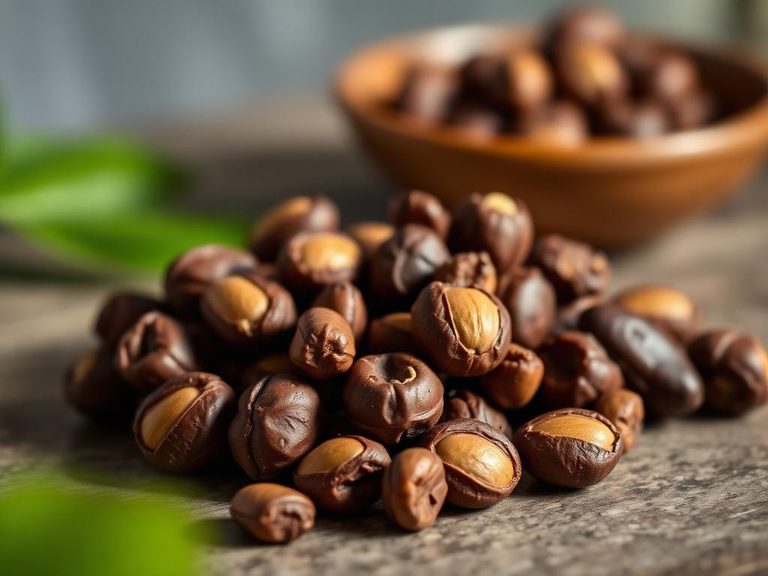
The Brazil nut is a large, creamy, and richly oily seed from the Amazon rainforest, prized for its buttery, slightly sweet flavor and satisfying crunch. Nutritionally, it is a powerhouse of healthy fats, protein, and an extraordinary concentration of selenium, a mineral vital for thyroid and antioxidant function.
Calorie split: 9% protein · 13% carbs · 78% fat
↓ Full nutrition💚 Why it's loved
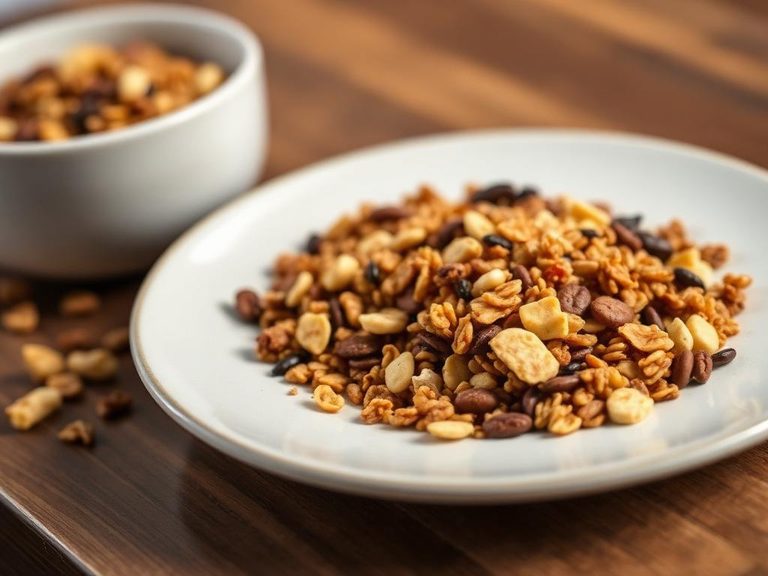
People adore Brazil nuts for their luxurious, buttery taste and the satisfying snap of their texture, which makes them a premium snack and a versatile ingredient in both sweet and savory dishes. They are a staple in trail mixes and confectionery, celebrated for adding a rich, creamy element.
⚠️ Watch-outs & how to enjoy it better
Due to their extremely high selenium content, consuming just a few nuts daily can lead to selenium toxicity (selenosis) over time. They are also a common tree nut allergen. To enjoy them safely, practice strict portion control—limiting intake to 1-3 nuts per day—and source them from reputable suppliers to ensure freshness.
Key benefits
- Exceptional source of selenium, supporting thyroid health and antioxidant defense.
- Rich in heart-healthy monounsaturated and polyunsaturated fats.
- Provides plant-based protein and dietary fiber.
- Contains significant amounts of magnesium and phosphorus.
- Offers a good dose of thiamine (vitamin B1).
🍽️ Popular dishes
🌍 Where it's eaten
💡 Did you know?
A single Brazil nut tree can live for 500 years or more and produce its first crop of nuts only after 10-15 years of growth.
Full nutrition (USDA data · scales with serving)
| Water | 2.3 g |
| Energy (Atwater General Factors) | 664 kcal |
| Energy (Atwater Specific Factors) | 621 kcal |
| Nitrogen | 2.8 g |
| Protein | 15.0 g |
| Total lipid (fat) | 57.4 g |
| Ash | 3.6 g |
| Carbohydrate, by difference | 21.6 g |
| Fiber, total dietary | 6.0 g |
| Calcium, Ca | 168 mg |
| Iron, Fe | 2.5 mg |
| Magnesium, Mg | 351 mg |
| Phosphorus, P | 707 mg |
| Potassium, K | 593 mg |
| Sodium, Na | 0.00 mg |
| Zinc, Zn | 3.8 mg |
| Copper, Cu | 1.7 mg |
| Manganese, Mn | 1.3 mg |
| Selenium, Se | 280 ug |
Fat & fatty acid profile (per 100g)
Estimated from Nuts, mixed nuts, dry roasted, with peanuts, with salt added — USDA does not publish this profile for Nuts.
| Fatty acids, total saturated | 6.5 g |
| SFA 4:0 | 0.00 g |
| SFA 6:0 | 0.00 g |
| SFA 8:0 | 0.04 g |
| SFA 10:0 | 0.04 g |
| SFA 12:0 | 0.27 g |
| SFA 14:0 | 0.21 g |
| SFA 16:0 | 4.2 g |
| SFA 18:0 | 1.7 g |
| Fatty acids, total monounsaturated | 31.4 g |
| MUFA 16:1 | 0.22 g |
| MUFA 18:1 | 30.8 g |
| MUFA 20:1 | 0.26 g |
| MUFA 22:1 | 0.00 g |
| Fatty acids, total polyunsaturated | 10.8 g |
| PUFA 18:2 | 10.5 g |
| PUFA 18:3 | 0.19 g |
| PUFA 18:4 | 0.00 g |
| PUFA 20:4 | 0.00 g |
| PUFA 20:5 n-3 (EPA) | 0.00 g |
| PUFA 22:5 n-3 (DPA) | 0.00 g |
| PUFA 22:6 n-3 (DHA) | 0.00 g |
| Cholesterol | 0.00 mg |
Amino acid profile (per 100g)
Estimated from Nuts, mixed nuts, dry roasted, with peanuts, with salt added — USDA does not publish this profile for Nuts.
| Tryptophan | 0.26 g |
| Threonine | 0.60 g |
| Isoleucine | 0.74 g |
| Leucine | 1.4 g |
| Lysine | 0.71 g |
| Methionine | 0.23 g |
| Cystine | 0.29 g |
| Phenylalanine | 0.95 g |
| Tyrosine | 0.68 g |
| Valine | 0.93 g |
| Arginine | 2.2 g |
| Histidine | 0.48 g |
| Alanine | 0.81 g |
| Aspartic acid | 2.1 g |
| Glutamic acid | 4.4 g |
| Glycine | 1.1 g |
| Proline | 0.88 g |
| Serine | 0.92 g |
FAQ
How many Brazil nuts should I eat per day?
Due to their high selenium content, it is generally recommended to limit intake to 1 to 3 nuts per day to avoid potential selenium toxicity.
What do Brazil nuts taste like?
They have a rich, creamy, and buttery flavor with a slightly sweet, earthy note and a firm, crunchy texture.
Are Brazil nuts good for you?
Yes, in moderation. They are an excellent source of selenium, healthy fats, and protein, but their high calorie and selenium content means portion control is key.
Nutrient density (calculated · NRF9.3)
Nutrient Rich Foods index: beneficial nutrients (protein, fiber, vitamins, minerals) minus saturated fat, added sugar & sodium, per 100 kcal.
NRF9.3 index — Fulgoni, Keast & Drewnowski, 2009. Computed from USDA nutrients.
Weight-loss friendliness (composite index)
Energy density 6.64 kcal/g · 9% calories from protein · 6.0 g fiber · 0.0 g sugar per 100 g.
Composite of energy density (Rolls et al., 1999), protein & fiber satiety, minus sugar. A calculated heuristic — ranks satiety-per-calorie, not a clinical measure.
Dietary load (calculated from USDA values)
Potential renal acid load. Positive = acid-forming, negative = alkaline-forming.
Sodium-to-potassium ratio: 0.00 (lower is better — aim for ≤ 1)
Sodium:potassium per WHO potassium guidance. Computed from USDA nutrients.