

Nutritional powder mix, protein, light, NFS
Common food

Photo: Wikipedia
This is a fine, free-flowing powder designed to be mixed with water, milk, or blended into smoothies, offering a neutral, slightly milky or vanilla-like flavor that adapts to any base. Its texture is smooth when well-blended, but can be chalky or gritty if not mixed thoroughly. It's a nutritional powerhouse, packing a dense 50 grams of protein per 100 grams into a low-sugar, high-fiber profile.
Calorie split: 51% protein · 22% carbs · 27% fat
↓ Full nutrition💚 Why it's loved
People love it for its sheer convenience and customizability—it's a blank canvas for flavor, allowing users to boost protein in anything from oatmeal to coffee. It's a staple in fitness and busy-lifestyle cultures for delivering high-quality nutrition quickly.
⚠️ Watch-outs & how to enjoy it better
The powder can have a distinct, sometimes bitter or 'chemical' aftertaste from certain protein isolates, and its fine texture can cause clumping or a gritty mouthfeel if not blended properly. Those with lactose intolerance or dairy allergies should check labels, as many mixes use whey or casein. To counteract bitterness, blend with strong flavors like cocoa, coffee, or berries; to avoid clumping, use a blender or shaker bottle and mix with liquid first before adding ice.
Key benefits
- Excellent source of complete protein for muscle repair and satiety
- Low in sugar (4g) and carbohydrates (22g), suitable for low-carb diets
- Provides dietary fiber (2g) to support digestive health
- High in calories (398 kcal) for efficient energy intake
- Versatile base for custom shakes, pancakes, or baked goods
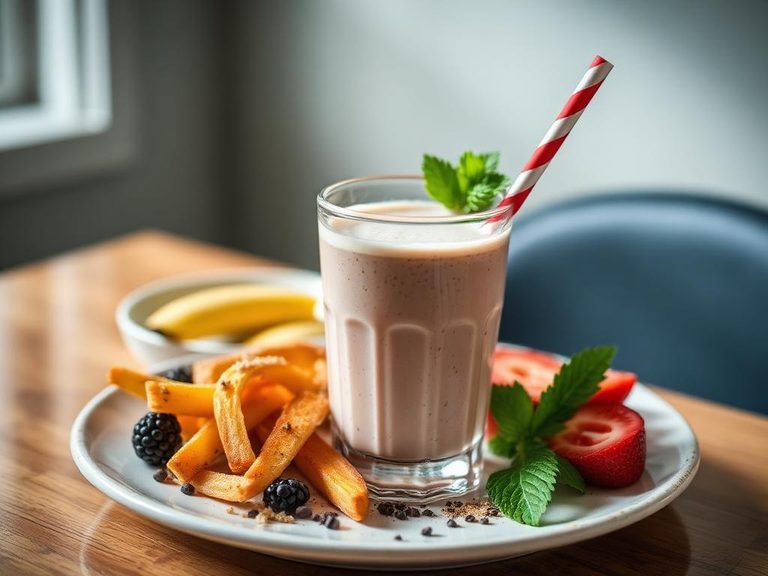
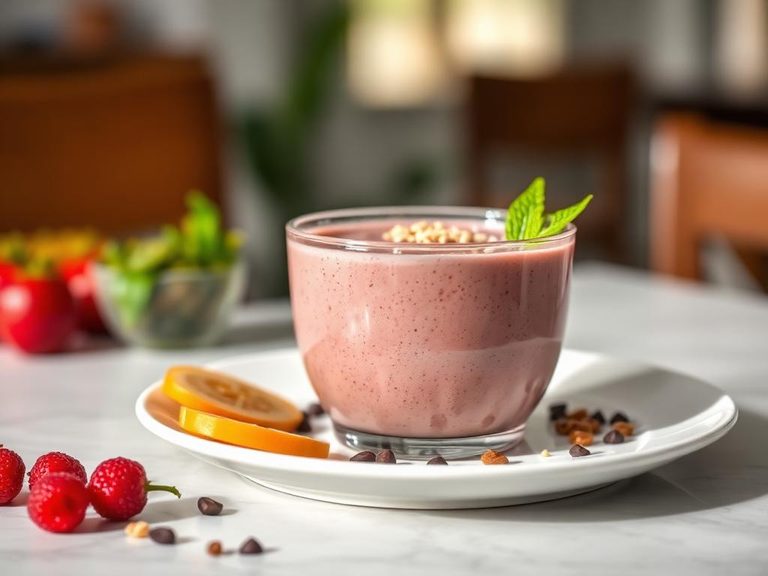
🍽️ Popular dishes

🌍 Where it's eaten
💡 Did you know?
The 'NFS' in its name stands for 'Not Further Specified,' a USDA designation meaning the product doesn't fit neatly into other specific categories, highlighting its generic, adaptable nature.
Full nutrition (USDA data · scales with serving)
| Water | 12.0 g |
| Energy | 396 kcal |
| Protein | 50.0 g |
| Total lipid (fat) | 12.0 g |
| Carbohydrate, by difference | 22.0 g |
| Fiber, total dietary | 2.0 g |
| Total Sugars | 4.0 g |
| Calcium, Ca | 1200 mg |
| Iron, Fe | 12.0 mg |
| Magnesium, Mg | 280 mg |
| Phosphorus, P | 700 mg |
| Potassium, K | 840 mg |
| Sodium, Na | 250 mg |
| Zinc, Zn | 10.0 mg |
| Copper, Cu | 1.4 mg |
| Selenium, Se | 33.8 ug |
| Vitamin C, total ascorbic acid | 42.0 mg |
| Thiamin | 1.0 mg |
| Riboflavin | 1.2 mg |
| Niacin | 14.0 mg |
| Vitamin B-6 | 1.4 mg |
| Folate, total | 280 ug |
| Folic acid | 280 ug |
| Folate, food | 0.00 ug |
| Folate, DFE | 476 ug |
| Choline, total | 81.6 mg |
| Vitamin B-12 | 4.2 ug |
| Vitamin B-12, added | 4.2 ug |
| Vitamin A, RAE | 1050 ug |
| Retinol | 1050 ug |
| Carotene, beta | 0.00 ug |
| Carotene, alpha | 0.00 ug |
| Cryptoxanthin, beta | 0.00 ug |
| Lycopene | 0.00 ug |
| Lutein + zeaxanthin | 0.00 ug |
| Vitamin E (alpha-tocopherol) | 9.4 mg |
| Vitamin E, added | 9.4 mg |
| Vitamin D (D2 + D3) | 7.0 ug |
| Vitamin K (phylloquinone) | 0.50 ug |
| Alcohol, ethyl | 0.00 g |
| Caffeine | 0.00 mg |
| Theobromine | 0.00 mg |
Fat & fatty acid profile (per 100g)
| Fatty acids, total saturated | 1.1 g |
| SFA 4:0 | 0.00 g |
| SFA 6:0 | 0.00 g |
| SFA 8:0 | 0.00 g |
| SFA 10:0 | 0.00 g |
| SFA 12:0 | 0.00 g |
| SFA 14:0 | 0.00 g |
| SFA 16:0 | 0.43 g |
| SFA 18:0 | 0.65 g |
| Fatty acids, total monounsaturated | 8.5 g |
| MUFA 16:1 | 0.00 g |
| MUFA 18:1 | 8.1 g |
| MUFA 20:1 | 0.22 g |
| MUFA 22:1 | 0.11 g |
| Fatty acids, total polyunsaturated | 1.2 g |
| PUFA 18:2 | 1.2 g |
| PUFA 18:3 | 0.04 g |
| PUFA 18:4 | 0.00 g |
| PUFA 20:4 | 0.00 g |
| PUFA 20:5 n-3 (EPA) | 0.00 g |
| PUFA 22:5 n-3 (DPA) | 0.00 g |
| PUFA 22:6 n-3 (DHA) | 0.00 g |
| Cholesterol | 10.0 mg |
FAQ
Can I bake with this powder?
Yes, it's commonly used to boost the protein content of pancakes, muffins, and bars. Be aware that high heat can denature the protein, potentially affecting texture, so follow recipes designed for protein powder.
Is this the same as a meal replacement shake?
Not necessarily. While it's high in protein, a complete meal replacement typically includes a more balanced macro profile with added vitamins, minerals, and fats. This is primarily a protein supplement.
Why does my shake taste gritty?
Grittiness often comes from the powder not fully dissolving. Try using a blender, mixing the powder with a small amount of liquid first to form a paste, or choosing a product that uses whey protein isolate or hydrolysate, which tend to mix smoother.
Nutrient density (calculated · NRF9.3)
Nutrient Rich Foods index: beneficial nutrients (protein, fiber, vitamins, minerals) minus saturated fat, added sugar & sodium, per 100 kcal.
NRF9.3 index — Fulgoni, Keast & Drewnowski, 2009. Computed from USDA nutrients.
Weight-loss friendliness (composite index)
Energy density 3.96 kcal/g · 51% calories from protein · 2.0 g fiber · 4.0 g sugar per 100 g.
Composite of energy density (Rolls et al., 1999), protein & fiber satiety, minus sugar. A calculated heuristic — ranks satiety-per-calorie, not a clinical measure.
Dietary load (calculated from USDA values)
Potential renal acid load. Positive = acid-forming, negative = alkaline-forming.
Sodium-to-potassium ratio: 0.30 (lower is better — aim for ≤ 1)
Sodium:potassium per WHO potassium guidance. Computed from USDA nutrients.