

Nutritional powder mix, NFS
Common food

Photo: Wikipedia
Nutritional powder mix, NFS is a finely milled, versatile dry blend designed for quick preparation into a drink or as a recipe enhancer. It typically has a neutral, slightly sweet taste and a smooth, dissolvable texture when mixed with liquid. Nutritionally, it's a concentrated source of carbohydrates and sugar, providing a quick energy boost with minimal fat and fiber.
Calorie split: 22% protein · 74% carbs · 4% fat
↓ Full nutrition💚 Why it's loved
People appreciate its convenience and mild, adaptable flavor, which makes it easy to incorporate into shakes, oatmeal, or baked goods without overpowering other ingredients. Its high energy density is valued by those needing to increase calorie intake efficiently.
⚠️ Watch-outs & how to enjoy it better
The high sugar content (65.8g per 100g) can cause rapid blood-sugar spikes, making it unsuitable for individuals managing diabetes or insulin resistance. It is also a processed product that may contain additives. To counteract, pair it with a source of protein (like Greek yogurt or a scoop of protein powder) and healthy fat (like nut butter or chia seeds) to slow sugar absorption, and practice strict portion control.
Key benefits
- Provides a rapid source of energy due to high carbohydrate content.
- Offers a convenient and portable calorie-dense option for supplementation.
- Can be easily mixed into liquids for quick consumption.
- Useful for fortifying other foods or drinks with additional calories and nutrients.
- Shelf-stable and requires no refrigeration.
🍽️ Popular dishes
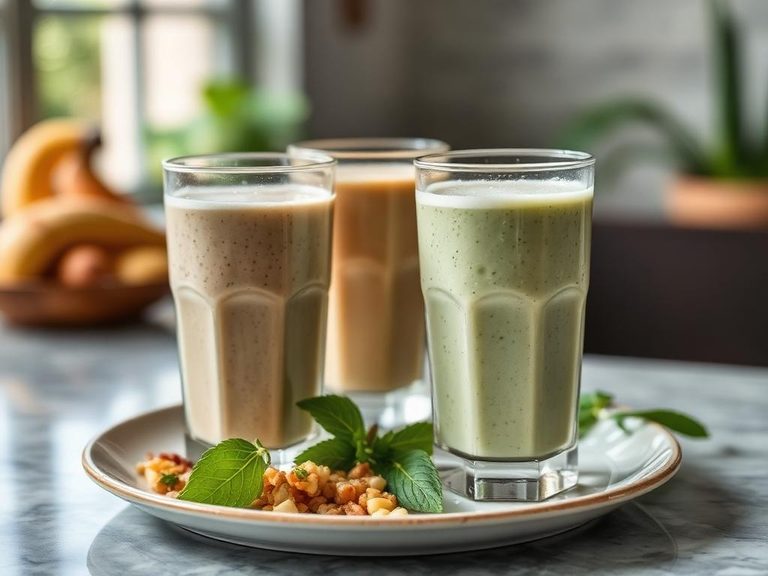
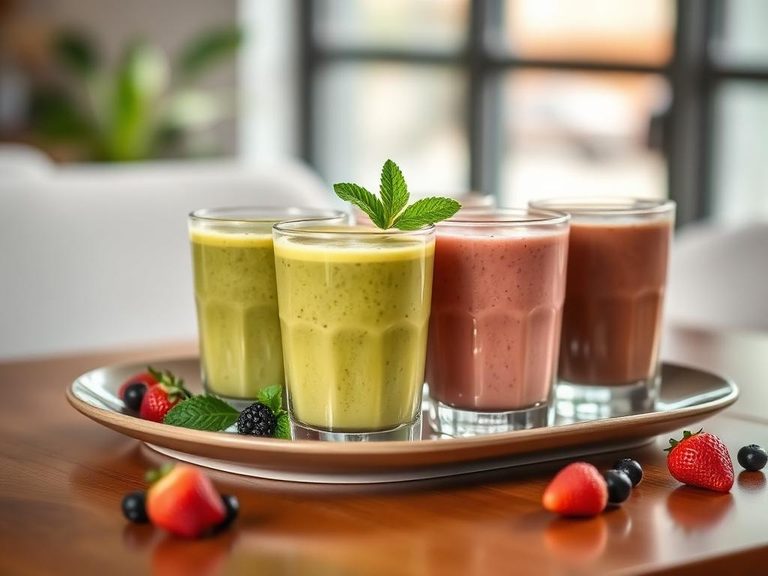


🌍 Where it's eaten
💡 Did you know?
Many 'nutritional powder mixes' are not single-ingredient foods but complex formulations, often containing a blend of isolated proteins, maltodextrin, vitamins, and minerals, engineered for specific functional outcomes like post-workout recovery or medical nutrition.
Full nutrition (USDA data · scales with serving)
| Water | 7.4 g |
| Energy | 353 kcal |
| Protein | 19.9 g |
| Total lipid (fat) | 1.4 g |
| Carbohydrate, by difference | 66.2 g |
| Fiber, total dietary | 0.40 g |
| Total Sugars | 65.8 g |
| Calcium, Ca | 285 mg |
| Iron, Fe | 12.8 mg |
| Magnesium, Mg | 228 mg |
| Phosphorus, P | 427 mg |
| Potassium, K | 947 mg |
| Sodium, Na | 385 mg |
| Zinc, Zn | 8.6 mg |
| Copper, Cu | 1.4 mg |
| Selenium, Se | 12.1 ug |
| Vitamin C, total ascorbic acid | 76.9 mg |
| Thiamin | 0.85 mg |
| Riboflavin | 0.20 mg |
| Niacin | 14.2 mg |
| Vitamin B-6 | 1.1 mg |
| Folate, total | 285 ug |
| Folic acid | 285 ug |
| Folate, food | 0.00 ug |
| Folate, DFE | 485 ug |
| Choline, total | 148 mg |
| Vitamin B-12 | 1.7 ug |
| Vitamin B-12, added | 1.0 ug |
| Vitamin A, RAE | 625 ug |
| Retinol | 625 ug |
| Carotene, beta | 0.00 ug |
| Carotene, alpha | 0.00 ug |
| Cryptoxanthin, beta | 0.00 ug |
| Lycopene | 0.00 ug |
| Lutein + zeaxanthin | 0.00 ug |
| Vitamin E (alpha-tocopherol) | 9.4 mg |
| Vitamin E, added | 9.4 mg |
| Vitamin D (D2 + D3) | 0.00 ug |
| Vitamin K (phylloquinone) | 90.0 ug |
| Alcohol, ethyl | 0.00 g |
| Caffeine | 25.0 mg |
| Theobromine | 290 mg |
Fat & fatty acid profile (per 100g)
| Fatty acids, total saturated | 0.56 g |
| SFA 4:0 | 0.01 g |
| SFA 6:0 | 0.00 g |
| SFA 8:0 | 0.00 g |
| SFA 10:0 | 0.01 g |
| SFA 12:0 | 0.00 g |
| SFA 14:0 | 0.02 g |
| SFA 16:0 | 0.29 g |
| SFA 18:0 | 0.22 g |
| Fatty acids, total monounsaturated | 0.31 g |
| MUFA 16:1 | 0.01 g |
| MUFA 18:1 | 0.30 g |
| MUFA 20:1 | 0.00 g |
| MUFA 22:1 | 0.00 g |
| Fatty acids, total polyunsaturated | 0.28 g |
| PUFA 18:2 | 0.25 g |
| PUFA 18:3 | 0.03 g |
| PUFA 18:4 | 0.00 g |
| PUFA 20:4 | 0.00 g |
| PUFA 20:5 n-3 (EPA) | 0.00 g |
| PUFA 22:5 n-3 (DPA) | 0.00 g |
| PUFA 22:6 n-3 (DHA) | 0.00 g |
| Cholesterol | 12.0 mg |
FAQ
Is nutritional powder mix the same as protein powder?
Not necessarily. While some are high in protein, many are carbohydrate-focused or balanced blends. Always check the nutrition label for the protein-to-carb ratio.
Can I bake with this powder?
Yes, it can often be used to fortify muffins, pancakes, or breads, but it may alter the texture and increase sweetness. Start by replacing 10-15% of the flour.
How should I store it after opening?
Keep it in a cool, dry place in an airtight container to prevent clumping and moisture absorption, which can degrade quality and promote bacterial growth.
Nutrient density (calculated · NRF9.3)
Nutrient Rich Foods index: beneficial nutrients (protein, fiber, vitamins, minerals) minus saturated fat, added sugar & sodium, per 100 kcal.
NRF9.3 index — Fulgoni, Keast & Drewnowski, 2009. Computed from USDA nutrients.
Weight-loss friendliness (composite index)
Energy density 3.53 kcal/g · 23% calories from protein · 0.4 g fiber · 65.8 g sugar per 100 g.
Composite of energy density (Rolls et al., 1999), protein & fiber satiety, minus sugar. A calculated heuristic — ranks satiety-per-calorie, not a clinical measure.
Dietary load (calculated from USDA values)
Potential renal acid load. Positive = acid-forming, negative = alkaline-forming.
Sodium-to-potassium ratio: 0.41 (lower is better — aim for ≤ 1)
Sodium:potassium per WHO potassium guidance. Computed from USDA nutrients.