

Mountain yam, hawaii, cooked, steamed, with salt
Whole food · Vegetables and Vegetable Products

Photo: Wikipedia
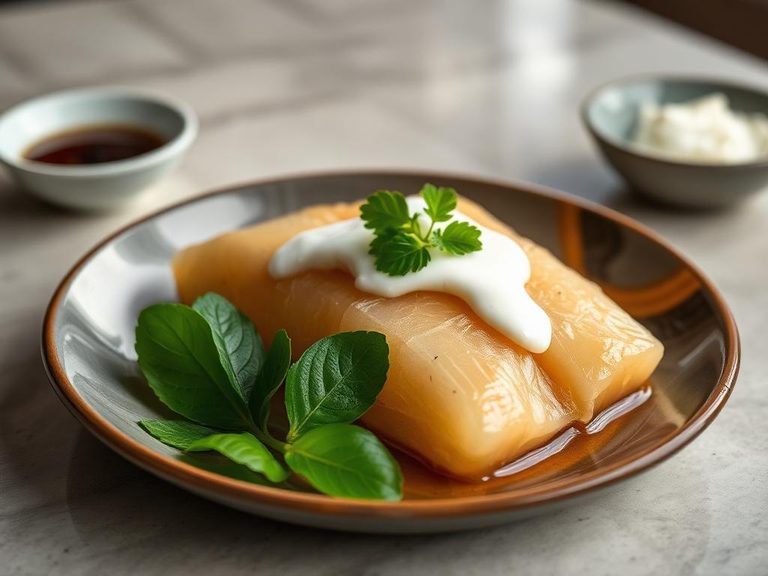
Steamed mountain yam, known as 'Ihi' in Hawaii, is a starchy, creamy root vegetable with a mild, earthy sweetness. Its texture is uniquely smooth and slightly sticky when cooked, making it a comforting, satisfying side dish. Nutritionally, it's a low-fat, high-carbohydrate food providing quick energy with minimal protein.
Calorie split: 8% protein · 91% carbs · 1% fat
↓ Full nutrition💚 Why it's loved
People love its creamy, comforting texture and subtle sweetness that pairs well with savory flavors. It's a versatile staple in Hawaiian and other Pacific Island cuisines, often served as a hearty, satisfying part of a meal.
⚠️ Watch-outs & how to enjoy it better
Its high carbohydrate content can cause blood-sugar spikes, especially for those managing diabetes. The added salt in preparation increases sodium intake, which can be a concern for individuals with hypertension. To counteract, pair it with protein (like grilled fish) and healthy fats (like avocado) to slow digestion, and use minimal salt or opt for herbs and spices for flavor.
Key benefits
- Good source of complex carbohydrates for sustained energy
- Very low in fat, supporting a heart-healthy diet
- Contains potassium, which aids in fluid balance
- Provides vitamin C, an antioxidant that supports immune function
- Naturally gluten-free, suitable for those with celiac disease
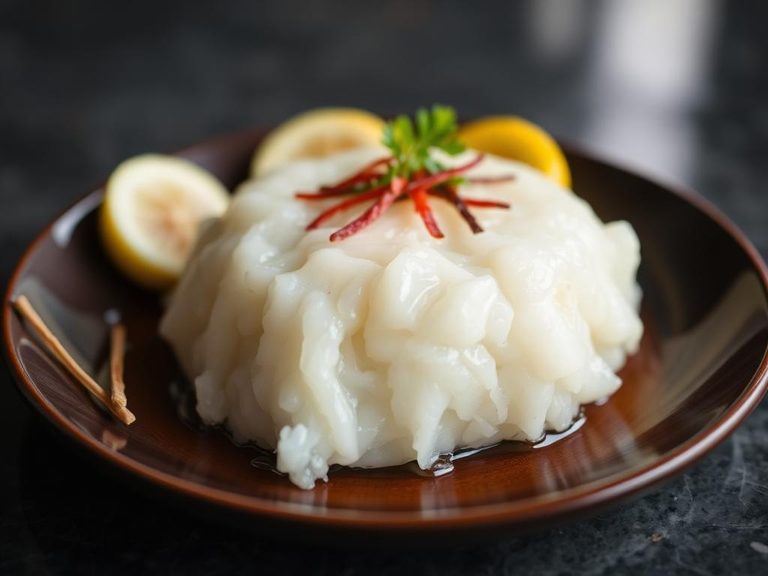
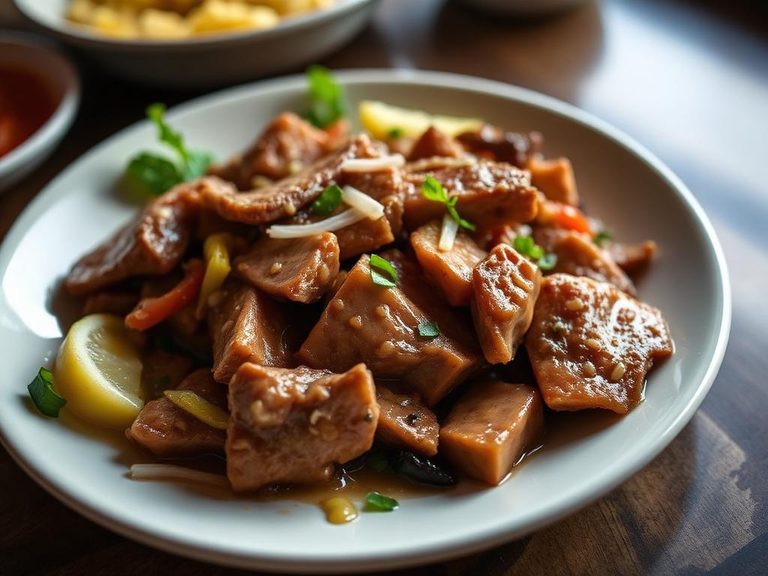
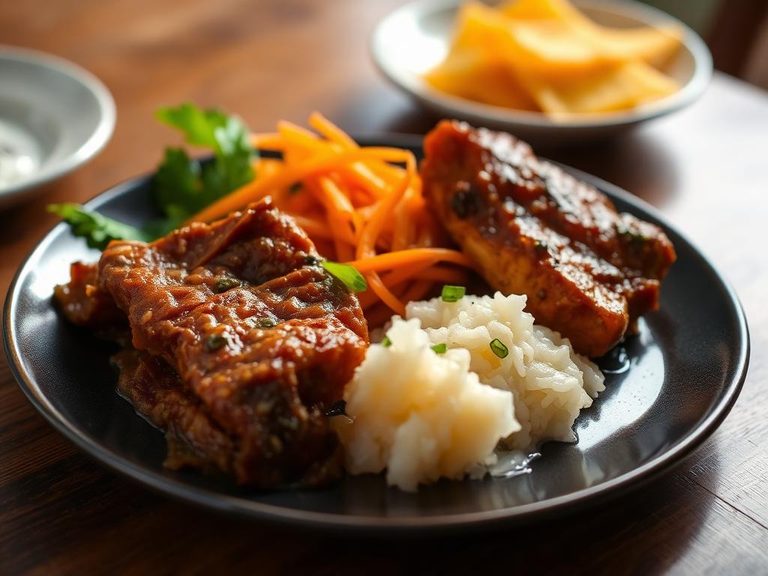
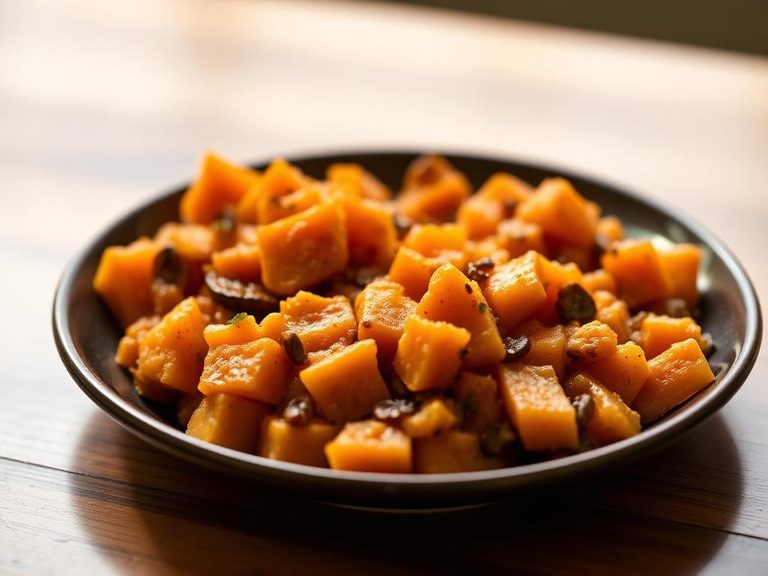
🍽️ Popular dishes
🌍 Where it's eaten
💡 Did you know?
Mountain yam, or 'Ihi', is a type of yam (Dioscorea) that was a crucial staple for ancient Hawaiians, providing essential calories and nutrients for their active lifestyle.
Full nutrition (USDA data · scales with serving)
| Water | 77.1 g |
| Energy | 82.0 kcal |
| Energy | 344 kj |
| Protein | 1.7 g |
| Total lipid (fat) | 0.08 g |
| Ash | 1.1 g |
| Carbohydrate, by difference | 20.0 g |
| Calcium, Ca | 8.0 mg |
| Iron, Fe | 0.43 mg |
| Magnesium, Mg | 10.0 mg |
| Phosphorus, P | 40.0 mg |
| Potassium, K | 495 mg |
| Sodium, Na | 248 mg |
| Zinc, Zn | 0.32 mg |
| Copper, Cu | 0.13 mg |
| Manganese, Mn | 0.28 mg |
| Selenium, Se | 0.90 ug |
| Vitamin C, total ascorbic acid | 0.00 mg |
| Thiamin | 0.09 mg |
| Riboflavin | 0.01 mg |
| Niacin | 0.13 mg |
| Pantothenic acid | 0.48 mg |
| Vitamin B-6 | 0.21 mg |
| Folate, total | 12.0 ug |
| Folic acid | 0.00 ug |
| Folate, food | 12.0 ug |
| Folate, DFE | 12.0 ug |
| Vitamin B-12 | 0.00 ug |
| Vitamin A, RAE | 0.00 ug |
| Retinol | 0.00 ug |
| Vitamin A, IU | 0.00 iu |
| Vitamin D (D2 + D3), International Units | 0.00 iu |
| Vitamin D (D2 + D3) | 0.00 ug |
Fat & fatty acid profile (per 100g)
| Fatty acids, total saturated | 0.02 g |
| SFA 16:0 | 0.01 g |
| SFA 18:0 | 0.00 g |
| Fatty acids, total monounsaturated | 0.00 g |
| MUFA 18:1 | 0.00 g |
| Fatty acids, total polyunsaturated | 0.04 g |
| PUFA 18:2 | 0.03 g |
| PUFA 18:3 | 0.01 g |
| Fatty acids, total trans | 0.00 g |
| Cholesterol | 0.00 mg |
Amino acid profile (per 100g)
| Tryptophan | 0.01 g |
| Threonine | 0.06 g |
| Isoleucine | 0.06 g |
| Leucine | 0.11 g |
| Lysine | 0.07 g |
| Methionine | 0.02 g |
| Cystine | 0.02 g |
| Phenylalanine | 0.08 g |
| Tyrosine | 0.05 g |
| Valine | 0.07 g |
| Arginine | 0.14 g |
| Histidine | 0.04 g |
| Alanine | 0.07 g |
| Aspartic acid | 0.17 g |
| Glutamic acid | 0.20 g |
| Glycine | 0.06 g |
| Proline | 0.06 g |
| Serine | 0.09 g |
FAQ
Is mountain yam the same as sweet potato?
No, mountain yam (Ihi) is a different species from sweet potato. While both are starchy root vegetables, they have distinct textures, flavors, and nutritional profiles. Mountain yam is typically more starchy and less sweet than sweet potato.
How do I store cooked mountain yam?
Cooked mountain yam should be stored in an airtight container in the refrigerator for up to 3-4 days. It can also be frozen for up to 2 months, though the texture may become slightly mushy upon thawing.
Can I eat mountain yam raw?
No, mountain yam should always be cooked before eating. Raw yam contains oxalates and other compounds that can be irritating to the digestive system and may cause discomfort.
Nutrient density (calculated · NRF9.3)
Nutrient Rich Foods index: beneficial nutrients (protein, fiber, vitamins, minerals) minus saturated fat, added sugar & sodium, per 100 kcal.
NRF9.3 index — Fulgoni, Keast & Drewnowski, 2009. Computed from USDA nutrients.
Weight-loss friendliness (composite index)
Energy density 0.82 kcal/g · 8% calories from protein · 0.0 g fiber · 0.0 g sugar per 100 g.
Composite of energy density (Rolls et al., 1999), protein & fiber satiety, minus sugar. A calculated heuristic — ranks satiety-per-calorie, not a clinical measure.
Dietary load (calculated from USDA values)
Potential renal acid load. Positive = acid-forming, negative = alkaline-forming.
Sodium-to-potassium ratio: 0.50 (lower is better — aim for ≤ 1)
Sodium:potassium per WHO potassium guidance. Computed from USDA nutrients.