

Lentil curry with rice
Common food

Photo: Wikipedia
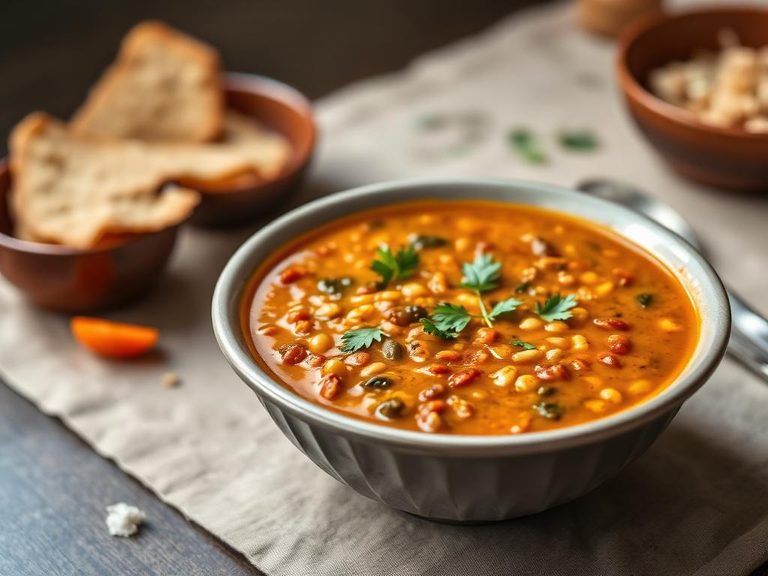
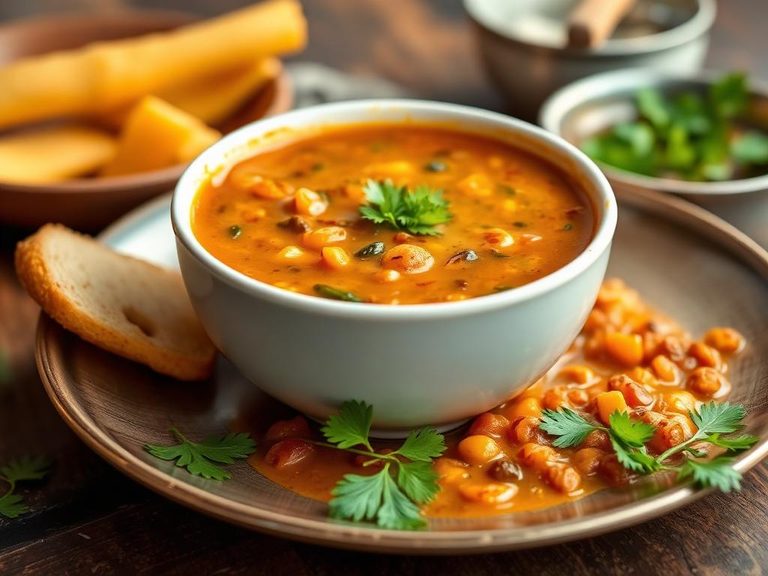
A hearty, aromatic dish where tender lentils are simmered in a spiced tomato-coconut gravy, served over fluffy rice. Each bite offers a creamy, earthy texture with a warm, complex flavor from spices like turmeric and cumin. It's a nutritionally balanced staple, providing a solid source of plant-based protein and fiber in a low-calorie package.
Calorie split: 11% protein · 63% carbs · 26% fat
↓ Full nutrition💚 Why it's loved
It's beloved for its deep, comforting flavors that are both warming and satisfying, making it a go-to comfort food. Its incredible versatility allows it to be adapted to any pantry, fitting seamlessly into weeknight dinners or festive meals across many cultures.
⚠️ Watch-outs & how to enjoy it better
The high fiber and lectin content in lentils can cause digestive discomfort (gas, bloating) for some, especially if not accustomed to legumes. To counteract this, introduce it gradually, ensure lentils are thoroughly cooked, and consider soaking them beforehand. The curry sauce can also be high in sodium; using low-sodium broth or tomatoes and seasoning with extra acid (like lemon juice) at the end can help balance flavors without excess salt.
Key benefits
- Excellent source of plant-based protein for muscle maintenance.
- High in dietary fiber, promoting digestive health and satiety.
- Naturally low in fat and calories, supporting weight management.
- Rich in iron and folate from lentils, important for energy and cell function.
- Spices like turmeric contain anti-inflammatory compounds.
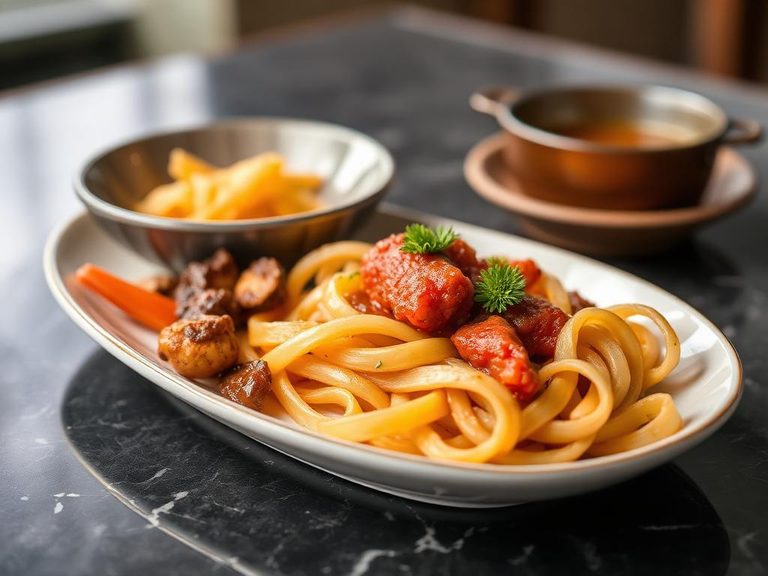
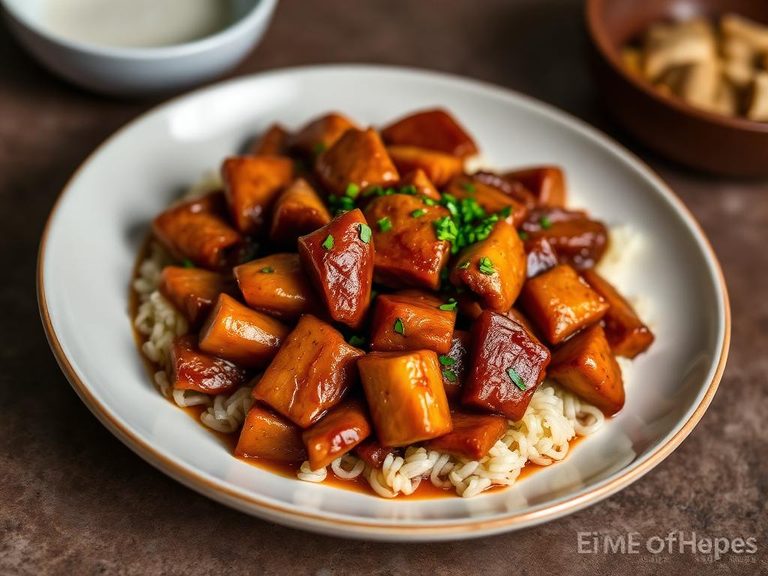
🍽️ Popular dishes
🌍 Where it's eaten
💡 Did you know?
The combination of lentils and rice creates a complete protein, containing all nine essential amino acids, a fact recognized in traditional cuisines long before modern nutrition science.
Full nutrition (USDA data · scales with serving)
| Water | 73.2 g |
| Energy | 118 kcal |
| Protein | 3.3 g |
| Total lipid (fat) | 3.5 g |
| Carbohydrate, by difference | 18.6 g |
| Fiber, total dietary | 2.2 g |
| Total Sugars | 1.9 g |
| Calcium, Ca | 19.0 mg |
| Iron, Fe | 1.3 mg |
| Magnesium, Mg | 19.0 mg |
| Phosphorus, P | 64.0 mg |
| Potassium, K | 189 mg |
| Sodium, Na | 328 mg |
| Zinc, Zn | 0.55 mg |
| Copper, Cu | 0.12 mg |
| Selenium, Se | 3.9 ug |
| Vitamin C, total ascorbic acid | 4.6 mg |
| Thiamin | 0.11 mg |
| Riboflavin | 0.04 mg |
| Niacin | 1.1 mg |
| Vitamin B-6 | 0.12 mg |
| Folate, total | 61.0 ug |
| Folic acid | 22.0 ug |
| Folate, food | 39.0 ug |
| Folate, DFE | 76.0 ug |
| Choline, total | 12.3 mg |
| Vitamin B-12 | 0.01 ug |
| Vitamin B-12, added | 0.00 ug |
| Vitamin A, RAE | 22.0 ug |
| Retinol | 1.0 ug |
| Carotene, beta | 225 ug |
| Carotene, alpha | 64.0 ug |
| Cryptoxanthin, beta | 1.0 ug |
| Lycopene | 2681 ug |
| Lutein + zeaxanthin | 44.0 ug |
| Vitamin E (alpha-tocopherol) | 0.86 mg |
| Vitamin E, added | 0.00 mg |
| Vitamin D (D2 + D3) | 0.00 ug |
| Vitamin K (phylloquinone) | 5.2 ug |
| Alcohol, ethyl | 0.00 g |
| Caffeine | 0.00 mg |
| Theobromine | 0.00 mg |
Fat & fatty acid profile (per 100g)
| Fatty acids, total saturated | 0.80 g |
| SFA 4:0 | 0.00 g |
| SFA 6:0 | 0.00 g |
| SFA 8:0 | 0.03 g |
| SFA 10:0 | 0.02 g |
| SFA 12:0 | 0.17 g |
| SFA 14:0 | 0.08 g |
| SFA 16:0 | 0.36 g |
| SFA 18:0 | 0.11 g |
| Fatty acids, total monounsaturated | 1.2 g |
| MUFA 16:1 | 0.01 g |
| MUFA 18:1 | 1.2 g |
| MUFA 20:1 | 0.02 g |
| MUFA 22:1 | 0.00 g |
| Fatty acids, total polyunsaturated | 1.2 g |
| PUFA 18:2 | 1.0 g |
| PUFA 18:3 | 0.13 g |
| PUFA 18:4 | 0.00 g |
| PUFA 20:4 | 0.00 g |
| PUFA 20:5 n-3 (EPA) | 0.00 g |
| PUFA 22:5 n-3 (DPA) | 0.00 g |
| PUFA 22:6 n-3 (DHA) | 0.00 g |
| Cholesterol | 0.00 mg |
FAQ
Is lentil curry with rice a complete meal?
Yes, it is nutritionally complete. The lentils provide protein and fiber, while the rice supplies carbohydrates for energy. Together, they form a balanced meal with all essential amino acids.
How can I make it creamier without dairy?
Use full-fat coconut milk or coconut cream as the base for the gravy. Alternatively, blend a portion of the cooked lentils and stir them back in to thicken the sauce naturally.
Can I use different types of lentils?
Absolutely. Red lentils will break down into a very creamy, thick sauce quickly. Brown or green lentils hold their shape better for a chunkier texture. Black lentils (urad dal) will create a richer, earthier dish.
Nutrient density (calculated · NRF9.3)
Nutrient Rich Foods index: beneficial nutrients (protein, fiber, vitamins, minerals) minus saturated fat, added sugar & sodium, per 100 kcal.
NRF9.3 index — Fulgoni, Keast & Drewnowski, 2009. Computed from USDA nutrients.
Weight-loss friendliness (composite index)
Energy density 1.18 kcal/g · 11% calories from protein · 2.2 g fiber · 1.9 g sugar per 100 g.
Composite of energy density (Rolls et al., 1999), protein & fiber satiety, minus sugar. A calculated heuristic — ranks satiety-per-calorie, not a clinical measure.
Dietary load (calculated from USDA values)
Potential renal acid load. Positive = acid-forming, negative = alkaline-forming.
Sodium-to-potassium ratio: 1.74 (lower is better — aim for ≤ 1)
Sodium:potassium per WHO potassium guidance. Computed from USDA nutrients.