

Lemonade, frozen concentrate, not reconstituted
Common food
This is a thick, intensely tart, and sugary paste made from concentrated lemon juice and sugar, designed to be diluted with water to make lemonade. Its texture is smooth and syrupy, often with a deep yellow or amber hue. Nutritionally, it is almost entirely composed of carbohydrates, primarily from added sugar, providing a quick energy boost but little else.
Calorie split: 0% protein · 97% carbs · 3% fat
↓ Full nutrition💚 Why it's loved
People love it for the instant, nostalgic refreshment of a perfectly sweet-tart glass of lemonade, especially on a hot day. Its versatility as a base for marinades, dressings, and cocktails makes it a pantry staple.
⚠️ Watch-outs & how to enjoy it better
The extremely high sugar content (over 44g per 100g) can cause rapid blood-sugar spikes and contributes empty calories. To counteract this, practice strict portion control when mixing, and consider diluting it more than the package suggests. Pairing the finished drink with a source of protein or healthy fat (like nuts or cheese) can help slow sugar absorption.
Key benefits
- Provides a quick source of energy from carbohydrates.
- Offers a concentrated dose of vitamin C when reconstituted.
- Convenient for making large batches of lemonade quickly.
- Long shelf life in its frozen, concentrated form.
- Can be used as a base for other tangy sauces or glazes.
🍽️ Popular dishes

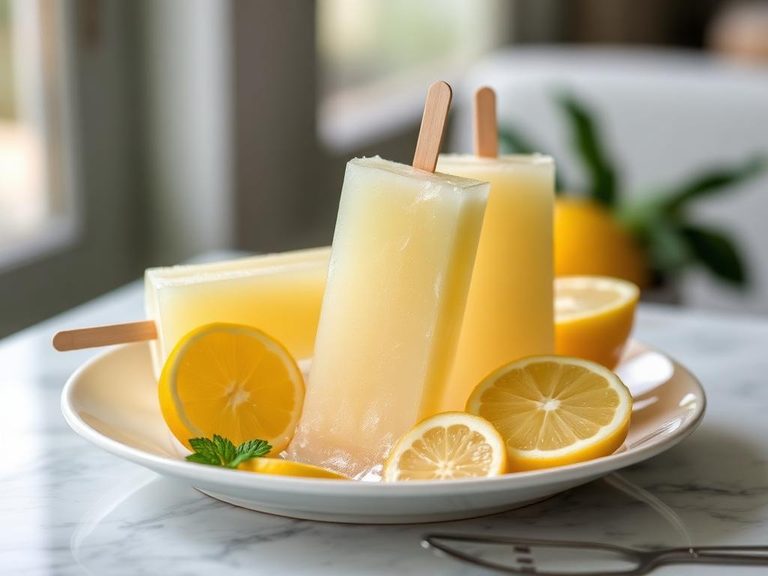
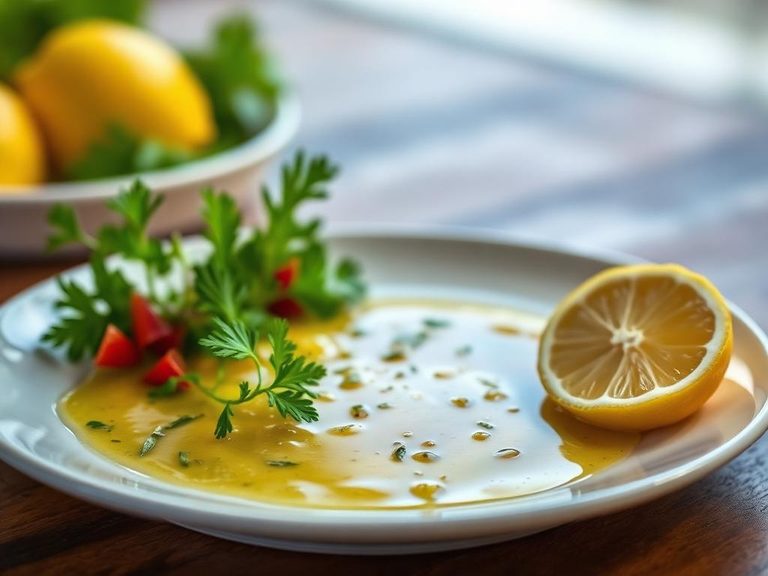

🌍 Where it's eaten
💡 Did you know?
The process of making frozen concentrate was commercially perfected in the 1940s, driven by the need to ship lemonade to U.S. troops overseas efficiently.
Full nutrition (USDA data · scales with serving)
| Water | 49.1 g |
| Energy | 196 kcal |
| Protein | 0.22 g |
| Total lipid (fat) | 0.70 g |
| Carbohydrate, by difference | 49.9 g |
| Fiber, total dietary | 0.30 g |
| Total Sugars | 44.5 g |
| Calcium, Ca | 7.0 mg |
| Iron, Fe | 0.09 mg |
| Magnesium, Mg | 7.0 mg |
| Phosphorus, P | 7.0 mg |
| Potassium, K | 72.0 mg |
| Sodium, Na | 7.0 mg |
| Zinc, Zn | 0.04 mg |
| Copper, Cu | 0.01 mg |
| Selenium, Se | 0.40 ug |
| Vitamin C, total ascorbic acid | 13.1 mg |
| Thiamin | 0.02 mg |
| Riboflavin | 0.00 mg |
| Niacin | 0.11 mg |
| Vitamin B-6 | 0.02 mg |
| Folate, total | 7.0 ug |
| Folic acid | 0.00 ug |
| Folate, food | 7.0 ug |
| Folate, DFE | 7.0 ug |
| Choline, total | 2.0 mg |
| Vitamin B-12 | 0.00 ug |
| Vitamin B-12, added | 0.00 ug |
| Vitamin A, RAE | 0.00 ug |
| Retinol | 0.00 ug |
| Carotene, beta | 0.00 ug |
| Carotene, alpha | 0.00 ug |
| Cryptoxanthin, beta | 0.00 ug |
| Lycopene | 0.00 ug |
| Lutein + zeaxanthin | 4.0 ug |
| Vitamin E (alpha-tocopherol) | 0.09 mg |
| Vitamin E, added | 0.00 mg |
| Vitamin D (D2 + D3) | 0.00 ug |
| Vitamin K (phylloquinone) | 0.20 ug |
| Alcohol, ethyl | 0.00 g |
| Caffeine | 0.00 mg |
| Theobromine | 0.00 mg |
Fat & fatty acid profile (per 100g)
| Fatty acids, total saturated | 0.03 g |
| SFA 4:0 | 0.00 g |
| SFA 6:0 | 0.00 g |
| SFA 8:0 | 0.00 g |
| SFA 10:0 | 0.00 g |
| SFA 12:0 | 0.00 g |
| SFA 14:0 | 0.00 g |
| SFA 16:0 | 0.02 g |
| SFA 18:0 | 0.00 g |
| Fatty acids, total monounsaturated | 0.01 g |
| MUFA 16:1 | 0.00 g |
| MUFA 18:1 | 0.01 g |
| MUFA 20:1 | 0.00 g |
| MUFA 22:1 | 0.00 g |
| Fatty acids, total polyunsaturated | 0.06 g |
| PUFA 18:2 | 0.04 g |
| PUFA 18:3 | 0.02 g |
| PUFA 18:4 | 0.00 g |
| PUFA 20:4 | 0.00 g |
| PUFA 20:5 n-3 (EPA) | 0.00 g |
| PUFA 22:5 n-3 (DPA) | 0.00 g |
| PUFA 22:6 n-3 (DHA) | 0.00 g |
| Cholesterol | 0.00 mg |
FAQ
How do I reconstitute the frozen concentrate?
Typically, you fill the empty concentrate can with cold water, pour it back into the concentrate in a pitcher, and stir well. This yields a standard-strength lemonade.
Can I use it for baking?
Yes, it's excellent for adding bright lemon flavor to cakes, cookies, and glazes. Use it in place of some of the liquid (like milk or water) in a recipe, and reduce other sugars slightly.
Is it the same as lemon juice?
No. It is lemon juice with a large amount of added sugar. For cooking or recipes needing pure lemon flavor, use bottled or fresh lemon juice instead.
Nutrient density (calculated · NRF9.3)
Nutrient Rich Foods index: beneficial nutrients (protein, fiber, vitamins, minerals) minus saturated fat, added sugar & sodium, per 100 kcal.
NRF9.3 index — Fulgoni, Keast & Drewnowski, 2009. Computed from USDA nutrients.
Weight-loss friendliness (composite index)
Energy density 1.96 kcal/g · 0% calories from protein · 0.3 g fiber · 44.5 g sugar per 100 g.
Composite of energy density (Rolls et al., 1999), protein & fiber satiety, minus sugar. A calculated heuristic — ranks satiety-per-calorie, not a clinical measure.
Dietary load (calculated from USDA values)
Potential renal acid load. Positive = acid-forming, negative = alkaline-forming.
Sodium-to-potassium ratio: 0.10 (lower is better — aim for ≤ 1)
Sodium:potassium per WHO potassium guidance. Computed from USDA nutrients.