

Lamb, Australian, imported, fresh, separable fat, cooked
Whole food · Lamb, Veal, and Game Products

Photo: Wikipedia
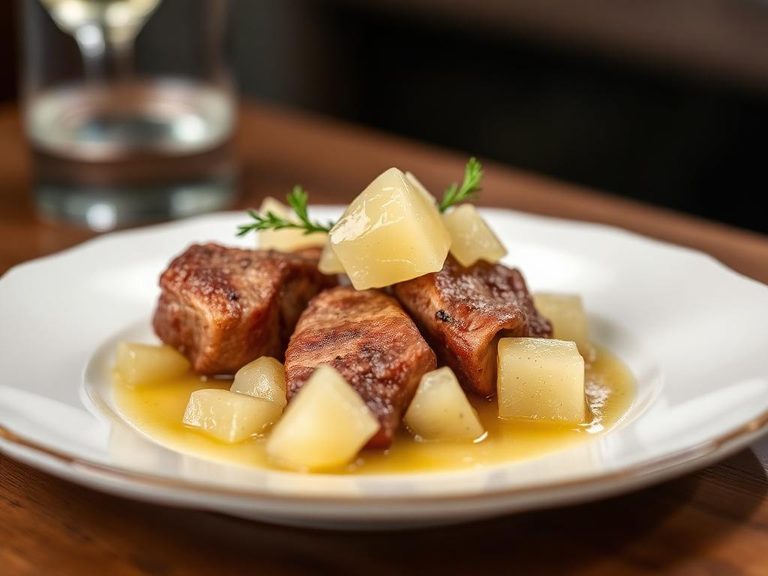
This is the rendered, golden-brown fat cap and suet from Australian lamb, cooked until it transforms into a rich, savory, and intensely flavorful component. Its texture ranges from a satisfyingly crisp, crackling-like exterior to a smooth, melt-in-your-mouth interior. Nutritionally, it is a pure energy source, providing dense calories almost entirely from fat with negligible protein or carbohydrates.
Calorie split: 6% protein · 0% carbs · 94% fat
↓ Full nutrition💚 Why it's loved
People love it for its profound, savory umami depth and luxurious mouthfeel that elevates simple ingredients. It is prized as a flavor cornerstone in many cuisines, used to baste steaks, roast vegetables, or create incredibly rich gravies.
⚠️ Watch-outs & how to enjoy it better
Due to its very high saturated fat content, it should be consumed in moderation by those monitoring cardiovascular health or calorie intake. To counteract this, use it sparingly as a flavoring agent rather than a primary fat, and pair it with high-fiber vegetables or lean proteins to create a more balanced meal.
Key benefits
- Excellent source of dietary fat for energy and satiety.
- High in oleic acid, the same heart-healthy monounsaturated fat found in olive oil.
- Provides fat-soluble vitamins like Vitamin E.
- Enhances the flavor and mouthfeel of leaner dishes.
- A traditional cooking medium for high-heat searing.
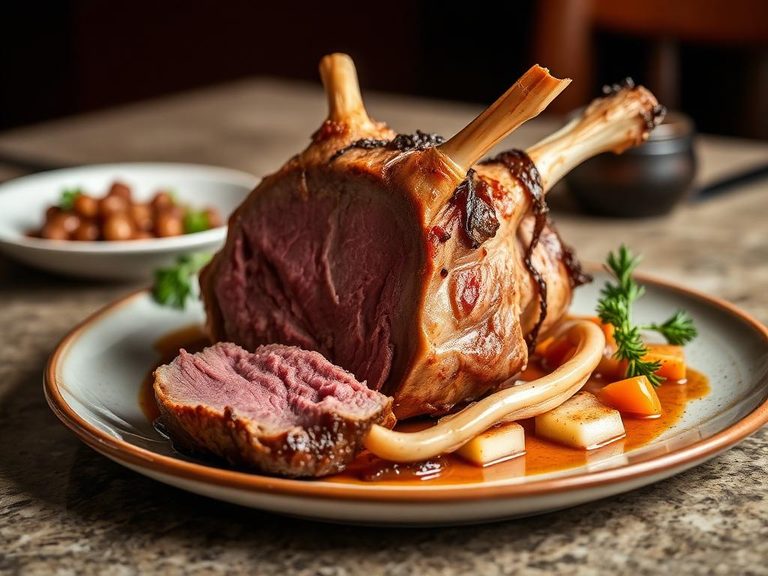
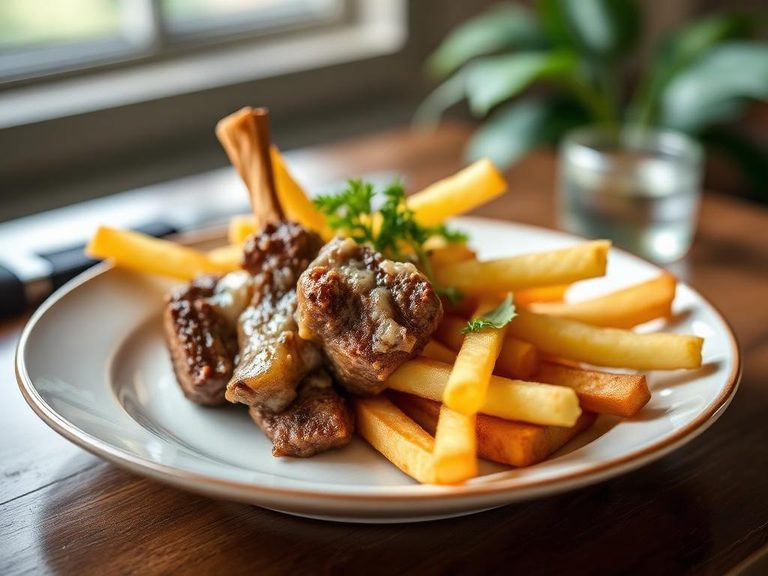
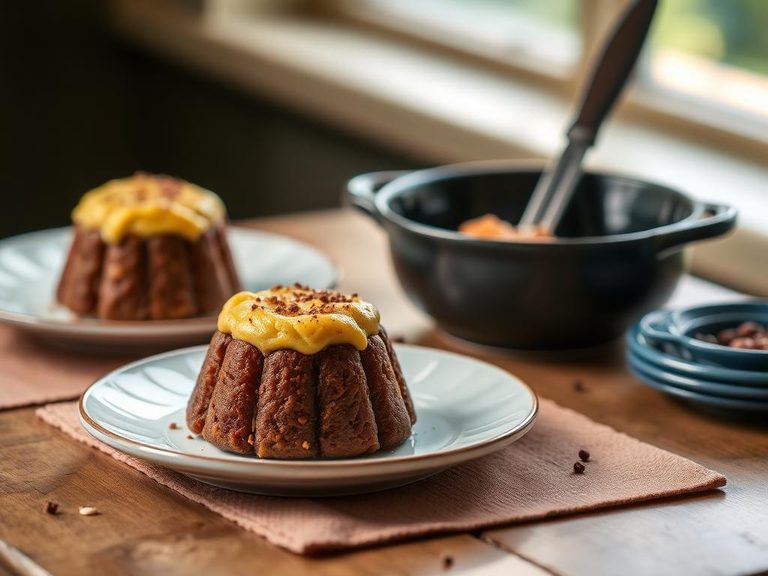
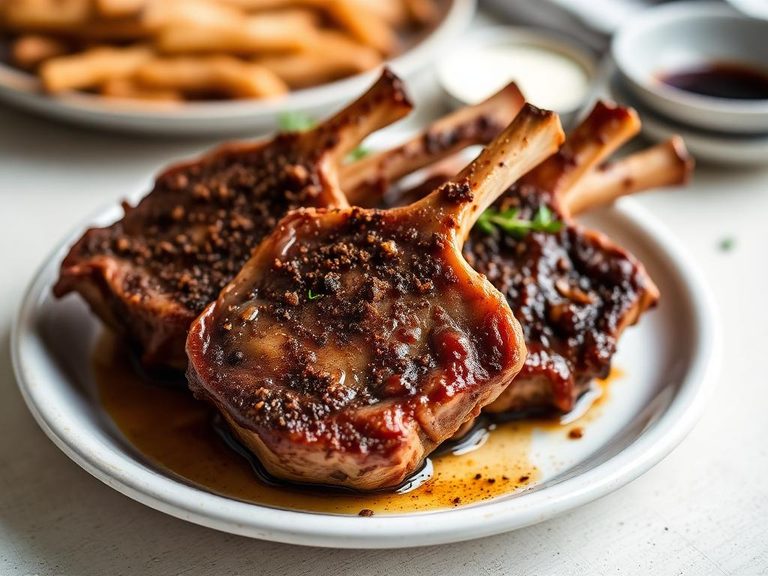
🍽️ Popular dishes
🌍 Where it's eaten
💡 Did you know?
Rendered lamb fat, known as tallow, has a higher melting point than beef tallow, making it historically preferred for creating exceptionally flaky pastry crusts in British and French baking.
Full nutrition (USDA data · scales with serving)
| Water | 24.0 g |
| Energy | 639 kcal |
| Energy | 2674 kj |
| Protein | 9.4 g |
| Total lipid (fat) | 66.4 g |
| Ash | 0.45 g |
| Carbohydrate, by difference | 0.00 g |
| Calcium, Ca | 27.0 mg |
| Iron, Fe | 1.1 mg |
| Magnesium, Mg | 12.0 mg |
| Phosphorus, P | 114 mg |
| Potassium, K | 179 mg |
| Sodium, Na | 51.0 mg |
| Zinc, Zn | 1.5 mg |
| Copper, Cu | 0.07 mg |
| Manganese, Mn | 0.01 mg |
| Selenium, Se | 5.8 ug |
| Thiamin | 0.06 mg |
| Riboflavin | 0.14 mg |
| Niacin | 2.9 mg |
| Pantothenic acid | 0.40 mg |
| Vitamin B-6 | 0.17 mg |
| Vitamin B-12 | 1.8 ug |
Fat & fatty acid profile (per 100g)
| Fatty acids, total saturated | 34.8 g |
| SFA 10:0 | 0.15 g |
| SFA 12:0 | 0.23 g |
| SFA 14:0 | 2.9 g |
| SFA 15:0 | 0.46 g |
| SFA 16:0 | 15.4 g |
| SFA 17:0 | 1.2 g |
| SFA 18:0 | 14.3 g |
| SFA 20:0 | 0.13 g |
| Fatty acids, total monounsaturated | 26.4 g |
| MUFA 14:1 | 0.13 g |
| MUFA 16:1 | 1.2 g |
| MUFA 18:1 | 24.3 g |
| MUFA 20:1 | 0.25 g |
| Fatty acids, total polyunsaturated | 2.3 g |
| PUFA 18:2 | 1.5 g |
| PUFA 18:3 | 0.75 g |
| PUFA 20:4 | 0.06 g |
| Cholesterol | 83.0 mg |
Amino acid profile (per 100g)
| Tryptophan | 0.11 g |
| Threonine | 0.40 g |
| Isoleucine | 0.46 g |
| Leucine | 0.73 g |
| Lysine | 0.83 g |
| Methionine | 0.24 g |
| Cystine | 0.11 g |
| Phenylalanine | 0.38 g |
| Tyrosine | 0.32 g |
| Valine | 0.51 g |
| Arginine | 0.56 g |
| Histidine | 0.30 g |
| Alanine | 0.57 g |
| Aspartic acid | 0.83 g |
| Glutamic acid | 1.4 g |
| Glycine | 0.46 g |
| Proline | 0.40 g |
| Serine | 0.35 g |
FAQ
Is cooked lamb fat the same as lamb tallow?
Yes, essentially. 'Tallow' is the term for the rendered, purified fat from suet (the hard fat around the kidneys and loins). 'Cooked separable fat' is a broader term for any fat trimmed and cooked, which may or may not be fully rendered and purified into tallow.
Can I reuse the fat from cooking lamb?
Yes, if it's been strained of solids and stored properly in the refrigerator. It can be reused for frying or roasting 2-3 times, but its smoke point will decrease with each use.
Why is the fat from Australian lamb often yellow?
A yellowish tint can indicate the sheep's diet, particularly if it grazed on plants rich in beta-carotene (like certain grasses). It's a natural occurrence and not a sign of spoilage.
Nutrient density (calculated · NRF9.3)
Nutrient Rich Foods index: beneficial nutrients (protein, fiber, vitamins, minerals) minus saturated fat, added sugar & sodium, per 100 kcal.
NRF9.3 index — Fulgoni, Keast & Drewnowski, 2009. Computed from USDA nutrients.
Weight-loss friendliness (composite index)
Energy density 6.39 kcal/g · 6% calories from protein · 0.0 g fiber · 0.0 g sugar per 100 g.
Composite of energy density (Rolls et al., 1999), protein & fiber satiety, minus sugar. A calculated heuristic — ranks satiety-per-calorie, not a clinical measure.
Dietary load (calculated from USDA values)
Potential renal acid load. Positive = acid-forming, negative = alkaline-forming.
Sodium-to-potassium ratio: 0.28 (lower is better — aim for ≤ 1)
Sodium:potassium per WHO potassium guidance. Computed from USDA nutrients.