

Infant formula, store brand, advantage or tender, powder, made with tap water
Common food

Photo: Wikipedia
This is a standard, store-brand infant formula powder designed to be mixed with tap water, providing a complete nutritional base for babies. It has a mild, slightly sweet, milky taste and a fine, easily dissolvable powder texture that creates a smooth liquid. Nutritionally, it's a balanced source of energy, with a macronutrient profile specifically engineered to support infant growth.
Calorie split: 8% protein · 43% carbs · 49% fat
↓ Full nutrition💚 Why it's loved
Parents and caregivers value it for its reliability, affordability, and the peace of mind it provides in ensuring an infant receives necessary nutrients. Its consistent, mild flavor is well-accepted by most babies, making feeding routines smoother.
⚠️ Watch-outs & how to enjoy it better
Some infants may experience digestive discomfort like gas or constipation due to the specific protein blend or carbohydrate source. It is not suitable for infants with diagnosed cow's milk protein allergy or galactosemia. To mitigate digestive issues, ensure proper mixing ratios, consider a gentle or sensitive formula variant if advised by a pediatrician, and always prepare with clean, safe water.
Key benefits
- Provides complete nutrition for infants when breast milk is unavailable.
- Contains essential fatty acids like DHA for brain and eye development.
- Balanced ratio of whey and casein proteins for easy digestion.
- Fortified with iron to prevent deficiency and support cognitive development.
- Convenient and cost-effective alternative to name-brand formulas.
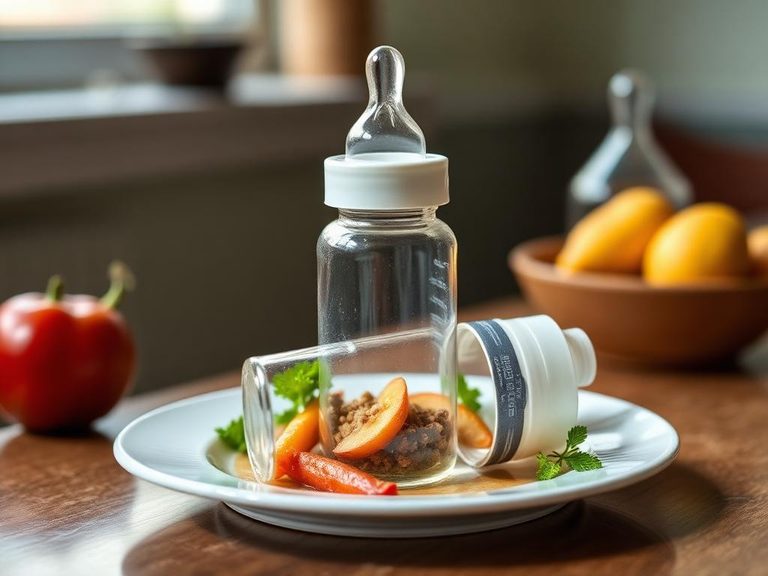
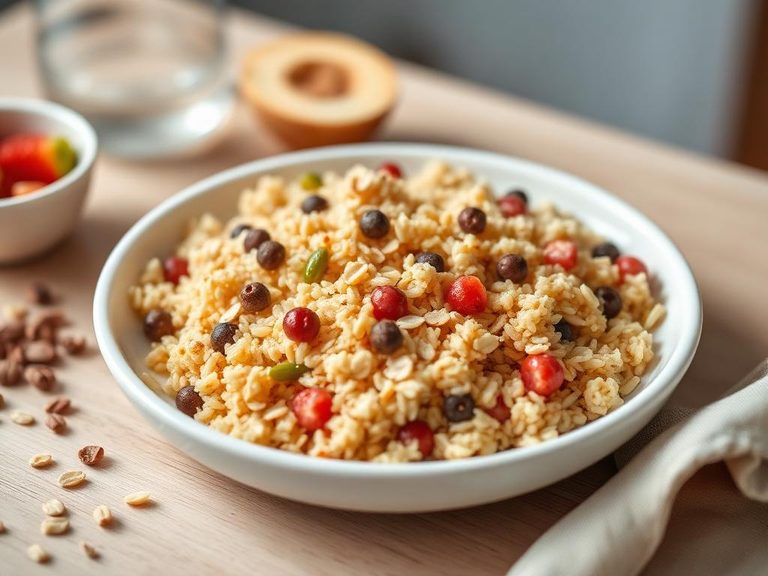
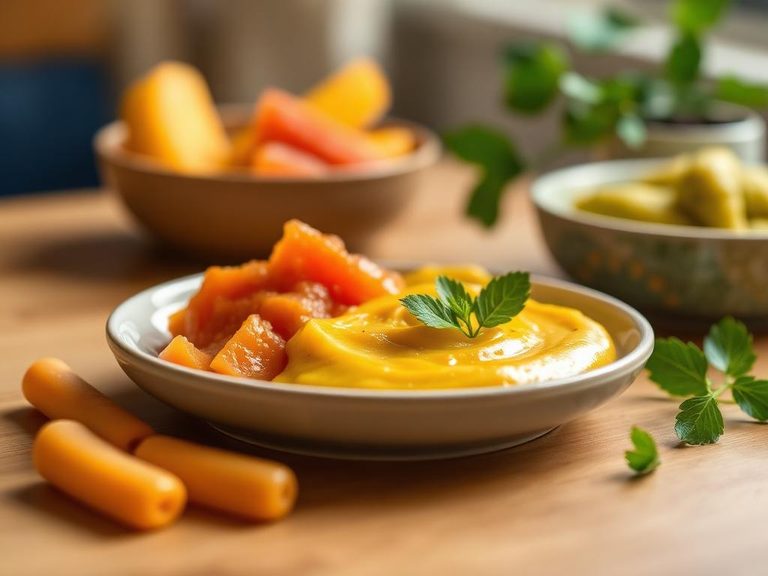
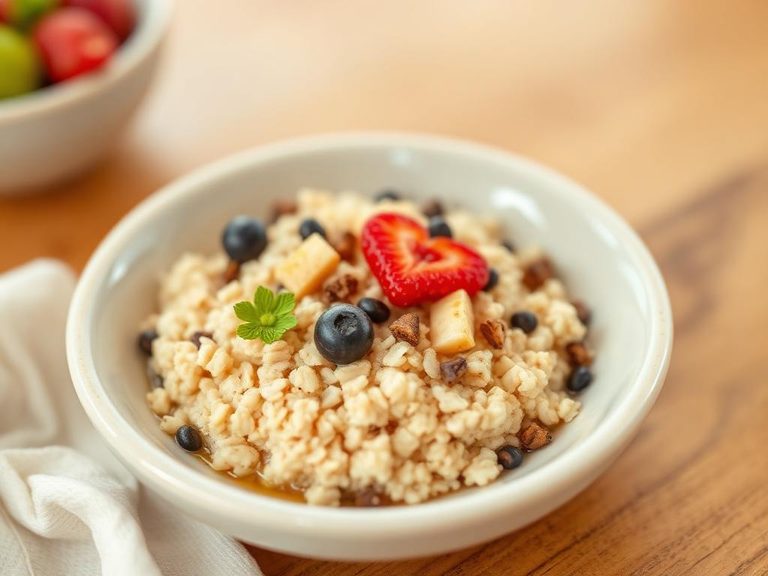
🍽️ Popular dishes

🌍 Where it's eaten
💡 Did you know?
The 'store brand' formula is often manufactured in the same facility and may be virtually identical to a leading name-brand formula, just with different packaging and labeling.
Full nutrition (USDA data · scales with serving)
| Water | 87.5 g |
| Energy | 66.0 kcal |
| Protein | 1.4 g |
| Total lipid (fat) | 3.6 g |
| Carbohydrate, by difference | 7.1 g |
| Fiber, total dietary | 0.00 g |
| Total Sugars | 7.1 g |
| Calcium, Ca | 54.0 mg |
| Iron, Fe | 1.2 mg |
| Magnesium, Mg | 6.0 mg |
| Phosphorus, P | 28.0 mg |
| Potassium, K | 70.0 mg |
| Sodium, Na | 20.0 mg |
| Zinc, Zn | 0.59 mg |
| Copper, Cu | 0.06 mg |
| Selenium, Se | 1.7 ug |
| Vitamin C, total ascorbic acid | 7.0 mg |
| Thiamin | 0.06 mg |
| Riboflavin | 0.10 mg |
| Niacin | 0.67 mg |
| Vitamin B-6 | 0.04 mg |
| Folate, total | 10.0 ug |
| Folic acid | 10.0 ug |
| Folate, food | 0.00 ug |
| Folate, DFE | 17.0 ug |
| Choline, total | 15.4 mg |
| Vitamin B-12 | 0.18 ug |
| Vitamin B-12, added | 0.18 ug |
| Vitamin A, RAE | 59.0 ug |
| Retinol | 59.0 ug |
| Carotene, beta | 0.00 ug |
| Carotene, alpha | 0.00 ug |
| Cryptoxanthin, beta | 0.00 ug |
| Lycopene | 0.00 ug |
| Lutein + zeaxanthin | 0.00 ug |
| Vitamin E (alpha-tocopherol) | 0.78 mg |
| Vitamin E, added | 0.78 mg |
| Vitamin D (D2 + D3) | 1.0 ug |
| Vitamin K (phylloquinone) | 5.6 ug |
| Alcohol, ethyl | 0.00 g |
| Caffeine | 0.00 mg |
| Theobromine | 0.00 mg |
Fat & fatty acid profile (per 100g)
| Fatty acids, total saturated | 1.3 g |
| SFA 4:0 | 0.00 g |
| SFA 6:0 | 0.01 g |
| SFA 8:0 | 0.08 g |
| SFA 10:0 | 0.06 g |
| SFA 12:0 | 0.40 g |
| SFA 14:0 | 0.16 g |
| SFA 16:0 | 0.50 g |
| SFA 18:0 | 0.13 g |
| Fatty acids, total monounsaturated | 1.3 g |
| MUFA 16:1 | 0.01 g |
| MUFA 18:1 | 1.3 g |
| MUFA 20:1 | 0.01 g |
| MUFA 22:1 | 0.00 g |
| Fatty acids, total polyunsaturated | 0.74 g |
| PUFA 18:2 | 0.66 g |
| PUFA 18:3 | 0.07 g |
| PUFA 18:4 | 0.00 g |
| PUFA 20:4 | 0.02 g |
| PUFA 20:5 n-3 (EPA) | 0.00 g |
| PUFA 22:5 n-3 (DPA) | 0.00 g |
| PUFA 22:6 n-3 (DHA) | 0.01 g |
| Cholesterol | 1.0 mg |
FAQ
Can I use this formula after the 'use by' date?
It is not recommended. The nutritional integrity, especially of sensitive vitamins and fats, can degrade over time, and the risk of bacterial contamination increases.
Why does my baby seem hungrier after this formula?
This could be due to normal growth spurts, the need for a higher-calorie formula for some babies, or a sensitivity to the protein type. Consult your pediatrician for personalized advice.
Is it safe to prepare formula with well water?
Well water may contain high levels of nitrates or other contaminants unsafe for infants. Use tested, safe tap water or boiled/cooled water as recommended by health authorities.
Nutrient density (calculated · NRF9.3)
Nutrient Rich Foods index: beneficial nutrients (protein, fiber, vitamins, minerals) minus saturated fat, added sugar & sodium, per 100 kcal.
NRF9.3 index — Fulgoni, Keast & Drewnowski, 2009. Computed from USDA nutrients.
Weight-loss friendliness (composite index)
Energy density 0.66 kcal/g · 8% calories from protein · 0.0 g fiber · 7.1 g sugar per 100 g.
Composite of energy density (Rolls et al., 1999), protein & fiber satiety, minus sugar. A calculated heuristic — ranks satiety-per-calorie, not a clinical measure.
Dietary load (calculated from USDA values)
Potential renal acid load. Positive = acid-forming, negative = alkaline-forming.
Sodium-to-potassium ratio: 0.29 (lower is better — aim for ≤ 1)
Sodium:potassium per WHO potassium guidance. Computed from USDA nutrients.