

Fruit flavored drink, diet
Common food
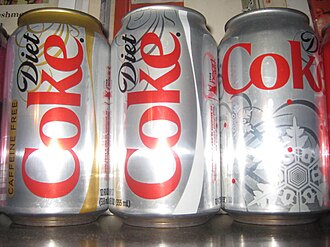
Photo: Wikipedia
A diet fruit-flavored drink is a clear, often brightly colored, zero-sugar beverage that delivers a sweet, fruity taste without the calories of its full-sugar counterpart. It has a light, watery texture and a flavor profile that mimics everything from cherry to tropical punch, relying on non-nutritive sweeteners. Its primary nutritional feature is its near-zero energy content, providing just 4 kcal per 100g.
Calorie split: 1% protein · 99% carbs · 0% fat
↓ Full nutrition💚 Why it's loved
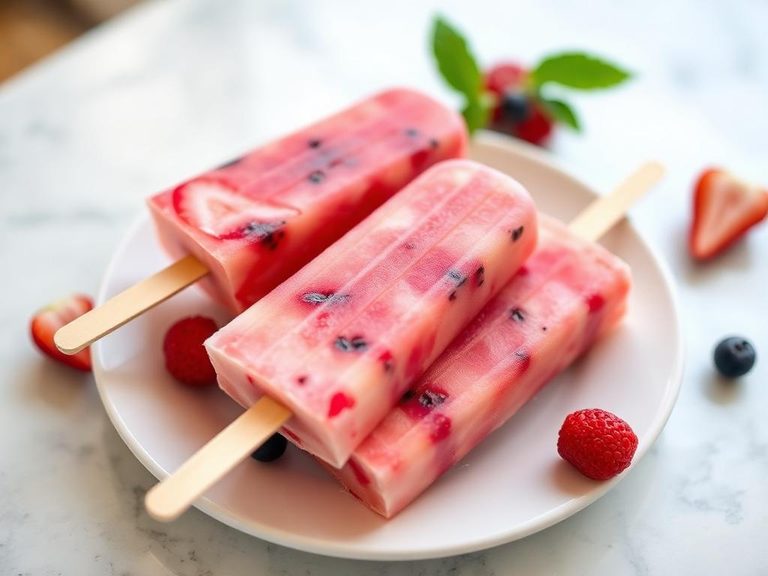
People love it for its intense, nostalgic fruit flavors that satisfy a sweet craving without the sugar, making it a popular choice for those managing calorie intake. Its versatility allows it to be sipped chilled, used as a mixer, or frozen into low-calorie popsicles.
⚠️ Watch-outs & how to enjoy it better
Some diet drinks contain artificial sweeteners or sugar alcohols that may cause digestive discomfort in sensitive individuals. They offer no nutritional benefit beyond hydration and can perpetuate a preference for intensely sweet tastes. To counteract this, consider it an occasional treat, not a water replacement, and pair it with a source of protein or fiber (like a handful of nuts) to create a more satisfying snack.
Key benefits
- Virtually calorie-free (4 kcal/100g)
- Contains no sugar or fat
- Provides hydration with flavor
- Can be a tool for reducing added sugar intake
- Offers a consistent, predictable flavor
🍽️ Popular dishes




🌍 Where it's eaten
💡 Did you know?
The first diet soda, No-Cal, was ginger ale-flavored and introduced in 1952, specifically marketed to diabetic patients and dieters.
Full nutrition (USDA data · scales with serving)
| Water | 98.3 g |
| Energy | 4.0 kcal |
| Protein | 0.01 g |
| Total lipid (fat) | 0.00 g |
| Carbohydrate, by difference | 1.4 g |
| Fiber, total dietary | 0.00 g |
| Total Sugars | 0.00 g |
| Calcium, Ca | 20.0 mg |
| Iron, Fe | 0.00 mg |
| Magnesium, Mg | 1.0 mg |
| Phosphorus, P | 21.0 mg |
| Potassium, K | 8.0 mg |
| Sodium, Na | 11.0 mg |
| Zinc, Zn | 0.01 mg |
| Copper, Cu | 0.01 mg |
| Selenium, Se | 0.00 ug |
| Vitamin C, total ascorbic acid | 9.3 mg |
| Thiamin | 0.00 mg |
| Riboflavin | 0.00 mg |
| Niacin | 0.00 mg |
| Vitamin B-6 | 0.00 mg |
| Folate, total | 0.00 ug |
| Folic acid | 0.00 ug |
| Folate, food | 0.00 ug |
| Folate, DFE | 0.00 ug |
| Choline, total | 0.00 mg |
| Vitamin B-12 | 0.00 ug |
| Vitamin B-12, added | 0.00 ug |
| Vitamin A, RAE | 0.00 ug |
| Retinol | 0.00 ug |
| Carotene, beta | 0.00 ug |
| Carotene, alpha | 0.00 ug |
| Cryptoxanthin, beta | 0.00 ug |
| Lycopene | 0.00 ug |
| Lutein + zeaxanthin | 0.00 ug |
| Vitamin E (alpha-tocopherol) | 0.00 mg |
| Vitamin E, added | 0.00 mg |
| Vitamin D (D2 + D3) | 0.00 ug |
| Vitamin K (phylloquinone) | 0.00 ug |
| Alcohol, ethyl | 0.00 g |
| Caffeine | 0.00 mg |
| Theobromine | 0.00 mg |
Fat & fatty acid profile (per 100g)
| Fatty acids, total saturated | 0.00 g |
| SFA 4:0 | 0.00 g |
| SFA 6:0 | 0.00 g |
| SFA 8:0 | 0.00 g |
| SFA 10:0 | 0.00 g |
| SFA 12:0 | 0.00 g |
| SFA 14:0 | 0.00 g |
| SFA 16:0 | 0.00 g |
| SFA 18:0 | 0.00 g |
| Fatty acids, total monounsaturated | 0.00 g |
| MUFA 16:1 | 0.00 g |
| MUFA 18:1 | 0.00 g |
| MUFA 20:1 | 0.00 g |
| MUFA 22:1 | 0.00 g |
| Fatty acids, total polyunsaturated | 0.00 g |
| PUFA 18:2 | 0.00 g |
| PUFA 18:3 | 0.00 g |
| PUFA 18:4 | 0.00 g |
| PUFA 20:4 | 0.00 g |
| PUFA 20:5 n-3 (EPA) | 0.00 g |
| PUFA 22:5 n-3 (DPA) | 0.00 g |
| PUFA 22:6 n-3 (DHA) | 0.00 g |
| Cholesterol | 0.00 mg |
FAQ
Is diet fruit drink the same as diet soda?
Not exactly. While both are sugar-free, a diet soda is typically carbonated and may contain caffeine and specific flavorings like cola or lemon-lime. A diet fruit drink is usually non-carbonated and focuses on replicating the taste of fruit juices or punches.
Does it have any vitamins or minerals?
Generally, no. Most diet fruit-flavored drinks are formulated for flavor and hydration without added vitamins or minerals. Always check the nutrition label, as some brands may add small amounts of Vitamin C.
Can I use it in baking?
Yes, it can be used to add flavor and moisture to cakes, muffins, or pancakes, but it will not contribute sugar, fat, or significant calories. The texture and browning of the final product may differ from recipes using sugar-sweetened liquids.
Nutrient density (calculated · NRF9.3)
Nutrient Rich Foods index: beneficial nutrients (protein, fiber, vitamins, minerals) minus saturated fat, added sugar & sodium, per 100 kcal.
NRF9.3 index — Fulgoni, Keast & Drewnowski, 2009. Computed from USDA nutrients.
Weight-loss friendliness (composite index)
Energy density 0.04 kcal/g · 1% calories from protein · 0.0 g fiber · 0.0 g sugar per 100 g.
Composite of energy density (Rolls et al., 1999), protein & fiber satiety, minus sugar. A calculated heuristic — ranks satiety-per-calorie, not a clinical measure.
Dietary load (calculated from USDA values)
Potential renal acid load. Positive = acid-forming, negative = alkaline-forming.
Sodium-to-potassium ratio: 1.38 (lower is better — aim for ≤ 1)
Sodium:potassium per WHO potassium guidance. Computed from USDA nutrients.