

Flavored rice mixture
Common food
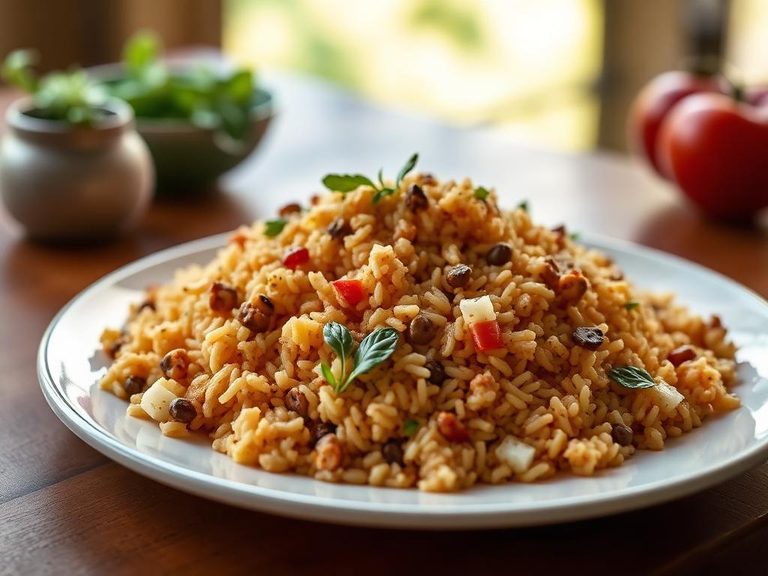
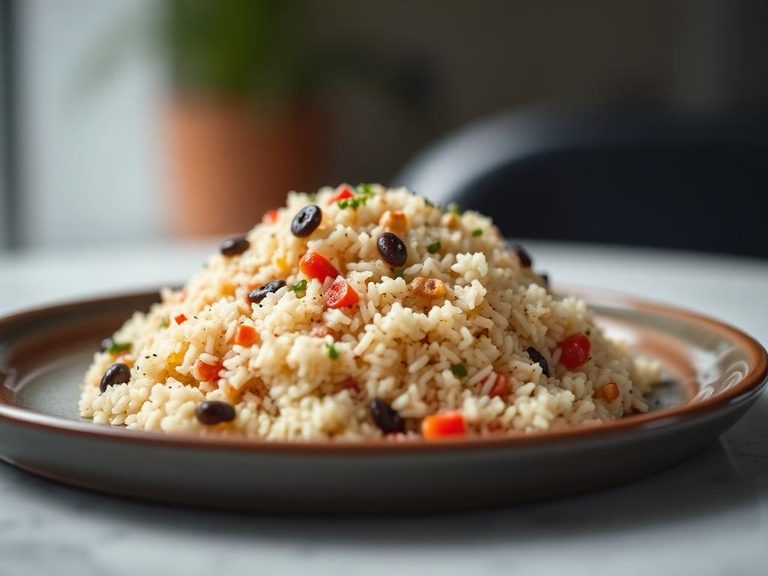
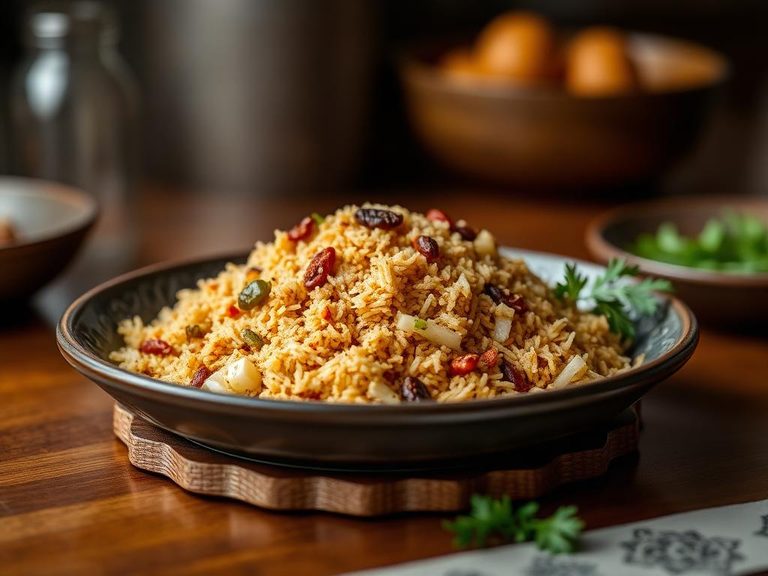
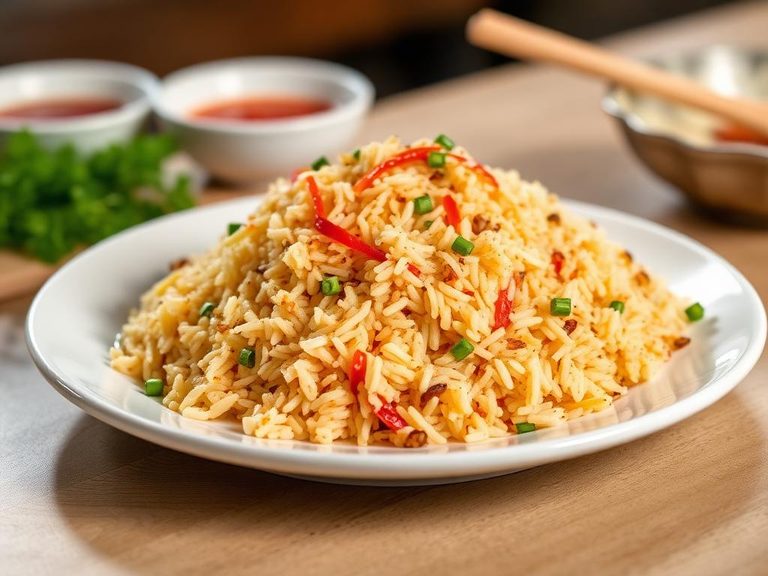
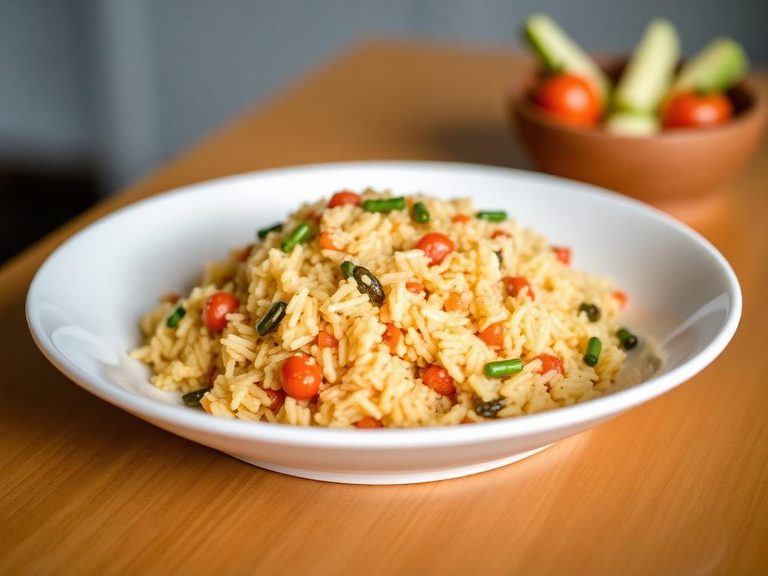
Aromatic and fluffy, this seasoned rice blend delivers a satisfying, slightly chewy texture with a savory, herb-infused flavor profile. It's a convenient, low-calorie base that provides quick energy from its carbohydrate content, making it a staple for fast, flavorful meals.
Calorie split: 6% protein · 63% carbs · 31% fat
↓ Full nutrition💚 Why it's loved
People adore it for its ability to transform a simple meal with minimal effort, offering a consistent, savory flavor that pairs well with countless proteins and vegetables. It's a cultural staple in many cuisines, representing comfort and convenience.
⚠️ Watch-outs & how to enjoy it better
As a refined carbohydrate with a high glycemic index, it can cause rapid blood-sugar spikes, making it less ideal for those managing diabetes without careful portioning. To counteract this, always pair it with a source of protein (like chicken or beans) and healthy fat (like avocado or olive oil) to slow digestion and stabilize energy levels.
Key benefits
- Quick source of energy from complex carbs
- Low in fat and calories per serving
- Versatile base for proteins and vegetables
- Often fortified with B vitamins in commercial blends
- Shelf-stable and easy to prepare
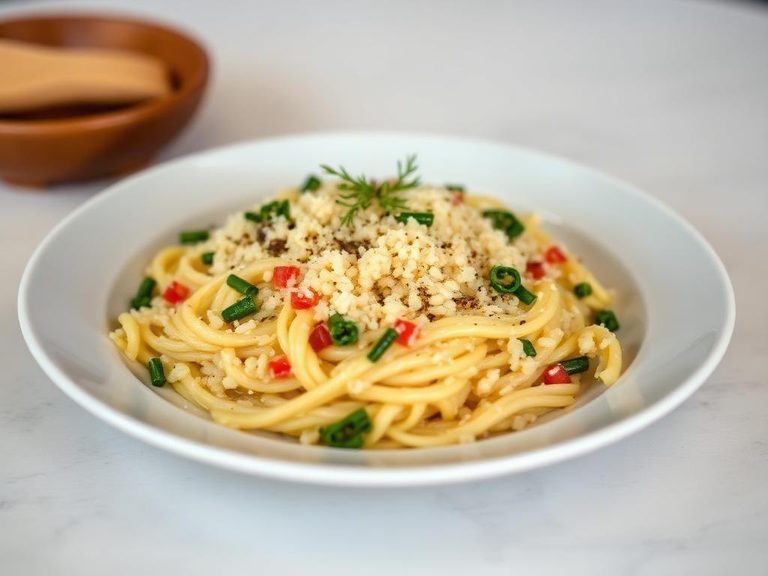
🍽️ Popular dishes
🌍 Where it's eaten
💡 Did you know?
Many commercial 'flavored rice' packets achieve their distinct yellow or orange color not from saffron, but from the more affordable spice turmeric.
Full nutrition (USDA data · scales with serving)
| Water | 73.0 g |
| Energy | 127 kcal |
| Protein | 1.9 g |
| Total lipid (fat) | 4.3 g |
| Carbohydrate, by difference | 19.8 g |
| Fiber, total dietary | 0.40 g |
| Total Sugars | 0.56 g |
| Calcium, Ca | 11.0 mg |
| Iron, Fe | 1.1 mg |
| Magnesium, Mg | 8.0 mg |
| Phosphorus, P | 28.0 mg |
| Potassium, K | 33.0 mg |
| Sodium, Na | 296 mg |
| Zinc, Zn | 0.28 mg |
| Copper, Cu | 0.06 mg |
| Selenium, Se | 3.7 ug |
| Vitamin C, total ascorbic acid | 0.10 mg |
| Thiamin | 0.11 mg |
| Riboflavin | 0.02 mg |
| Niacin | 1.0 mg |
| Vitamin B-6 | 0.04 mg |
| Folate, total | 38.0 ug |
| Folic acid | 36.0 ug |
| Folate, food | 2.0 ug |
| Folate, DFE | 63.0 ug |
| Choline, total | 3.2 mg |
| Vitamin B-12 | 0.01 ug |
| Vitamin B-12, added | 0.00 ug |
| Vitamin A, RAE | 28.0 ug |
| Retinol | 27.0 ug |
| Carotene, beta | 22.0 ug |
| Carotene, alpha | 0.00 ug |
| Cryptoxanthin, beta | 0.00 ug |
| Lycopene | 0.00 ug |
| Lutein + zeaxanthin | 2.0 ug |
| Vitamin E (alpha-tocopherol) | 0.48 mg |
| Vitamin E, added | 0.00 mg |
| Vitamin D (D2 + D3) | 0.20 ug |
| Vitamin K (phylloquinone) | 4.7 ug |
| Alcohol, ethyl | 0.00 g |
| Caffeine | 0.00 mg |
| Theobromine | 0.00 mg |
Fat & fatty acid profile (per 100g)
| Fatty acids, total saturated | 0.86 g |
| SFA 4:0 | 0.00 g |
| SFA 6:0 | 0.00 g |
| SFA 8:0 | 0.00 g |
| SFA 10:0 | 0.00 g |
| SFA 12:0 | 0.00 g |
| SFA 14:0 | 0.01 g |
| SFA 16:0 | 0.54 g |
| SFA 18:0 | 0.28 g |
| Fatty acids, total monounsaturated | 2.0 g |
| MUFA 16:1 | 0.05 g |
| MUFA 18:1 | 1.9 g |
| MUFA 20:1 | 0.02 g |
| MUFA 22:1 | 0.00 g |
| Fatty acids, total polyunsaturated | 1.3 g |
| PUFA 18:2 | 1.1 g |
| PUFA 18:3 | 0.11 g |
| PUFA 18:4 | 0.00 g |
| PUFA 20:4 | 0.00 g |
| PUFA 20:5 n-3 (EPA) | 0.00 g |
| PUFA 22:5 n-3 (DPA) | 0.00 g |
| PUFA 22:6 n-3 (DHA) | 0.00 g |
| Cholesterol | 1.0 mg |
Amino acid profile (per 100g)
Estimated from Rice mix, white and wild, flavored, unprepared — USDA does not publish this profile for Flavored rice mixture.
| Hydroxyproline | 0.00 g |
FAQ
A: Not necessarily. While many flavored rice products are par-cooked for quick preparation, the term primarily refers to the seasoning blend. You can find flavored rice that requires standard cooking times, just with added spices and herbs.
How can I reduce the sodium in store-bought flavored rice?
Look for 'low-sodium' or 'no salt added' versions. Alternatively, you can prepare your own blend using low-sodium broth and controlling the salt yourself, or rinse the cooked rice lightly if the seasoning is applied post-cooking.
What's the best way to prevent flavored rice from becoming mushy?
Follow the package water ratio precisely. Use a heavy-bottomed pot, bring the liquid to a boil before adding the rice, then reduce to a simmer and cover tightly. Avoid stirring during cooking, and let it rest off the heat for 5-10 minutes before fluffing with a fork.
Nutrient density (calculated · NRF9.3)
Nutrient Rich Foods index: beneficial nutrients (protein, fiber, vitamins, minerals) minus saturated fat, added sugar & sodium, per 100 kcal.
NRF9.3 index — Fulgoni, Keast & Drewnowski, 2009. Computed from USDA nutrients.
Weight-loss friendliness (composite index)
Energy density 1.27 kcal/g · 6% calories from protein · 0.4 g fiber · 0.6 g sugar per 100 g.
Composite of energy density (Rolls et al., 1999), protein & fiber satiety, minus sugar. A calculated heuristic — ranks satiety-per-calorie, not a clinical measure.
Dietary load (calculated from USDA values)
Potential renal acid load. Positive = acid-forming, negative = alkaline-forming.
Sodium-to-potassium ratio: 8.97 (lower is better — aim for ≤ 1)
Sodium:potassium per WHO potassium guidance. Computed from USDA nutrients.