

Fish, ling, raw
Whole food · Finfish and Shellfish Products
Ling, also known as marlin or cusk, is a lean, white-fleshed saltwater fish prized for its mild, slightly sweet flavor and firm, flaky texture that holds up beautifully in cooking. With an impressive 19 grams of protein per 100 grams and virtually no fat or carbohydrates, it's a powerhouse of pure, low-calorie nutrition. Its clean taste makes it a versatile canvas for bold seasonings or delicate preparations.
Calorie split: 93% protein · 0% carbs · 7% fat
↓ Full nutrition💚 Why it's loved
People love ling for its mild, non-fishy taste that appeals even to those wary of stronger seafood, and its firm texture that doesn't fall apart during grilling, baking, or stewing. It's a culinary chameleon, equally at home in a simple pan-sear with lemon or as the star of a hearty Portuguese caldeirada.
⚠️ Watch-outs & how to enjoy it better
As a very lean fish, ling can dry out quickly if overcooked, leading to a chalky texture. To counteract this, use moist-heat methods like poaching or baking en papillote, or baste with a small amount of olive oil or butter. Those with specific fish allergies should obviously avoid it, and as with all seafood, ensure it's fresh and properly handled to prevent foodborne illness.
Key benefits
- Excellent source of lean, complete protein for muscle maintenance.
- Extremely low in calories and fat, ideal for weight management.
- Naturally carb-free, making it suitable for ketogenic and low-carb diets.
- Provides essential nutrients like selenium and B vitamins.
- A sustainable choice when sourced from well-managed fisheries.
🍽️ Popular dishes
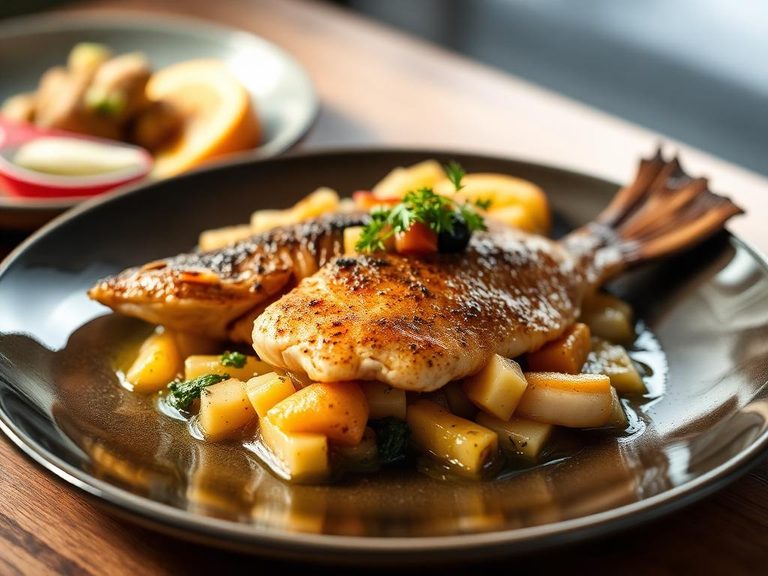
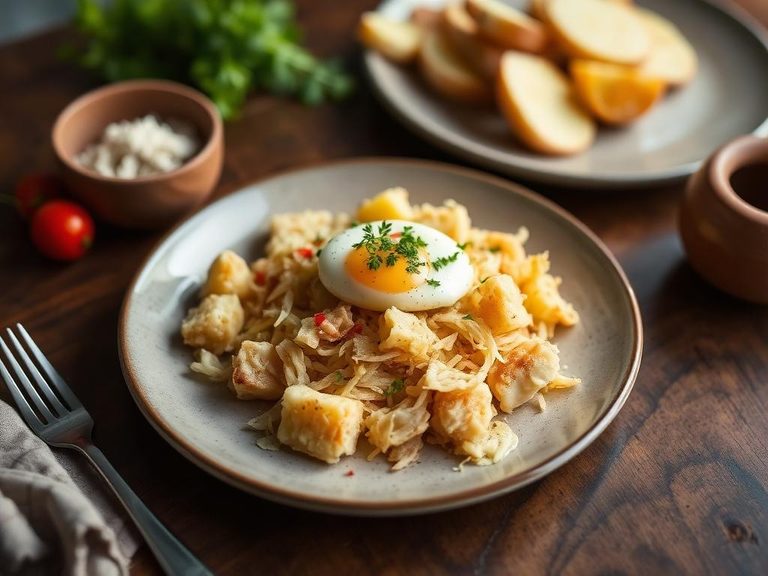
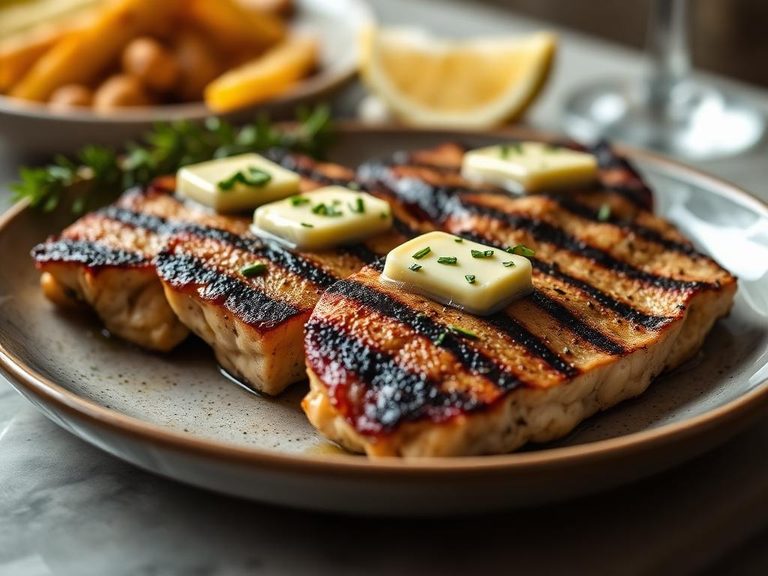
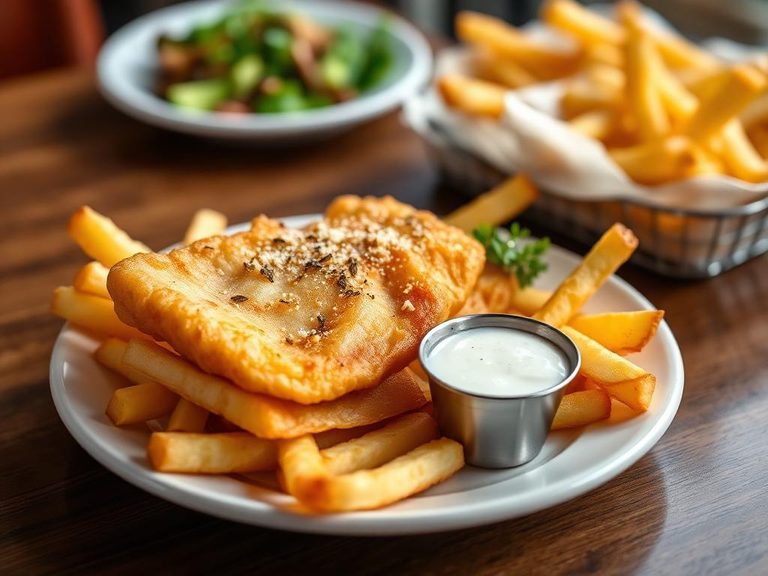
🌍 Where it's eaten
💡 Did you know?
Despite its name often being associated with cod in recipes, true ling (Molva molva) is actually a distinct species in the cod family, known for growing much larger—up to 2 meters in length—making it one of the largest of the cod-like fishes.
Full nutrition (USDA data · scales with serving)
| Water | 79.6 g |
| Energy | 87.0 kcal |
| Energy | 364 kj |
| Protein | 19.0 g |
| Total lipid (fat) | 0.64 g |
| Ash | 1.4 g |
| Carbohydrate, by difference | 0.00 g |
| Fiber, total dietary | 0.00 g |
| Calcium, Ca | 34.0 mg |
| Iron, Fe | 0.65 mg |
| Magnesium, Mg | 63.0 mg |
| Phosphorus, P | 198 mg |
| Potassium, K | 379 mg |
| Sodium, Na | 135 mg |
| Zinc, Zn | 0.78 mg |
| Copper, Cu | 0.11 mg |
| Manganese, Mn | 0.03 mg |
| Selenium, Se | 36.5 ug |
| Vitamin C, total ascorbic acid | 0.00 mg |
| Thiamin | 0.11 mg |
| Riboflavin | 0.19 mg |
| Niacin | 2.3 mg |
| Pantothenic acid | 0.32 mg |
| Vitamin B-6 | 0.30 mg |
| Folate, total | 7.0 ug |
| Folic acid | 0.00 ug |
| Folate, food | 7.0 ug |
| Folate, DFE | 7.0 ug |
| Vitamin B-12 | 0.56 ug |
| Vitamin A, RAE | 30.0 ug |
| Retinol | 30.0 ug |
| Vitamin A, IU | 100 iu |
Fat & fatty acid profile (per 100g)
| Fatty acids, total saturated | 0.12 g |
| Fatty acids, total monounsaturated | 0.09 g |
| Fatty acids, total polyunsaturated | 0.22 g |
| Cholesterol | 40.0 mg |
Amino acid profile (per 100g)
| Tryptophan | 0.21 g |
| Threonine | 0.83 g |
| Isoleucine | 0.88 g |
| Leucine | 1.5 g |
| Lysine | 1.7 g |
| Methionine | 0.56 g |
| Cystine | 0.20 g |
| Phenylalanine | 0.74 g |
| Tyrosine | 0.64 g |
| Valine | 0.98 g |
| Arginine | 1.1 g |
| Histidine | 0.56 g |
| Alanine | 1.1 g |
| Aspartic acid | 1.9 g |
| Glutamic acid | 2.8 g |
| Glycine | 0.91 g |
| Proline | 0.67 g |
| Serine | 0.78 g |
FAQ
Is ling the same as cod?
No, they are related but different. Ling (Molva molva) is a longer, more slender fish with a slightly firmer texture and milder flavor than Atlantic cod (Gadus morhua).
How do I keep ling from drying out?
Avoid overcooking. Use a meat thermometer and aim for an internal temperature of 145°F (63°C). Cooking methods like poaching, baking in sauce, or wrapping in parchment paper help retain moisture.
What's the best way to store fresh ling?
Place it on a plate or tray, cover tightly with plastic wrap, and store on the coldest part of your refrigerator for up to 2 days. For longer storage, wrap tightly and freeze for up to 3 months.
Nutrient density (calculated · NRF9.3)
Nutrient Rich Foods index: beneficial nutrients (protein, fiber, vitamins, minerals) minus saturated fat, added sugar & sodium, per 100 kcal.
NRF9.3 index — Fulgoni, Keast & Drewnowski, 2009. Computed from USDA nutrients.
Weight-loss friendliness (composite index)
Energy density 0.87 kcal/g · 87% calories from protein · 0.0 g fiber · 0.0 g sugar per 100 g.
Composite of energy density (Rolls et al., 1999), protein & fiber satiety, minus sugar. A calculated heuristic — ranks satiety-per-calorie, not a clinical measure.
Dietary load (calculated from USDA values)
Potential renal acid load. Positive = acid-forming, negative = alkaline-forming.
Sodium-to-potassium ratio: 0.36 (lower is better — aim for ≤ 1)
Sodium:potassium per WHO potassium guidance. Computed from USDA nutrients.