

Fennel bulb, raw
Common food

Photo: Wikipedia
The fennel bulb is a crisp, layered vegetable with a pale green-white base and feathery green fronds. When raw, it offers a refreshing, crunchy texture and a distinct, sweet anise or licorice-like flavor. Nutritionally, it's a low-calorie, high-fiber food that provides a good source of vitamin C.
Calorie split: 14% protein · 81% carbs · 5% fat
↓ Full nutrition💚 Why it's loved
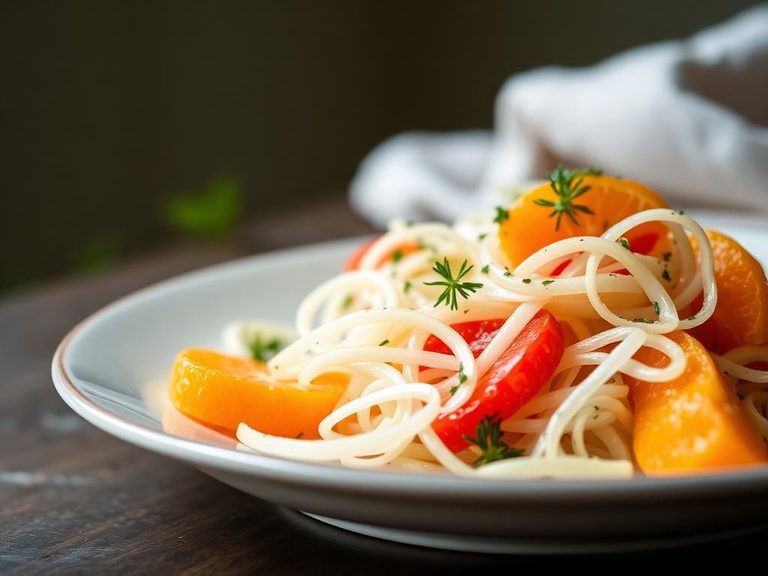
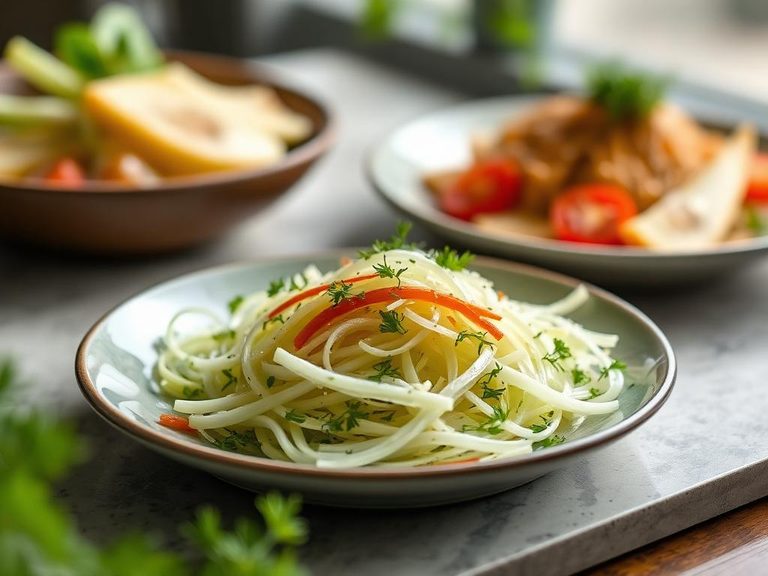
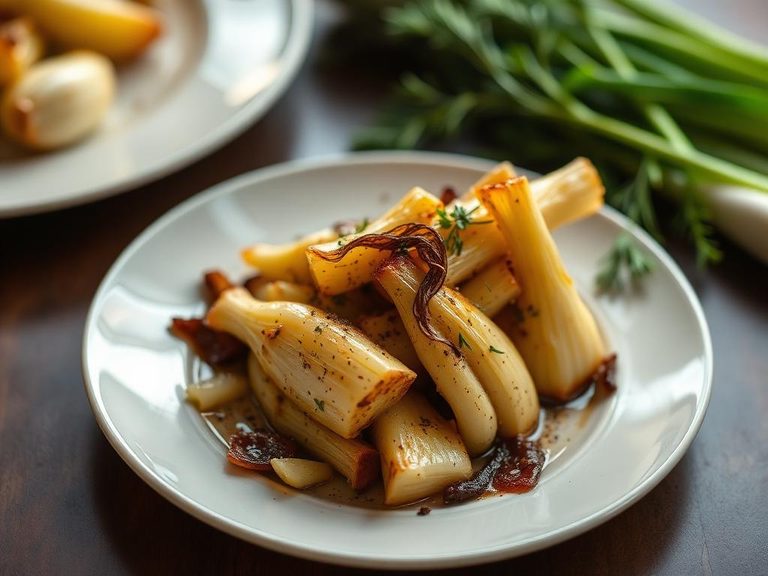
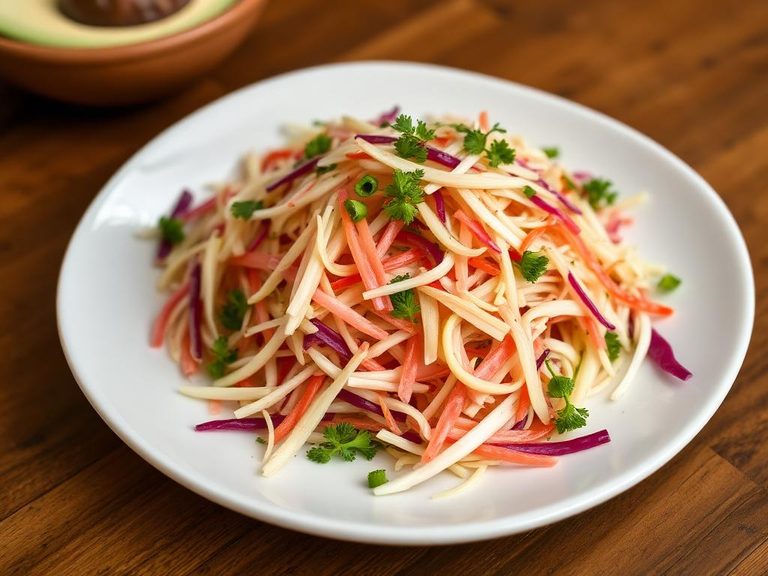
People love fennel for its unique, bright flavor that can transform a simple salad or slaw. Its versatility allows it to be sliced paper-thin for raw applications, roasted until caramelized, or braised until tender, making it a staple in many culinary traditions.
⚠️ Watch-outs & how to enjoy it better
The strong anise flavor can be polarizing for some palates. For those sensitive to FODMAPs, the fructans in fennel may cause digestive discomfort. To enjoy it, start with smaller portions, and pair it with a source of protein or fat (like cheese or nuts) to balance the flavor and aid digestion.
Key benefits
- Very low in calories and fat
- Good source of dietary fiber
- Provides vitamin C
- Contains antioxidants like quercetin
- Naturally hydrating with high water content
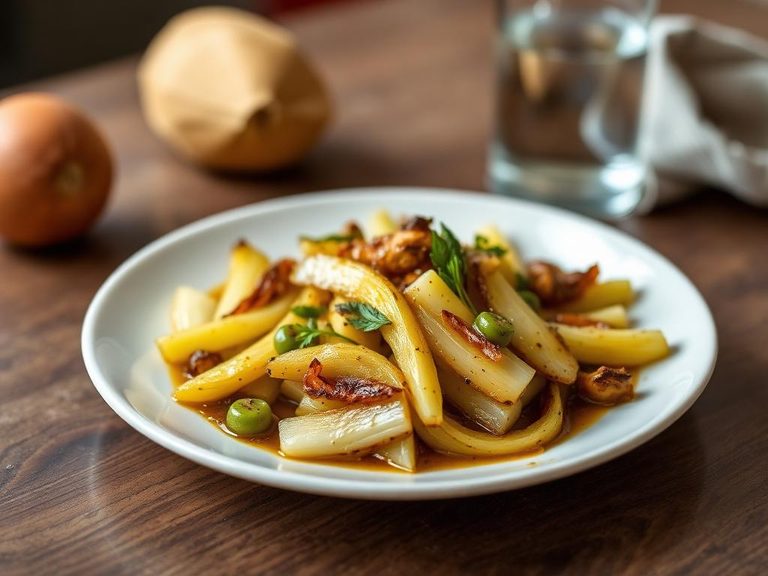
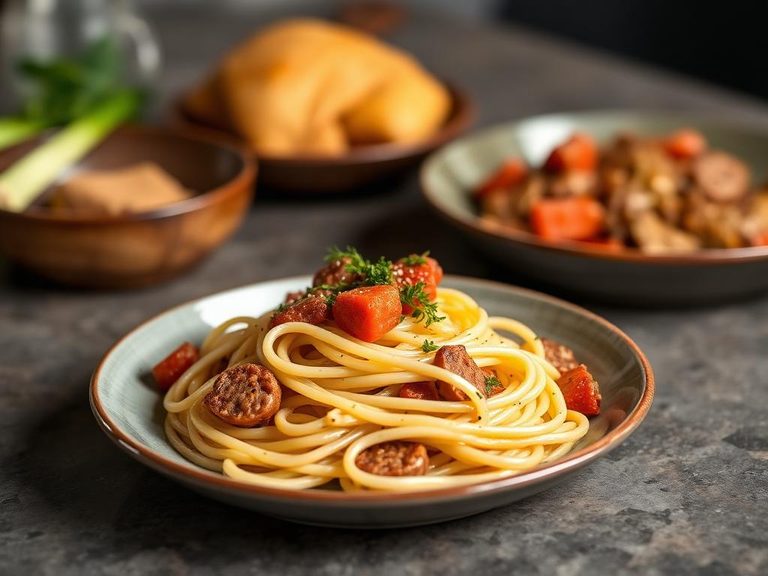
🍽️ Popular dishes
🌍 Where it's eaten
💡 Did you know?
The entire fennel plant is edible—bulb, stalks, and fronds—and ancient Romans believed fennel could improve eyesight and grant courage.
Full nutrition (USDA data · scales with serving)
| Water | 90.2 g |
| Energy | 31.0 kcal |
| Protein | 1.2 g |
| Total lipid (fat) | 0.20 g |
| Carbohydrate, by difference | 7.3 g |
| Fiber, total dietary | 3.1 g |
| Total Sugars | 3.9 g |
| Calcium, Ca | 49.0 mg |
| Iron, Fe | 0.73 mg |
| Magnesium, Mg | 17.0 mg |
| Phosphorus, P | 50.0 mg |
| Potassium, K | 414 mg |
| Sodium, Na | 52.0 mg |
| Zinc, Zn | 0.20 mg |
| Copper, Cu | 0.07 mg |
| Selenium, Se | 0.70 ug |
| Vitamin C, total ascorbic acid | 12.0 mg |
| Thiamin | 0.01 mg |
| Riboflavin | 0.03 mg |
| Niacin | 0.64 mg |
| Vitamin B-6 | 0.05 mg |
| Folate, total | 27.0 ug |
| Folic acid | 0.00 ug |
| Folate, food | 27.0 ug |
| Folate, DFE | 27.0 ug |
| Choline, total | 13.2 mg |
| Vitamin B-12 | 0.00 ug |
| Vitamin B-12, added | 0.00 ug |
| Vitamin A, RAE | 48.0 ug |
| Retinol | 0.00 ug |
| Carotene, beta | 578 ug |
| Carotene, alpha | 0.00 ug |
| Cryptoxanthin, beta | 0.00 ug |
| Lycopene | 0.00 ug |
| Lutein + zeaxanthin | 607 ug |
| Vitamin E (alpha-tocopherol) | 0.58 mg |
| Vitamin E, added | 0.00 mg |
| Vitamin D (D2 + D3) | 0.00 ug |
| Vitamin K (phylloquinone) | 62.8 ug |
| Alcohol, ethyl | 0.00 g |
| Caffeine | 0.00 mg |
| Theobromine | 0.00 mg |
Fat & fatty acid profile (per 100g)
| Fatty acids, total saturated | 0.09 g |
| SFA 4:0 | 0.00 g |
| SFA 6:0 | 0.00 g |
| SFA 8:0 | 0.00 g |
| SFA 10:0 | 0.00 g |
| SFA 12:0 | 0.00 g |
| SFA 14:0 | 0.00 g |
| SFA 16:0 | 0.08 g |
| SFA 18:0 | 0.01 g |
| Fatty acids, total monounsaturated | 0.07 g |
| MUFA 16:1 | 0.00 g |
| MUFA 18:1 | 0.07 g |
| MUFA 20:1 | 0.00 g |
| MUFA 22:1 | 0.00 g |
| Fatty acids, total polyunsaturated | 0.17 g |
| PUFA 18:2 | 0.17 g |
| PUFA 18:3 | 0.00 g |
| PUFA 18:4 | 0.00 g |
| PUFA 20:4 | 0.00 g |
| PUFA 20:5 n-3 (EPA) | 0.00 g |
| PUFA 22:5 n-3 (DPA) | 0.00 g |
| PUFA 22:6 n-3 (DHA) | 0.00 g |
| Cholesterol | 0.00 mg |
FAQ
What part of fennel do you eat?
The primary part eaten is the crisp, layered bulb at the base. The stalks can be used in stocks, and the delicate green fronds are used as a fresh herb garnish.
How do you store fresh fennel?
Wrap the bulb and stalks loosely in a plastic bag and store it in the crisper drawer of your refrigerator. It should keep for up to a week. The fronds are best used within a couple of days.
Does cooking change the flavor of fennel?
Yes, significantly. Raw fennel has a strong, crisp anise flavor. When roasted or braised, the flavor mellows, becomes sweeter, and the texture turns tender and silky.
Nutrient density (calculated · NRF9.3)
Nutrient Rich Foods index: beneficial nutrients (protein, fiber, vitamins, minerals) minus saturated fat, added sugar & sodium, per 100 kcal.
NRF9.3 index — Fulgoni, Keast & Drewnowski, 2009. Computed from USDA nutrients.
Weight-loss friendliness (composite index)
Energy density 0.31 kcal/g · 16% calories from protein · 3.1 g fiber · 3.9 g sugar per 100 g.
Composite of energy density (Rolls et al., 1999), protein & fiber satiety, minus sugar. A calculated heuristic — ranks satiety-per-calorie, not a clinical measure.
Dietary load (calculated from USDA values)
Potential renal acid load. Positive = acid-forming, negative = alkaline-forming.
Sodium-to-potassium ratio: 0.13 (lower is better — aim for ≤ 1)
Sodium:potassium per WHO potassium guidance. Computed from USDA nutrients.