

Dressing with oysters
Common food

Photo: Wikipedia
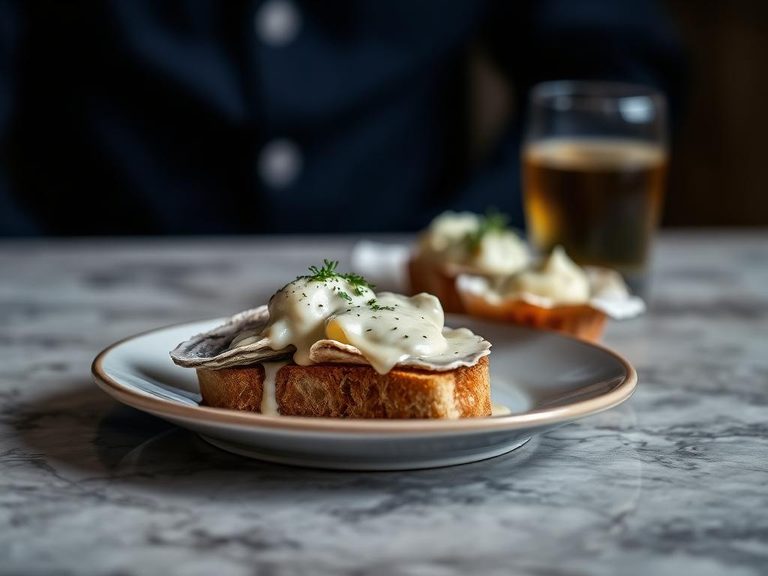
A rich, savory dressing or sauce centered around the briny, umami flavor of oysters, often thickened with a roux or cream. Its texture can range from a smooth, velvety pour to a chunkier, more rustic consistency, depending on the preparation. Nutritionally, it provides a notable protein boost from the oysters while remaining relatively high in carbohydrates and fats from its base ingredients.
Calorie split: 10% protein · 39% carbs · 51% fat
↓ Full nutrition💚 Why it's loved
People love it for its deep, oceanic umami flavor that can elevate simple dishes like steak, pasta, or rice. It's cherished in coastal cuisines as a way to add a luxurious, savory depth and a taste of the sea.
⚠️ Watch-outs & how to enjoy it better
The high sodium content from the oysters and added salt can be a concern for those monitoring intake. The carbohydrate content, often from flour or thickeners, may cause blood-sugar spikes if consumed in large portions. To counteract, pair it with a fiber-rich vegetable side and control portion size. Also, oysters are a common shellfish allergen.
Key benefits
- Excellent source of zinc and B12 from oysters.
- Provides a significant protein boost per serving.
- Contains omega-3 fatty acids from the oyster meat.
- Offers a concentrated source of minerals like iron and selenium.
🍽️ Popular dishes
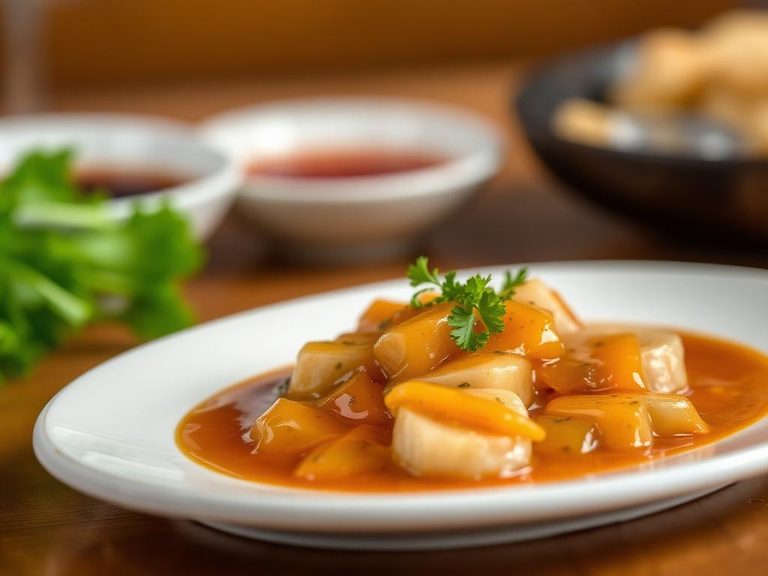
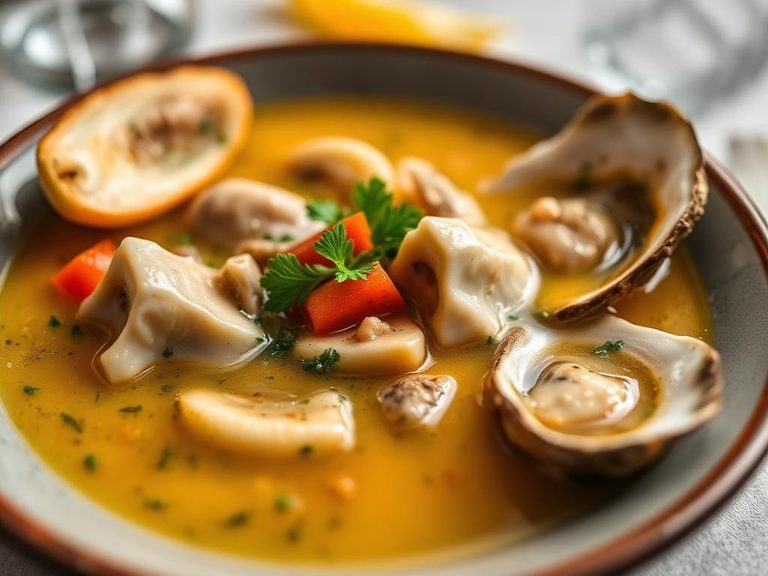
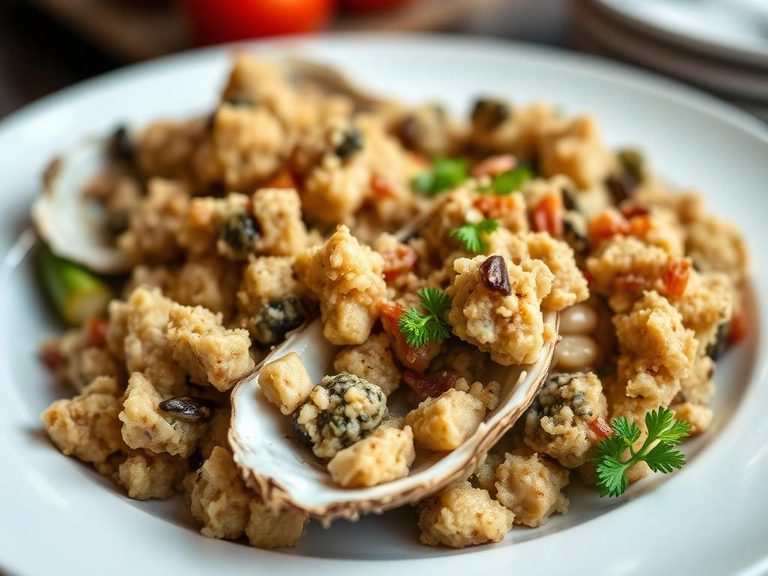
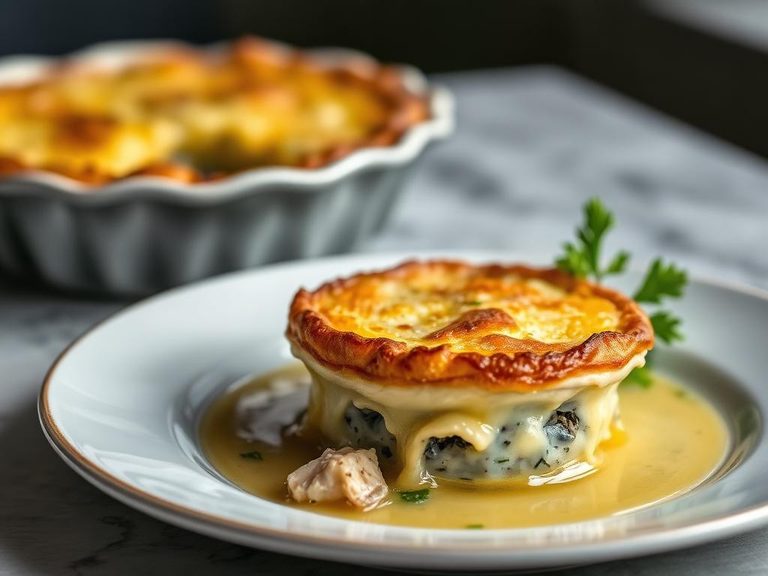
🌍 Where it's eaten
💡 Did you know?
Oyster sauce, a closely related condiment, was reportedly invented by accident in 1888 when a Chinese oyster farmer left oysters boiling too long, creating a thick, caramelized sauce.
Full nutrition (USDA data · scales with serving)
| Water | 64.0 g |
| Energy | 189 kcal |
| Protein | 5.0 g |
| Total lipid (fat) | 10.8 g |
| Carbohydrate, by difference | 18.4 g |
| Fiber, total dietary | 1.2 g |
| Total Sugars | 2.6 g |
| Calcium, Ca | 97.0 mg |
| Iron, Fe | 2.4 mg |
| Magnesium, Mg | 18.0 mg |
| Phosphorus, P | 67.0 mg |
| Potassium, K | 136 mg |
| Sodium, Na | 503 mg |
| Zinc, Zn | 10.0 mg |
| Copper, Cu | 0.72 mg |
| Selenium, Se | 12.5 ug |
| Vitamin C, total ascorbic acid | 1.8 mg |
| Thiamin | 0.15 mg |
| Riboflavin | 0.11 mg |
| Niacin | 1.8 mg |
| Vitamin B-6 | 0.07 mg |
| Folate, total | 32.0 ug |
| Folic acid | 19.0 ug |
| Folate, food | 13.0 ug |
| Folate, DFE | 46.0 ug |
| Choline, total | 24.2 mg |
| Vitamin B-12 | 1.9 ug |
| Vitamin B-12, added | 0.00 ug |
| Vitamin A, RAE | 100 ug |
| Retinol | 88.0 ug |
| Carotene, beta | 136 ug |
| Carotene, alpha | 0.00 ug |
| Cryptoxanthin, beta | 0.00 ug |
| Lycopene | 0.00 ug |
| Lutein + zeaxanthin | 80.0 ug |
| Vitamin E (alpha-tocopherol) | 1.3 mg |
| Vitamin E, added | 0.00 mg |
| Vitamin D (D2 + D3) | 0.40 ug |
| Vitamin K (phylloquinone) | 32.5 ug |
| Alcohol, ethyl | 0.00 g |
| Caffeine | 0.00 mg |
| Theobromine | 0.00 mg |
Fat & fatty acid profile (per 100g)
| Fatty acids, total saturated | 2.1 g |
| SFA 4:0 | 0.00 g |
| SFA 6:0 | 0.00 g |
| SFA 8:0 | 0.01 g |
| SFA 10:0 | 0.01 g |
| SFA 12:0 | 0.01 g |
| SFA 14:0 | 0.03 g |
| SFA 16:0 | 1.2 g |
| SFA 18:0 | 0.80 g |
| Fatty acids, total monounsaturated | 4.7 g |
| MUFA 16:1 | 0.04 g |
| MUFA 18:1 | 4.6 g |
| MUFA 20:1 | 0.03 g |
| MUFA 22:1 | 0.00 g |
| Fatty acids, total polyunsaturated | 3.5 g |
| PUFA 18:2 | 3.1 g |
| PUFA 18:3 | 0.32 g |
| PUFA 18:4 | 0.01 g |
| PUFA 20:4 | 0.01 g |
| PUFA 20:5 n-3 (EPA) | 0.04 g |
| PUFA 22:5 n-3 (DPA) | 0.00 g |
| PUFA 22:6 n-3 (DHA) | 0.03 g |
| Cholesterol | 10.0 mg |
FAQ
Is this the same as oyster sauce?
Not exactly. Oyster sauce is a specific, highly reduced condiment made primarily from oyster extracts, sugar, and salt. A 'dressing with oysters' is a broader dish or sauce that contains whole or chopped oysters as a primary ingredient, often with a different base like cream or broth.
Can I use canned oysters for this?
Yes, canned oysters are a common and convenient substitute. Be sure to drain them well and note that their texture is softer than fresh. Reserve the liquor (juice) from the can to add extra oyster flavor to the dressing.
How do I prevent the oysters from becoming rubbery?
Oysters cook very quickly. Add them to the hot dressing or sauce only at the very end of the cooking process. They are done as soon as their edges just begin to curl, which typically takes only 1-2 minutes. Overcooking makes them tough and chewy.
Nutrient density (calculated · NRF9.3)
Nutrient Rich Foods index: beneficial nutrients (protein, fiber, vitamins, minerals) minus saturated fat, added sugar & sodium, per 100 kcal.
NRF9.3 index — Fulgoni, Keast & Drewnowski, 2009. Computed from USDA nutrients.
Weight-loss friendliness (composite index)
Energy density 1.89 kcal/g · 10% calories from protein · 1.2 g fiber · 2.6 g sugar per 100 g.
Composite of energy density (Rolls et al., 1999), protein & fiber satiety, minus sugar. A calculated heuristic — ranks satiety-per-calorie, not a clinical measure.
Dietary load (calculated from USDA values)
Potential renal acid load. Positive = acid-forming, negative = alkaline-forming.
Sodium-to-potassium ratio: 3.70 (lower is better — aim for ≤ 1)
Sodium:potassium per WHO potassium guidance. Computed from USDA nutrients.