

Cocktail sauce
Common food

Photo: Wikipedia
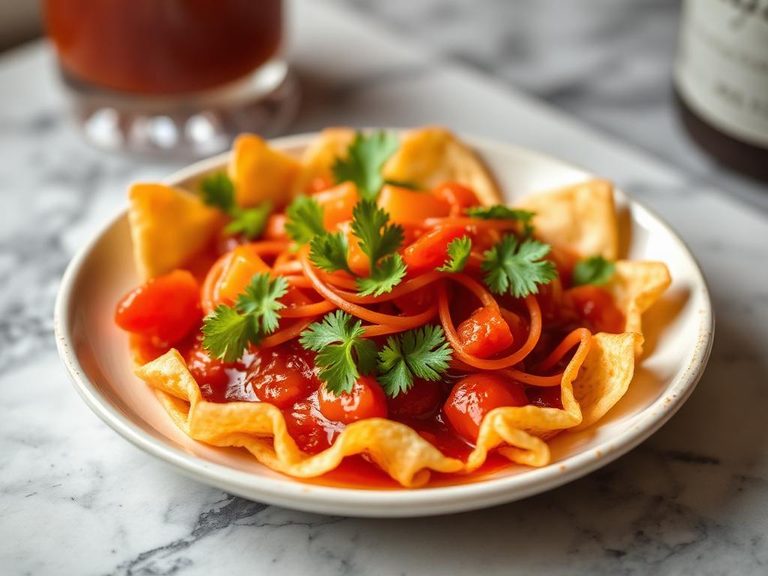
Cocktail sauce is a vibrant, thick, and glossy condiment with a spicy-sweet-tangy profile, primarily built on a base of tomato ketchup and prepared horseradish. Its texture is smooth and spoonable, offering a bold kick that cuts through the richness of seafood. Nutritionally, it's a low-fat, low-protein sauce where nearly all its 128 kcal per 100g come from carbohydrates, specifically sugars.
Calorie split: 4% protein · 88% carbs · 7% fat
↓ Full nutrition💚 Why it's loved
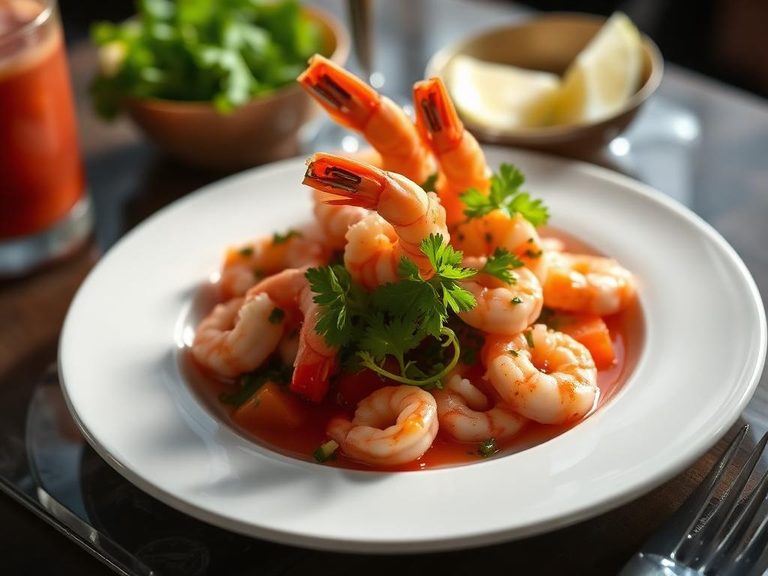
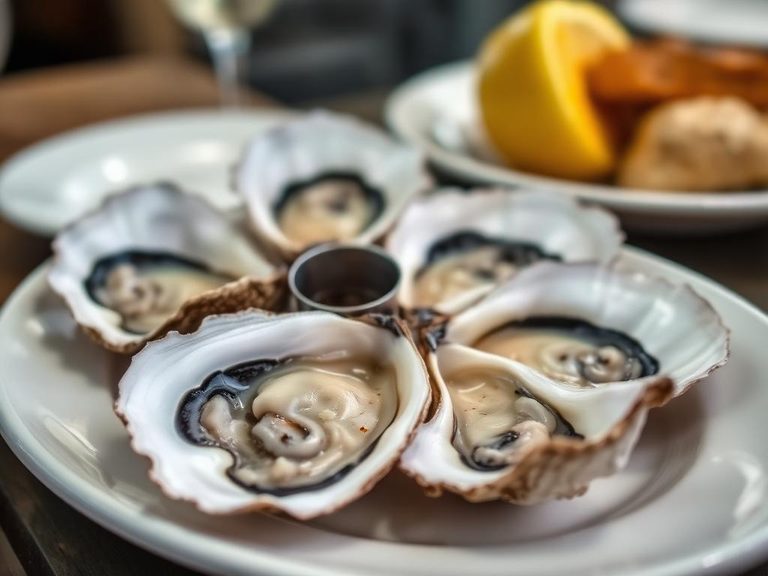
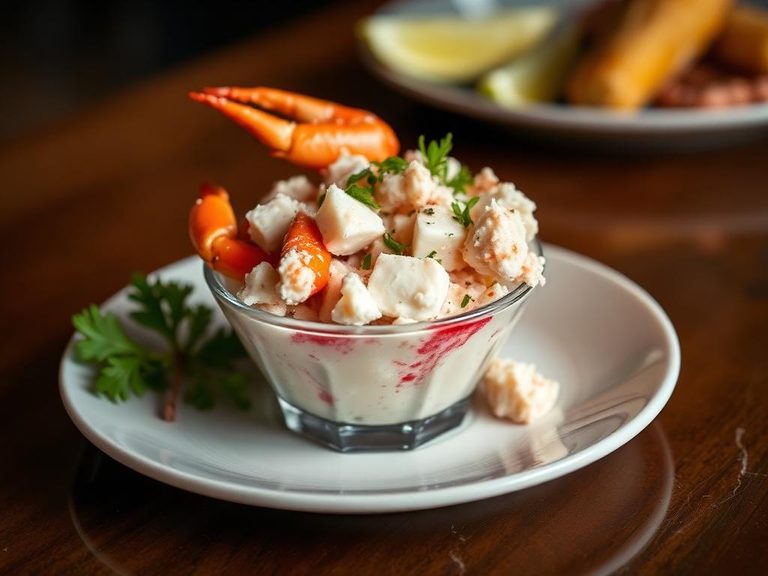
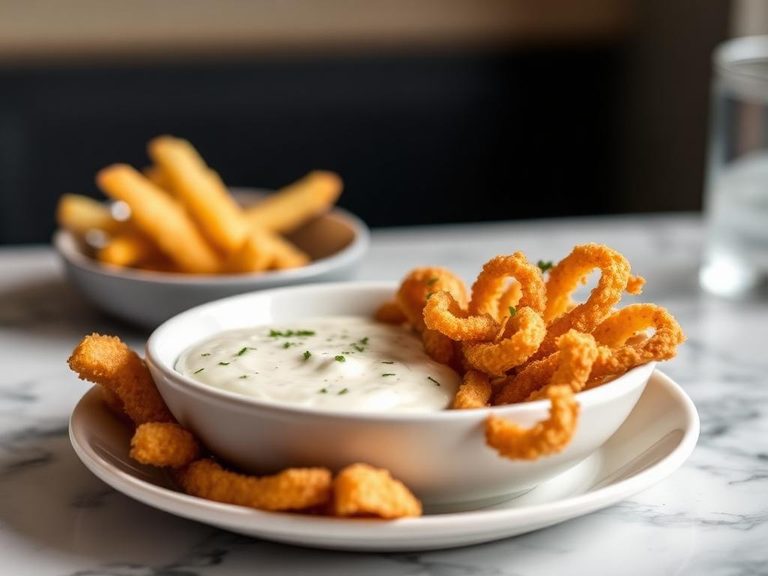
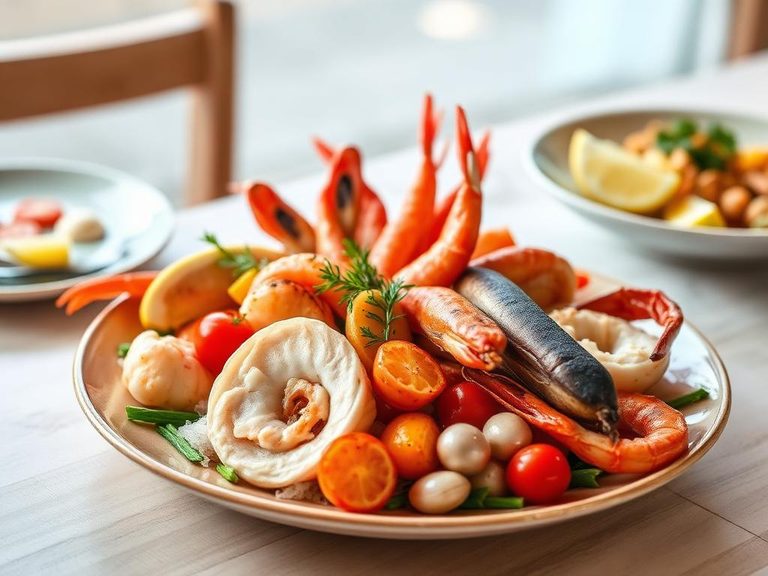
People adore cocktail sauce for its iconic, punchy combination of sweet, spicy, and acidic flavors that perfectly complement and enhance the natural sweetness of chilled shrimp and oysters. Its versatility extends beyond seafood, serving as a zesty dip for fried foods or a bold sandwich spread.
⚠️ Watch-outs & how to enjoy it better
The primary downside is its high sugar content (nearly 12g per 100g), which can cause blood-sugar spikes, and it can be very high in sodium. To counteract this, practice strict portion control (using 1-2 tablespoons per serving) and pair it with protein-rich foods like shrimp or oysters, which help slow sugar absorption. Those watching sodium should look for low-sodium ketchup versions to make homemade sauce.
Key benefits
- Provides a quick source of energy from simple carbohydrates.
- Contains a small amount of dietary fiber from its tomato base.
- Low in fat, making it a lighter condiment option compared to cream-based sauces.
- The horseradish component can offer a mild, natural sinus-clearing effect.
- Adds significant flavor with minimal fat contribution.
🍽️ Popular dishes
🌍 Where it's eaten
💡 Did you know?
The classic American 'Shrimp Cocktail' was a fashionable hors d'oeuvre in the 1950s and 60s, famously served in a stemmed glass, and its popularity was cemented by being a staple at the deli counters of luxury department stores.
Full nutrition (USDA data · scales with serving)
| Water | 65.7 g |
| Energy | 128 kcal |
| Protein | 1.4 g |
| Total lipid (fat) | 1.1 g |
| Carbohydrate, by difference | 28.2 g |
| Fiber, total dietary | 1.8 g |
| Total Sugars | 11.8 g |
| Calcium, Ca | 26.0 mg |
| Iron, Fe | 0.83 mg |
| Magnesium, Mg | 17.0 mg |
| Phosphorus, P | 30.0 mg |
| Potassium, K | 309 mg |
| Sodium, Na | 1262 mg |
| Zinc, Zn | 0.38 mg |
| Copper, Cu | 0.11 mg |
| Selenium, Se | 2.2 ug |
| Vitamin C, total ascorbic acid | 11.6 mg |
| Thiamin | 0.02 mg |
| Riboflavin | 0.05 mg |
| Niacin | 0.82 mg |
| Vitamin B-6 | 0.08 mg |
| Folate, total | 17.0 ug |
| Folic acid | 0.00 ug |
| Folate, food | 17.0 ug |
| Folate, DFE | 17.0 ug |
| Choline, total | 11.0 mg |
| Vitamin B-12 | 0.00 ug |
| Vitamin B-12, added | 0.00 ug |
| Vitamin A, RAE | 18.0 ug |
| Retinol | 0.00 ug |
| Carotene, beta | 212 ug |
| Carotene, alpha | 7.0 ug |
| Cryptoxanthin, beta | 0.00 ug |
| Lycopene | 6753 ug |
| Lutein + zeaxanthin | 2.0 ug |
| Vitamin E (alpha-tocopherol) | 1.1 mg |
| Vitamin E, added | 0.00 mg |
| Vitamin D (D2 + D3) | 0.00 ug |
| Vitamin K (phylloquinone) | 4.4 ug |
| Alcohol, ethyl | 0.00 g |
| Caffeine | 0.00 mg |
| Theobromine | 0.00 mg |
Fat & fatty acid profile (per 100g)
| Fatty acids, total saturated | 0.00 g |
| SFA 4:0 | 0.00 g |
| SFA 6:0 | 0.00 g |
| SFA 8:0 | 0.00 g |
| SFA 10:0 | 0.00 g |
| SFA 12:0 | 0.00 g |
| SFA 14:0 | 0.00 g |
| SFA 16:0 | 0.00 g |
| SFA 18:0 | 0.00 g |
| Fatty acids, total monounsaturated | 0.00 g |
| MUFA 16:1 | 0.00 g |
| MUFA 18:1 | 0.00 g |
| MUFA 20:1 | 0.00 g |
| MUFA 22:1 | 0.00 g |
| Fatty acids, total polyunsaturated | 0.00 g |
| PUFA 18:2 | 0.00 g |
| PUFA 18:3 | 0.00 g |
| PUFA 18:4 | 0.00 g |
| PUFA 20:4 | 0.00 g |
| PUFA 20:5 n-3 (EPA) | 0.00 g |
| PUFA 22:5 n-3 (DPA) | 0.00 g |
| PUFA 22:6 n-3 (DHA) | 0.00 g |
| Cholesterol | 0.00 mg |
FAQ
Is cocktail sauce just ketchup and horseradish?
While that's the core, a classic recipe also includes a splash of Worcestershire sauce, lemon juice, and sometimes a dash of hot sauce for added depth and complexity.
Can I make a lower-sugar version at home?
Absolutely. Use a no-sugar-added ketchup or tomato paste as a base, increase the horseradish and lemon juice for tang, and add a pinch of celery salt for flavor without sugar.
What's the difference between cocktail sauce and Marie Rose sauce?
Cocktail sauce (American) is tomato and horseradish-based. Marie Rose sauce (British) is a creamy blend of mayonnaise and ketchup, often with a dash of Worcestershire and brandy, used for prawn cocktails.
Nutrient density (calculated · NRF9.3)
Nutrient Rich Foods index: beneficial nutrients (protein, fiber, vitamins, minerals) minus saturated fat, added sugar & sodium, per 100 kcal.
NRF9.3 index — Fulgoni, Keast & Drewnowski, 2009. Computed from USDA nutrients.
Weight-loss friendliness (composite index)
Energy density 1.28 kcal/g · 4% calories from protein · 1.8 g fiber · 11.8 g sugar per 100 g.
Composite of energy density (Rolls et al., 1999), protein & fiber satiety, minus sugar. A calculated heuristic — ranks satiety-per-calorie, not a clinical measure.
Dietary load (calculated from USDA values)
Potential renal acid load. Positive = acid-forming, negative = alkaline-forming.
Sodium-to-potassium ratio: 4.08 (lower is better — aim for ≤ 1)
Sodium:potassium per WHO potassium guidance. Computed from USDA nutrients.