

Chocolate candy, nougat filled with nuts
Common food

Photo: Wikipedia
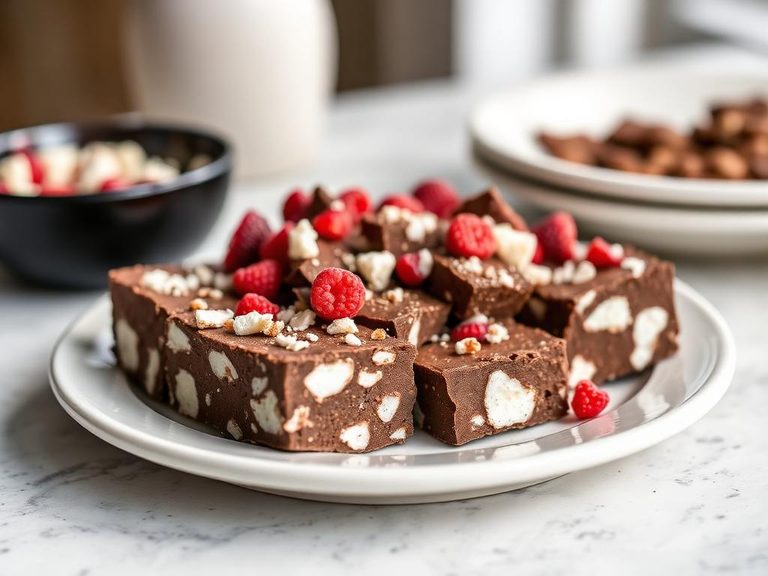
This is a classic confection where a soft, chewy nougat center, studded with crunchy nuts like almonds or hazelnuts, is enrobed in a smooth, rich chocolate shell. The experience is a delightful contrast of textures: the snap of the chocolate giving way to the elastic nougat and the satisfying crunch of the nuts. Nutritionally, it's an energy-dense treat, providing a significant carbohydrate and sugar boost from the nougat and chocolate coating.
Calorie split: 5% protein · 52% carbs · 42% fat
↓ Full nutrition💚 Why it's loved
People love it for the perfect trifecta of textures and flavors: the creamy chocolate, the sweet and chewy nougat, and the earthy, crunchy nuts. It's a nostalgic comfort food often associated with holidays, gifting, and indulgent moments.
⚠️ Watch-outs & how to enjoy it better
The high sugar and calorie content can contribute to blood-sugar spikes and is a concern for those managing diabetes or weight. It contains common allergens: nuts (tree nuts like almonds/hazelnuts) and often dairy (in chocolate and nougat). To enjoy mindfully, practice strict portion control (e.g., one small piece) and pair it with a source of protein or fiber (like a handful of plain nuts or a piece of fruit) to slow sugar absorption.
Key benefits
- Provides a quick energy boost from carbohydrates.
- Contains nuts, which offer some protein and healthy fats.
- The protein and fat from nuts can slightly moderate the sugar spike.
- A popular source of psychological comfort and enjoyment.
🍽️ Popular dishes
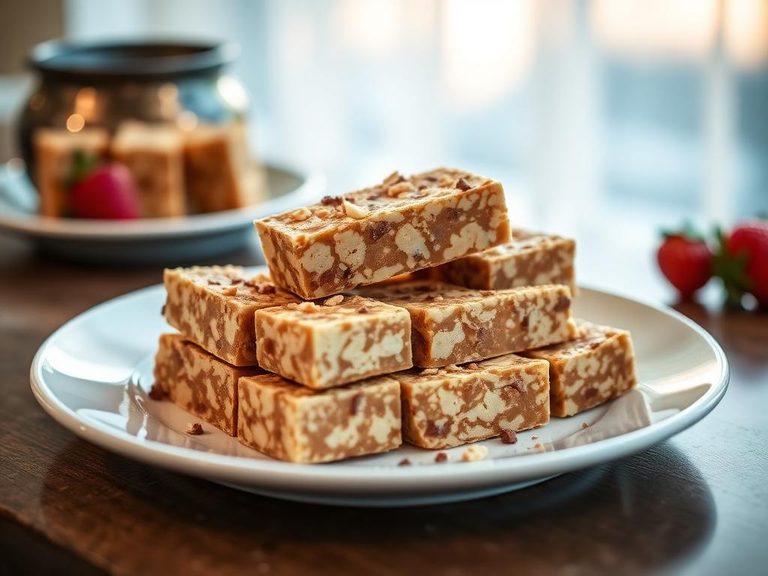
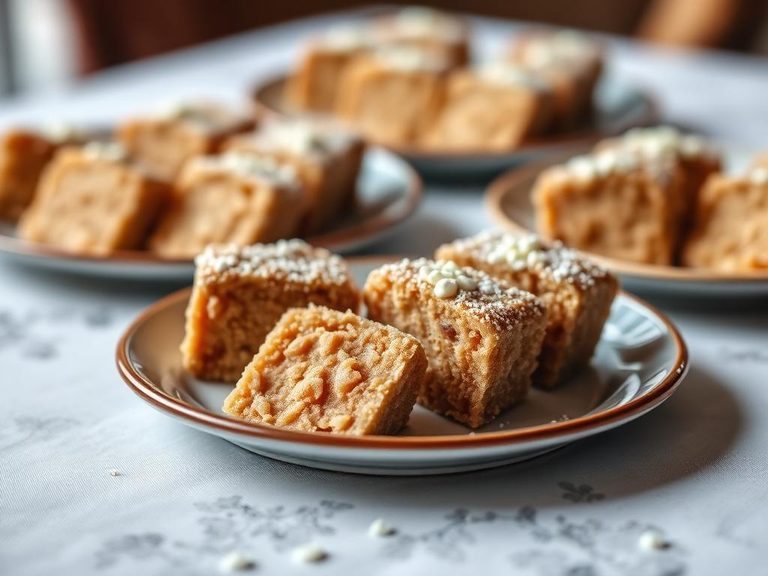
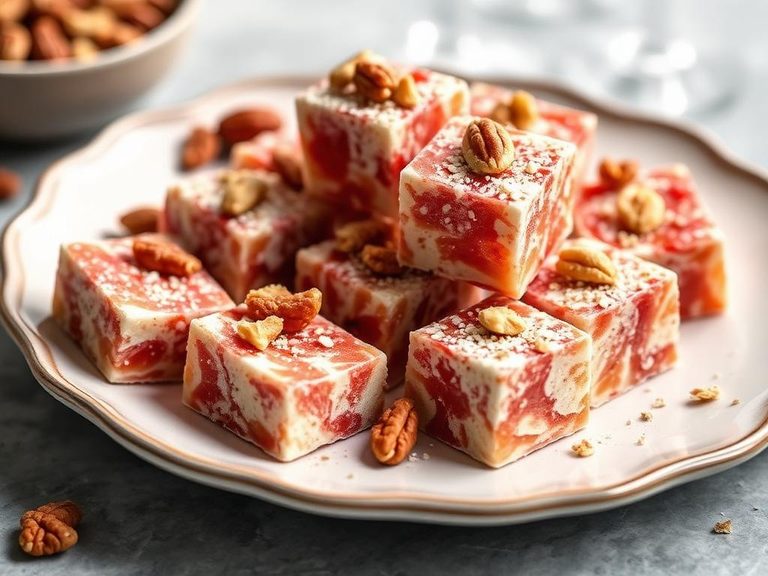

🌍 Where it's eaten
💡 Did you know?
The word 'nougat' comes from the Occitan word 'nogat,' meaning 'nutty,' and the confection's origins trace back to a 10th-century recipe from the Arab world, which used almonds and honey.
Full nutrition (USDA data · scales with serving)
| Water | 6.3 g |
| Energy | 483 kcal |
| Protein | 6.5 g |
| Total lipid (fat) | 22.7 g |
| Carbohydrate, by difference | 63.2 g |
| Fiber, total dietary | 2.2 g |
| Total Sugars | 52.2 g |
| Calcium, Ca | 70.0 mg |
| Iron, Fe | 0.68 mg |
| Magnesium, Mg | 58.0 mg |
| Phosphorus, P | 142 mg |
| Potassium, K | 286 mg |
| Sodium, Na | 234 mg |
| Zinc, Zn | 1.6 mg |
| Copper, Cu | 0.25 mg |
| Selenium, Se | 5.2 ug |
| Vitamin C, total ascorbic acid | 0.20 mg |
| Thiamin | 0.06 mg |
| Riboflavin | 0.13 mg |
| Niacin | 2.4 mg |
| Vitamin B-6 | 0.07 mg |
| Folate, total | 20.0 ug |
| Folic acid | 3.0 ug |
| Folate, food | 16.0 ug |
| Folate, DFE | 22.0 ug |
| Choline, total | 36.7 mg |
| Vitamin B-12 | 0.11 ug |
| Vitamin B-12, added | 0.00 ug |
| Vitamin A, RAE | 23.0 ug |
| Retinol | 22.0 ug |
| Carotene, beta | 3.0 ug |
| Carotene, alpha | 0.00 ug |
| Cryptoxanthin, beta | 0.00 ug |
| Lycopene | 0.00 ug |
| Lutein + zeaxanthin | 8.0 ug |
| Vitamin E (alpha-tocopherol) | 1.2 mg |
| Vitamin E, added | 0.00 mg |
| Vitamin D (D2 + D3) | 0.00 ug |
| Vitamin K (phylloquinone) | 2.1 ug |
| Alcohol, ethyl | 0.00 g |
| Caffeine | 6.0 mg |
| Theobromine | 102 mg |
Fat & fatty acid profile (per 100g)
| Fatty acids, total saturated | 10.6 g |
| SFA 4:0 | 0.17 g |
| SFA 6:0 | 0.10 g |
| SFA 8:0 | 0.38 g |
| SFA 10:0 | 0.37 g |
| SFA 12:0 | 3.3 g |
| SFA 14:0 | 1.5 g |
| SFA 16:0 | 2.8 g |
| SFA 18:0 | 1.8 g |
| Fatty acids, total monounsaturated | 6.7 g |
| MUFA 16:1 | 0.06 g |
| MUFA 18:1 | 6.5 g |
| MUFA 20:1 | 0.10 g |
| MUFA 22:1 | 0.00 g |
| Fatty acids, total polyunsaturated | 2.8 g |
| PUFA 18:2 | 2.8 g |
| PUFA 18:3 | 0.03 g |
| PUFA 18:4 | 0.00 g |
| PUFA 20:4 | 0.00 g |
| PUFA 20:5 n-3 (EPA) | 0.00 g |
| PUFA 22:5 n-3 (DPA) | 0.00 g |
| PUFA 22:6 n-3 (DHA) | 0.00 g |
| Cholesterol | 6.0 mg |
FAQ
Is nougat the same as marzipan?
No. Nougat is made from whipped egg whites, sugar, and nuts, giving it a chewy texture. Marzipan is a paste made primarily from ground almonds and sugar, with a smoother, denser consistency.
Why is the nougat sometimes white and sometimes brown?
White nougat (like torrone) is made without caramelized sugar. Brown nougat gets its color and deeper flavor from caramelizing the sugar before whipping it with egg whites.
Can I make a lower-sugar version at home?
Yes, you can experiment with sugar substitutes like erythritol or allulose in nougat recipes, but the texture and stability will differ significantly from traditional sugar-based nougat.
Nutrient density (calculated · NRF9.3)
Nutrient Rich Foods index: beneficial nutrients (protein, fiber, vitamins, minerals) minus saturated fat, added sugar & sodium, per 100 kcal.
NRF9.3 index — Fulgoni, Keast & Drewnowski, 2009. Computed from USDA nutrients.
Weight-loss friendliness (composite index)
Energy density 4.83 kcal/g · 5% calories from protein · 2.2 g fiber · 52.2 g sugar per 100 g.
Composite of energy density (Rolls et al., 1999), protein & fiber satiety, minus sugar. A calculated heuristic — ranks satiety-per-calorie, not a clinical measure.
Dietary load (calculated from USDA values)
Potential renal acid load. Positive = acid-forming, negative = alkaline-forming.
Sodium-to-potassium ratio: 0.82 (lower is better — aim for ≤ 1)
Sodium:potassium per WHO potassium guidance. Computed from USDA nutrients.