

Broccoli raab, cooked
Common food

Photo: Wikipedia
Broccoli raab, also known as rapini, is a leafy green vegetable with small broccoli-like florets and a distinctive, pleasantly bitter flavor. When cooked, its tender-crisp stems and leaves offer a slightly nutty, earthy taste with a texture that holds up well to sautéing or blanching. Nutritionally, it's a low-calorie powerhouse, delivering a good dose of fiber and a notable amount of healthy fats relative to its calorie count.
Calorie split: 24% protein · 22% carbs · 54% fat
↓ Full nutrition💚 Why it's loved
People love broccoli raab for its bold, assertive flavor that cuts through rich dishes, making it a perfect counterpoint to fatty meats or creamy pastas. Its versatility in Italian and Asian cuisines—from being tossed with garlic and olive oil to being stir-fried with oyster sauce—makes it a beloved staple for adding depth and nutrition.
⚠️ Watch-outs & how to enjoy it better
The pronounced bitterness can be off-putting to some palates, especially those sensitive to bitter compounds. It is also high in oxalates, which can contribute to kidney stone formation in susceptible individuals. To mitigate bitterness, blanching it briefly in salted water before sautéing can help; to reduce oxalates, pairing it with calcium-rich foods like cheese or almonds can bind some of the oxalates.
Key benefits
- Excellent source of dietary fiber for digestive health.
- Provides a good amount of plant-based protein for a vegetable.
- Contains healthy monounsaturated and polyunsaturated fats.
- Low in calories, making it suitable for weight management.
- Rich in vitamins K and C, and minerals like potassium.
🍽️ Popular dishes
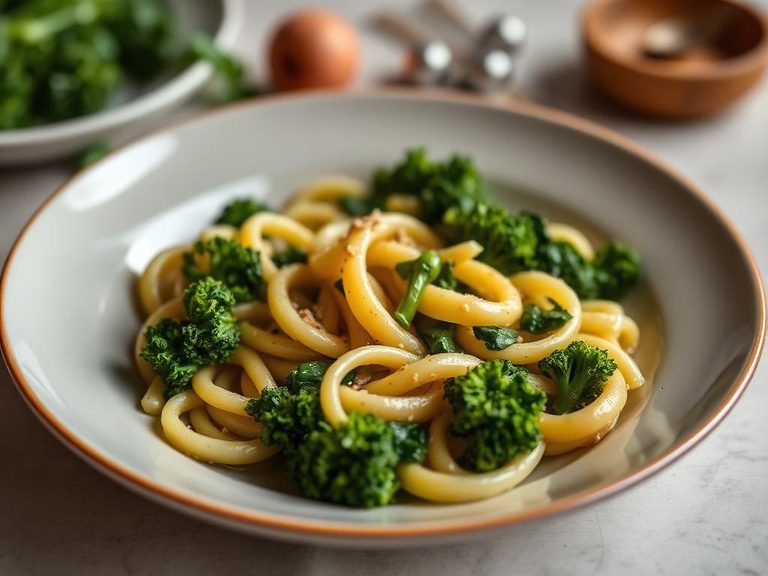
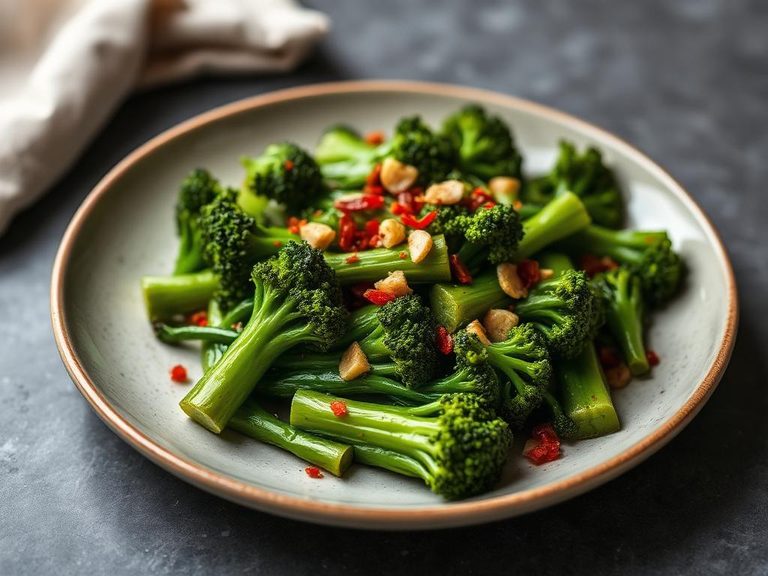
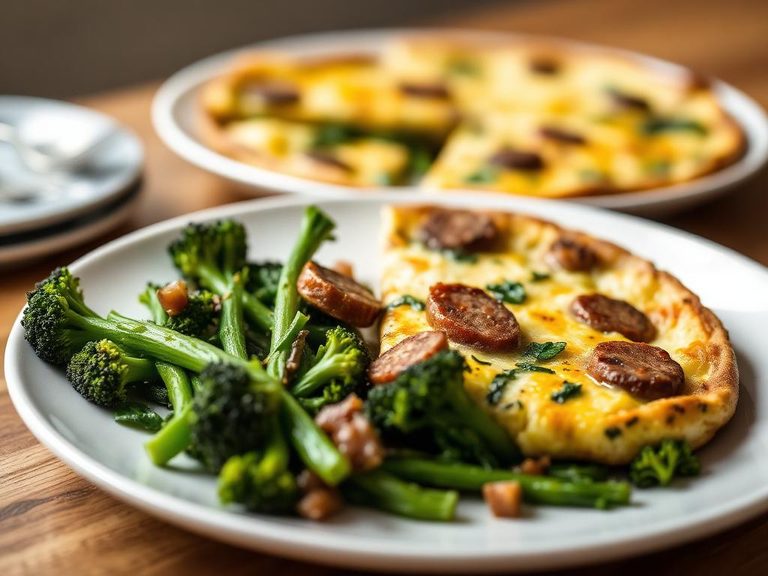
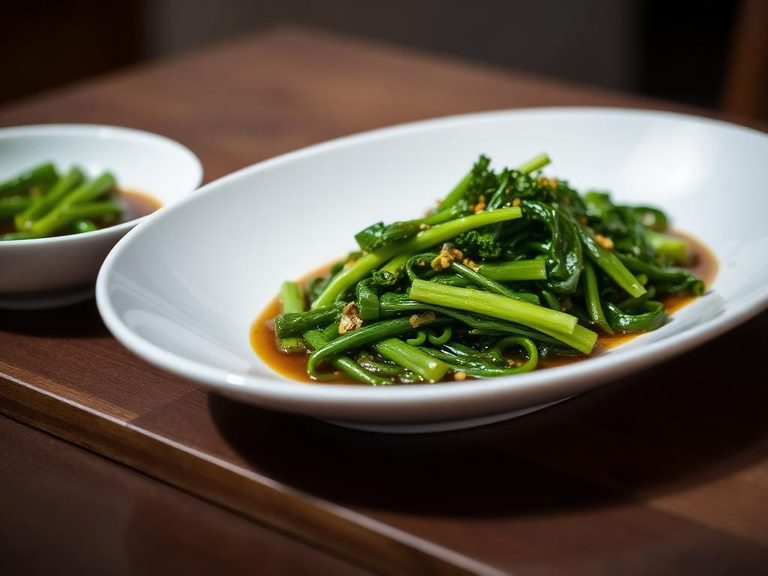
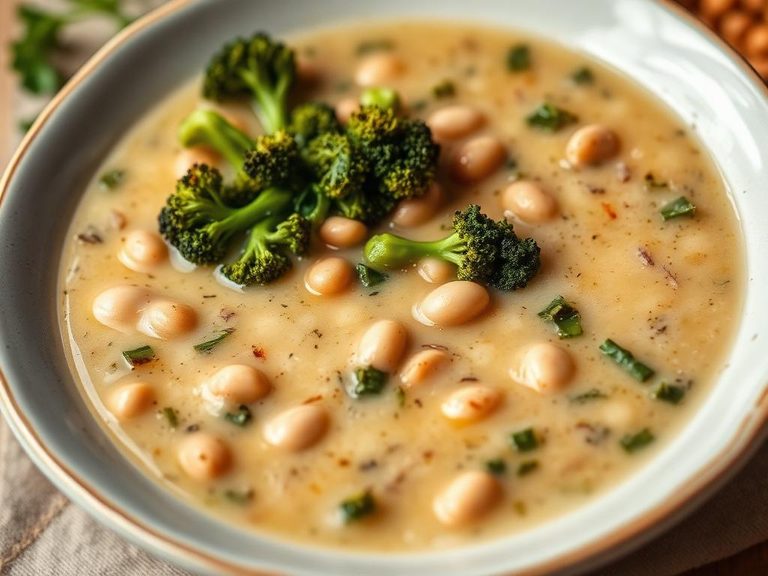
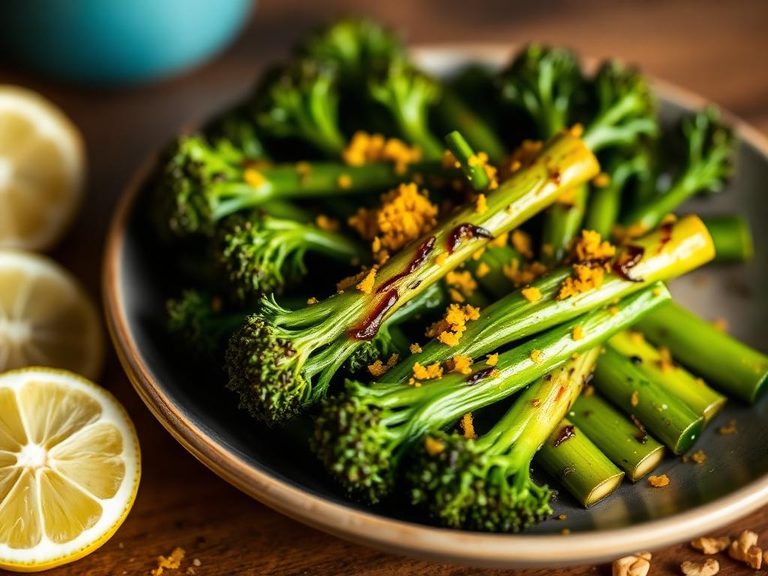
🌍 Where it's eaten
💡 Did you know?
Despite its name, broccoli raab is not a type of broccoli at all; it belongs to the turnip family (Brassica rapa) and is more closely related to mustard greens and turnips.
Full nutrition (USDA data · scales with serving)
| Water | 89.5 g |
| Energy | 46.0 kcal |
| Protein | 3.2 g |
| Total lipid (fat) | 3.1 g |
| Carbohydrate, by difference | 2.9 g |
| Fiber, total dietary | 2.7 g |
| Total Sugars | 0.39 g |
| Calcium, Ca | 109 mg |
| Iron, Fe | 2.2 mg |
| Magnesium, Mg | 22.0 mg |
| Phosphorus, P | 74.0 mg |
| Potassium, K | 198 mg |
| Sodium, Na | 159 mg |
| Zinc, Zn | 0.78 mg |
| Copper, Cu | 0.04 mg |
| Selenium, Se | 1.0 ug |
| Vitamin C, total ascorbic acid | 14.3 mg |
| Thiamin | 0.15 mg |
| Riboflavin | 0.12 mg |
| Niacin | 1.2 mg |
| Vitamin B-6 | 0.18 mg |
| Folate, total | 63.0 ug |
| Folic acid | 0.00 ug |
| Folate, food | 63.0 ug |
| Folate, DFE | 63.0 ug |
| Choline, total | 18.7 mg |
| Vitamin B-12 | 0.00 ug |
| Vitamin B-12, added | 0.00 ug |
| Vitamin A, RAE | 137 ug |
| Retinol | 11.0 ug |
| Carotene, beta | 1512 ug |
| Carotene, alpha | 0.00 ug |
| Cryptoxanthin, beta | 0.00 ug |
| Lycopene | 0.00 ug |
| Lutein + zeaxanthin | 1074 ug |
| Vitamin E (alpha-tocopherol) | 2.0 mg |
| Vitamin E, added | 0.00 mg |
| Vitamin D (D2 + D3) | 0.00 ug |
| Vitamin K (phylloquinone) | 228 ug |
| Alcohol, ethyl | 0.00 g |
| Caffeine | 0.00 mg |
| Theobromine | 0.00 mg |
Fat & fatty acid profile (per 100g)
| Fatty acids, total saturated | 0.78 g |
| SFA 4:0 | 0.02 g |
| SFA 6:0 | 0.01 g |
| SFA 8:0 | 0.01 g |
| SFA 10:0 | 0.02 g |
| SFA 12:0 | 0.02 g |
| SFA 14:0 | 0.07 g |
| SFA 16:0 | 0.45 g |
| SFA 18:0 | 0.15 g |
| Fatty acids, total monounsaturated | 0.98 g |
| MUFA 16:1 | 0.01 g |
| MUFA 18:1 | 0.92 g |
| MUFA 20:1 | 0.01 g |
| MUFA 22:1 | 0.00 g |
| Fatty acids, total polyunsaturated | 0.98 g |
| PUFA 18:2 | 0.70 g |
| PUFA 18:3 | 0.28 g |
| PUFA 18:4 | 0.00 g |
| PUFA 20:4 | 0.00 g |
| PUFA 20:5 n-3 (EPA) | 0.00 g |
| PUFA 22:5 n-3 (DPA) | 0.00 g |
| PUFA 22:6 n-3 (DHA) | 0.00 g |
| Cholesterol | 2.0 mg |
FAQ
Is broccoli raab the same as broccoli rabe?
Yes, 'broccoli raab' and 'broccoli rabe' are simply different spellings of the same vegetable, also known as rapini. The spelling 'raab' is a more direct transliteration of the Italian 'rapa' (turnip).
How do I reduce the bitterness of cooked broccoli raab?
Blanching the chopped greens in a large pot of heavily salted boiling water for 1-2 minutes, then shocking them in ice water, can significantly mellow the bitterness before you proceed with sautéing or adding to dishes.
Can I eat broccoli raab raw?
While it's possible to eat young, tender leaves raw in salads, the mature vegetable is quite tough and bitter when raw. Cooking is the preferred method to tenderize the stems and balance its strong flavor.
Nutrient density (calculated · NRF9.3)
Nutrient Rich Foods index: beneficial nutrients (protein, fiber, vitamins, minerals) minus saturated fat, added sugar & sodium, per 100 kcal.
NRF9.3 index — Fulgoni, Keast & Drewnowski, 2009. Computed from USDA nutrients.
Weight-loss friendliness (composite index)
Energy density 0.46 kcal/g · 28% calories from protein · 2.7 g fiber · 0.4 g sugar per 100 g.
Composite of energy density (Rolls et al., 1999), protein & fiber satiety, minus sugar. A calculated heuristic — ranks satiety-per-calorie, not a clinical measure.
Dietary load (calculated from USDA values)
Potential renal acid load. Positive = acid-forming, negative = alkaline-forming.
Sodium-to-potassium ratio: 0.80 (lower is better — aim for ≤ 1)
Sodium:potassium per WHO potassium guidance. Computed from USDA nutrients.