

Breakfast bar, corn flake crust with fruit
Whole food · Snacks

Photo: Wikipedia
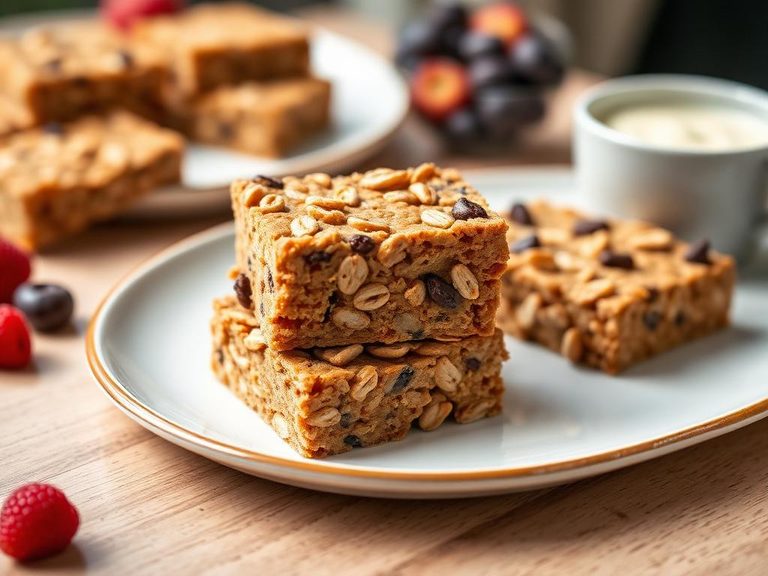
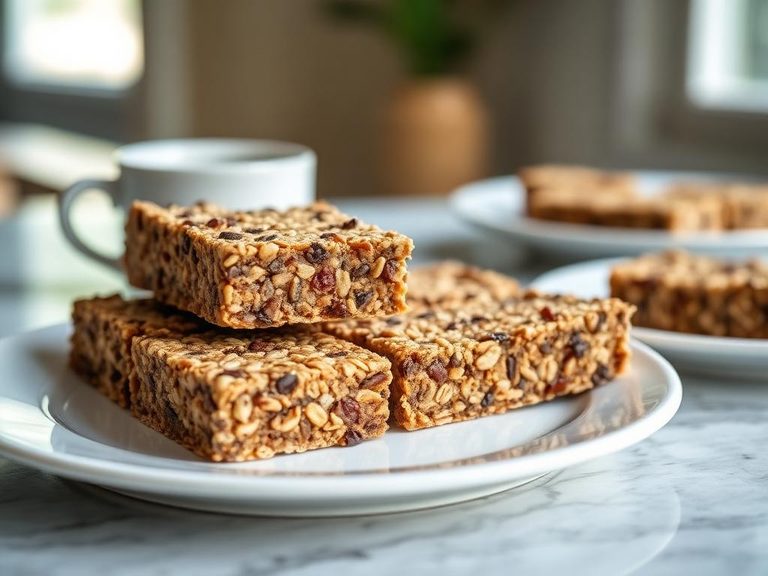
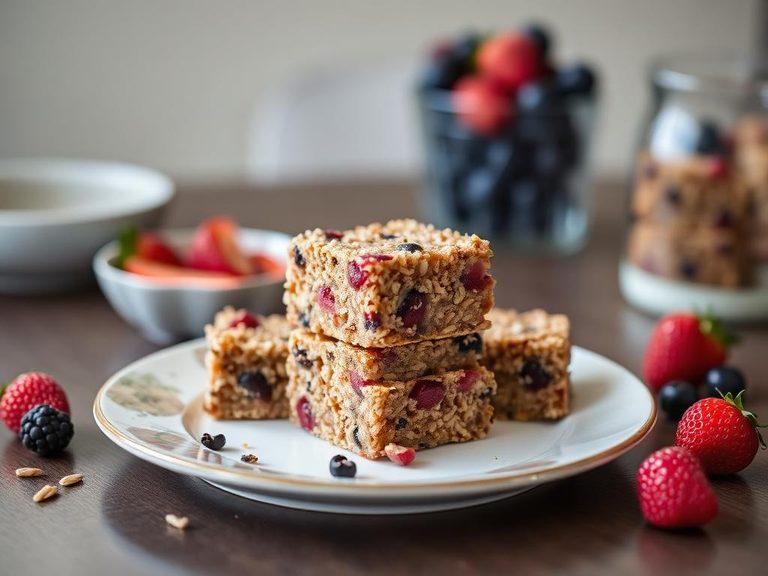
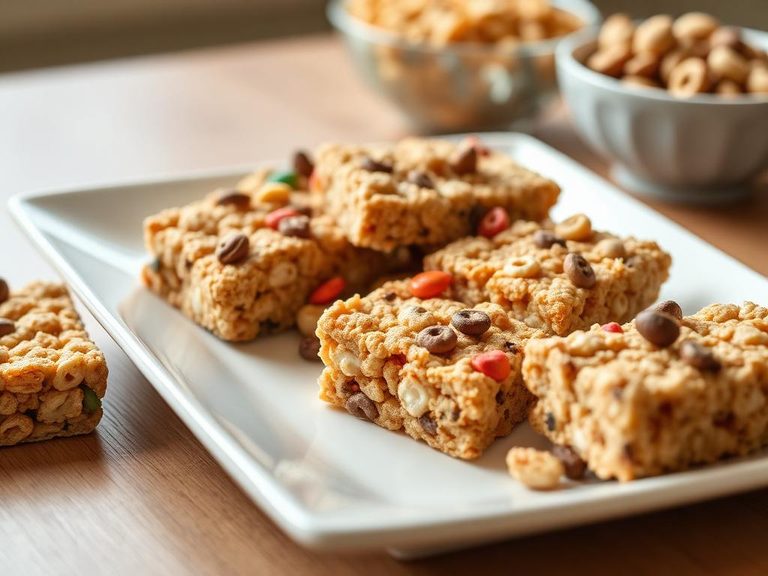
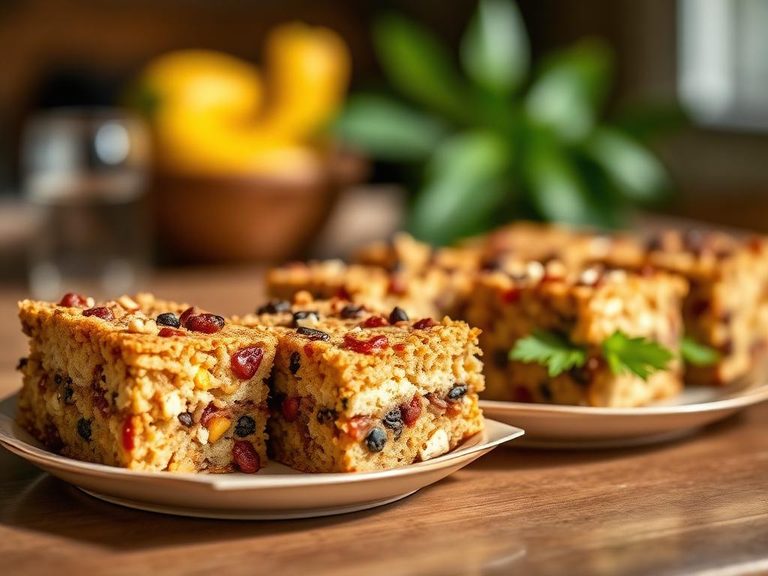
A crunchy, golden-brown bar with a crispy corn flake crust and a chewy, fruity center, often studded with raisins or cranberries. It delivers a quick energy boost with its high carbohydrate content, primarily from sugars and refined grains. The texture is a satisfying mix of crisp and chewy, making it a popular grab-and-go breakfast or snack.
Calorie split: 5% protein · 77% carbs · 18% fat
↓ Full nutrition💚 Why it's loved
People love it for its nostalgic, comforting sweetness and the satisfying crunch of the corn flake base. Its portability makes it a staple for quick breakfasts, lunchboxes, and on-the-go snacking.
⚠️ Watch-outs & how to enjoy it better
The high sugar content (35.1g per 100g) can lead to a rapid blood sugar spike and subsequent crash, making it a poor choice for sustained energy or for those managing blood sugar. To counteract this, pair it with a source of protein or healthy fat (like a handful of nuts or a cheese stick) to slow digestion and stabilize energy levels. Be mindful of portion size, as it is easy to overconsume.
Key benefits
- Provides a quick source of energy from carbohydrates
- Convenient and portable for busy mornings
- Offers a familiar, comforting sweet flavor profile
- The fruit pieces add small amounts of natural vitamins and minerals
- Often fortified with some vitamins and minerals
🍽️ Popular dishes
🌍 Where it's eaten
💡 Did you know?
The modern breakfast bar was popularized in the 1970s and 80s as a direct response to the increasingly busy, on-the-go American lifestyle, evolving from earlier health food concepts into a mainstream convenience product.
Full nutrition (USDA data · scales with serving)
| Water | 14.5 g |
| Energy | 376 kcal |
| Energy | 1574 kj |
| Protein | 4.4 g |
| Total lipid (fat) | 7.5 g |
| Ash | 0.80 g |
| Carbohydrate, by difference | 72.8 g |
| Fiber, total dietary | 2.1 g |
| Total Sugars | 35.1 g |
| Calcium, Ca | 41.0 mg |
| Iron, Fe | 4.9 mg |
| Magnesium, Mg | 27.0 mg |
| Phosphorus, P | 103 mg |
| Potassium, K | 197 mg |
| Sodium, Na | 337 mg |
| Zinc, Zn | 4.1 mg |
| Copper, Cu | 0.10 mg |
| Selenium, Se | 15.0 ug |
| Vitamin C, total ascorbic acid | 0.00 mg |
| Thiamin | 1.0 mg |
| Riboflavin | 1.1 mg |
| Niacin | 13.5 mg |
| Pantothenic acid | 0.00 mg |
| Vitamin B-6 | 1.4 mg |
| Folate, total | 108 ug |
| Folic acid | 95.0 ug |
| Folate, food | 13.0 ug |
| Folate, DFE | 174 ug |
| Choline, total | 34.3 mg |
| Vitamin B-12 | 0.00 ug |
| Vitamin B-12, added | 0.00 ug |
| Vitamin A, RAE | 608 ug |
| Retinol | 608 ug |
| Carotene, beta | 0.00 ug |
| Carotene, alpha | 0.00 ug |
| Cryptoxanthin, beta | 0.00 ug |
| Vitamin A, IU | 2027 iu |
| Lycopene | 0.00 ug |
| Lutein + zeaxanthin | 40.0 ug |
| Vitamin E (alpha-tocopherol) | 0.76 mg |
| Vitamin E, added | 0.00 mg |
| Vitamin D (D2 + D3), International Units | 0.00 iu |
| Vitamin D (D2 + D3) | 0.00 ug |
| Vitamin K (phylloquinone) | 13.8 ug |
| Alcohol, ethyl | 0.00 g |
| Caffeine | 0.00 mg |
| Theobromine | 0.00 mg |
Fat & fatty acid profile (per 100g)
| Fatty acids, total saturated | 1.5 g |
| SFA 4:0 | 0.00 g |
| SFA 6:0 | 0.00 g |
| SFA 8:0 | 0.00 g |
| SFA 10:0 | 0.00 g |
| SFA 12:0 | 0.00 g |
| SFA 14:0 | 0.00 g |
| SFA 16:0 | 0.86 g |
| SFA 18:0 | 0.15 g |
| Fatty acids, total monounsaturated | 5.0 g |
| MUFA 16:1 | 0.05 g |
| MUFA 18:1 | 5.0 g |
| MUFA 20:1 | 0.02 g |
| MUFA 22:1 | 0.00 g |
| Fatty acids, total polyunsaturated | 0.90 g |
| PUFA 18:2 | 0.85 g |
| PUFA 18:3 | 0.06 g |
| PUFA 18:4 | 0.00 g |
| PUFA 20:4 | 0.00 g |
| PUFA 20:5 n-3 (EPA) | 0.00 g |
| PUFA 22:5 n-3 (DPA) | 0.00 g |
| PUFA 22:6 n-3 (DHA) | 0.00 g |
| Cholesterol | 0.00 mg |
FAQ
Is a breakfast bar a healthy breakfast option?
While convenient, many breakfast bars are high in added sugars and refined carbohydrates, offering less nutritional balance than a whole-food meal. They can be part of a balanced diet if chosen carefully (looking for higher fiber and protein) and paired with other nutrient-dense foods.
How does it differ from a granola bar?
A breakfast bar with a corn flake crust typically has a lighter, crispier texture from the corn flakes, whereas granola bars are usually made with rolled oats, often bound with honey or syrup, and can be chewier or crunchier depending on the recipe.
Can I make a healthier version at home?
Yes. You can make homemade versions by using whole-grain oats or crushed whole-grain cereal, reducing added sweeteners, and incorporating nuts, seeds, and unsweetened dried fruit to boost fiber, protein, and healthy fats.
Nutrient density (calculated · NRF9.3)
Nutrient Rich Foods index: beneficial nutrients (protein, fiber, vitamins, minerals) minus saturated fat, added sugar & sodium, per 100 kcal.
NRF9.3 index — Fulgoni, Keast & Drewnowski, 2009. Computed from USDA nutrients.
Weight-loss friendliness (composite index)
Energy density 3.76 kcal/g · 5% calories from protein · 2.1 g fiber · 35.1 g sugar per 100 g.
Composite of energy density (Rolls et al., 1999), protein & fiber satiety, minus sugar. A calculated heuristic — ranks satiety-per-calorie, not a clinical measure.
Dietary load (calculated from USDA values)
Potential renal acid load. Positive = acid-forming, negative = alkaline-forming.
Sodium-to-potassium ratio: 1.71 (lower is better — aim for ≤ 1)
Sodium:potassium per WHO potassium guidance. Computed from USDA nutrients.