

Cereal bar snacks
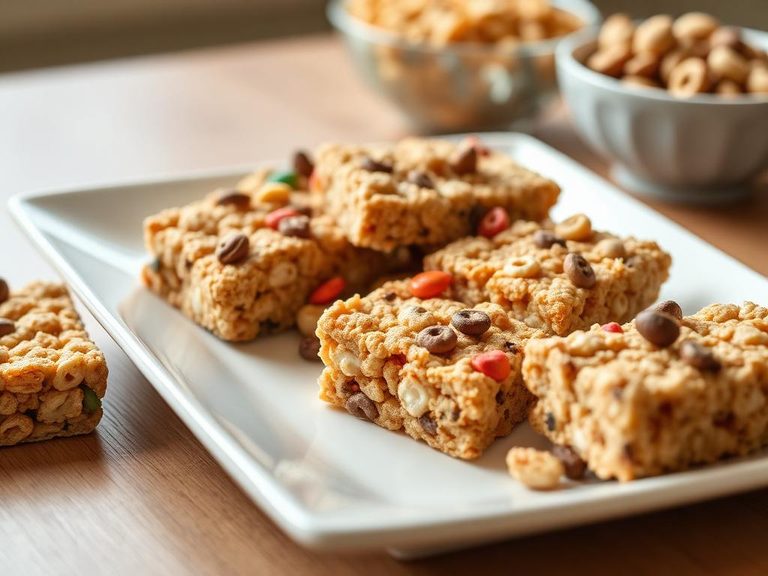
Cereal bar snacks are portable, ready-to-eat bars made primarily from processed cereal grains like oats, rice, or wheat, often bound together with sweeteners and fats. They are a modern convenience food that originated in the United States in the mid-20th century, evolving from the need for a quick, mess-free breakfast or snack option.
🍽️ Nutrition at a glance
These bars are typically high in carbohydrates, especially from added sugars and refined grains, providing a quick source of energy. A standard bar offers moderate fiber and protein, along with key nutrients like iron and B vitamins, with a calorie count generally ranging from 150 to 250 kcal per serving.
Nutrition breakdown
| Calories | 180 kcal |
| Protein | 3 g |
| Carbs | 33 g |
| Fat | 5 g |
| Fiber | 2 g |
| Sugar | 12 g |
| Sodium | 120 mg |
| Iron | 4.5 mg |
| Thiamin (B1) | 0.3 mg |
| Niacin (B3) | 4 mg |
| Vitamin B6 | 0.4 mg |
| Folate | 80 mcg |
| Magnesium | 25 mg |
| Phosphorus | 60 mg |
| Zinc | 1.5 mg |
Per 1 bar (40 g) · estimated, varies by recipe
💡 What's interesting
Culturally, they represent the fast-paced, on-the-go lifestyle of modern societies and are a staple in school lunchboxes and office desks. Nutritionally, they are a fascinating case study in food engineering, balancing texture, shelf stability, and taste, though they can vary widely from being a relatively wholesome snack to being more akin to a candy bar in disguise.
🍽️ Related dishes








AI estimate may be inaccurate · Terms