Fruit leather snacks
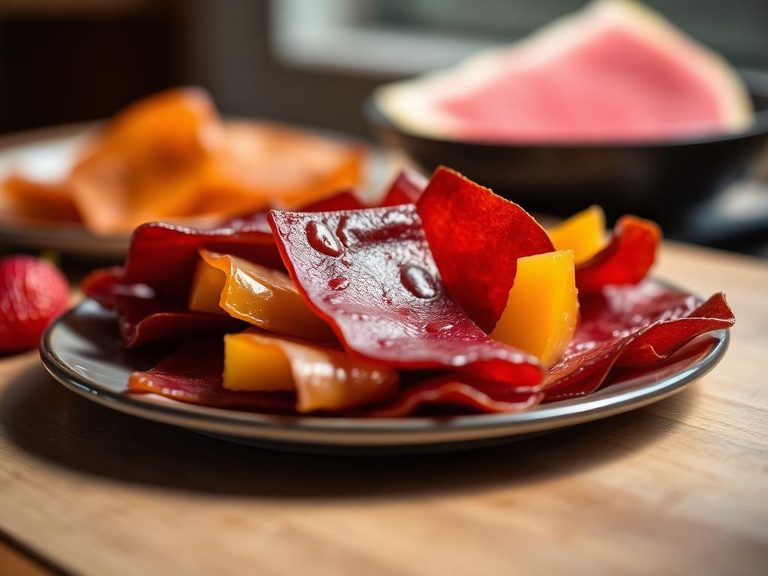
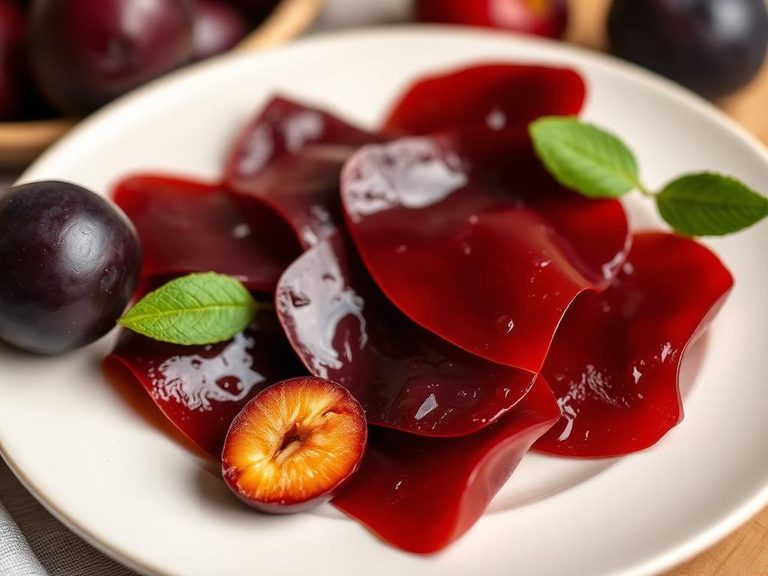
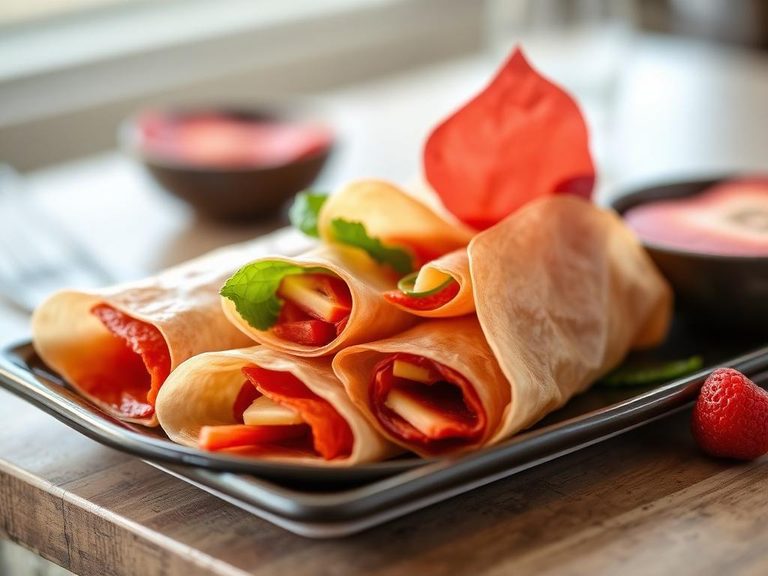
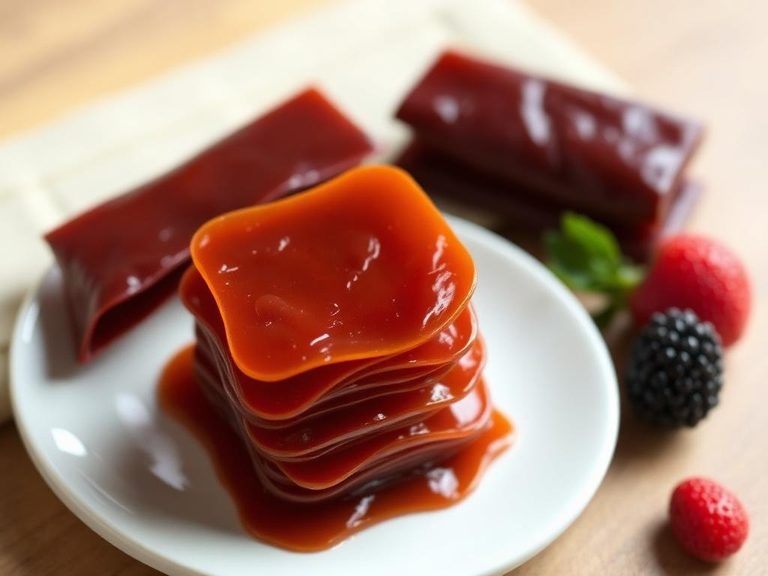
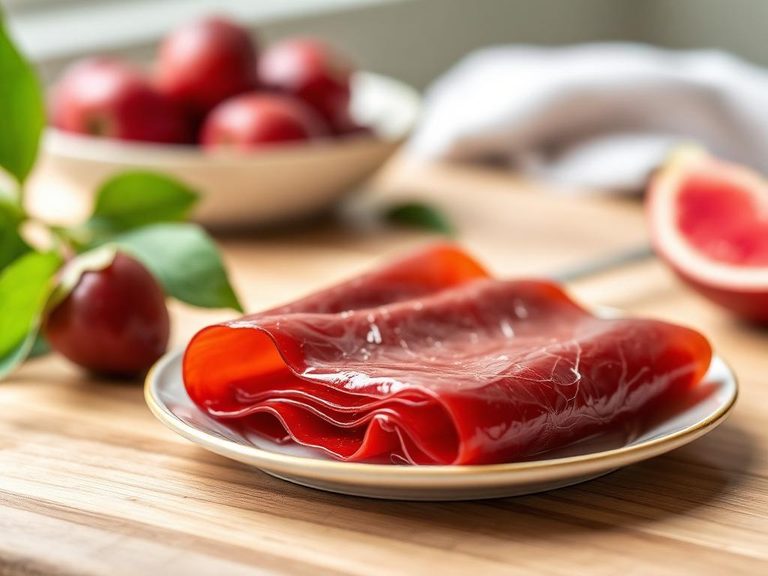
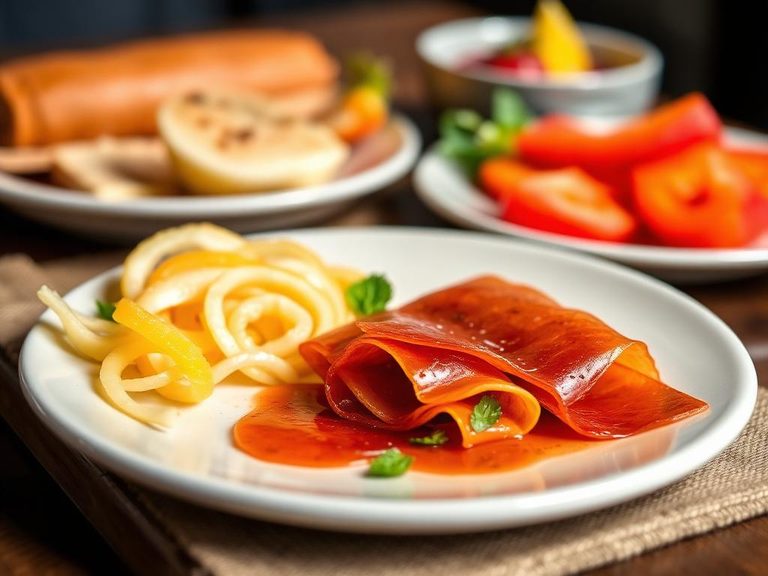
Fruit leather is a chewy, dehydrated snack made by pureeing fruit, spreading it thin, and drying it into a flexible sheet. It typically uses fruits like apples, apricots, peaches, or berries, often with minimal added ingredients. This snack has ancient roots, with variations found across many cultures from the Middle East to Asia.
🍽️ Nutrition at a glance
Fruit leather is primarily a carbohydrate source, offering quick energy from natural fruit sugars with minimal fat or protein. It provides some dietary fiber, vitamins (like vitamin C), and antioxidants, with a typical serving containing around 100-150 calories.
Nutrition breakdown
| Calories | 140 kcal |
| Protein | 0.5 g |
| Carbs | 34 g |
| Fat | 0 g |
| Fiber | 2 g |
| Sugar | 26 g |
| Sodium | 10 mg |
| Vitamin C | 30 mg |
| Potassium | 180 mg |
| Vitamin A | 450 IU |
| Iron | 0.5 mg |
| Calcium | 10 mg |
| Vitamin E | 1.5 mg |
| Magnesium | 8 mg |
| Phosphorus | 12 mg |
Per 1 package (40 g) · estimated, varies by recipe
💡 What's interesting
Culturally, it's a historic preservation method that transforms perishable fruit into a shelf-stable, portable food, similar to traditional fruit pastes like 'pastila' in Russia or 'lavashak' in Iran. Nutritionally, it concentrates fruit's nutrients but can be high in natural sugars, making it a more wholesome alternative to candy when made without added sweeteners.