Fruit leather as a dessert topping
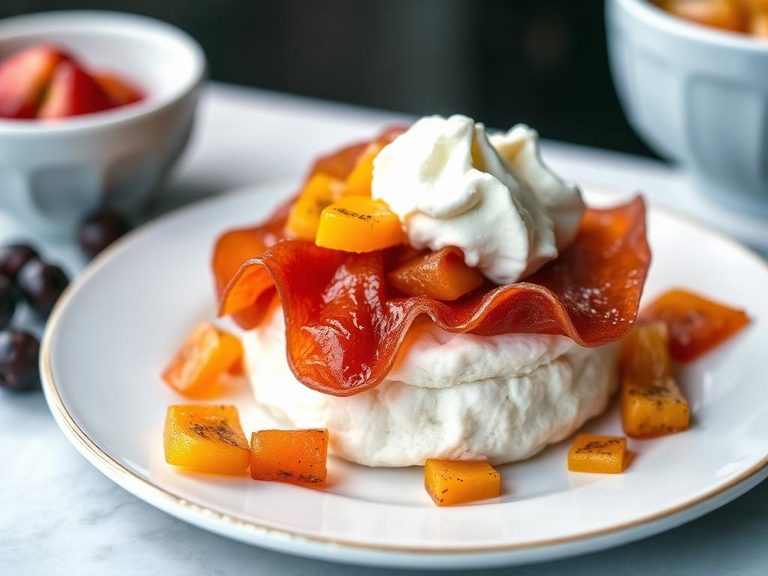
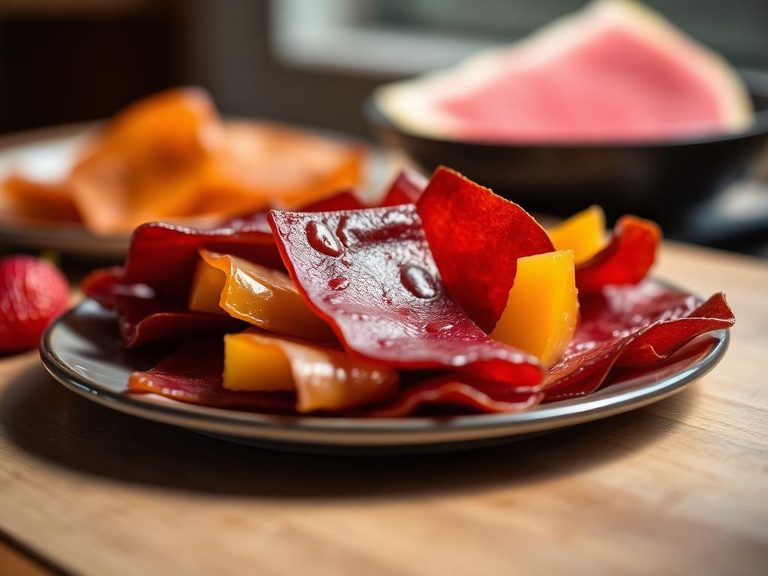
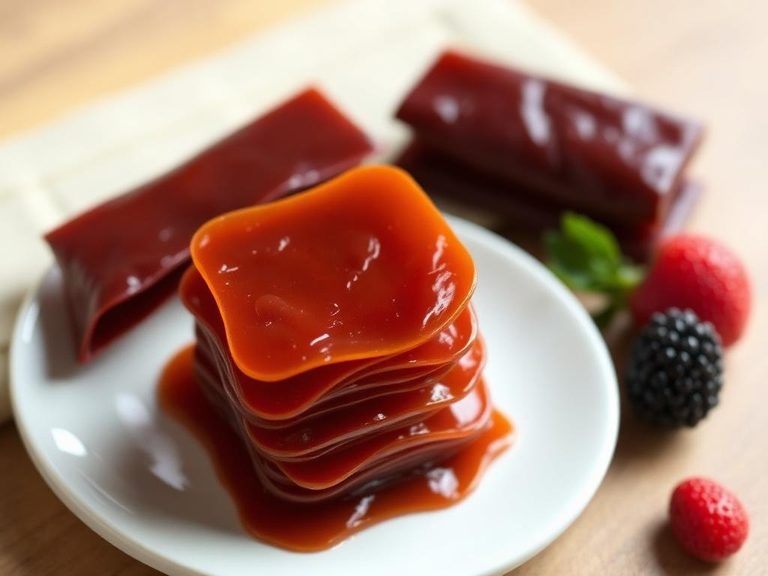
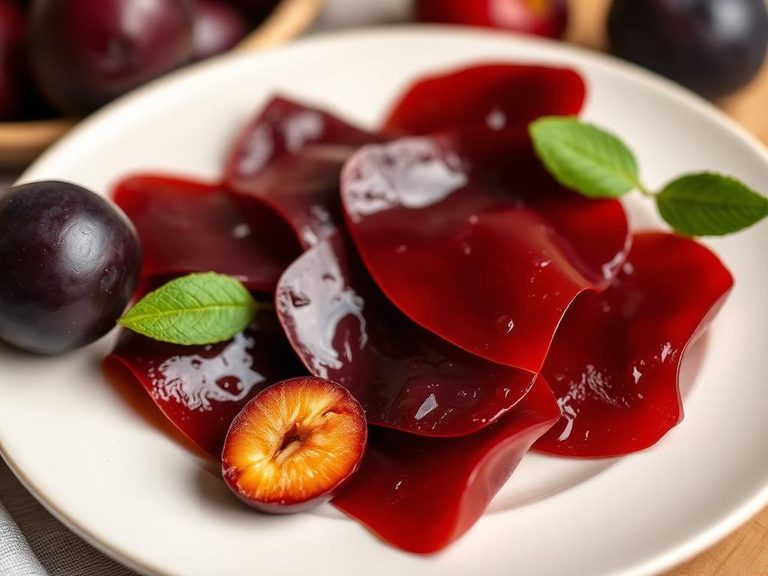
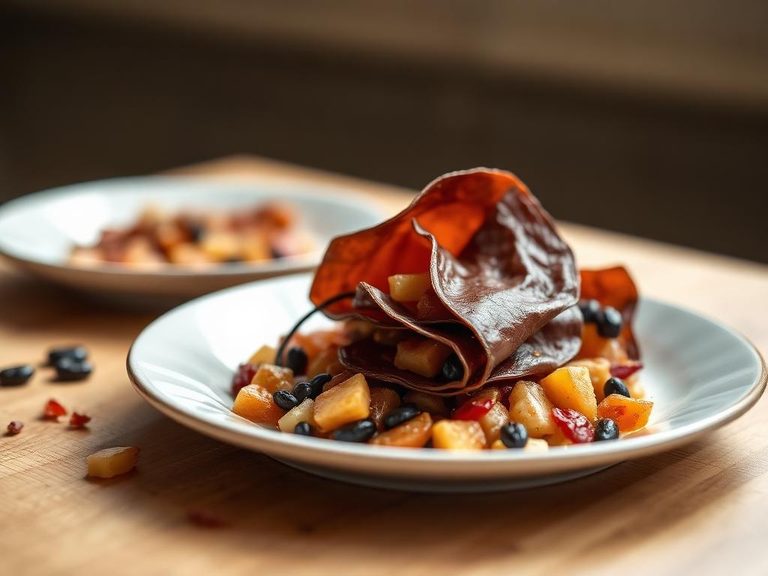
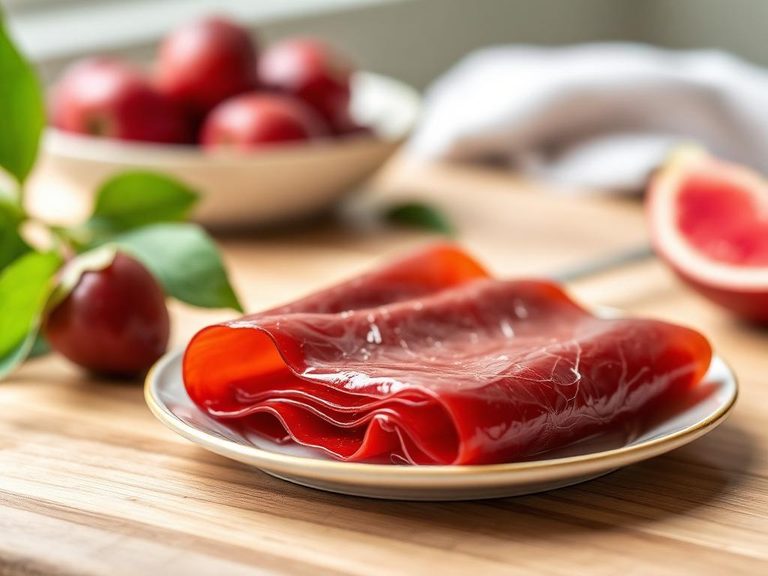
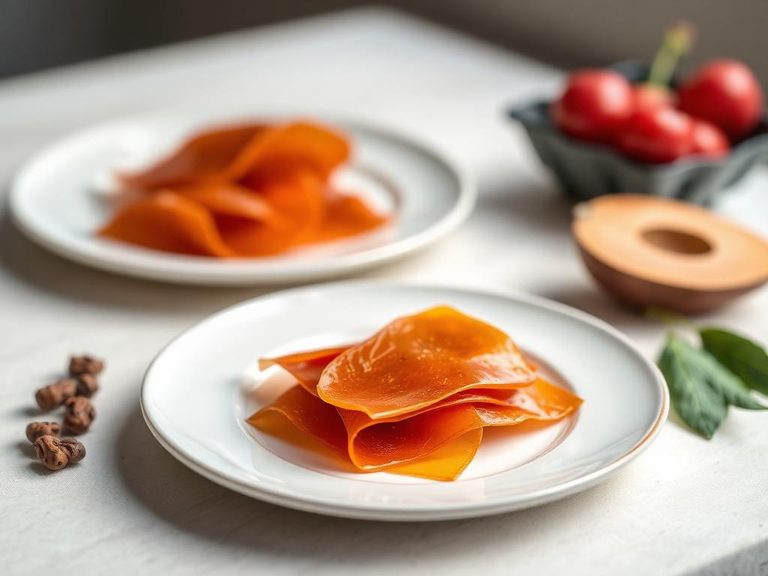
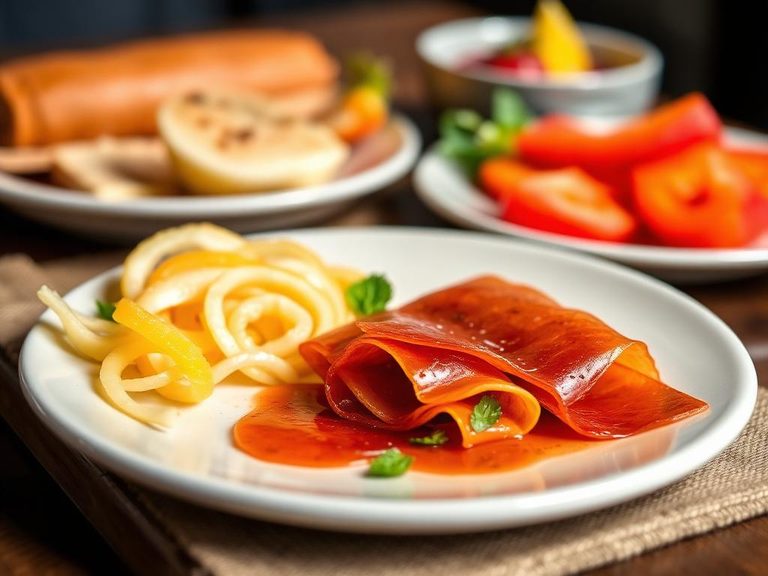
Fruit leather as a dessert topping is a creative twist on the traditional snack, where thin, chewy sheets of dried fruit puree are crumbled or sliced over sweets like ice cream, yogurt, or cakes. It's typically made from blended fruits like apples, berries, or mangoes, often with a touch of lemon juice, and is spread thin and dehydrated. This practice has roots in various cultures, from Middle Eastern fruit pastes to Asian dried fruit snacks, but using it as a topping is a modern, versatile adaptation.
🍽️ Nutrition at a glance
Fruit leather is generally high in carbohydrates from natural fruit sugars, with minimal fat and protein. It provides key nutrients like dietary fiber, vitamins (such as vitamin C from citrus fruits), and antioxidants, depending on the fruit used. A typical serving (about 1 ounce or 28 grams) contains roughly 80-100 calories.
Nutrition breakdown
| Calories | 100 kcal |
| Protein | 0.5 g |
| Carbs | 24 g |
| Fat | 0.2 g |
| Fiber | 2 g |
| Sugar | 20 g |
| Sodium | 10 mg |
| Potassium | 200 mg |
| Vitamin C | 15 mg |
| Vitamin A | 80 mcg RAE |
| Iron | 0.5 mg |
| Calcium | 15 mg |
| Magnesium | 10 mg |
| Phosphorus | 15 mg |
| Vitamin B6 | 0.1 mg |
Per 1 sheet (approx. 30 g) · estimated, varies by recipe
💡 What's interesting
Culturally, fruit leather has been a portable, long-lasting food for travelers and nomads for centuries, but its use as a dessert topping adds a playful, textural contrast to creamy or soft desserts. Nutritionally, it offers a concentrated source of fruit benefits without added fats, making it a lighter alternative to sugary syrups or chocolate drizzles.